

If you are looking for one of the most fascinating archaeological sites in Albania, Orikum Archaeological Park is a destination that combines ancient history, dramatic coastal landscapes, and centuries of Mediterranean civilization in one place.
Located near the Bay of Vlorë, inside the wider area of Pashaliman and close to the Karaburun Peninsula, Orikum (ancient Oricum) was once one of the most important fortified cities of the Adriatic coast. Today, its ruins reveal traces of Greek, Roman, Byzantine, medieval, and Ottoman history layered across a rocky hill overlooking the sea.
Unlike many archaeological parks in the Balkans, Orikum still feels relatively untouched and authentic. Walking through the site, visitors can explore carved staircases, ancient fortifications, monumental structures, medieval remains, and panoramic views over the surrounding lagoon and mountains.
📑 Table of Contents
- The Ancient History of Orikum
- Orikum and the Roman Civil War
- The Byzantine and Medieval City
- Archaeological Discoveries That Changed the History of the Site
- The Monumental Fountain of Orikum
- The Rock-Carved Houses of Paleokastra
- The Fortifications of the City
- The Medieval Church and Later Occupation
- Visiting Orikum Today
The Ancient History of Orikum
The history of Orikum stretches back more than 2,500 years. Archaeological evidence suggests that the city was founded around the middle of the 6th century BC, during a period when the Adriatic coast was becoming increasingly important for trade and military expansion. Ancient historians such as Herodotus and Hecataeus of Miletus already described Orikum as one of the most strategic and fortified settlements of Epirus.
Its position along the Adriatic and Ionian maritime routes gave the city enormous importance. Orikum functioned not only as a defensive stronghold but also as a commercial gateway connecting different parts of the Mediterranean world. Because of this, the city became involved in some of the most important military and political events of antiquity.
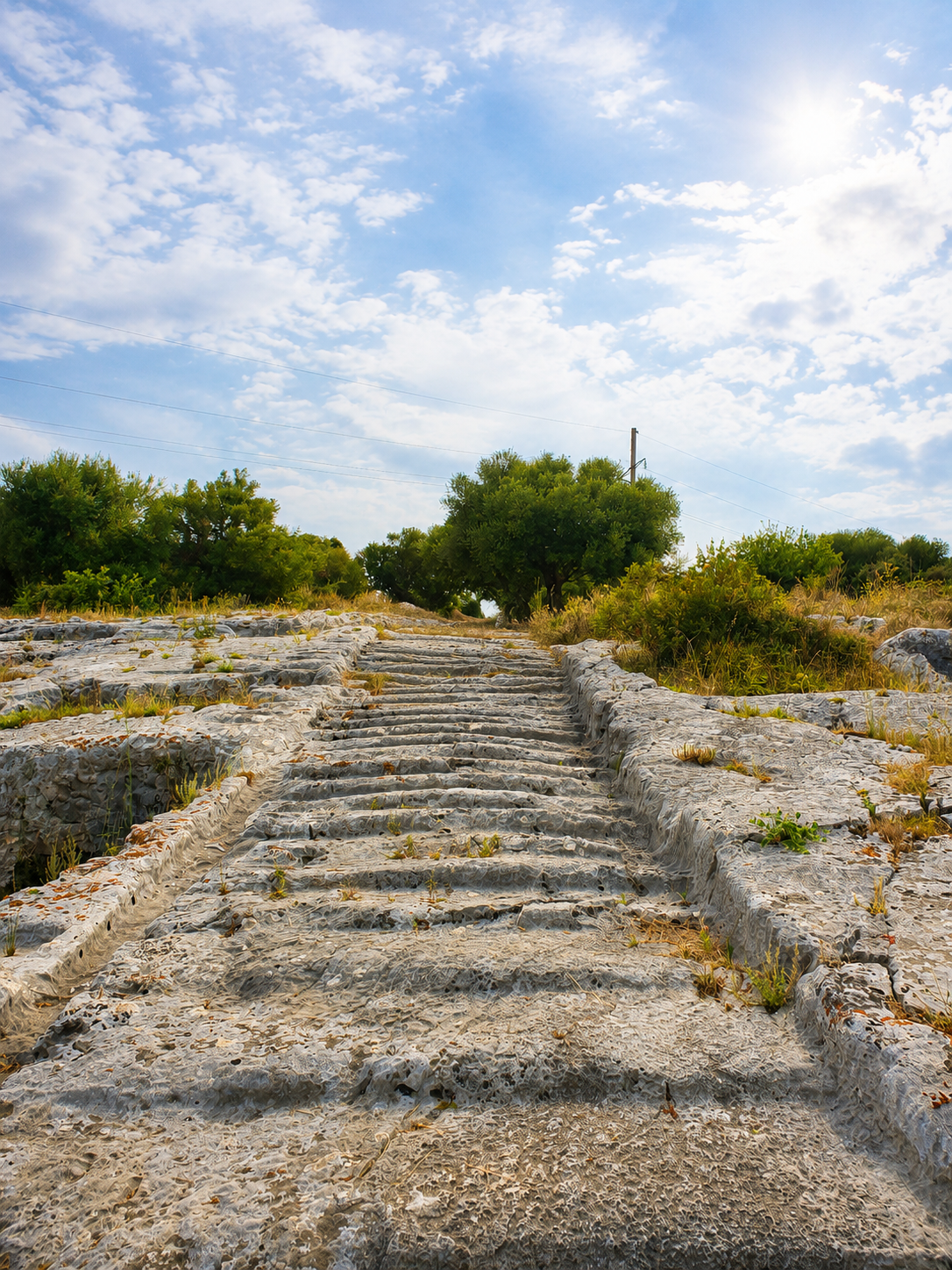
By the 3rd century BC, Orikum had fully developed into an organized urban center. One of the most remarkable aspects of the city was the way its infrastructure adapted to the natural terrain. Large parts of the settlement were carved directly into the rocky hillside. Ancient staircases, water cisterns, drainage systems, and building foundations were integrated into the stone itself, creating a city that blended naturally into the landscape.
Even today, visitors can still notice these carved elements scattered across the hill, offering a glimpse into the engineering and urban planning of the ancient inhabitants.
Orikum and the Roman Civil War
Orikum became especially important during the conflicts between Macedonia and Rome in the late Hellenistic period, but its most famous historical moment came during the Roman Civil War between Julius Caesar and Pompey in 48 BC.
In his own writings about the war, Caesar described Orikum as a strongly fortified coastal city protected by powerful walls and defensive towers. Because of its strategic harbor and military position, controlling Orikum was considered essential during the campaign.
The battles and political instability of this era likely caused significant destruction to the settlement. Archaeological evidence suggests that parts of the city were abandoned during the Roman period, possibly due to warfare and changing trade dynamics in the region.
Still, Orikum never completely disappeared. Instead, the city evolved and adapted through different historical periods, continuously reshaping itself over centuries.
The Byzantine and Medieval City
After the decline of the classical city, Orikum experienced a revival during Late Antiquity and the Byzantine era. Archaeological discoveries show that the site was rebuilt and fortified once again, proving that the location continued to hold strategic value long after the Roman period.
During the Middle Ages, the settlement became known as “Eriko,” a name mentioned by the Byzantine historian Anna Komnene in the 11th century. This medieval name still preserved traces of the original ancient identity of Orikum.
The hill where the city stands is today called Paleokastra, meaning “old castle,” a name that reflects the defensive character of the settlement throughout history.
Later, during Ottoman times, the surrounding area served as an important naval base because of its position near the Bay of Vlorë. In the communist period after World War II, the site became isolated because it was included within the territory of the Pashaliman Naval Military Base. For decades, public access was limited, which unintentionally helped preserve many archaeological remains from uncontrolled urban development.
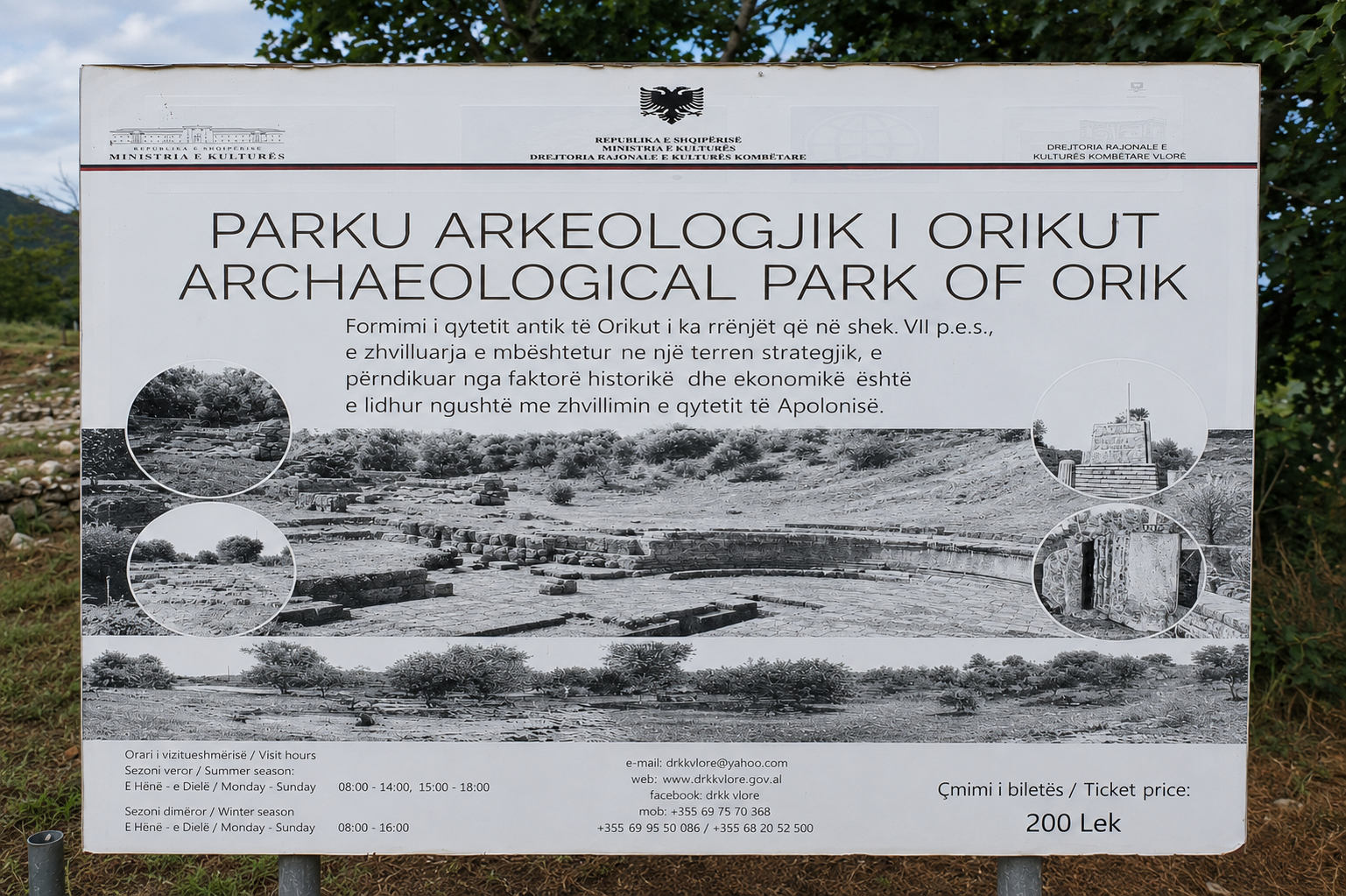
Because of its exceptional historical and environmental value, Orikum was officially declared a National Archaeological Park in 2005.
Archaeological Discoveries That Changed the History of the Site
Although travelers and foreign researchers had noticed the ruins since the beginning of the 20th century, systematic archaeological excavations only started in 1958 through a joint Albanian-Soviet mission led by Dhimosten Budina and N. Kabilina.
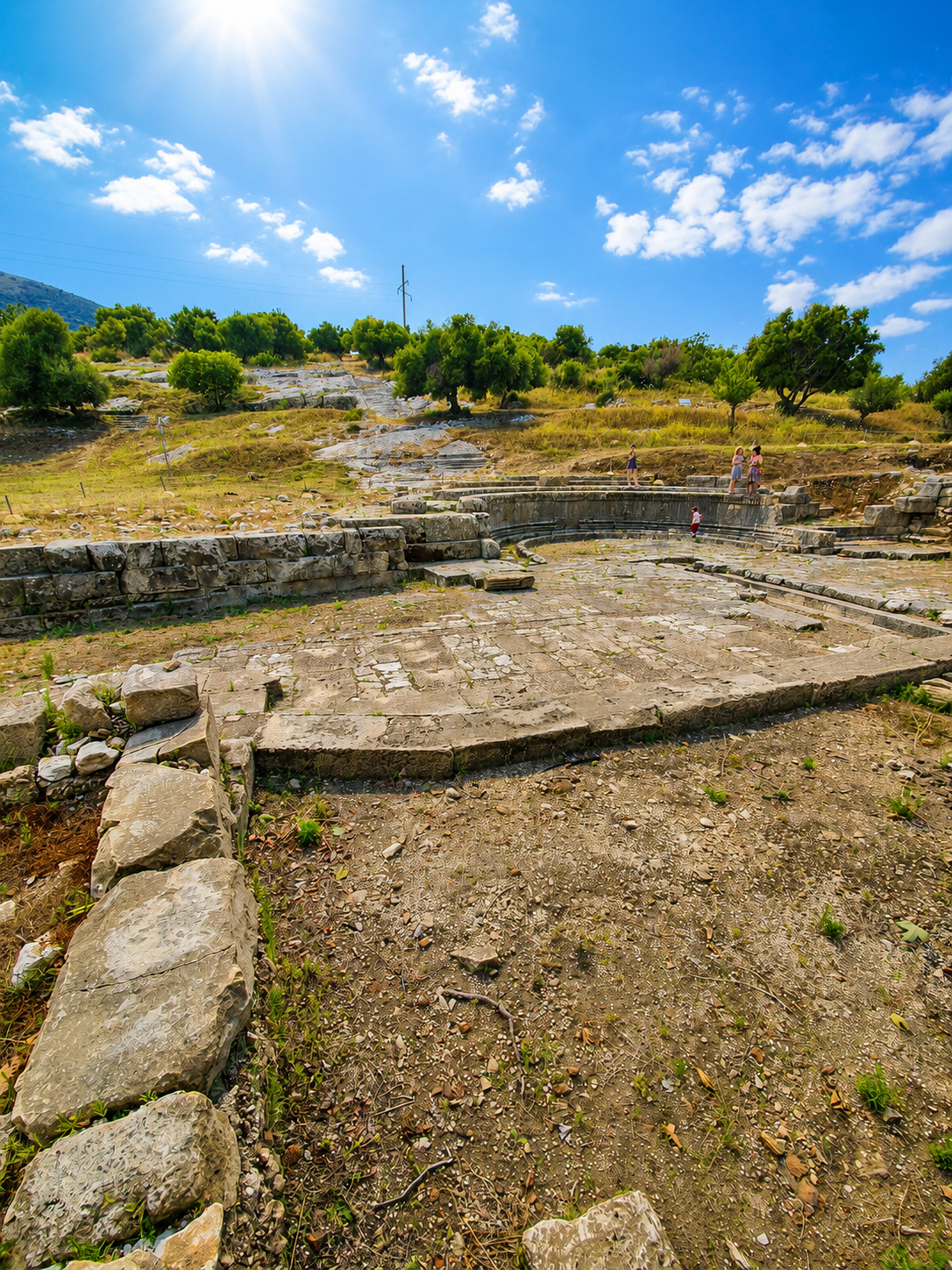
The first excavations uncovered important structures, including monumental staircases carved into the hill and a large semicircular monument initially believed to be a theater. These discoveries were extremely important because they revealed the urban organization of the ancient city for the first time.
After decades without major excavation work, research resumed in 2007 through a collaborative Albanian-Swiss project between the Institute of Archaeology in Tirana and the University of Geneva. This long-term mission dramatically transformed the understanding of Orikum.
New excavations uncovered additional monuments, fortification systems, residential structures, and important chronological evidence that helped archaeologists reconstruct the evolution of the city across different centuries.
Among the most remarkable discoveries was a unique square-shaped monument dating to the 3rd–2nd century BC, considered highly unusual in the ancient Mediterranean world.
The Monumental Fountain of Orikum
One of the most fascinating monuments in Orikum is the structure once mistakenly identified as a theater.
When the monument was first excavated in the late 1950s, archaeologists believed it was an ancient theater because of its semicircular shape and stepped seating area. However, new excavations carried out in 2013 and 2014 completely changed this interpretation.
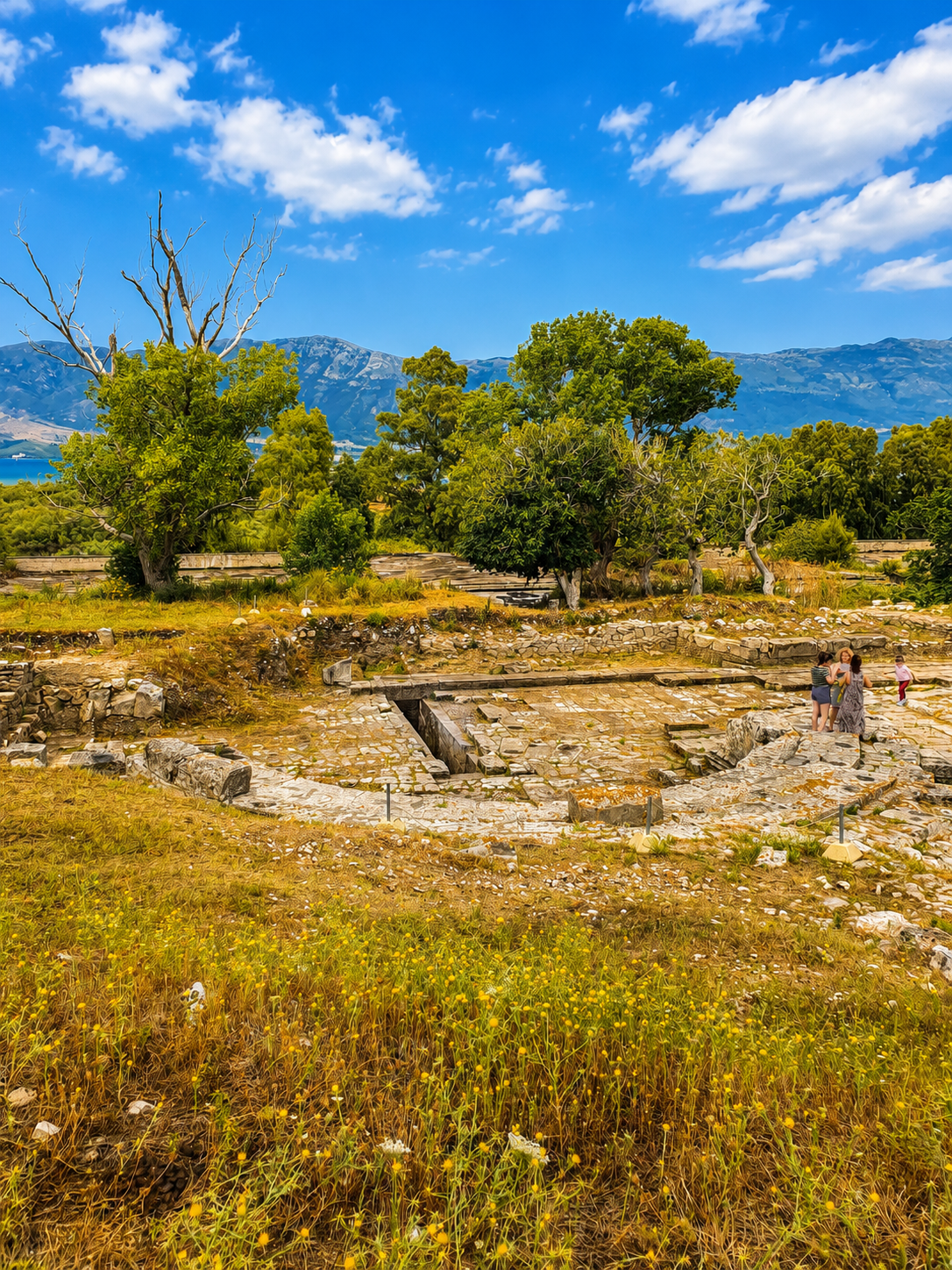
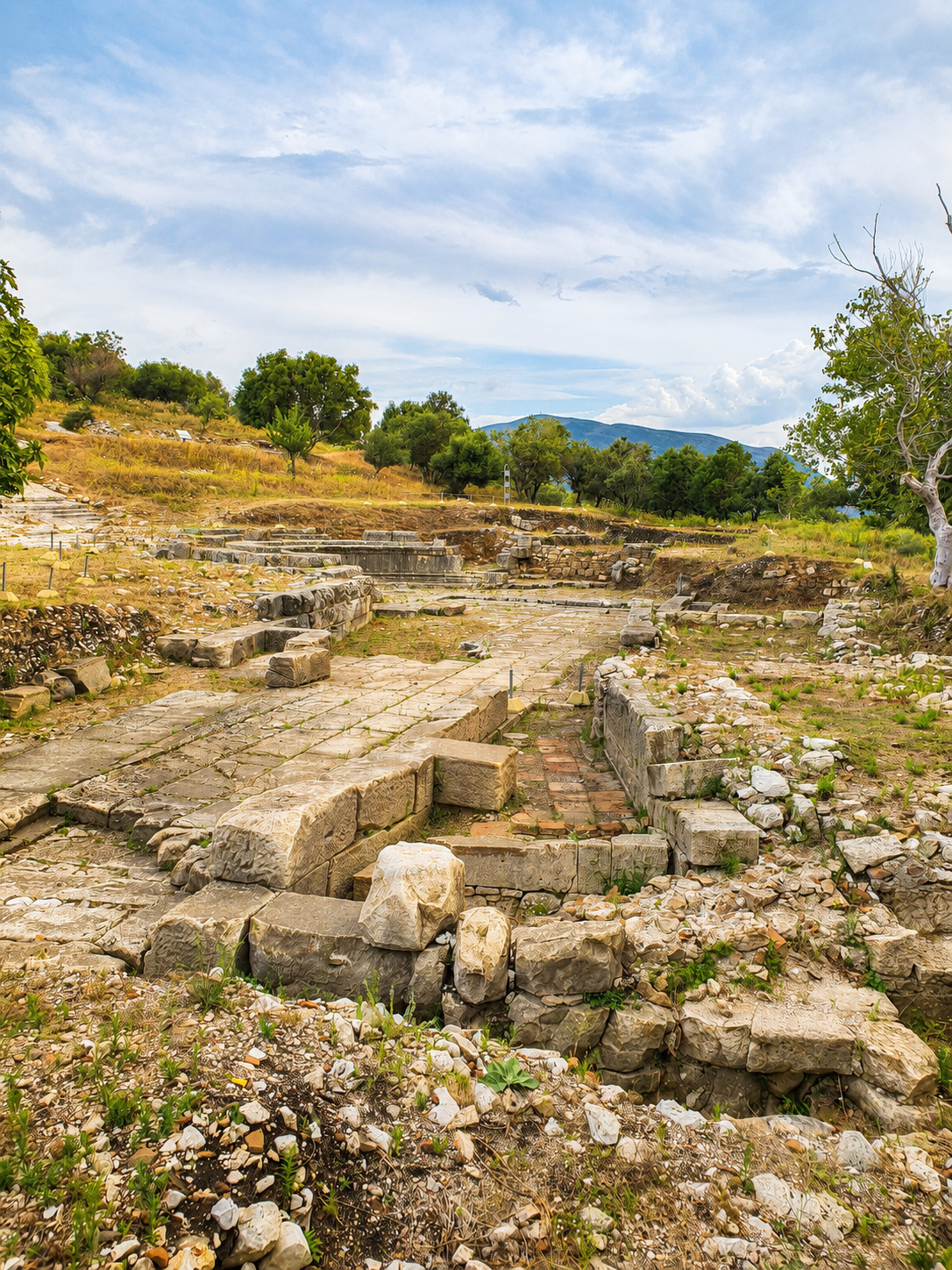
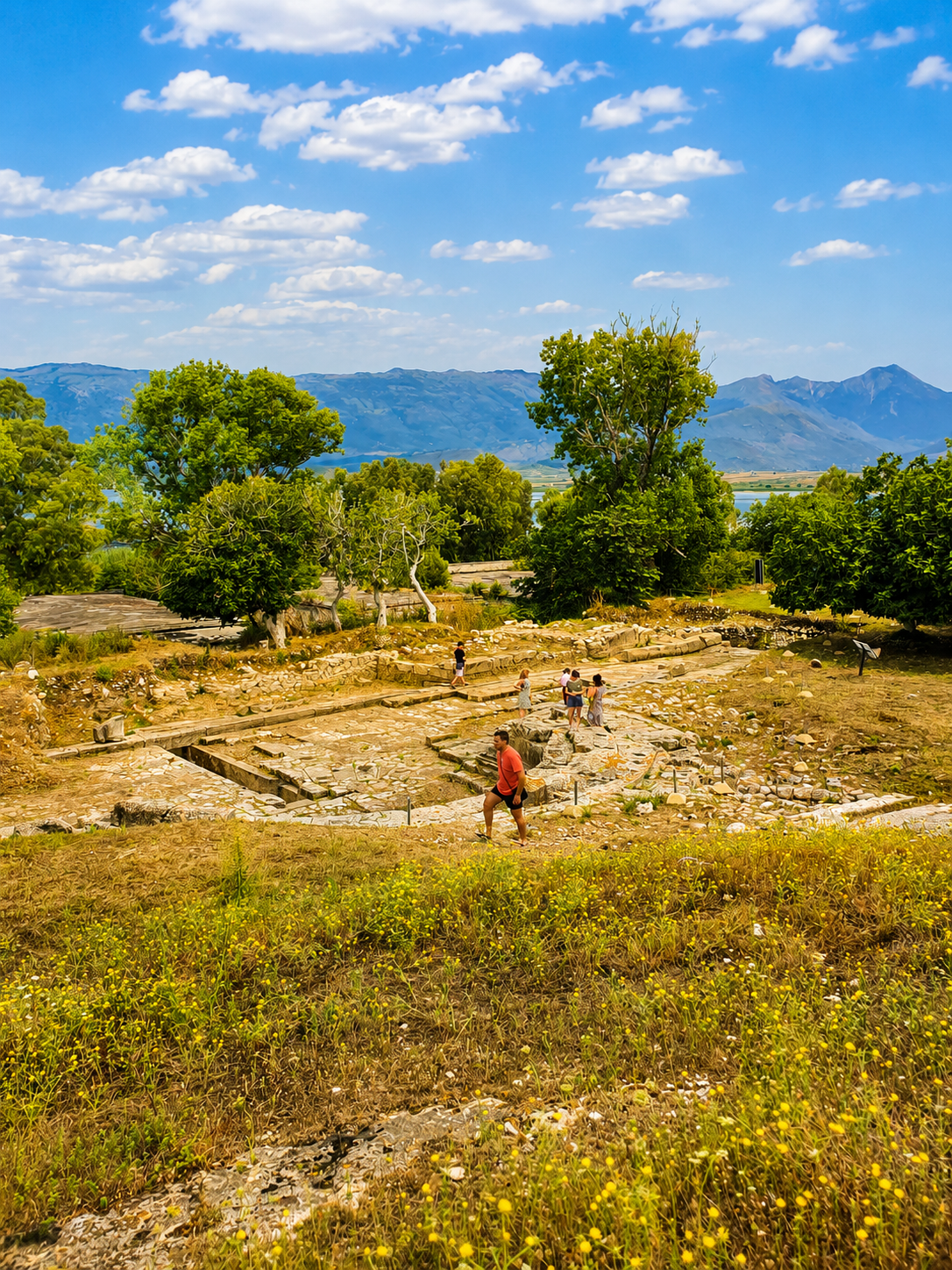
Researchers discovered that the structure lacked essential architectural elements required for a theater, such as the stage and side entrances known as parodoi. Instead, archaeologists uncovered a deep water channel running through the center of the monument.
Today, experts identify the structure as a monumental Hellenistic fountain rather than a theater. The monument is especially impressive because of its monumental staircase and elevated podium decorated with carved dentils, reflecting the architectural sophistication of the Hellenistic period.
This reinterpretation became one of the most important archaeological breakthroughs connected to the site and demonstrated how modern excavations can completely change the historical understanding of ancient monuments.
The Rock-Carved Houses of Paleokastra
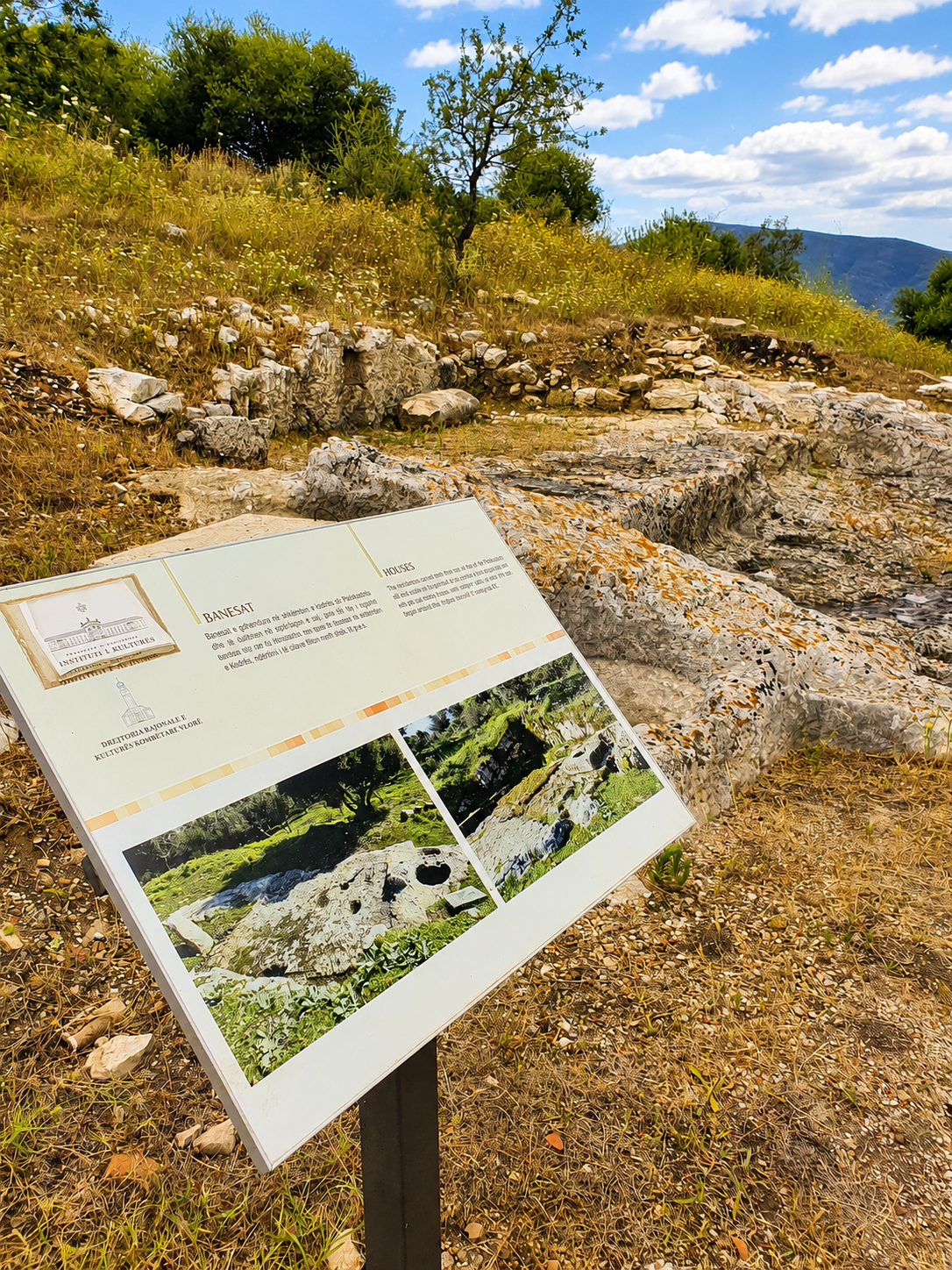
Another unique feature of Orikum is its residential architecture. Across the slopes of Paleokastra hill, visitors can still see traces of ancient houses carved directly into the rock.
These were one- or two-story dwellings designed to adapt perfectly to the steep terrain. Many included deep pits and water storage systems integrated into the stone itself. Construction of these houses began around the 3rd century BC and represents a remarkable example of ancient engineering and urban adaptation.
Unlike monumental temples or public buildings, these houses offer insight into the everyday lives of the people who once lived in Orikum. They reveal how ancient communities organized water, space, and domestic life in a challenging coastal landscape.
The Fortifications of the City
The fortification system of Orikum was one of the key reasons for the city’s historical importance.
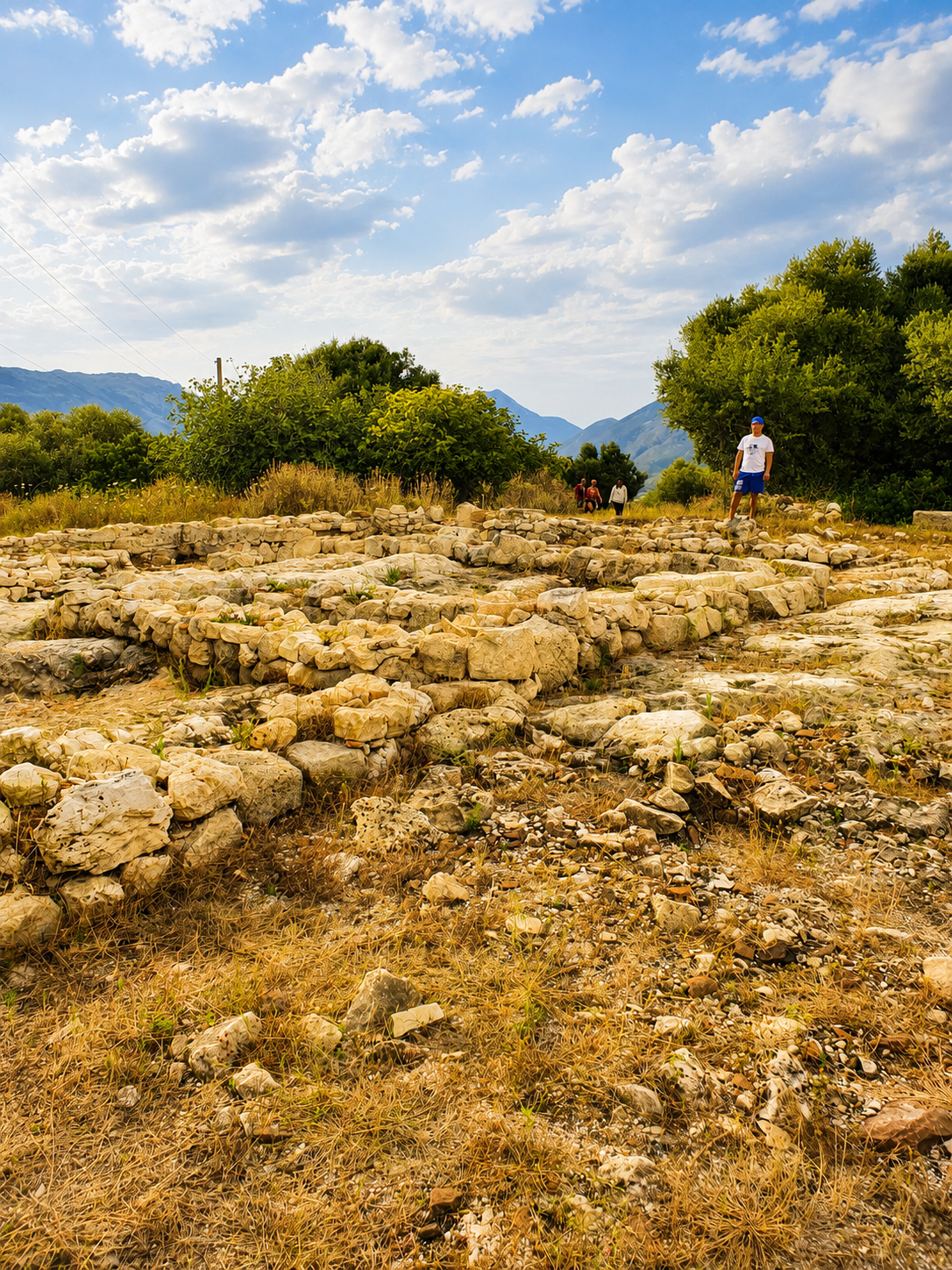
Recent archaeological excavations uncovered several important defensive elements, including the northern entrance gate, artillery platforms, towers from Late Antiquity, and additional fortified sections along the eastern terrace.
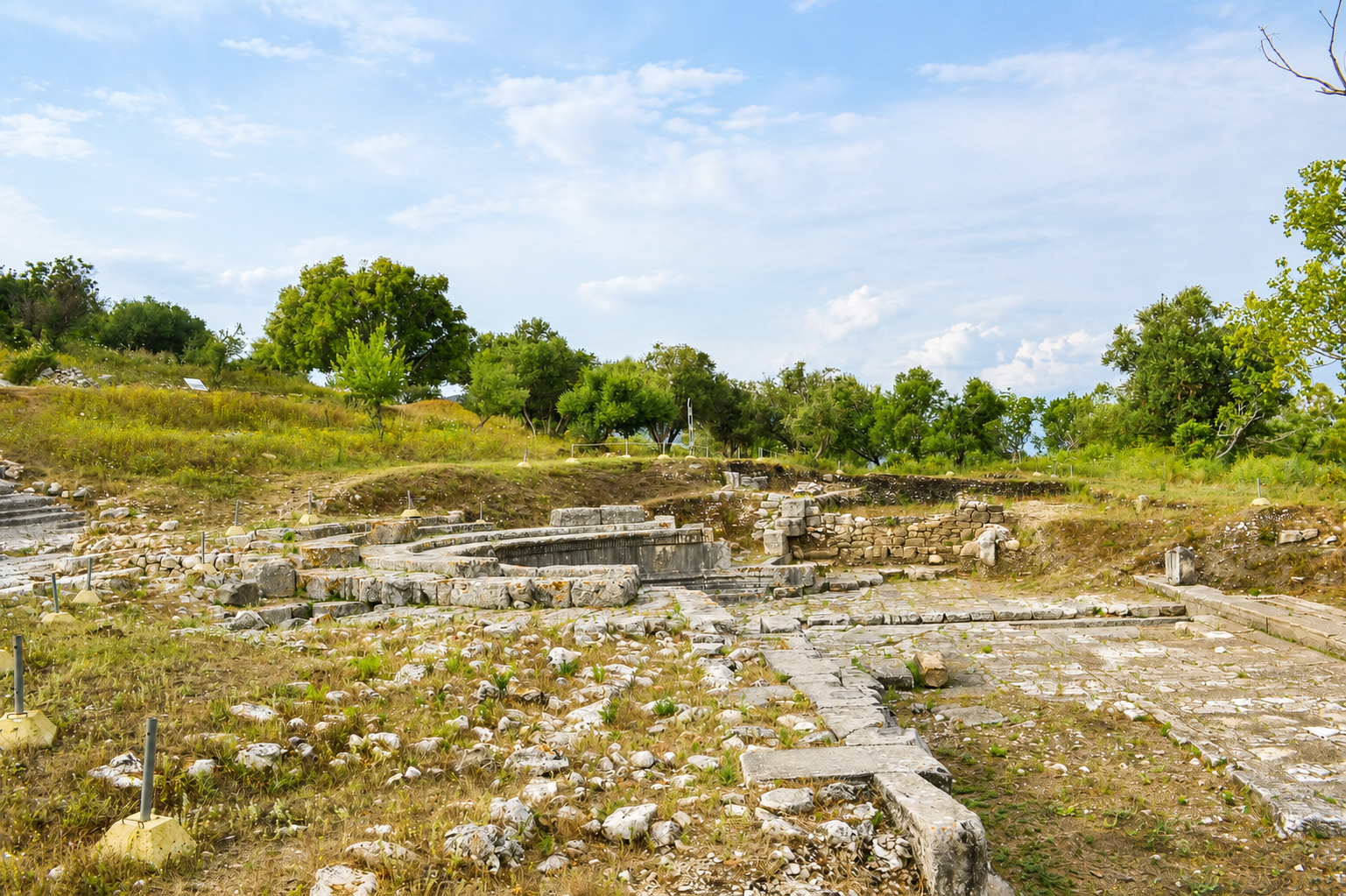
These discoveries helped archaeologists date parts of the defensive walls more precisely to around 150 BC.
Walking around the site today, visitors can still recognize sections of these ancient defenses and understand why Orikum was considered such a strategically valuable military settlement for centuries.
The Medieval Church and Later Occupation
One of the newest visible discoveries at the archaeological park is a medieval church uncovered during excavations between 2016 and 2017 in the acropolis area. The church confirms that the site remained inhabited and active throughout the medieval period, adding yet another historical layer to Orikum’s long story.
Together, the ancient fortifications, Hellenistic monuments, Roman remains, and medieval structures make Orikum one of the few archaeological sites in Albania where visitors can observe multiple historical periods overlapping in a single location.
Visiting Orikum Today
Today, visiting Orikum Archaeological Park is not only a historical experience but also a scenic one. The archaeological ruins are surrounded by Mediterranean vegetation, rocky hills, and panoramic views over the Bay of Vlorë that become especially beautiful during sunset.
The atmosphere is peaceful, especially outside the peak summer season. Unlike many larger archaeological parks in the Mediterranean, Orikum still feels intimate, authentic, and relatively undiscovered.
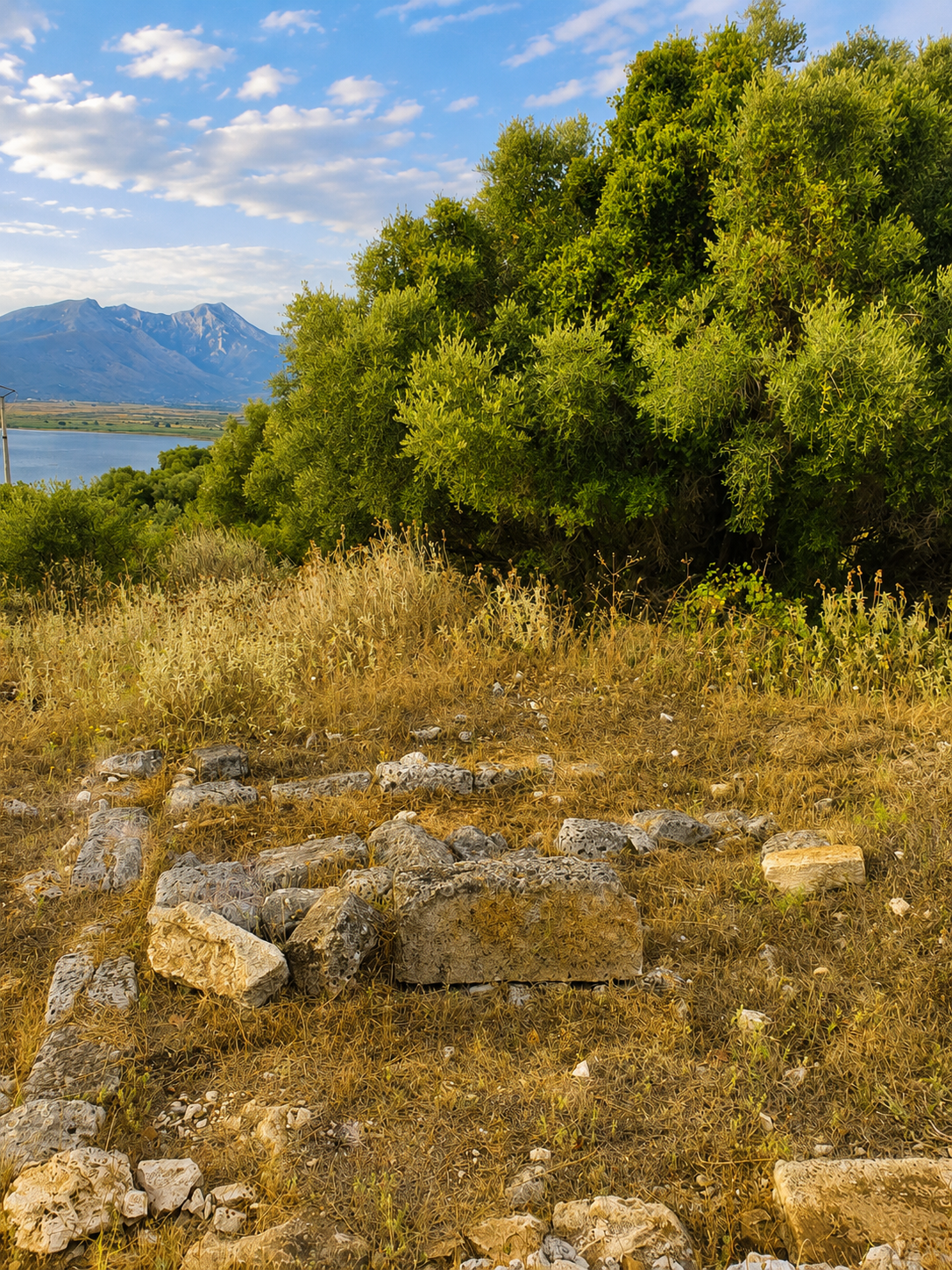
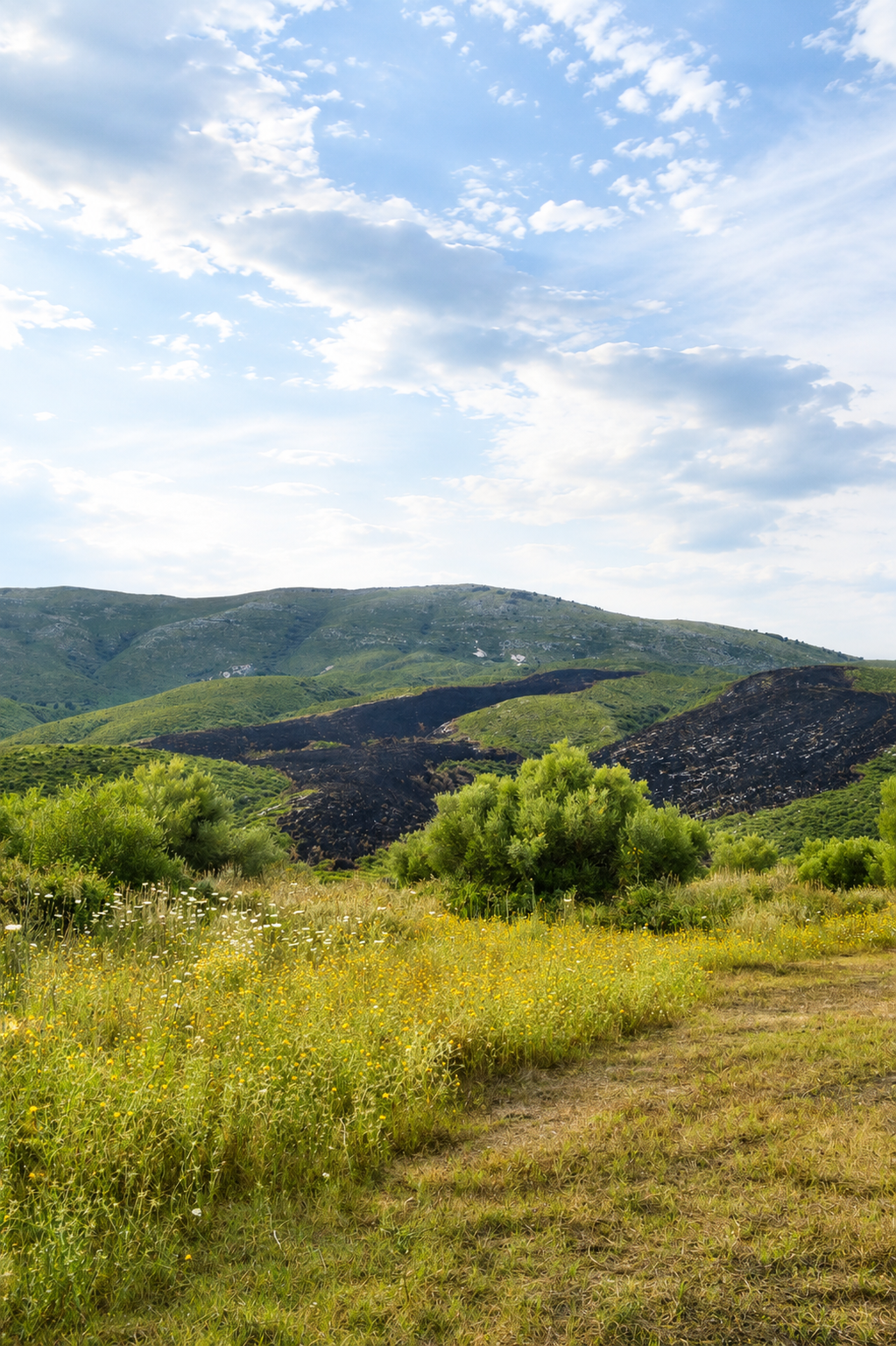
Today, the archaeological park is located within a protected military and environmental zone, which means access can sometimes be regulated and may require permission depending on the area and current restrictions. Because of this unique setting, the site has remained more preserved and less affected by mass tourism compared to other historical destinations along the Adriatic coast.
The site can also be combined with nearby attractions along the Albanian Riviera, including beaches near Orikum, the Karaburun Peninsula, and Llogara National Park.
For travelers interested in history, archaeology, photography, or hidden destinations in Albania, Orikum offers one of the most rewarding cultural experiences on the southern coast.
Orikum Archaeological Park is one of Albania’s most fascinating hidden historical destinations, where ancient ruins, Mediterranean landscapes, and centuries of history come together in a peaceful setting near the Albanian Riviera.
Looking to explore more hidden places near Vlorë? Read also: Zvernec Albania: What to Do, Beaches, Monastery & Narta Lagoon Experience