

If you’re searching for the most important archaeological parks in Albania, there is one place that stands above the rest for both history and atmosphere — Apollonia Archaeological Park.
Located near Fier in southwestern Albania, Apollonia is one of the country’s most impressive ancient cities. Founded more than 2,600 years ago in a region originally inhabited by the Illyrian Taulantii tribe, this former Greek and Roman settlement combines monumental ruins, ancient temples, panoramic landscapes, and a fascinating museum inside a medieval monastery.
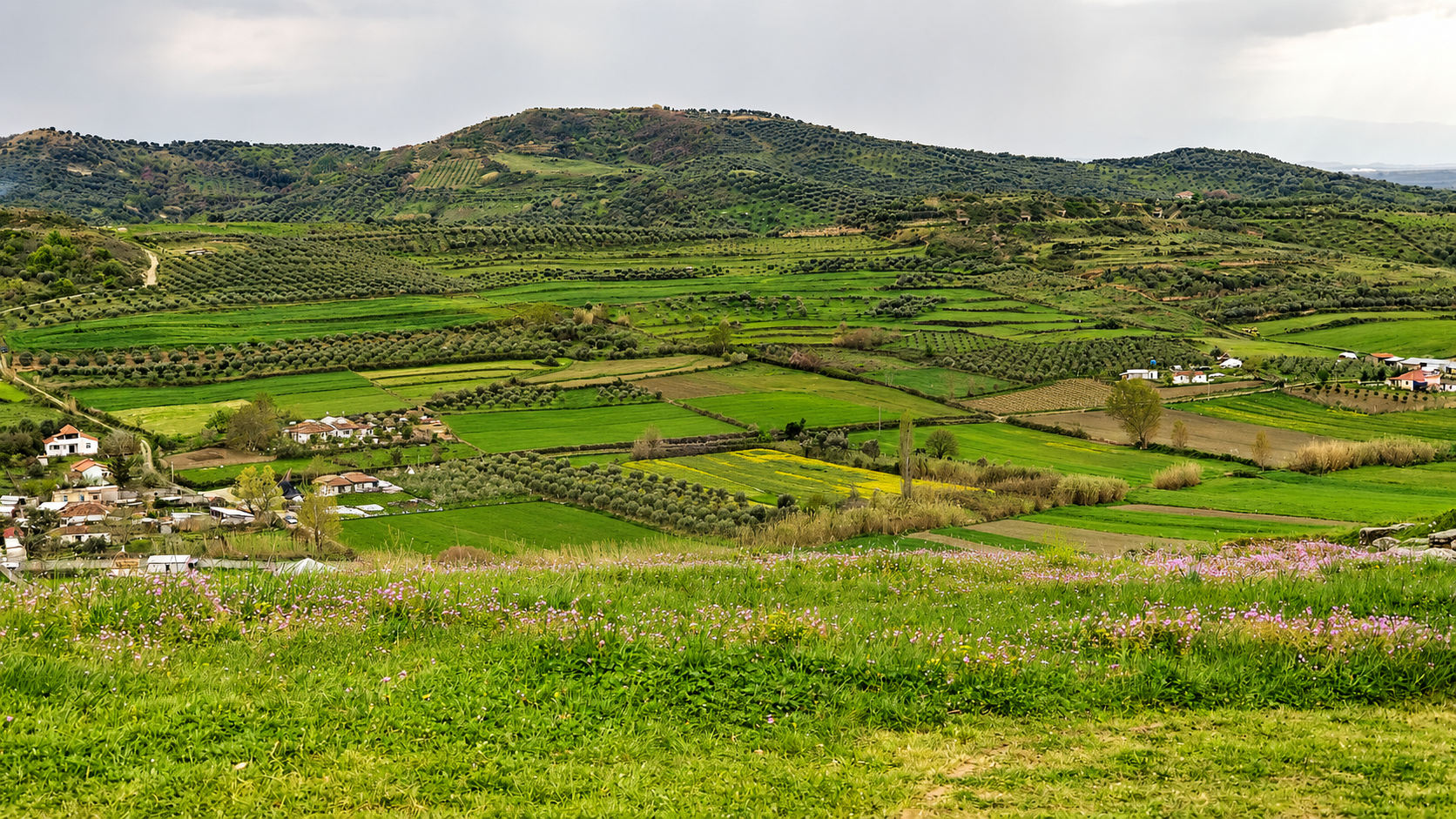
Unlike many archaeological sites in the Balkans, Apollonia still feels authentic and untouched. The ruins are spread across rolling hills surrounded by olive trees and open countryside, creating an experience that feels closer to an ancient city rediscovered than a crowded tourist attraction.
Whether you’re interested in Albanian history, Roman architecture, archaeology, photography, or simply looking for unique places to visit in Albania, Apollonia is absolutely worth adding to your itinerary.
📑 Table of Contents
- Where Is Apollonia Archaeological Park?
- History of Apollonia
- What to See Inside Apollonia Archaeological Park
- Apollonia Archaeological Museum
- How to Visit Apollonia Archaeological Park
- Tickets & Opening Hours
- Best Time to Visit
- Practical Tips for Visitors
- Why Apollonia Is Worth Visiting?
- FAQ – Apollonia Archaeological Park
📍 Where is Apollonia Archaeological Park?
Apollonia Archaeological Park is located near the village of Pojan, around 12 km from the city of Fier in southwestern Albania.
The park sits on a hill overlooking the Myzeqe plain, offering beautiful panoramic views of the surrounding countryside. Its strategic location once connected the city to important trade routes linking the Adriatic coast with the Balkans.
Distances from major cities:
- 🚗 Tirana → Around 2 hours
- 🚗 Vlora → Around 35 minutes
- 🚗 Berat → Around 1 hour
- 🚗 Fier → Around 15 minutes
The easiest way to visit Apollonia is by car, although it’s also possible to reach it using buses to Fier followed by a taxi or local transport.
🏛 History of Apollonia
Apollonia was founded around 600 BC by Greek colonists from Corinth and Corfu in a region originally inhabited by the Illyrian Taulantii tribe. From the beginning, the city developed through a combination of Greek, Illyrian, and later Roman influences, becoming one of the most important ancient settlements in present-day Albania.
Thanks to its strategic location near important trade routes, Apollonia quickly grew into a powerful center of commerce, culture, philosophy, and education. The city flourished during both the Hellenistic and Roman periods, attracting merchants, scholars, and political figures from across the ancient Mediterranean.
One of the most famous historical connections is with Octavian — the future Roman Emperor Augustus — who is believed to have studied in Apollonia before becoming ruler of the Roman Empire.
At its peak, Apollonia featured temples, theaters, libraries, villas, fortifications, baths, and large public spaces spread across a vast urban area. Over time, earthquakes, changing river routes, and the decline of trade caused the city to gradually lose importance and eventually become abandoned.
Today, Apollonia remains one of Albania’s most significant archaeological parks and an important symbol of the country’s Illyrian, Greek, and Roman heritage.
🏺 What to see inside Apollonia Archaeological Park
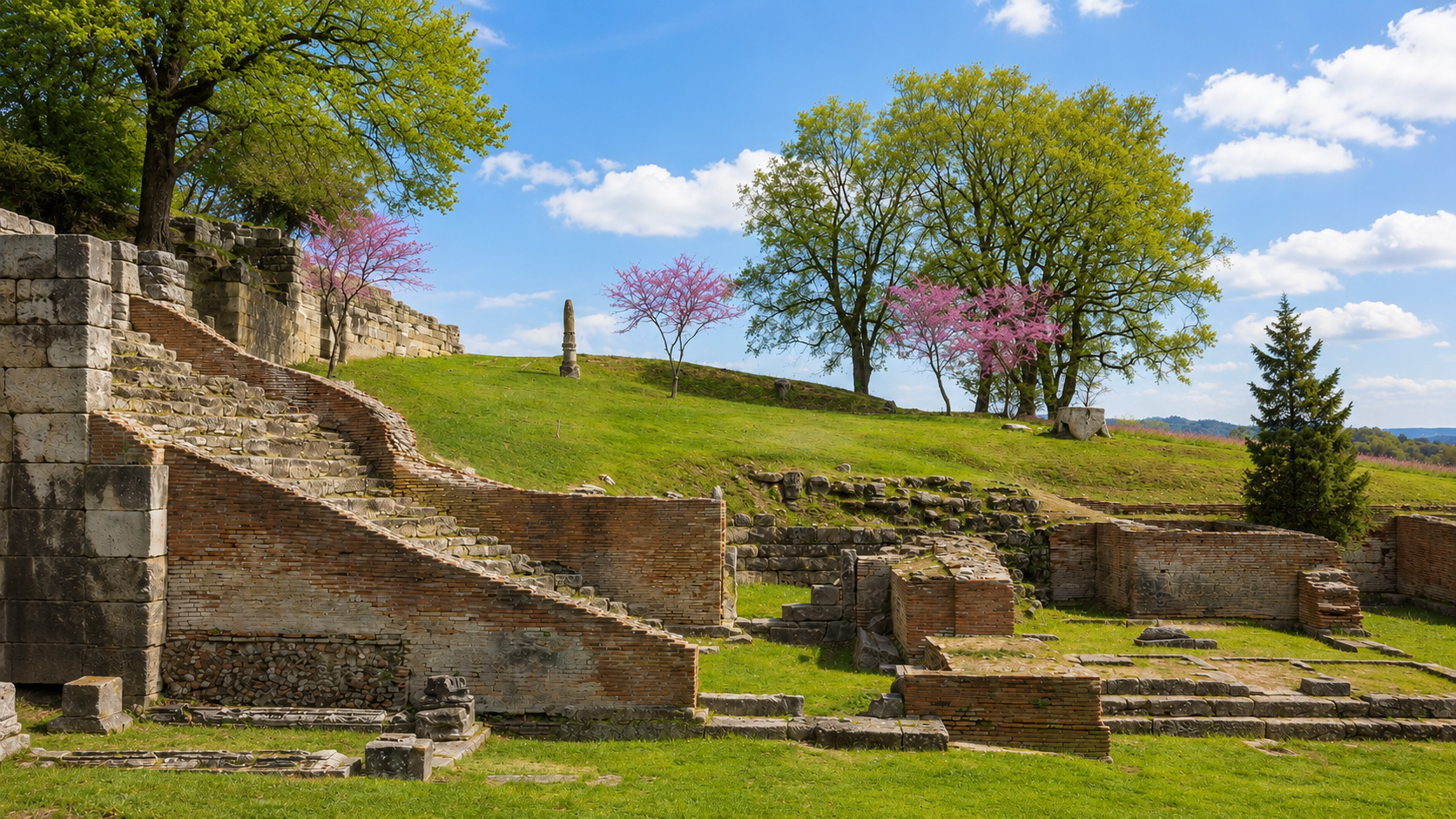
Apollonia Archaeological Park is much more than a collection of ruins — it’s a massive ancient city filled with monuments, temples, public spaces, and traces of daily life from more than 2,000 years ago. As you walk through the park, you’ll discover a combination of Greek, Roman, and medieval history surrounded by peaceful hills and panoramic landscapes.
- The Bouleuterion (Council Building)
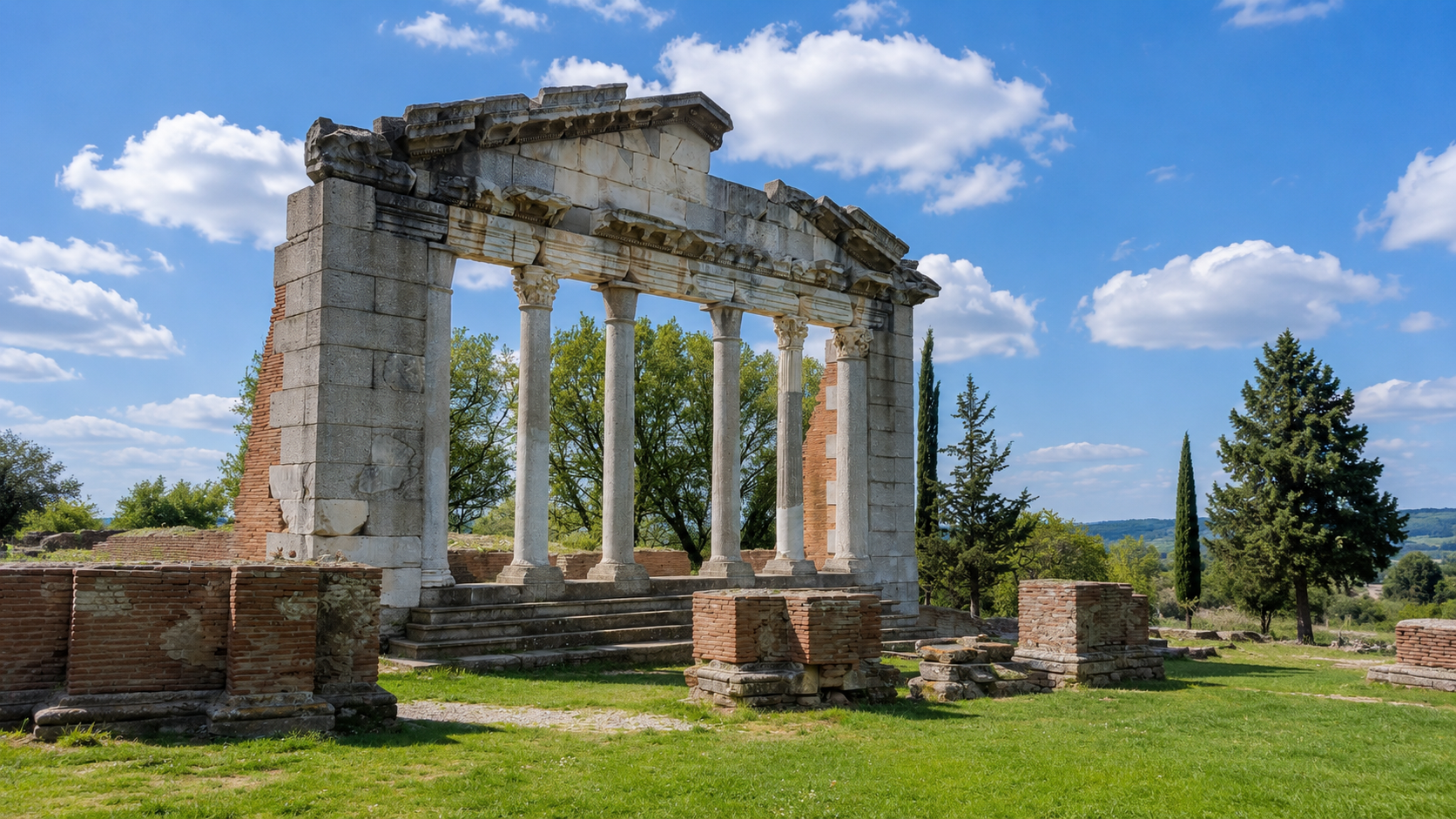
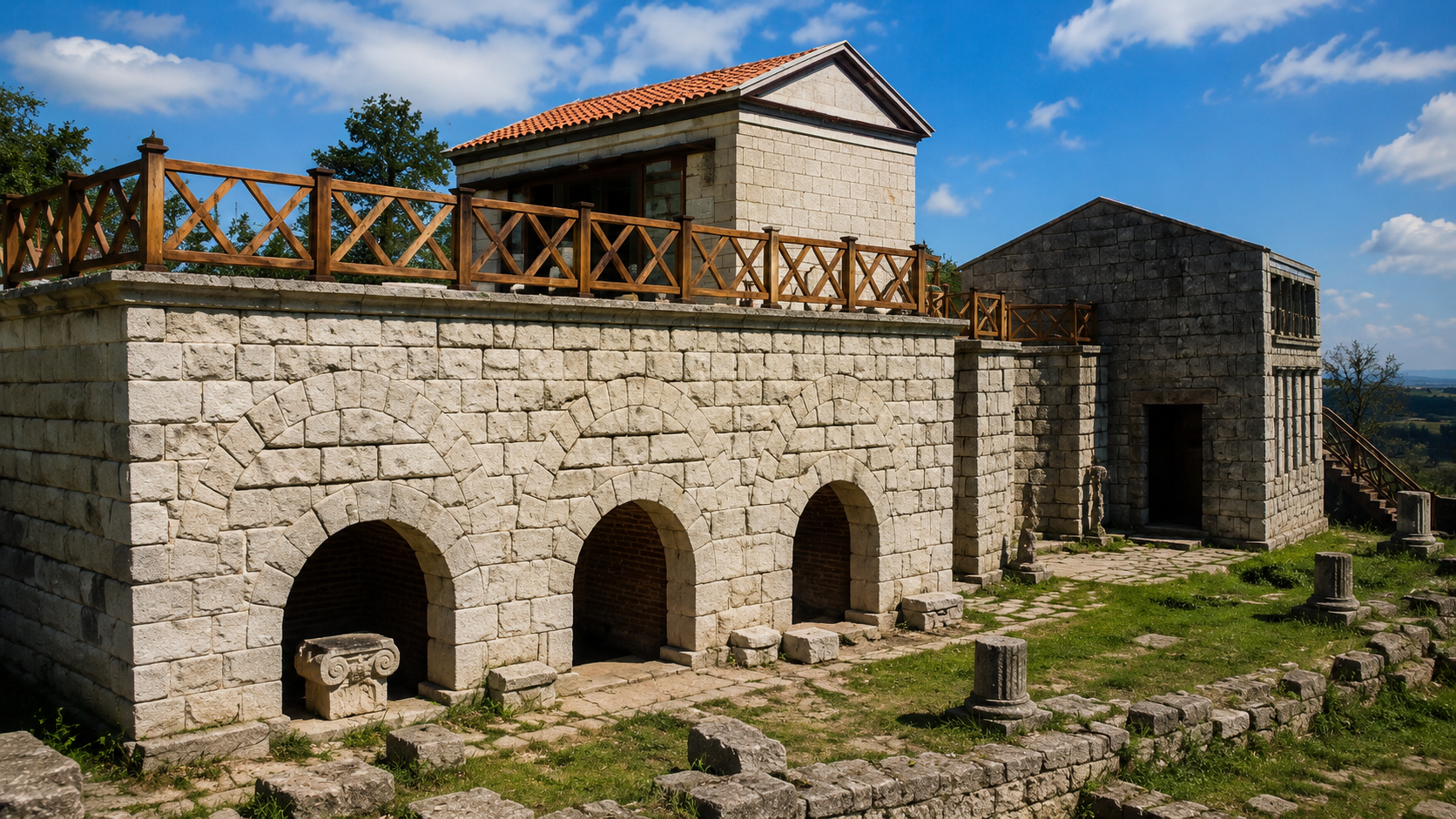
One of the most iconic structures in Apollonia, the Bouleuterion served as the political and administrative center of the city. Its impressive façade with restored columns remains one of the most photographed spots inside the archaeological park and offers a glimpse into the civic life of ancient Apollonia. - The Odeon
The Odeon of Apollonia is one of the park’s most fascinating monuments. Discovered in 1932 and fully excavated later in the 20th century, this small covered Roman theater could host around 650 spectators. Archaeologists believe it was used for musical performances, public gatherings, lectures, and cultural events, highlighting Apollonia’s importance as a major academic and cultural center during Roman times. - Sanctuary Near the Odeon
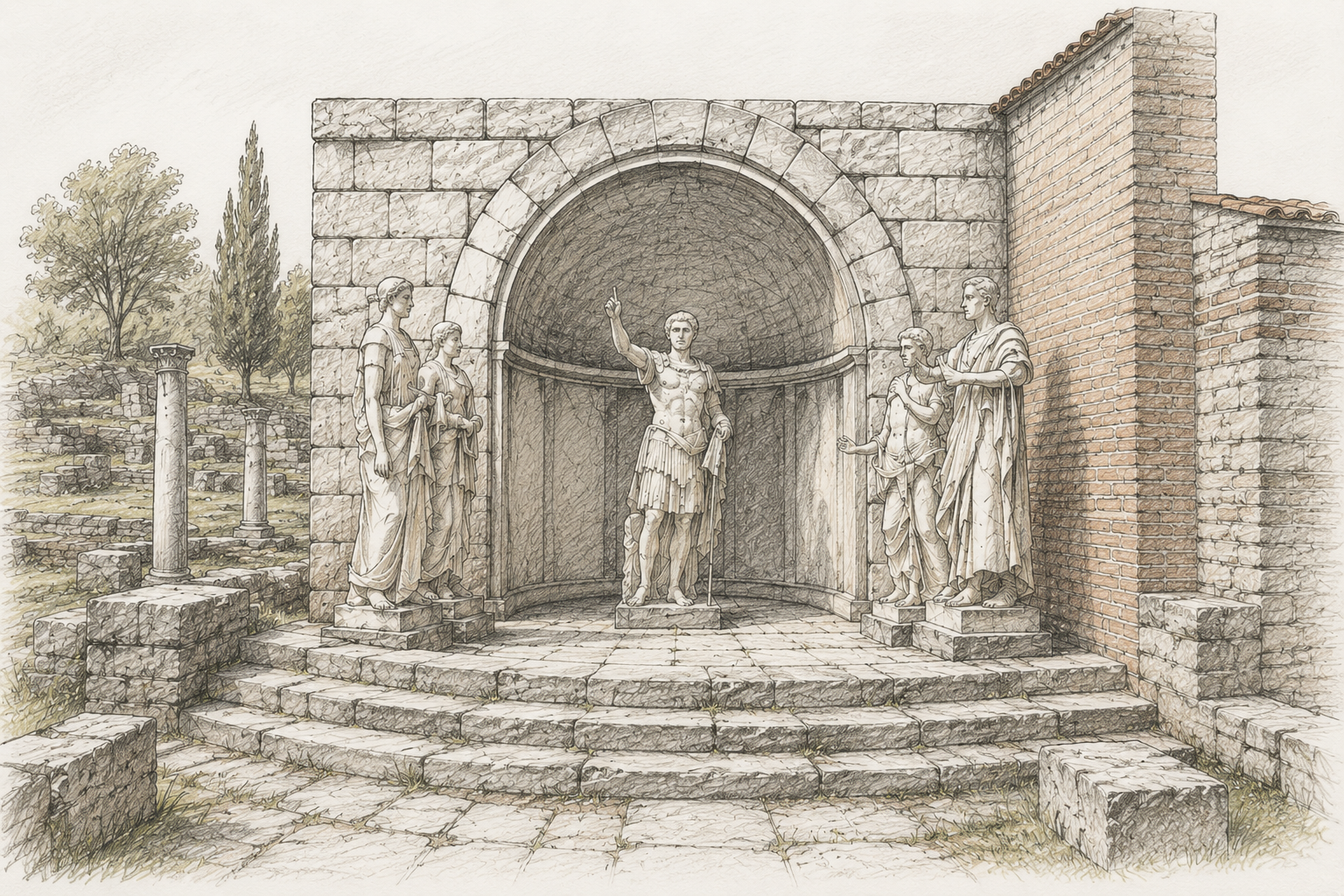
Close to the Odeon, visitors can also find the remains of a small sanctuary structure believed to be older than the theater itself. Historians suggest it may have been connected to religious ceremonies or imperial worship, adding another spiritual layer to the ancient city. - The Temple of Diana
Dedicated to the Roman goddess Diana, this temple stands among the central ruins of Apollonia and remains one of the most recognizable ancient structures in the park. Even in ruins, it reflects the city’s religious and architectural importance during antiquity.
- Storehouses & Cisterns
Another interesting area inside the park includes the ancient storehouses and cisterns, discovered during archaeological excavations in 1995. These structures were used for product storage and water management, demonstrating the advanced infrastructure and urban organization of ancient Apollonia. - The Great Stoa
The Great Stoa was a long public building used for gatherings, commerce, and everyday social life. Walking through this area helps visitors imagine the scale and organization of the ancient city during its peak. - The Nymphaeum
One of the most impressive engineering structures in Apollonia, the Nymphaeum was a monumental fountain system that once supplied water to the city. - Ancient Walls & Gates
Throughout the archaeological park, visitors can explore ancient walls, foundations, stone streets, and scattered Roman ruins that reveal the size and complexity of Apollonia. Many sections still preserve original architectural elements, creating an authentic atmosphere that makes the site feel like an open-air museum.
🏺 Apollonia Archaeological Museum
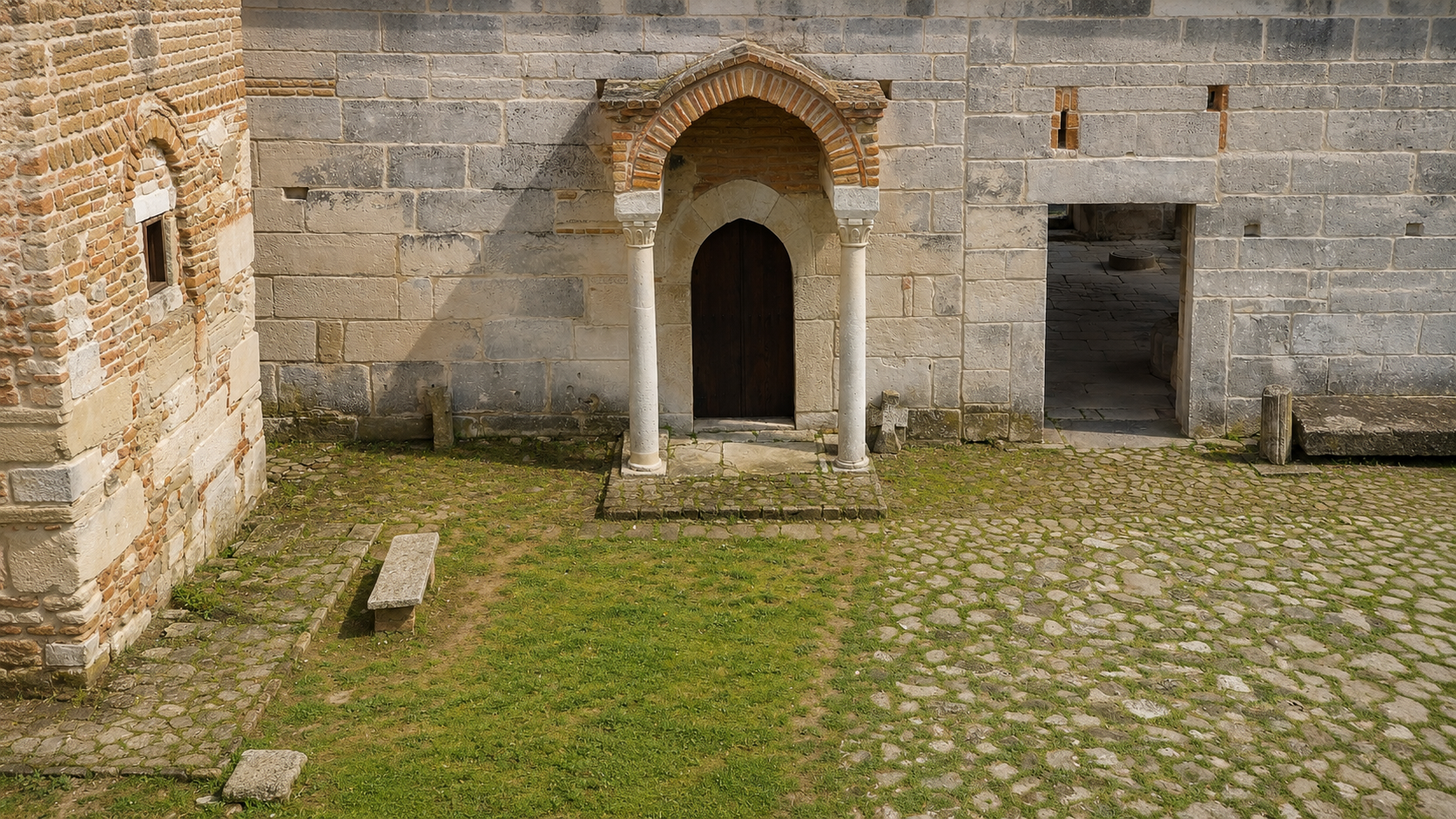
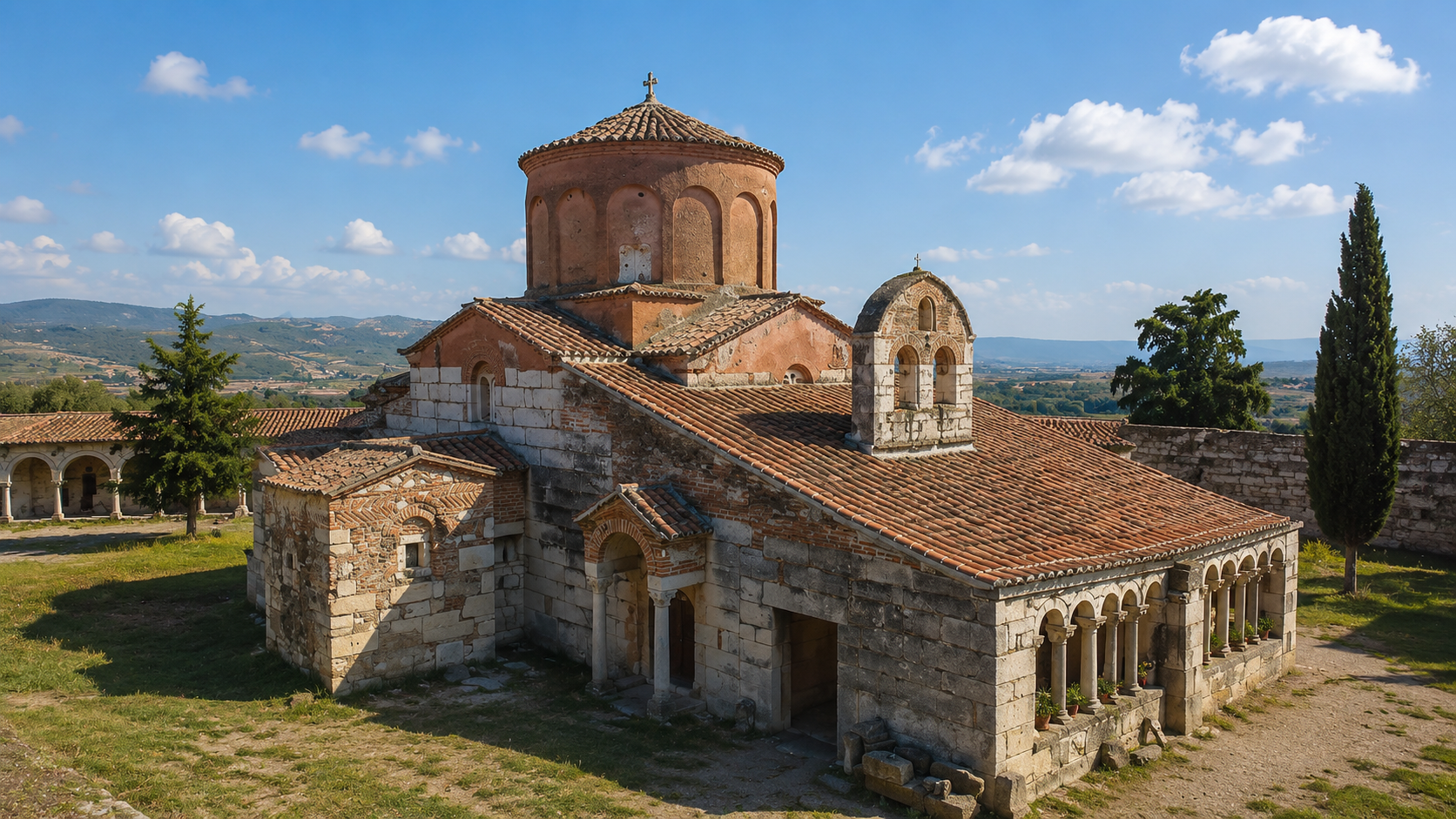
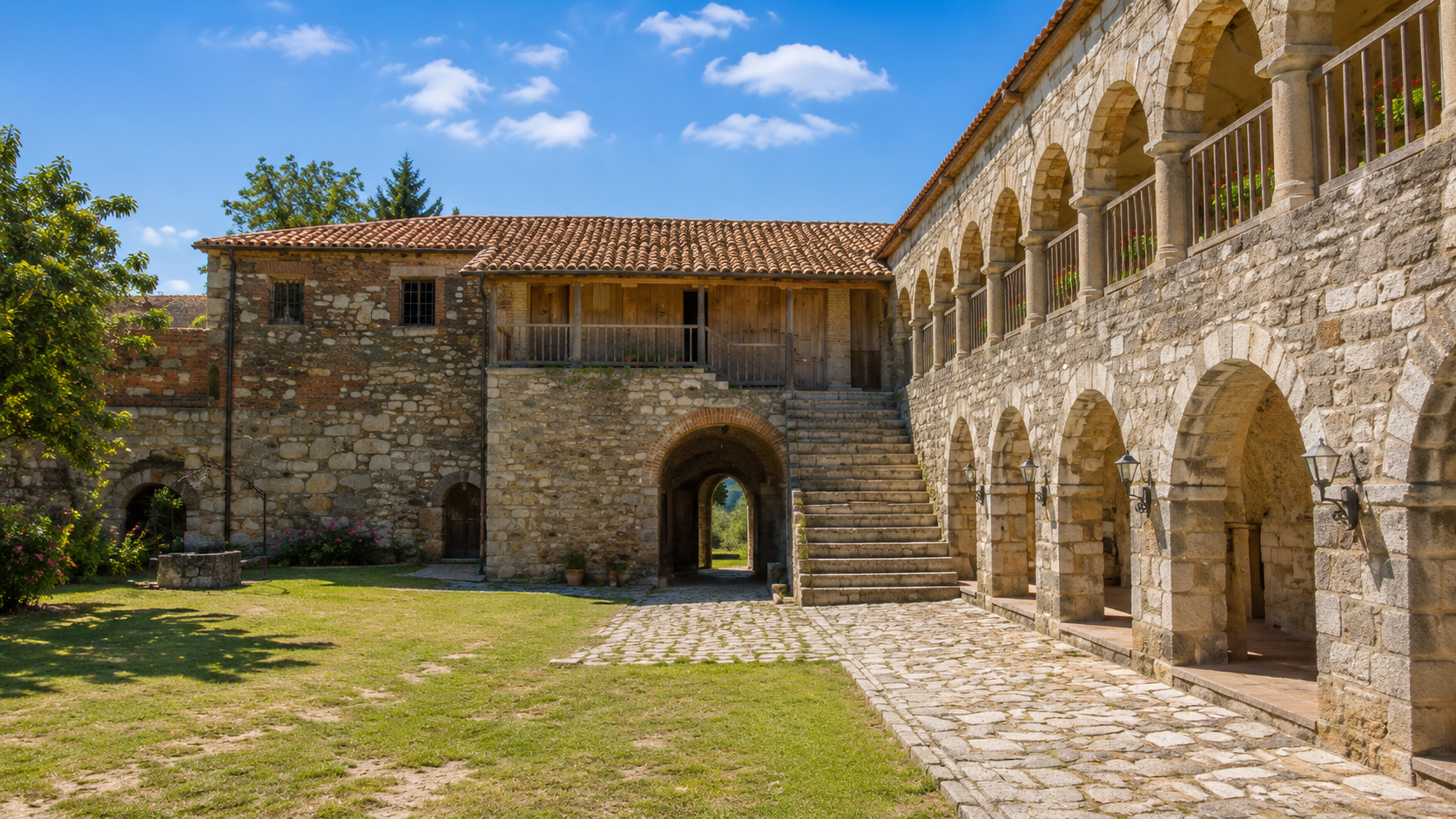
One of the highlights of visiting Apollonia is the Archaeological Museum, located inside the beautiful medieval Monastery of St. Mary. The combination of ancient ruins and Byzantine architecture creates one of the most unique cultural experiences in Albania.
Inside the museum, visitors can explore a rich collection of artifacts discovered during excavations across the ancient city, including statues, Roman sculptures, mosaics, ceramics, coins, and architectural fragments that reveal the daily life and artistic importance of Apollonia through different historical periods.
Beyond the exhibits themselves, the monastery is also worth visiting for its peaceful atmosphere, stone architecture, and historic church surrounded by the ruins of the archaeological park. For many visitors, this area becomes one of the most photogenic and memorable parts of the entire experience.
🚗 How to Visit Apollonia Archaeological Park
- By Car: Driving is the easiest and most convenient option. The roads are generally in good condition, and parking is available near the entrance.
- By Bus: You can take a bus from Tirana or Vlora to Fier. From Fier, you can continue by taxi or local transport toward Pojan and Apollonia.
- By Organized Tour: Many day tours from Tirana, Durres, and Vlora combine Apollonia with destinations such as Berat, Ardenica Monastery, or Karavasta Lagoon.
🎟 Tickets & Opening Hours
Entrance fees and opening hours may vary slightly depending on the season, but generally:
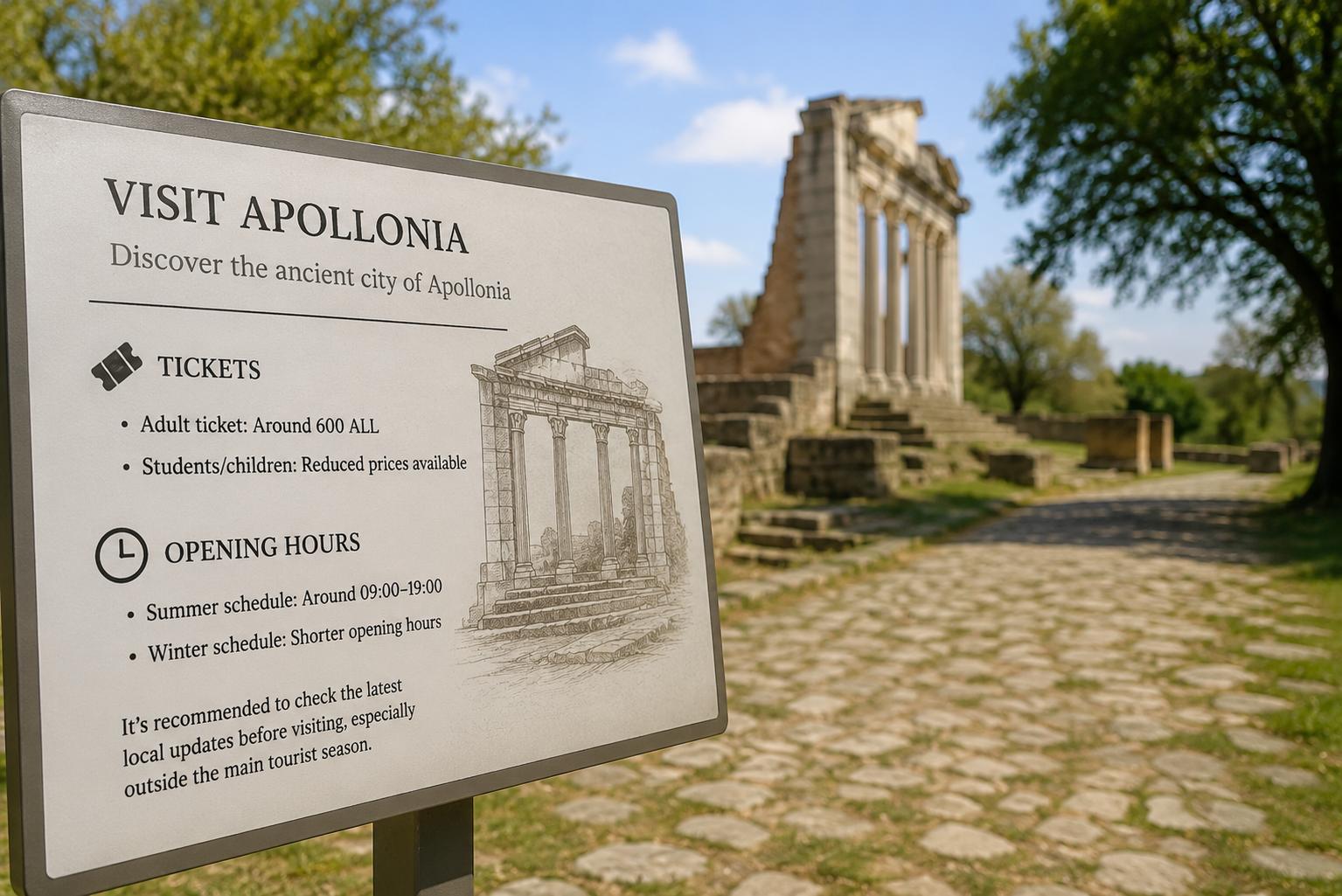
- 🎟 Adult ticket: Around 600 ALL
- 🎟 Students/children: Reduced prices available
- 🕒 Summer schedule: Around 09:00–19:00
- 🕒 Winter schedule: Shorter opening hours
It’s recommended to check the latest local updates before visiting, especially outside the main tourist season.
🌿 Best Time to Visit Apollonia
The best seasons to visit Apollonia are spring and autumn, when temperatures are more comfortable for walking. Summer can become very hot during midday because most of the archaeological park is exposed to the sun. For photography, early morning and late afternoon offer the best lighting conditions and atmosphere.
💡 Practical Tips for Visitors
- 👟 Wear comfortable walking shoes
- ☀️ Bring sunscreen and water
- 📸 Visit early or late for better photos
- ⏳ Plan at least 2–3 hours for the visit
- 🏛 Don’t skip the museum and monastery
- 🌿 Respect the archaeological ruins and avoid climbing on structures
✨ Why Apollonia is worth visiting?
Apollonia is one of those rare places where history, nature, and atmosphere come together perfectly.
Unlike crowded archaeological sites across Europe, Apollonia still feels peaceful and authentic. You can walk among ancient ruins, hear only the wind and birds around you, and truly imagine what life looked like thousands of years ago.
For travelers interested in culture, history, archaeology, photography, or unique experiences in Albania, Apollonia Archaeological Park is absolutely one of the country’s must-visit destinations.
❓ FAQ – Apollonia Archaeological Park
Apollonia is located near Fier in southwestern Albania, close to the village of Pojan.
Yes — it’s considered one of the most important archaeological parks in Albania and one of the country’s best historical attractions.
The standard entrance ticket is usually around 600 ALL, although prices may vary slightly depending on the season.
Most visitors spend between 2 and 4 hours exploring the archaeological park and museum.
Yes, but it’s easier with a car. Public transport usually requires first reaching Fier and then taking a taxi or local bus.
Main highlights include the Bouleuterion, Odeon, Temple of Diana, Monastery of St. Mary, and the Archaeological Museum.
Apollonia is one of the most important archaeological parks in Albania, combining ancient Greek and Roman ruins, beautiful landscapes, and centuries of history in one unique destination near Fier.
Interested in Albania’s spiritual heritage too? Read our guide: “Monasteries in Albania: Top Spiritual Sites, History & Travel Tips.”