

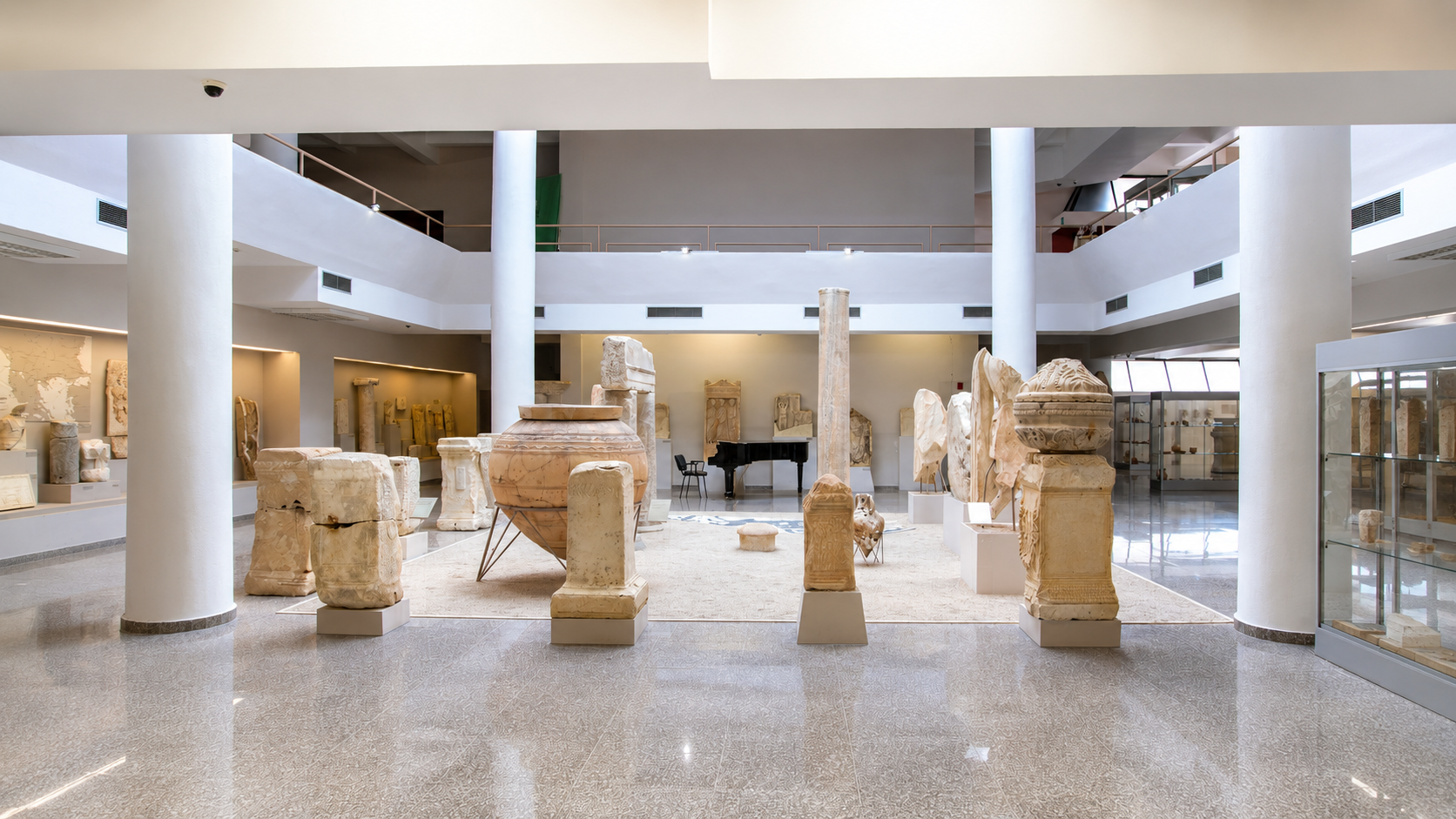
If you want to understand the ancient history of Albania, there is no better place to start than the Archaeological Museum of Durres. Located along the seaside promenade of Durres, this museum is the largest archaeological institution in the country and one of the most important cultural attractions in Albania.
Home to thousands of artifacts discovered in the ancient city of Dyrrhachium, the museum tells the story of Durres through Illyrian, Greek, Roman, Byzantine, and Ottoman periods. From ancient mosaics and Roman funerary stelae to rare sculptures and coins, the museum offers one of the richest archaeological collections in the Balkans.
After a major restoration supported by the European Union through the EU4Culture project, the museum fully reopened in 2026 with redesigned exhibition spaces, modern technology, and new educational experiences for visitors.
📑 Table of Contents
- History of the Museum
- What You Will See Inside
- The Beauty of Durrës Mosaic
- Museum Renovation and Modernization
- Visitor Information
- Nearby Attractions
- FAQ – Archaeological Museum of Durrës
History of the Museum
The Archaeological Museum of Durrës was officially founded on March 13, 1951, under the direction of archaeologist Vangjel Toçi. It originally developed from the Historical and Natural Museum established in 1945 and quickly became Albania’s most important archaeological institution.
Over the decades, archaeological excavations in and around ancient Durrës continuously expanded the museum’s collection. The city of Durrës, known in antiquity as Dyrrhachium, was one of the most significant ports of the Roman Empire in the Adriatic, making it extremely rich in archaeological discoveries.
The museum suffered severe damage during the 1997 unrest in Albania, when many cultural institutions were looted and vandalized. Years later, the 2019 earthquake caused additional structural damage to the building, leading to another major restoration campaign.
Following a large-scale reconstruction supported by the EU4Culture program, the museum reopened fully in 2026 with new exhibition halls, improved accessibility, climate-controlled preservation systems, and interactive educational spaces.
What You Will See Inside
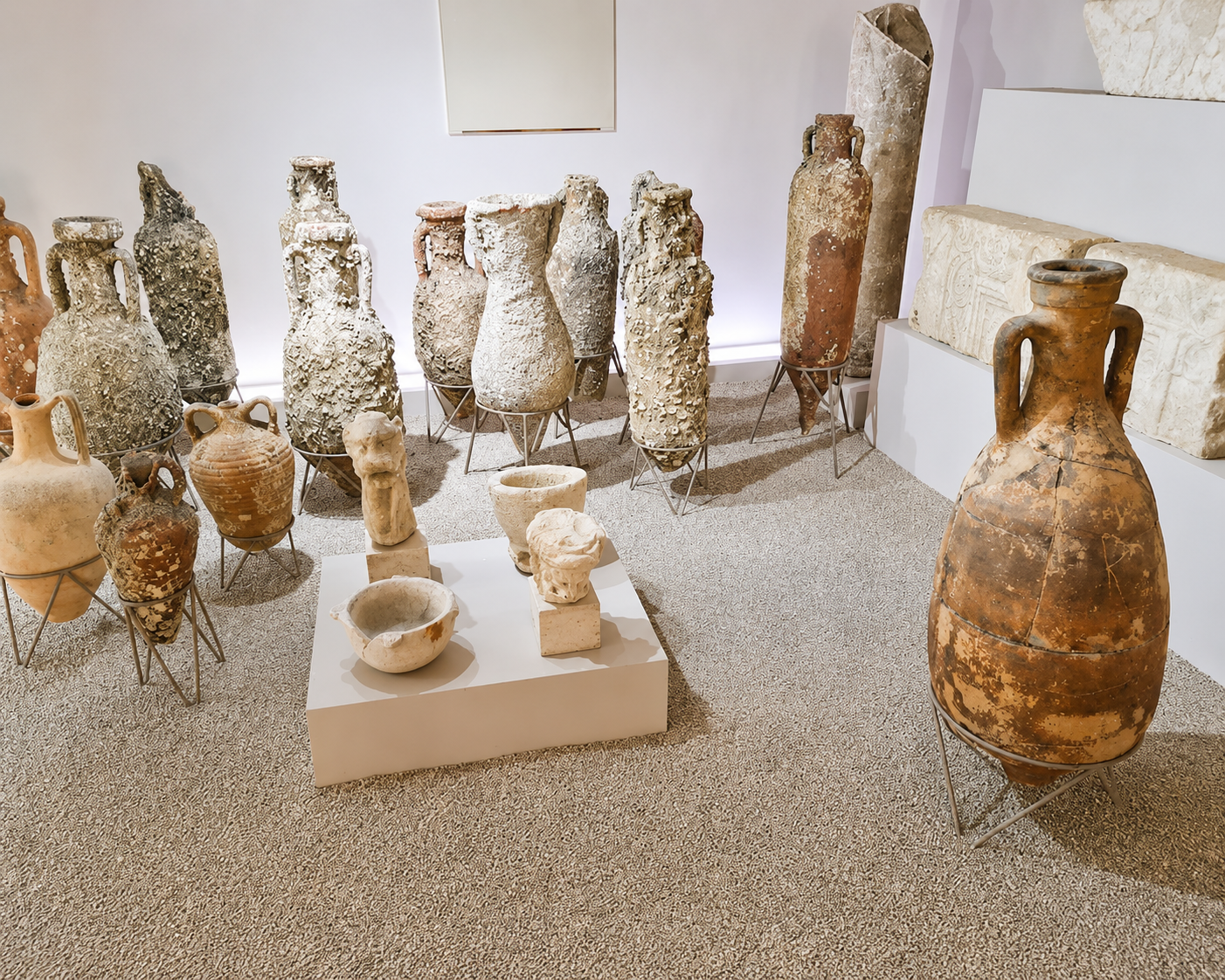
The Archaeological Museum of Durrës displays approximately 3,200 archaeological artifacts, carefully organized in chronological order from prehistory to the medieval period. As visitors move through the museum, they experience the evolution of one of the oldest and most important cities in the Adriatic region through objects discovered during decades of archaeological excavations in ancient Dyrrachium.
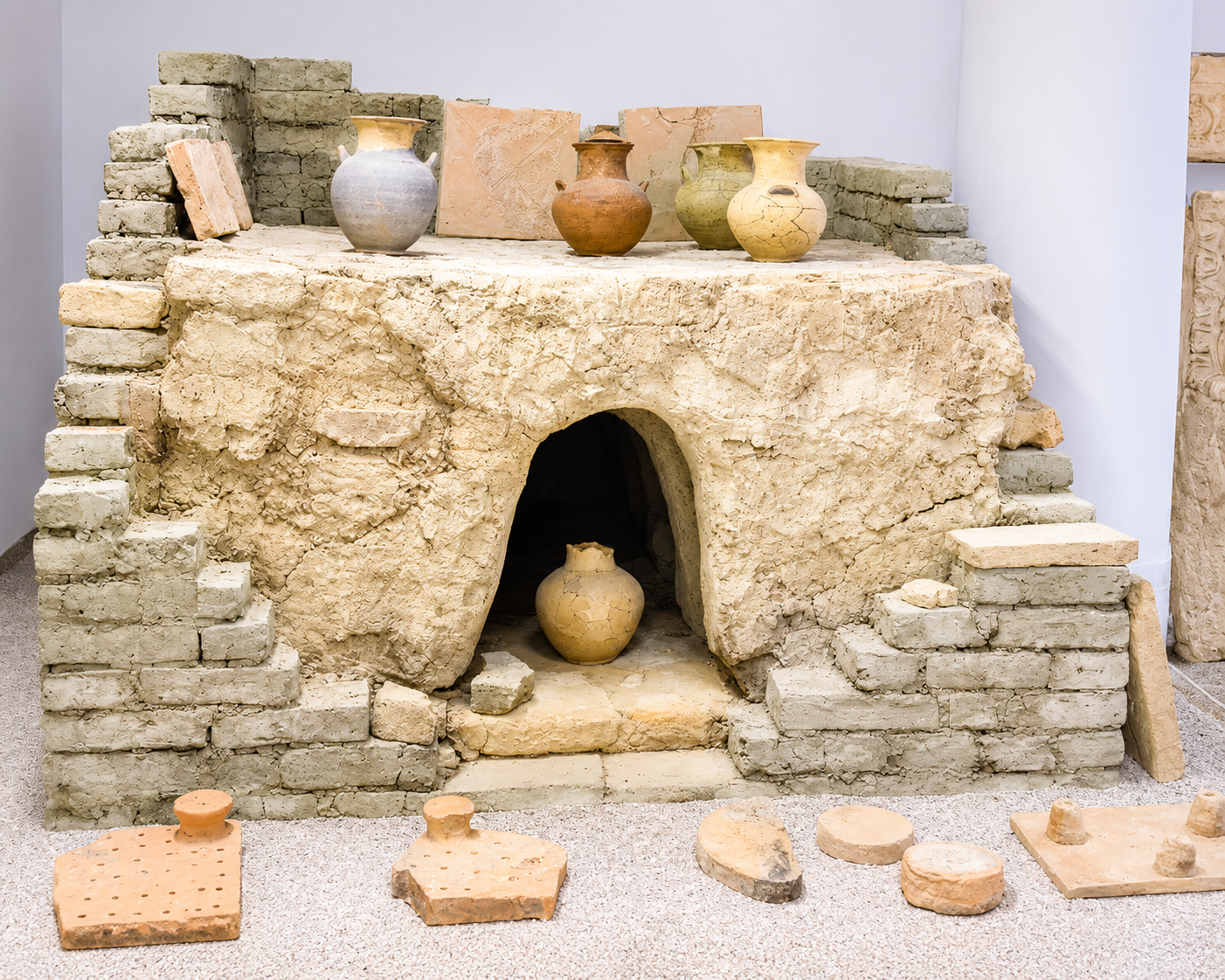
The first exhibition halls introduce the Illyrian and Ancient Greek periods, presenting pottery, ceramic vessels, weapons, ornaments, and everyday objects connected to the earliest civilizations that inhabited the area. These collections help visitors understand the strategic importance of Durrës as an ancient settlement and trading center connected to the wider Mediterranean world.
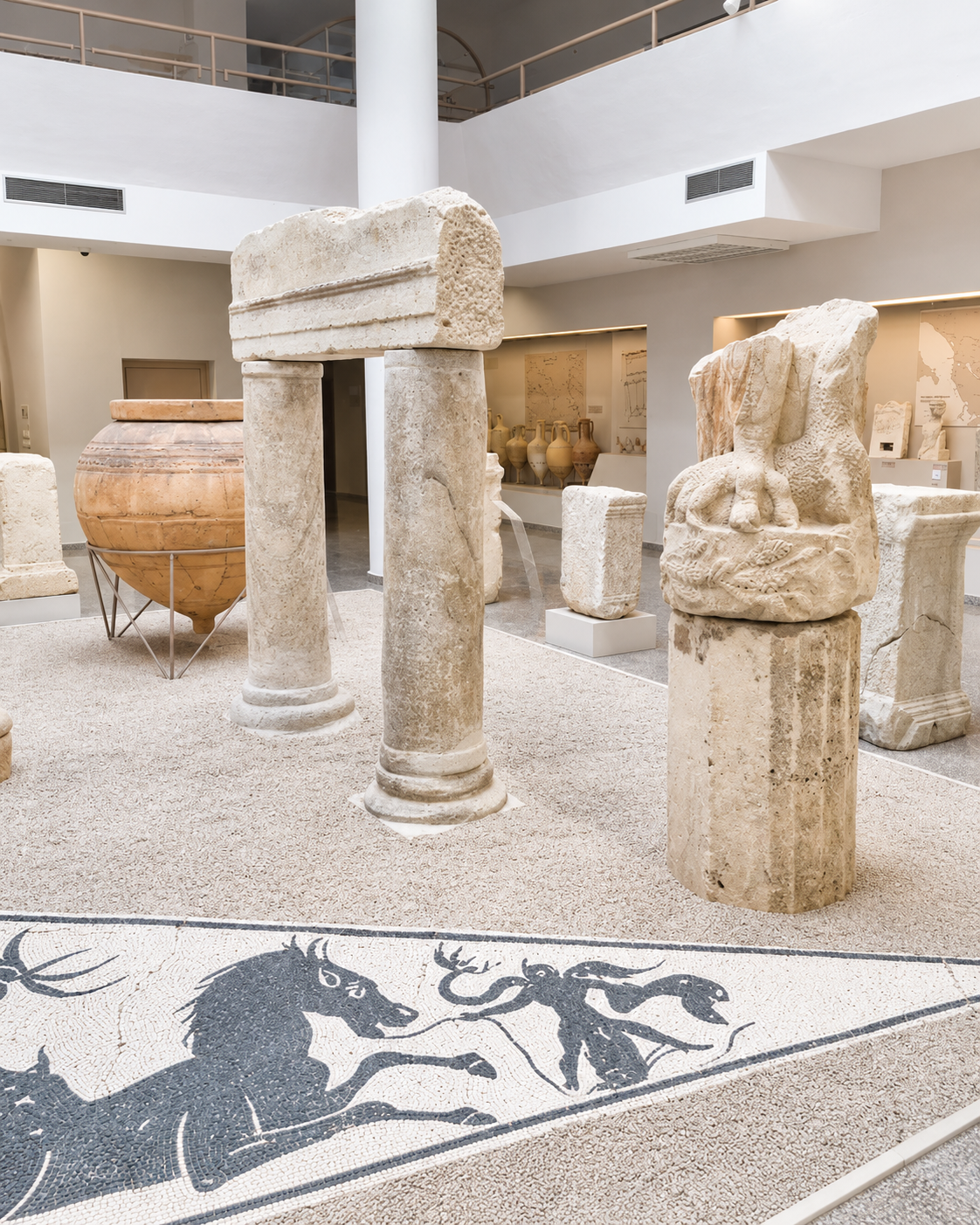
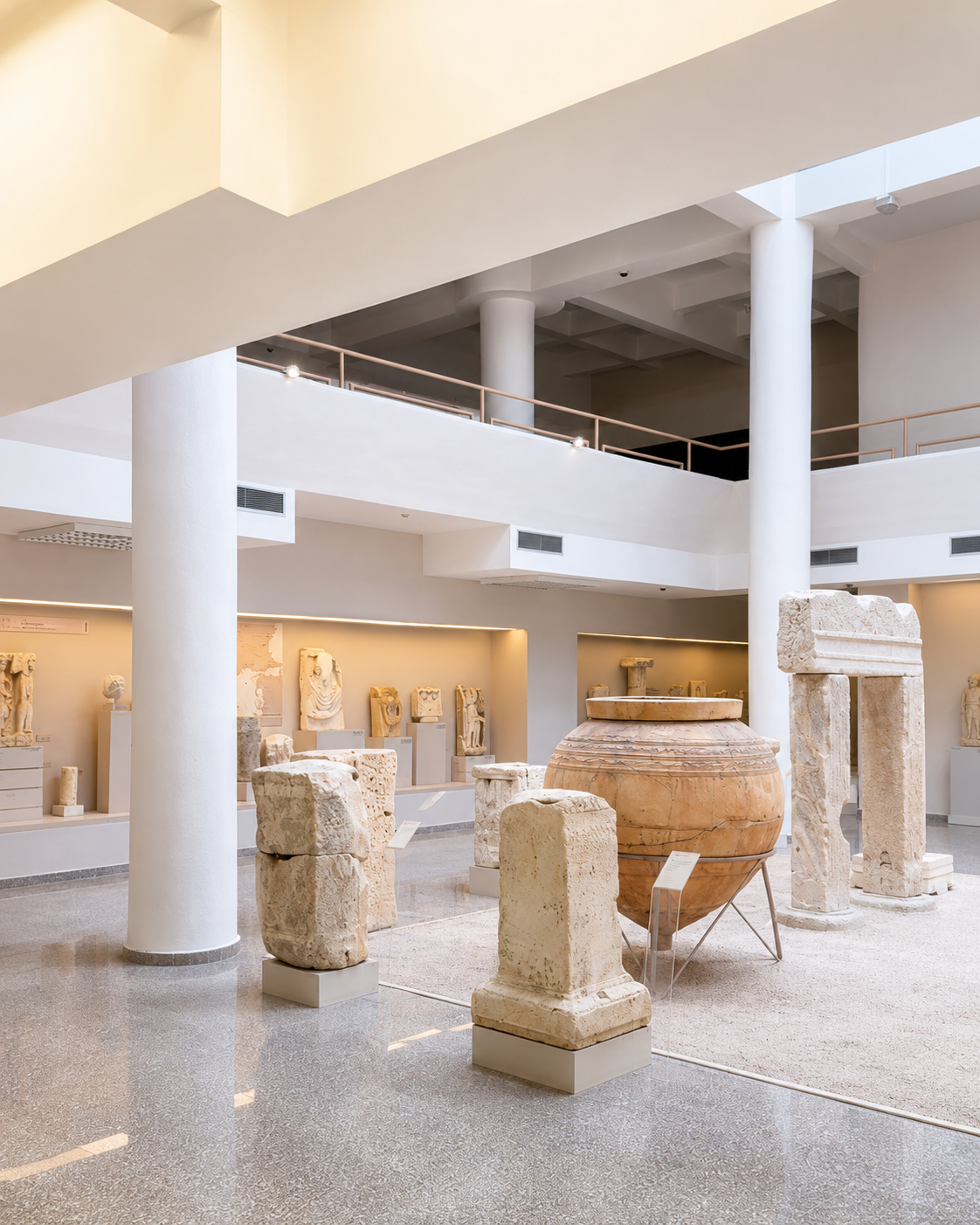
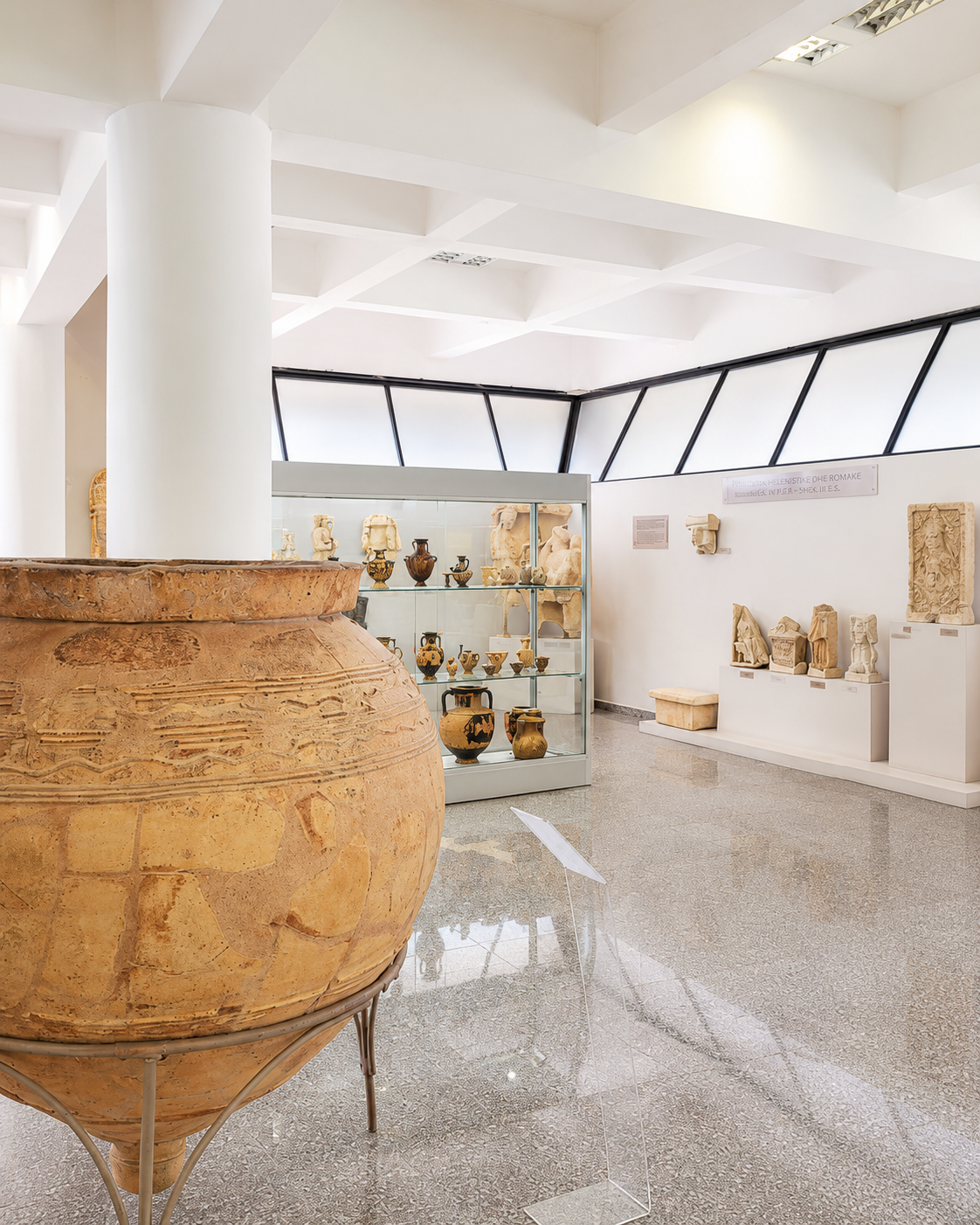
One of the most impressive sections of the museum is dedicated to the Roman period, when Dyrrachium became one of the most significant ports of the Roman Empire in the Balkans. This part of the museum showcases richly decorated marble funerary stelae, massive stone sarcophagi carved with detailed reliefs, ancient coins, jewelry, sculptures, and fragments of Roman temples discovered throughout the city.
Visitors can also admire remarkable Roman mosaics and a unique collection of miniature busts representing the goddess Venus, evidence of the important religious and cultural role her cult once had in ancient Durrës. Many of these artifacts reveal the prosperity and cosmopolitan nature of the city during antiquity.
The upper floors continue the historical journey through the Byzantine and medieval periods, displaying mosaics, icons, ceramics, coins, and various objects from the Byzantine and Ottoman eras. Together, these collections illustrate how Durrës transformed across centuries under different empires while remaining one of Albania’s most important cultural and trading centers.
The Beauty of Durrës Mosaic
The “Beauty of Durrës” is not only the most famous object inside the Archaeological Museum of Durrës, but also one of the most important archaeological treasures ever discovered in Albania. Known in Albanian as “Bukuroshja e Durrësit,” the mosaic dates back to the 4th century BC, making it more than 2,300 years old and one of the earliest known mosaics in the Adriatic region.
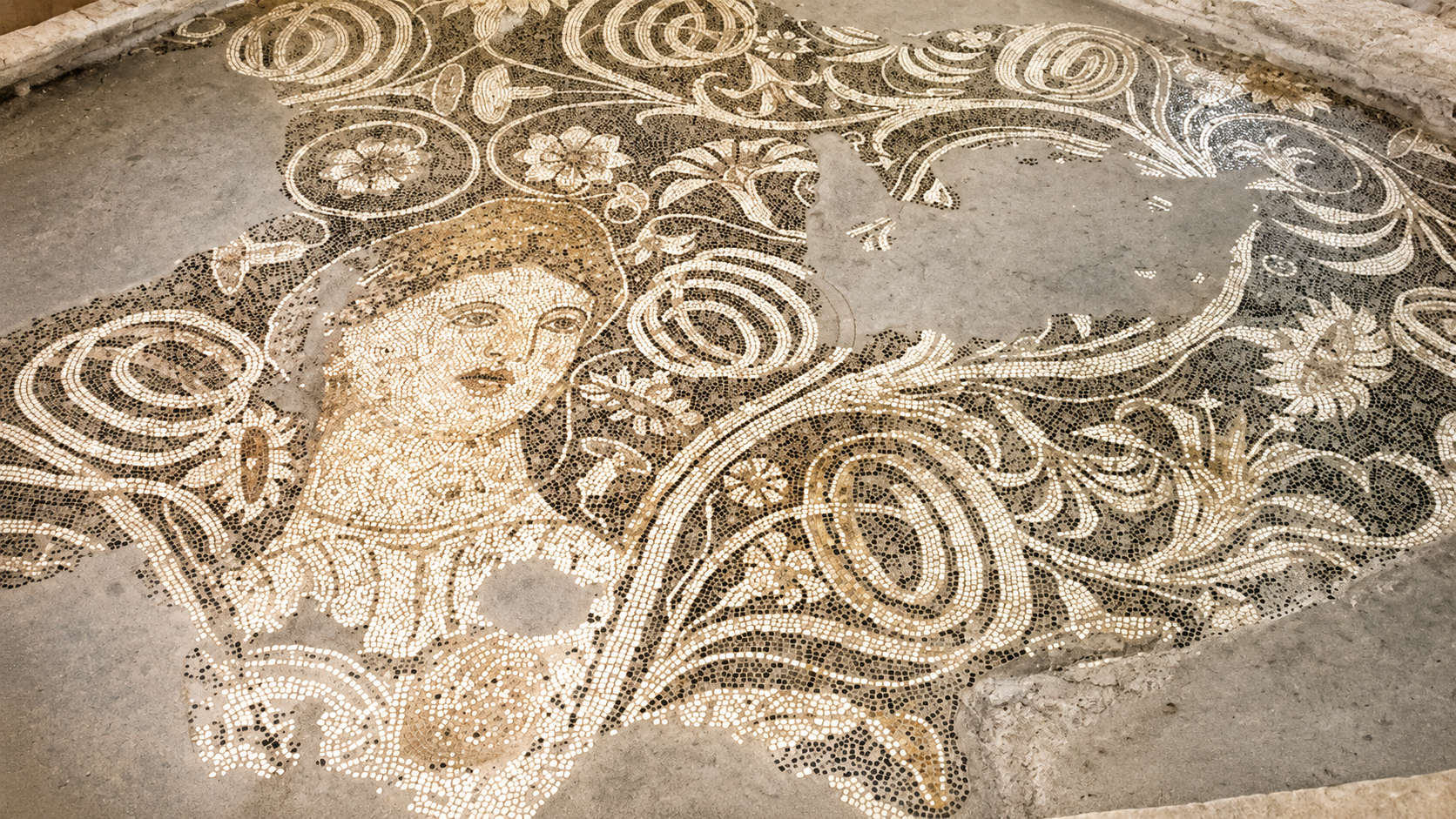
The mosaic portrays the elegant portrait of a young woman surrounded by colorful floral elements and decorative motifs. What makes it particularly unique is the extraordinary level of artistic detail achieved using thousands of small pebbles and stones, a technique characteristic of ancient Greek and Hellenistic mosaic art. Archaeologists believe the artwork once decorated the floor of a luxurious ancient villa in Dyrrachium, reflecting the wealth and cultural sophistication of the city during antiquity.
It was first discovered in 1916 by Austrian archaeologists during World War I excavations in Durrës. However, the mosaic gained wider recognition decades later after Albanian archaeologist Vangjel Toçi helped bring attention to its historical importance in the 1950s. Over time, it became one of the strongest visual symbols of Albanian archaeology and ancient heritage.
Because of its fragility and historical value, the mosaic spent many years outside Durrës for preservation and exhibition purposes. Its official return to the Archaeological Museum of Durrës in April 2026 was considered one of the most significant moments of the museum’s reopening and restoration project. Today, it stands as one of the museum’s central attractions and a masterpiece that connects visitors directly with the artistic and cultural world of ancient Dyrrachium.
Museum Renovation and Modernization
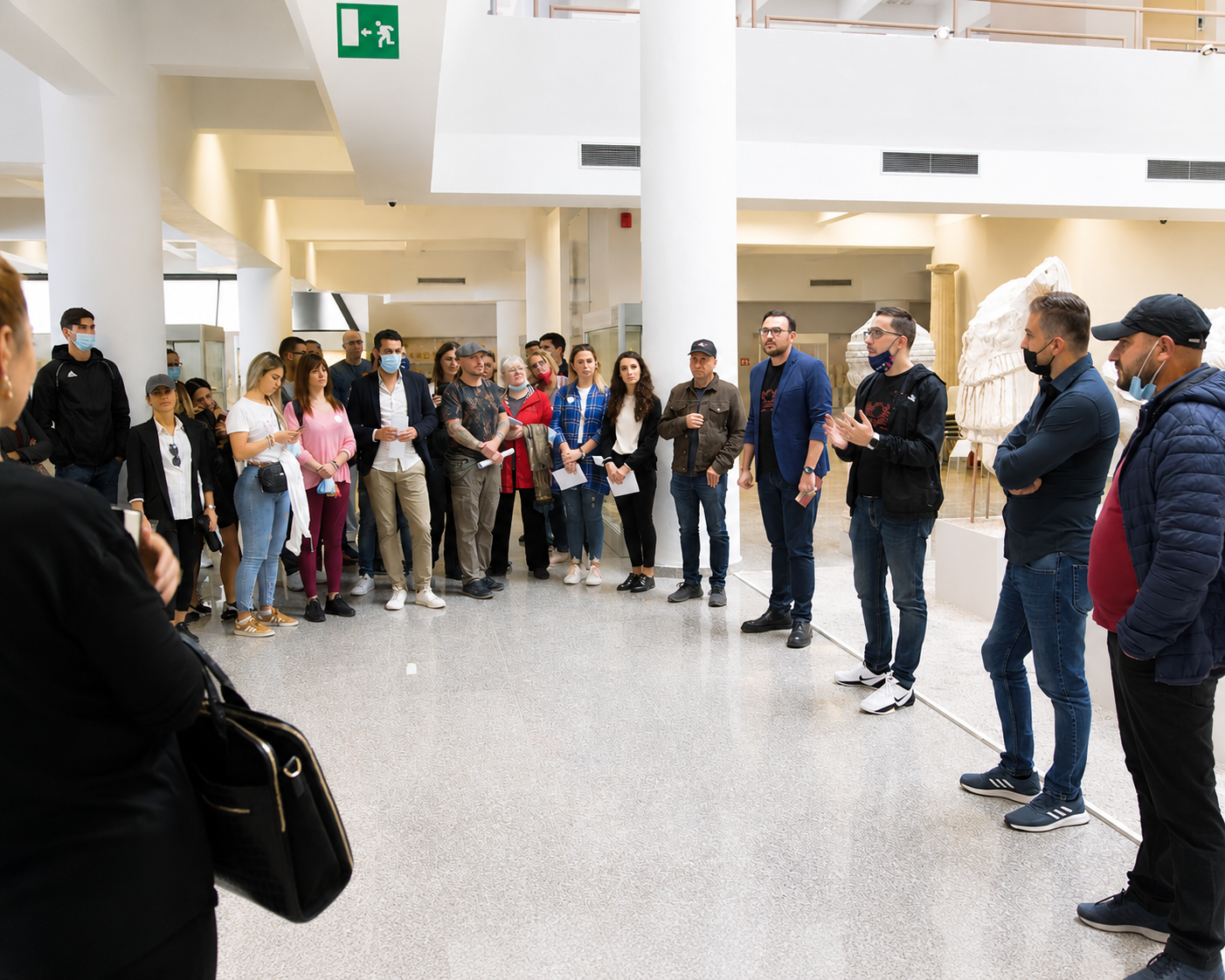
The recent EU-funded restoration transformed the Archaeological Museum of Durrës into a more modern and accessible cultural center.
New additions include:
- Interactive multimedia exhibitions
- Climate-controlled artifact preservation systems
- Educational spaces for children and schools
- Accessibility features for visually and hearing-impaired visitors
- Future plans for virtual reality experiences and digital guides
- Improved visitor infrastructure and exhibition design
The museum now aims to meet international standards while becoming one of Albania’s most important cultural tourism destinations.
Visitor Information
Opening Hours
- June – September: 09:00 – 19:00 (Monday–Sunday)
- October – May: 09:00 – 16:00 (Tuesday–Sunday)
- Winter Mondays: Closed
Ticket Prices
- Adults: around 400 Lek
- Groups (12+ visitors): around 300 Lek per person
- Students, pensioners, disabled visitors: around 200 Lek
- Young children may enter free or with reduced tickets
Nearby Attractions
One of the best things about visiting the museum is that many of Durrës’ main attractions are located nearby.
- Durrës Amphitheatre
- Venetian Tower
- Byzantine Walls
- Roman Baths
- Durrës Castle
- Seaside promenade and beaches
You can easily combine the museum with a full historical walking tour of Durrës.
FAQ – Archaeological Museum of Durrës
It is known for being the largest archaeological museum in Albania and for preserving artifacts from the ancient city of Dyrrhachium.
Most visitors spend between 1 and 2 hours exploring the museum.
The most famous piece is “The Beauty of Durrës,” an ancient mosaic over 2,300 years old.
Yes. The museum includes educational spaces, multimedia exhibits, and accessible experiences designed for families and school groups.
The Archaeological Museum of Durrës offers one of the most complete journeys through Albania’s ancient history, combining Roman artifacts, rare mosaics, and centuries of Mediterranean heritage in the heart of Durrës.
For more cultural destinations, also explore our guide to 10 Museums to Visit in Albania | A Complete Cultural Guide (2026).