

The Ethnographic Museum of Vlora is one of the most fascinating cultural attractions in southern Albania. Located in the heart of the city’s historic district, the museum offers visitors a unique opportunity to explore the traditional lifestyle, craftsmanship, and cultural identity of the Vlora region.
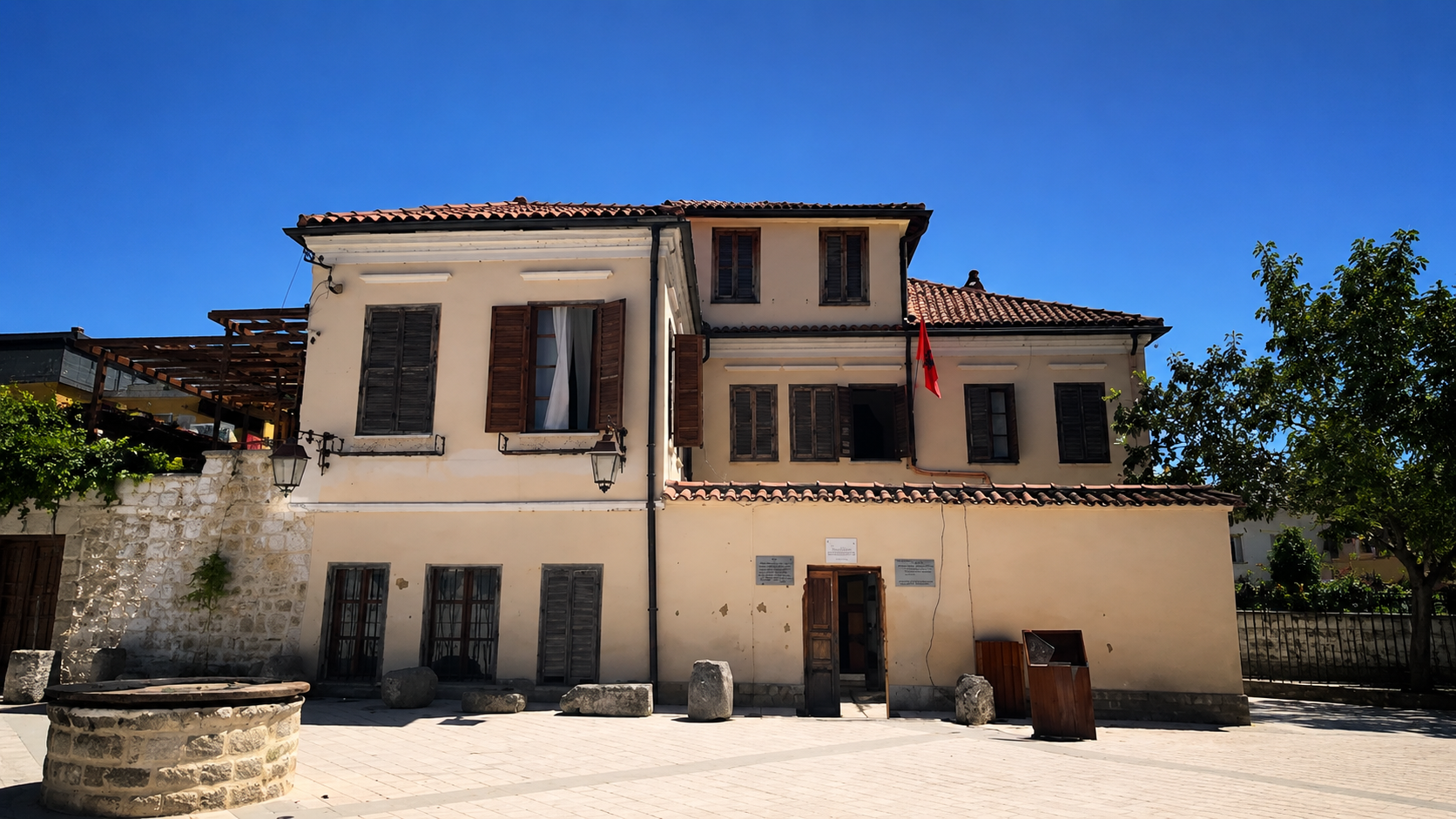
Unlike many museums where the exhibits are the main attraction, the Ethnographic Museum of Vlora is special because the building itself is part of the story. Housed inside a beautifully preserved 19th-century townhouse on Justin Godard Street, the museum combines architecture, history, and local traditions in a single experience.
Whether you are interested in Albanian heritage, traditional costumes, local crafts, or the history of Vlora, this museum provides valuable insight into the daily life of generations that shaped one of Albania’s most important coastal cities.
Table of Contents
- Why Visit the Ethnographic Museum of Vlora?
- The History Behind the Museum
- What Can You See Inside?
- Architecture Worth Admiring
- The Museum’s Role in Vlora Today
- Opening Hours
- How to Find the Ethnographic Museum of Vlora?
Why Visit the Ethnographic Museum of Vlora?
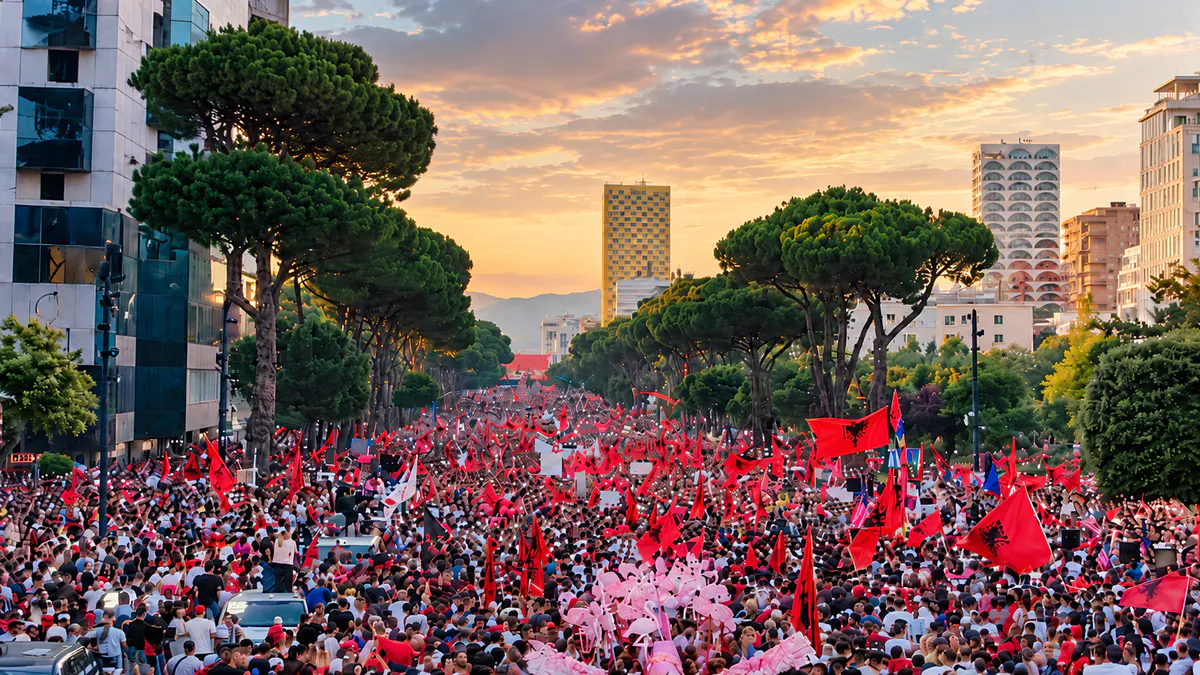
Most visitors know Vlora for its beaches, the Albanian Riviera, and its role in the declaration of Albanian Independence. However, the city also preserves a rich cultural heritage that can be discovered through its museums.
The Ethnographic Museum helps visitors understand how people in the region lived, worked, dressed, and celebrated important moments of life long before modern tourism transformed the coastline.
A visit offers:
- Traditional costumes from Vlora and surrounding regions
- Exhibits dedicated to local craftsmanship and trades
- Historic household objects and furniture
- Displays related to fishing, agriculture, and olive oil production
- A chance to explore one of Vlora’s most important historic buildings
The History Behind the Museum
The museum is located inside a traditional urban residence dating back to the mid-19th century. The building is considered one of the most valuable examples of Vlora’s historic architecture and forms part of the city’s protected cultural heritage district. Its importance extends far beyond architecture.
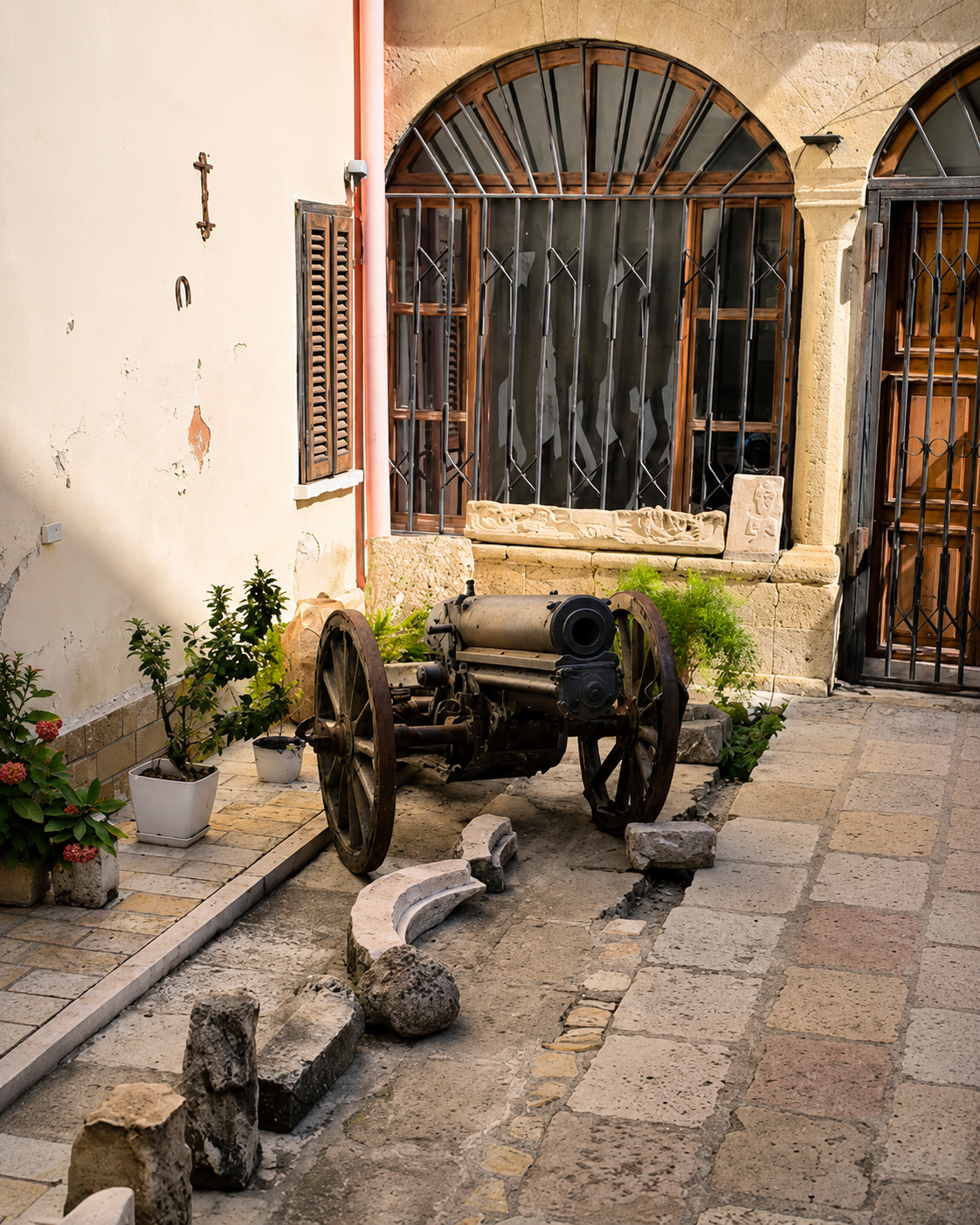
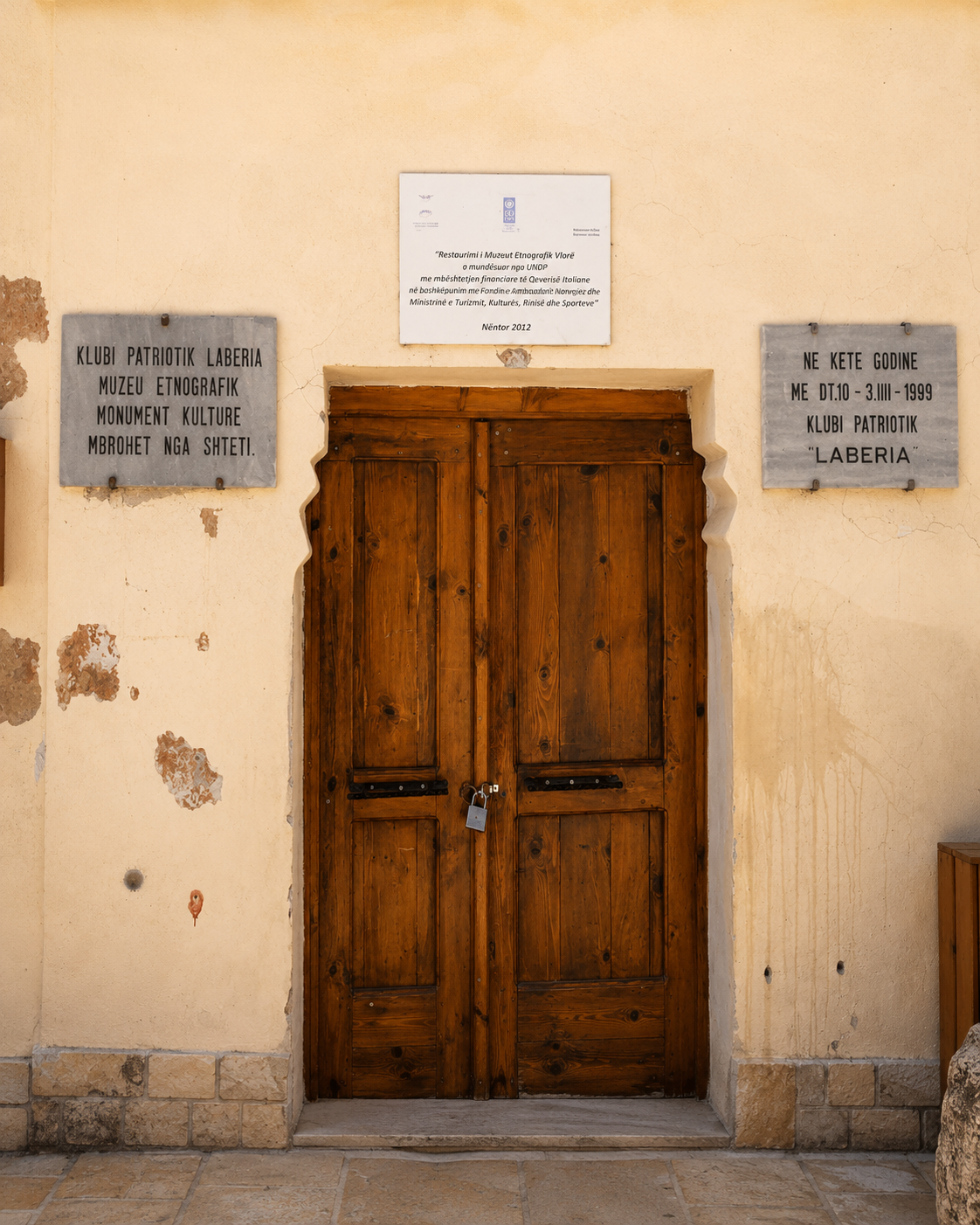
In 1908, the building became the headquarters of the Patriotic Club “Labëria,” one of the most influential patriotic organizations in pre-independence Albania. Historical sources connect the club to the Albanian National Awakening movement and the promotion of Albanian language and culture.
The building also played a role in Vlora’s early cultural life. In 1909, it hosted the theatrical performance of “The Death of Pyrrhus,” considered one of the earliest theatrical productions staged in the city.
The Ethnographic Museum itself was established in 1982, coinciding with the 70th anniversary of Albania’s Declaration of Independence.
What can you see inside?
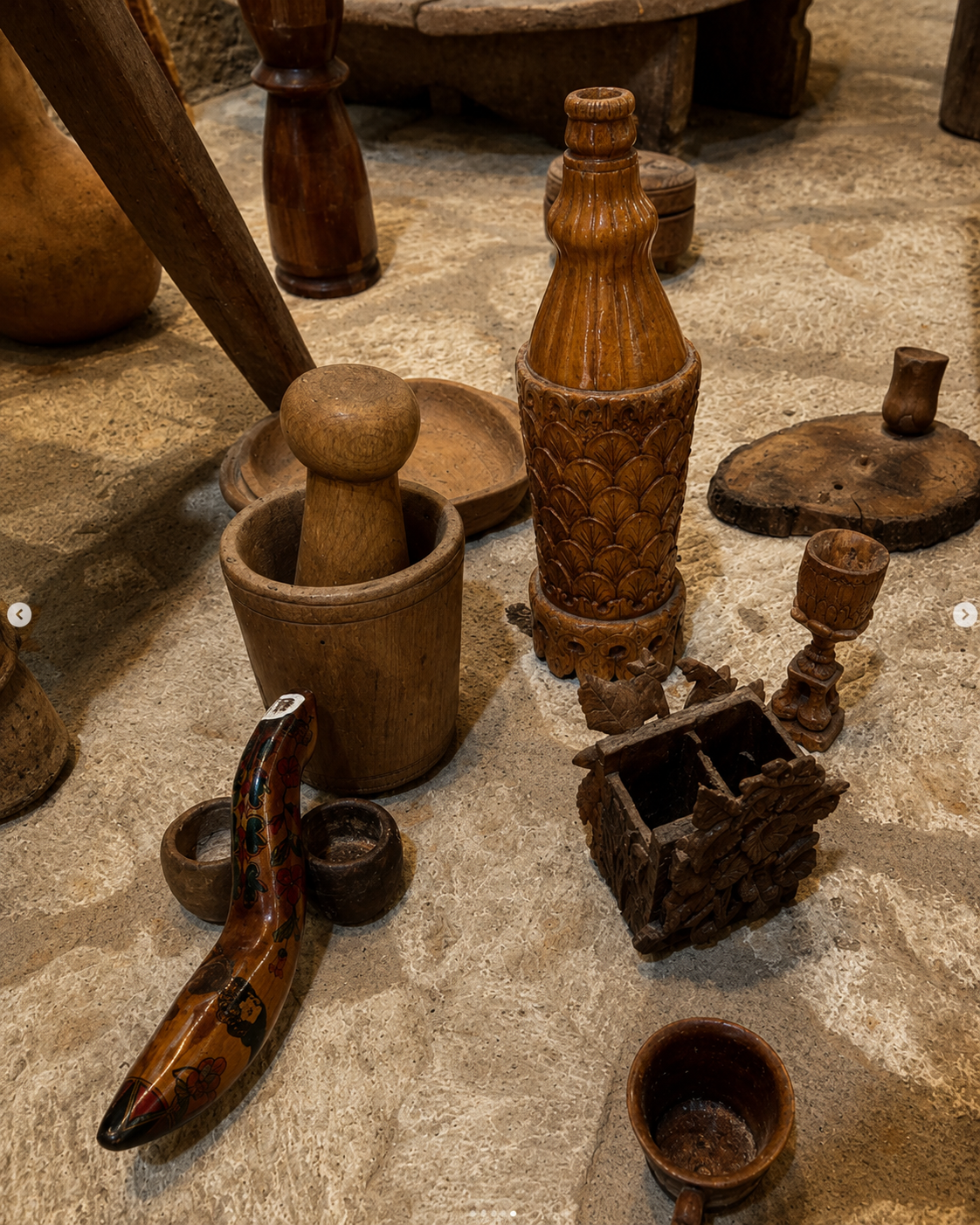
The museum’s collections focus on the material culture of Vlora and its surrounding regions.
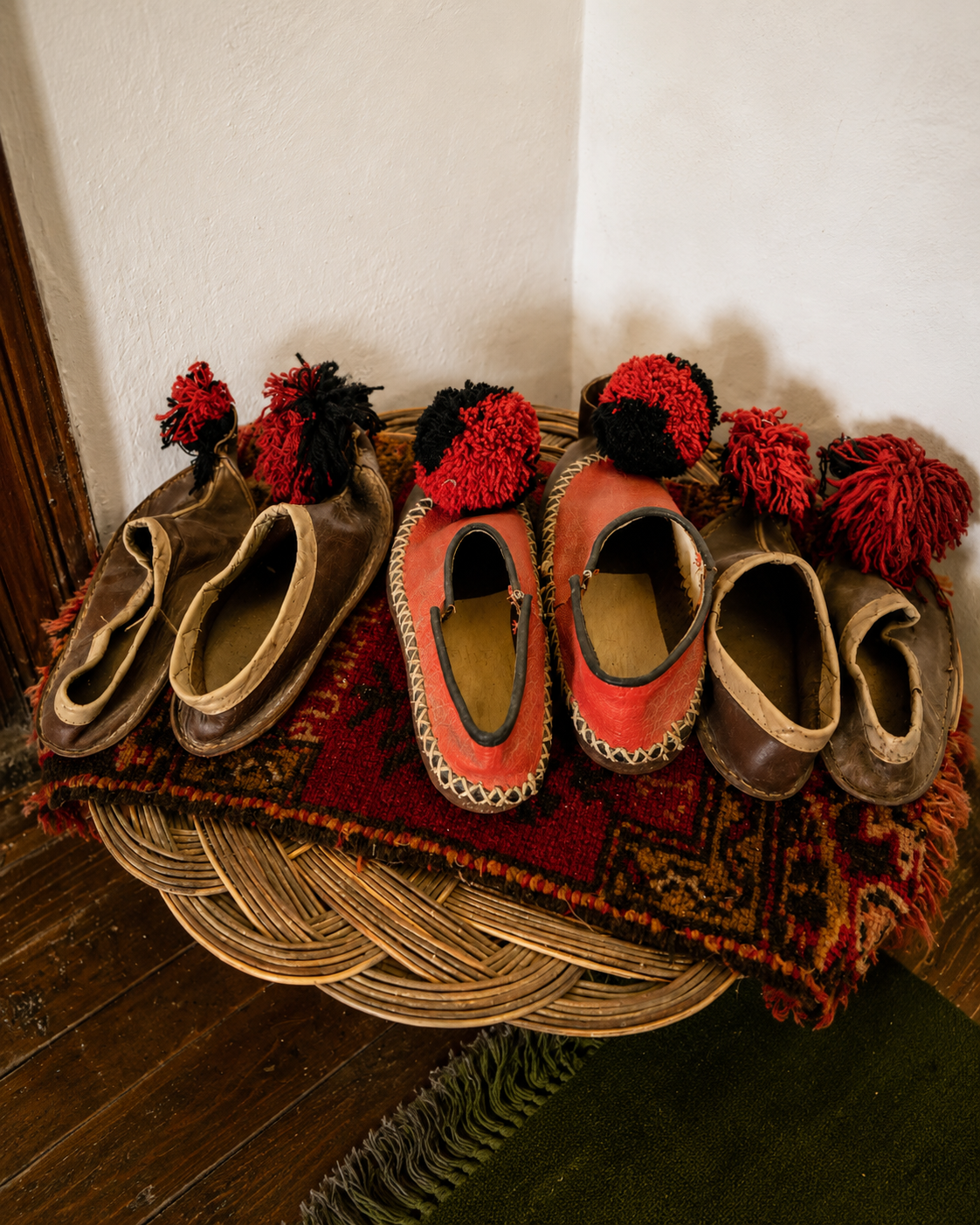
1. Traditional Costumes
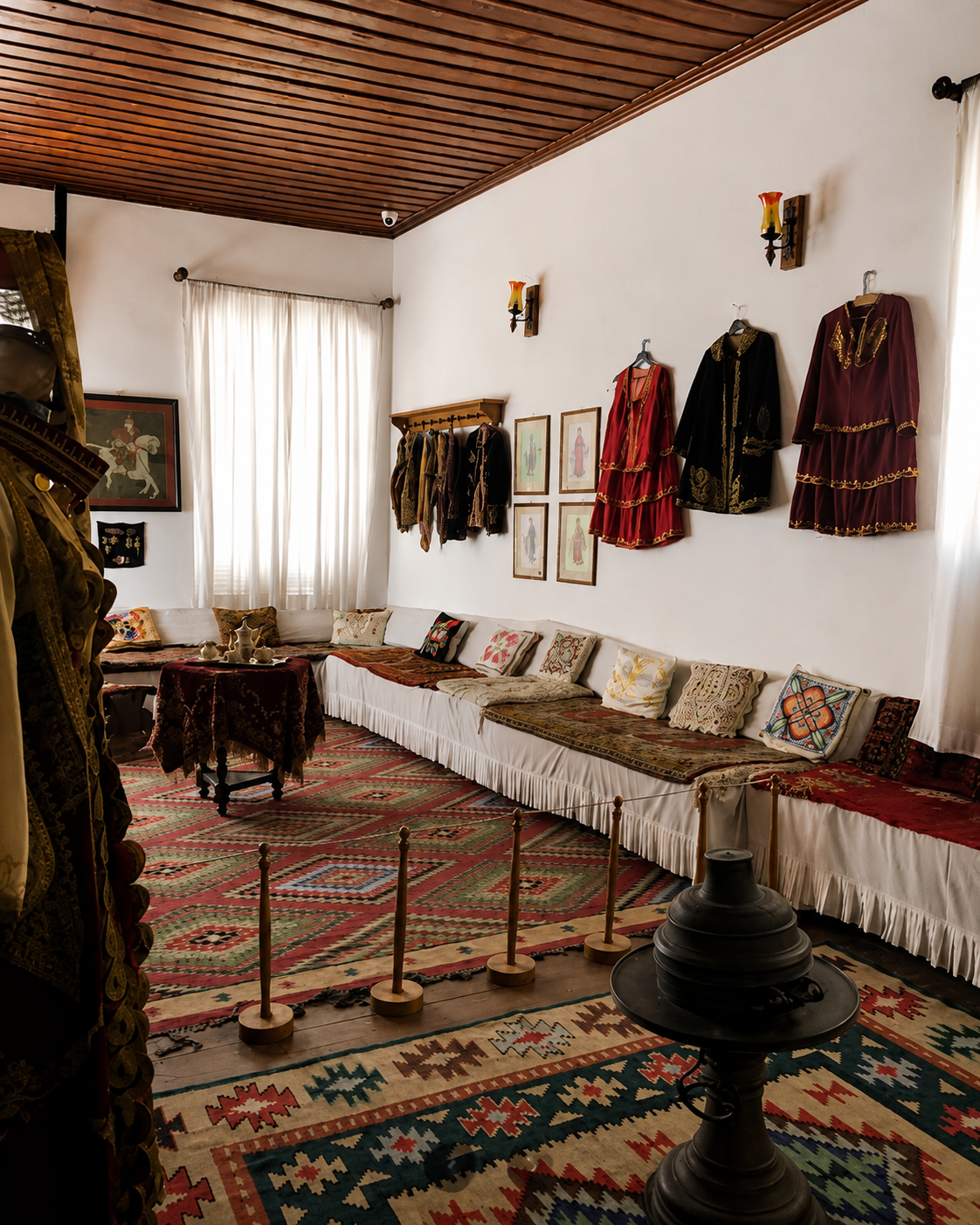
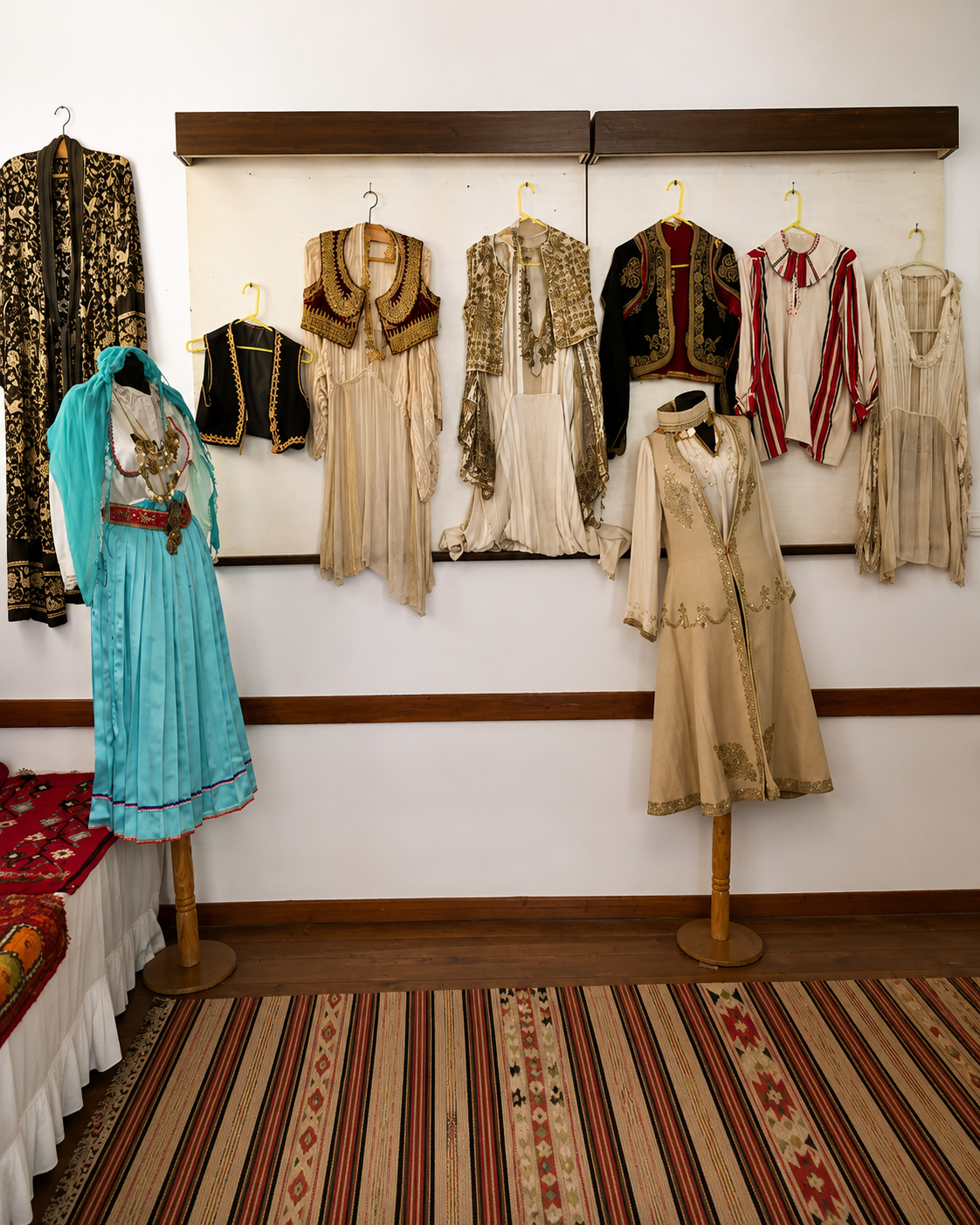
One of the highlights of the museum is its collection of traditional Albanian clothing. Visitors can admire garments worn during weddings, religious celebrations, and important family events.
Particularly noteworthy are the costumes of urban women from Vlora, dating from the late 19th and early 20th centuries. These garments showcase intricate embroidery, fine craftsmanship, and social traditions that once defined life in the city.
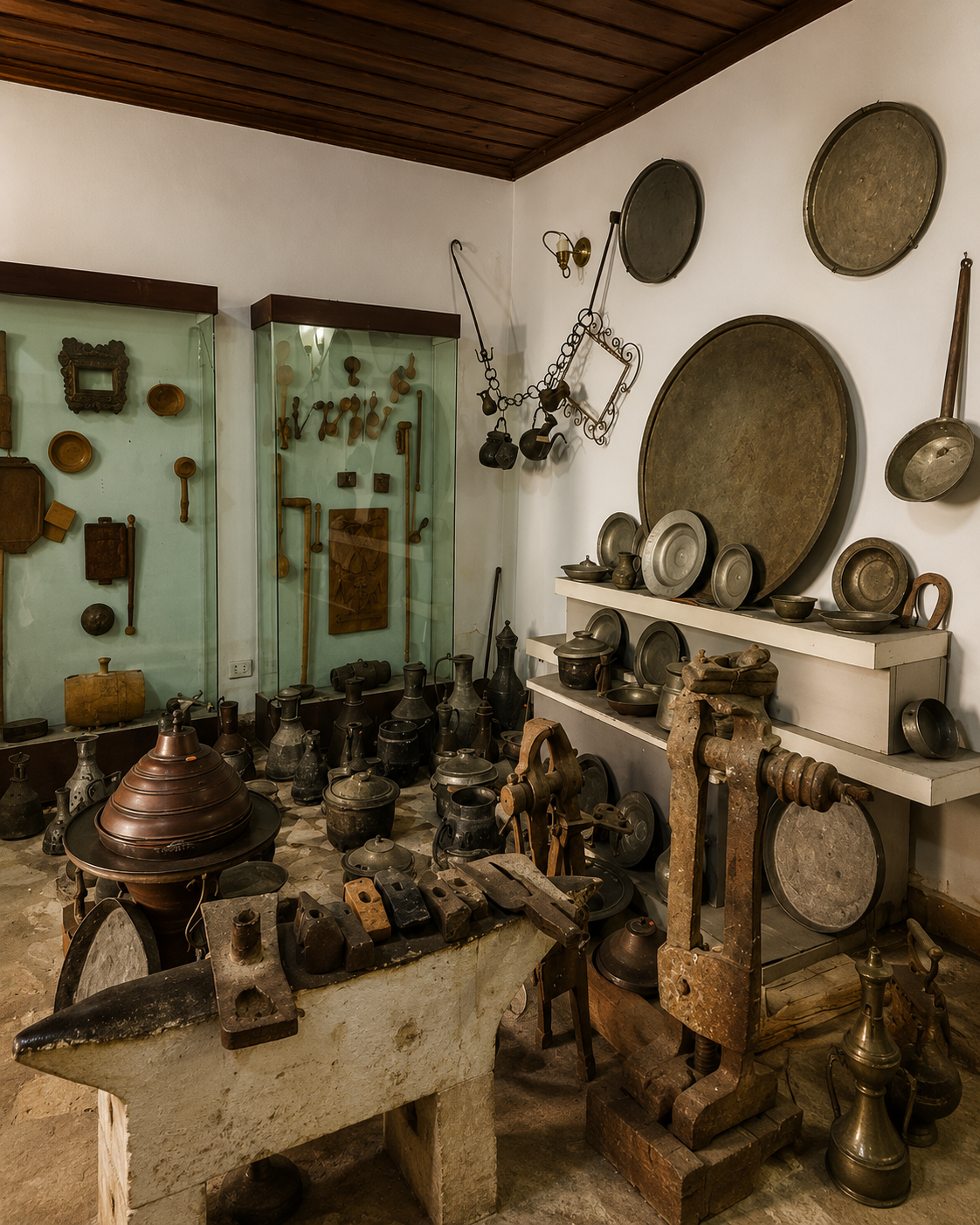
2. Traditional Crafts
Several sections of the museum are dedicated to traditional craftsmanship.
Visitors can explore tools and objects related to:
- Woodworking
- Metalworking
- Weaving
- Embroidery
- Traditional textile production
These exhibits demonstrate the skills that supported local communities for generations.
4. The Women’s Room and Loom Room
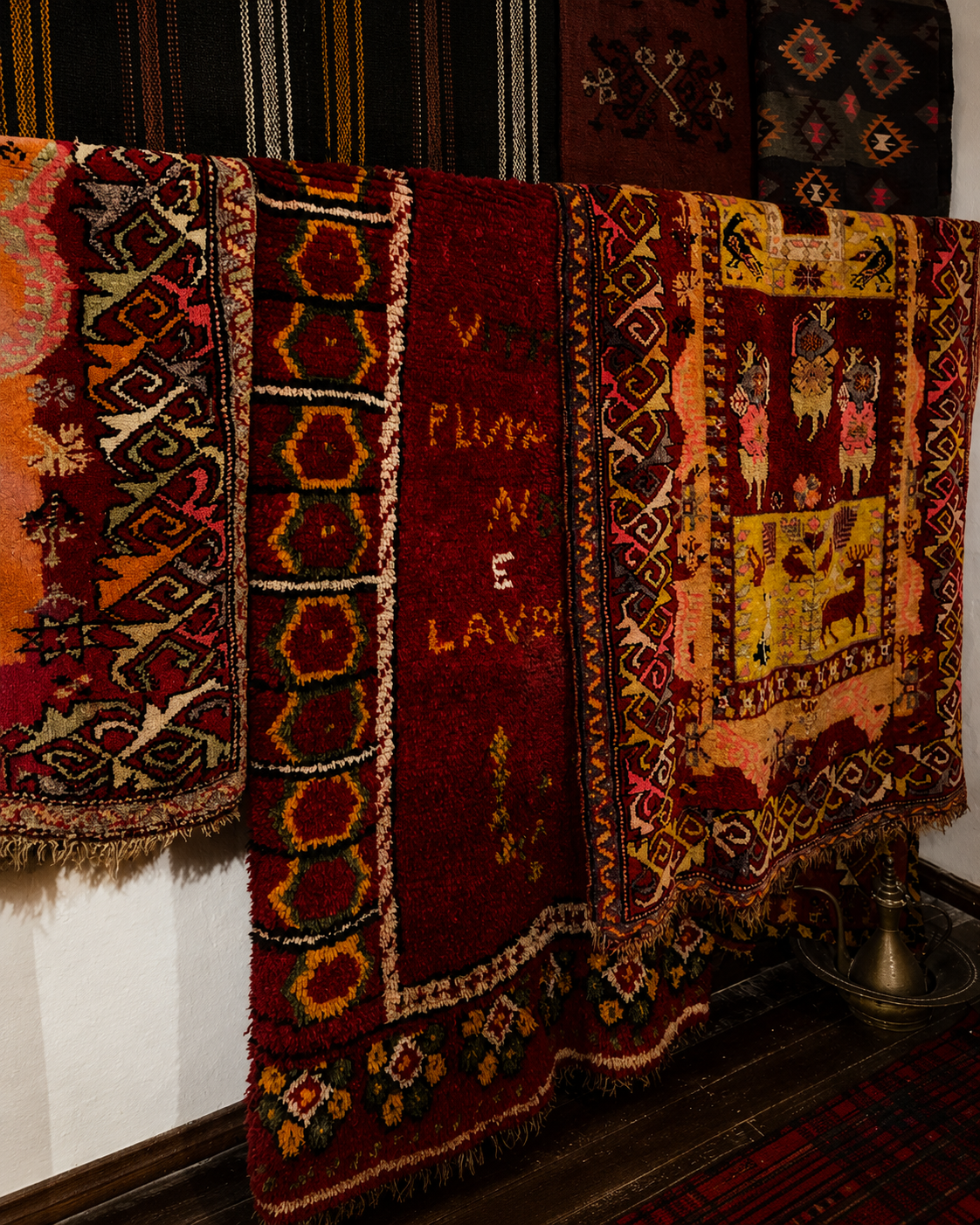
One of the most interesting spaces inside the Ethnographic Museum of Vlora is the traditional women’s room, often referred to as the Loom Room. This room recreates the space where women gathered after completing their daily household responsibilities. Here they would care for children, socialize, and spend hours weaving carpets and textiles.
The museum explains that weaving skills were traditionally passed from mother to daughter, making the loom not only a practical tool but also a symbol of family heritage and cultural continuity. Visitors can see traditional carpets, woven textiles, and decorative motifs collected from families in Vlora and nearby villages, offering a glimpse into the artistic traditions of the region.
5. The Men’s Room
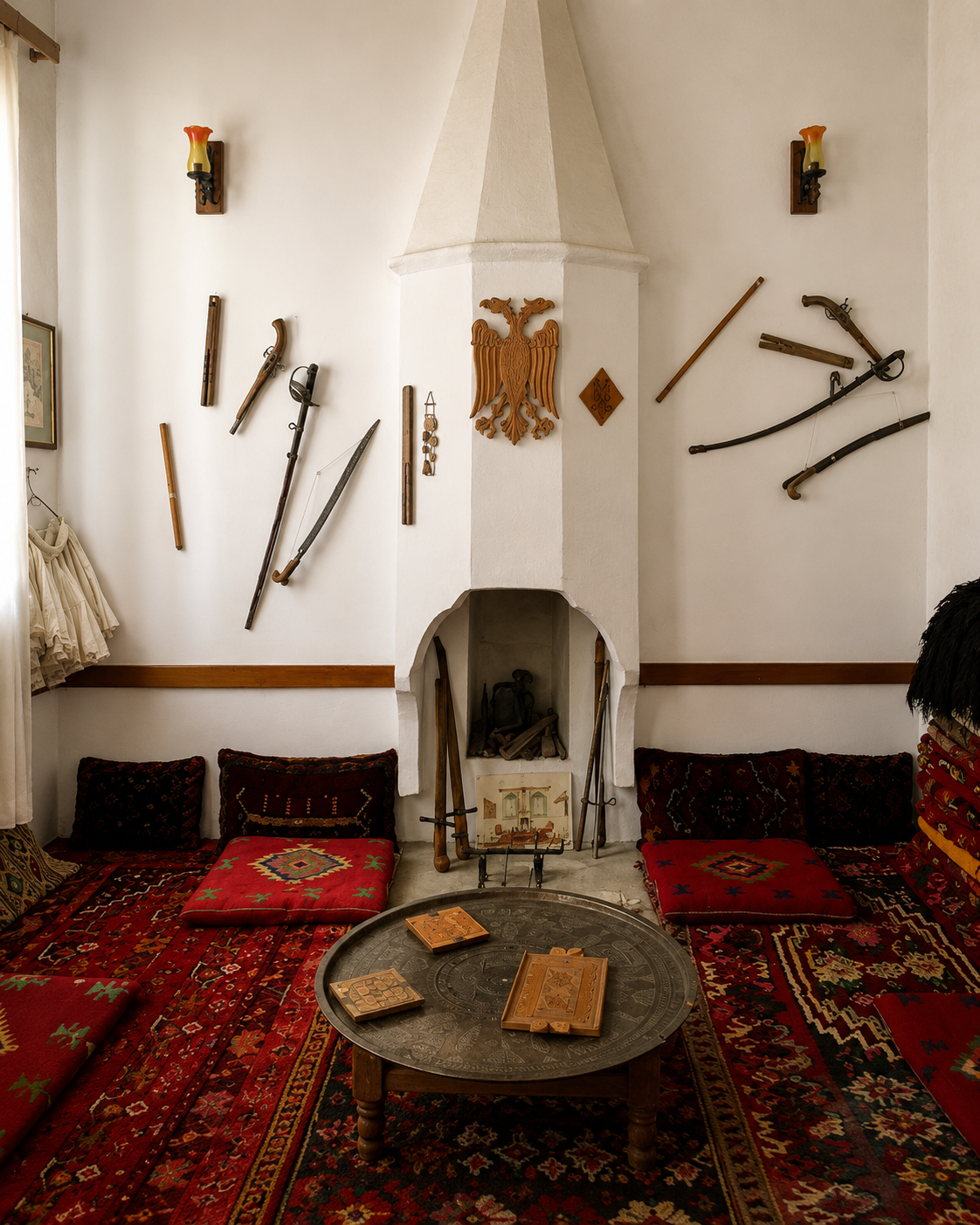
Another fascinating area is the traditional men’s room, which reflects the social and cultural role of men in Vlora’s historic households. The room is furnished with low seating areas, traditional rugs, a central fireplace, and displays of historical weapons such as swords, rifles, and pistols.
This space illustrates how men gathered to discuss community affairs, receive guests, and preserve family traditions. The exhibits provide insight into the values of hospitality, honor, and local identity that shaped life in southern Albania for generations.
6. Fishing and Maritime Life
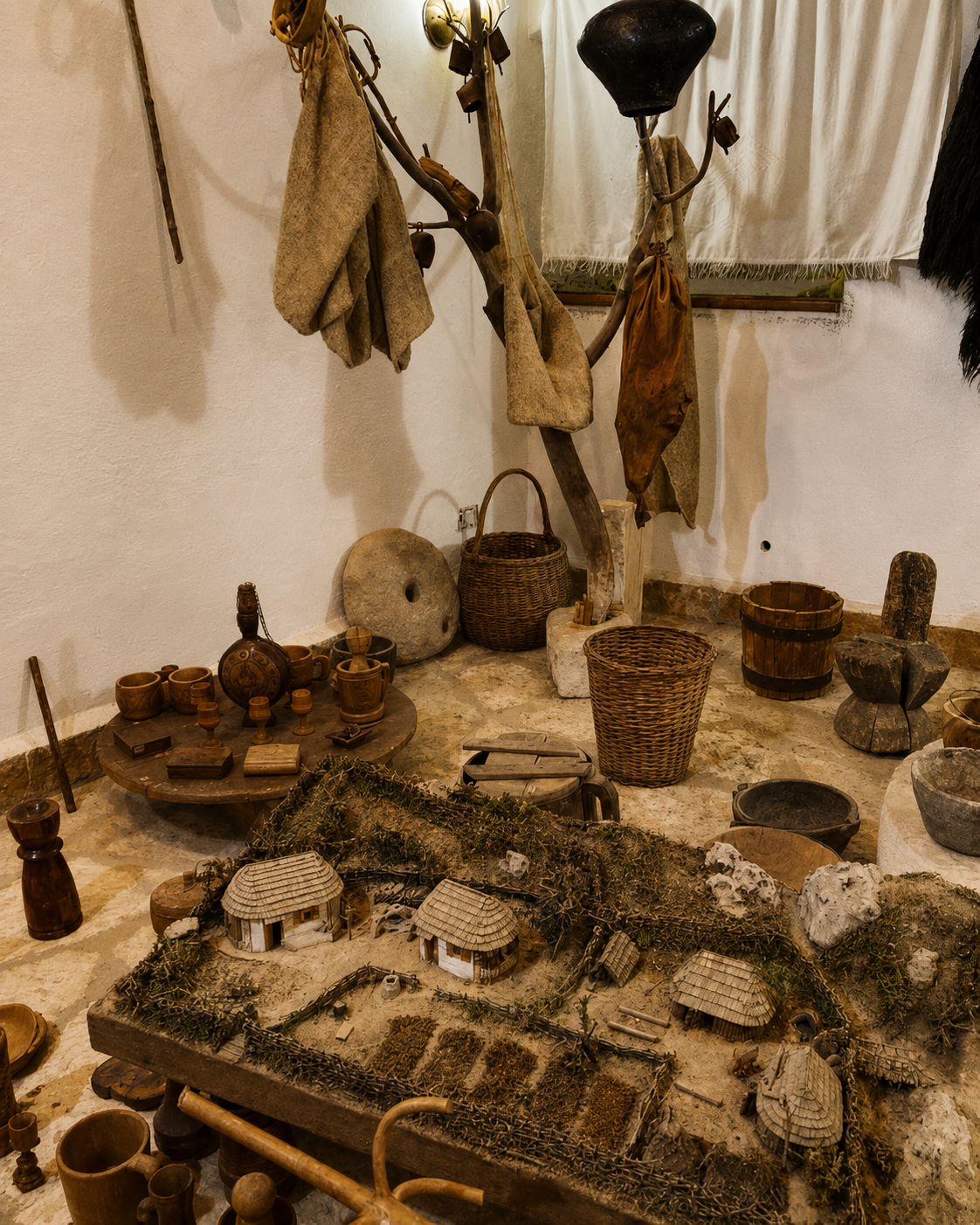
Given Vlora’s strong connection to the sea, the museum includes displays illustrating traditional fishing practices and maritime culture.
These exhibits help explain how coastal communities relied on the Adriatic and Ionian Seas for trade, food, and economic activity.
7. Olive Oil and Wine Production
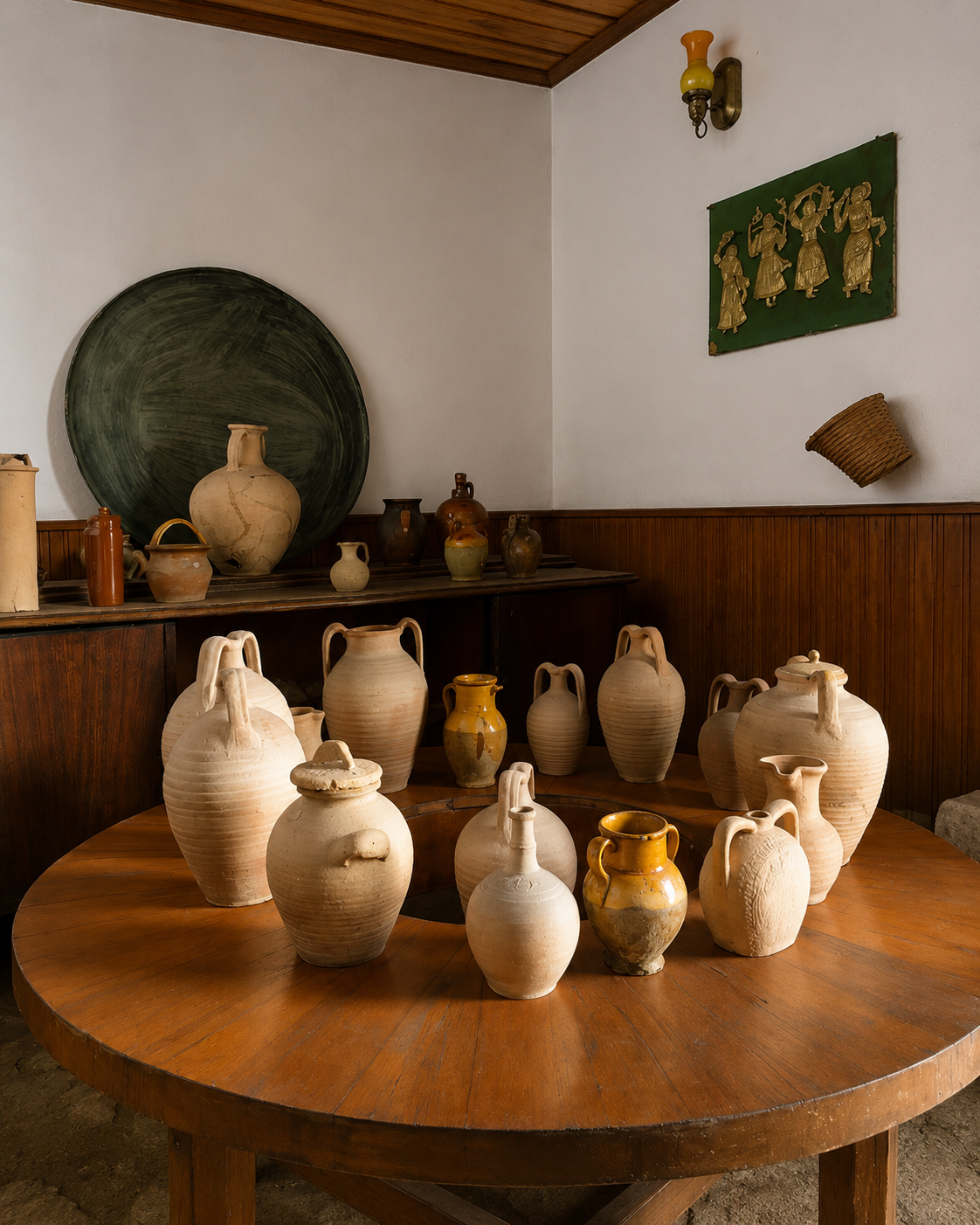
The museum also preserves tools associated with traditional olive oil and wine production.
These exhibits reflect agricultural practices that remain important throughout southern Albania today and highlight the region’s long-standing relationship with olive cultivation and viticulture.
Architecture Worth Admiring
Even before entering the exhibitions, visitors can appreciate the building itself.
The structure is a characteristic Vlora townhouse featuring:
- Three floors
- Traditional tiled roof
- Wooden construction elements
- Stone and wooden flooring
- Historic urban architecture typical of the 19th century
As a result, the museum offers two experiences in one: a cultural collection and a historic architectural monument.
The Museum’s Role in Vlora Today
The Ethnographic Museum is considered one of the three most important museums in Vlora, alongside the Independence Museum and the Historical Museum.
For years, it has hosted educational programs, cultural events, heritage exhibitions, and activities designed to promote both tangible and intangible Albanian heritage.
The museum serves not only as a repository of historical objects but also as a cultural center connecting local identity with contemporary tourism.
Opening Hours
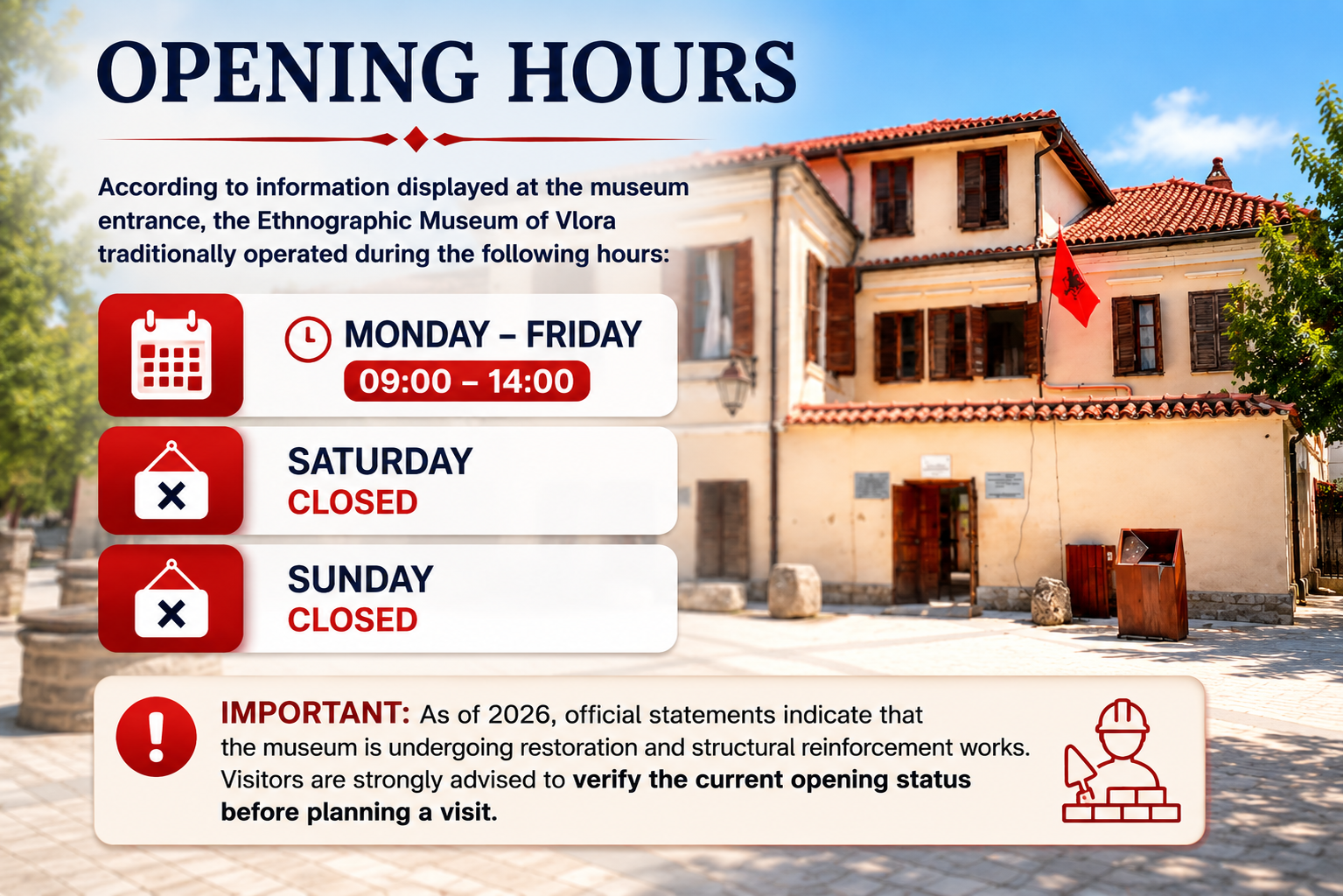
According to information displayed at the museum entrance, the Ethnographic Museum of Vlora traditionally operated during the following hours:
- Monday – Friday: 09:00 – 14:00
- Saturday: Closed
- Sunday: Closed
Important: As of 2026, official statements indicate that the museum is undergoing restoration and structural reinforcement works. Visitors are strongly advised to verify the current opening status before planning a visit.
Ticket Information
Publicly available information regarding ticket prices has varied over the years. Visitors should check with local cultural authorities or the Municipality of Vlora for the most up-to-date admission fees once the museum reopens.
How to Find the Ethnographic Museum of Vlora?
The museum is located on Justin Godard Street within Vlora’s historic center, close to several other cultural landmarks and within walking distance of the city’s main attractions.
Its location makes it an excellent stop for travelers exploring the historic side of Vlora beyond the beaches and waterfront.
The Ethnographic Museum of Vlora is much more than a collection of traditional objects. It is a place where architecture, patriotism, craftsmanship, and everyday life come together to tell the story of one of Albania’s most important cities.
For travelers interested in Albanian culture and history, it offers a deeper understanding of Vlora beyond its famous coastline. From traditional costumes and artisan tools to the remarkable history of the Labëria Club building, the museum remains one of the most meaningful cultural attractions in Vlora.
For those interested in exploring even deeper layers of the region’s history, a visit to the Amantia Archaeological Park – A Hidden Illyrian City Above Vlore offers the perfect continuation of the journey, revealing the ancient roots of the area through one of Albania’s most remarkable archaeological sites.