

If you are planning a trip to southern Albania, Butrint is one of those places you should not skip.
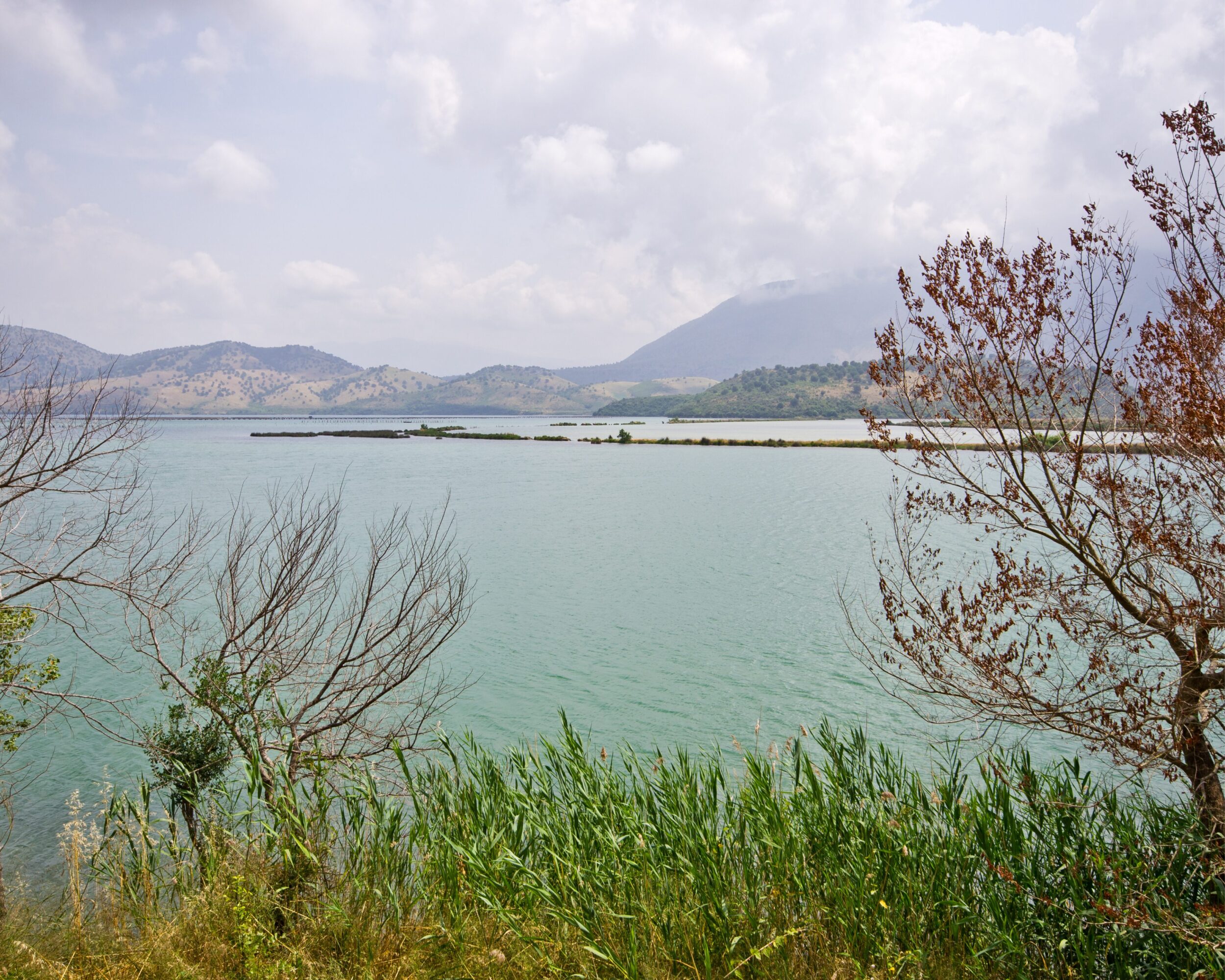
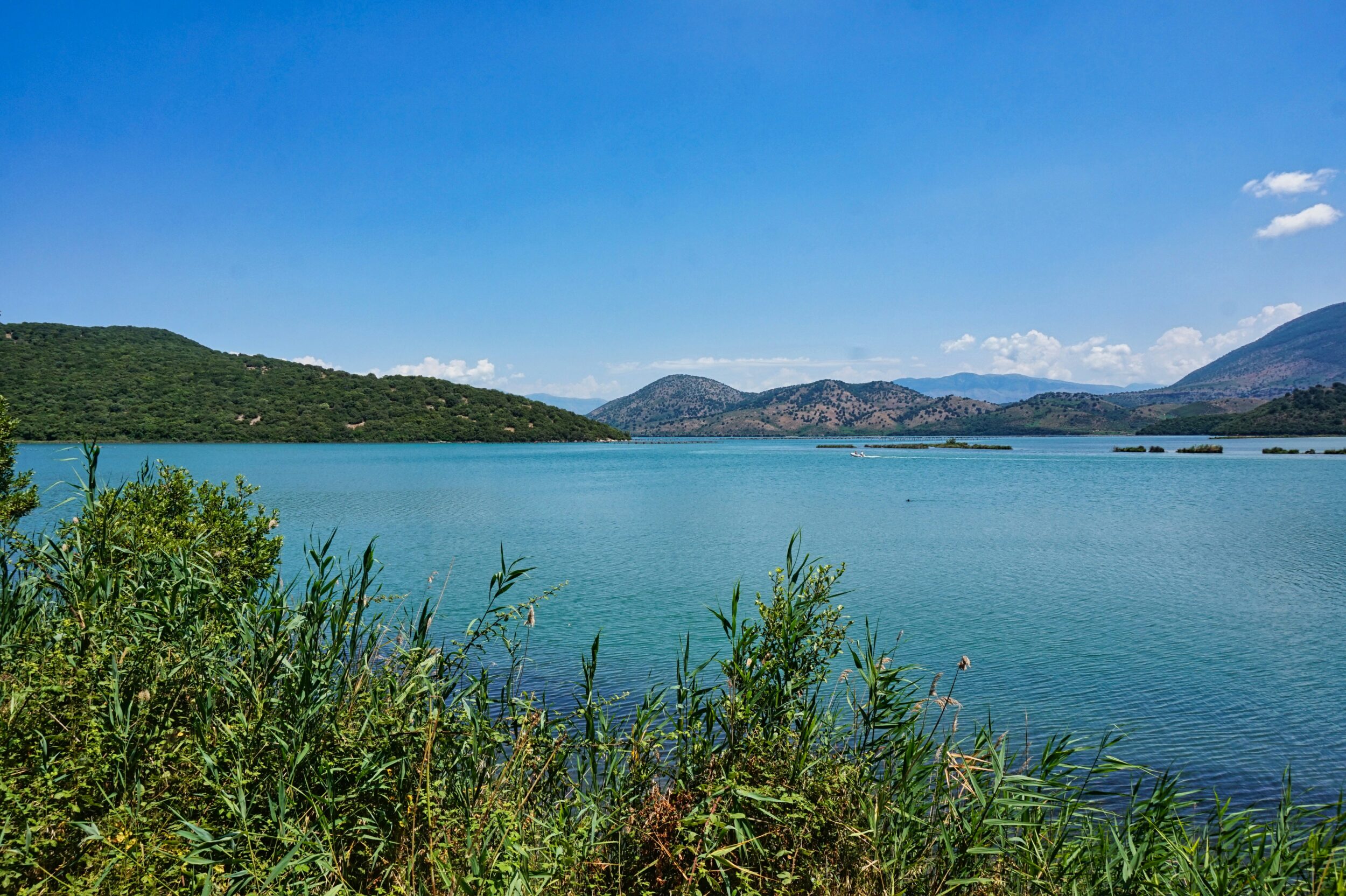
Located near Saranda and Ksamil, inside a peaceful landscape of forests, wetlands, ancient ruins, and the Vivari Channel, Butrint National Park is one of Albania’s most important cultural sites. It is also a UNESCO World Heritage Site, known for its rare mix of archaeology, nature, and Mediterranean history. UNESCO lists Butrint as a protected World Heritage property, while the wider area also forms part of Butrint National Park.
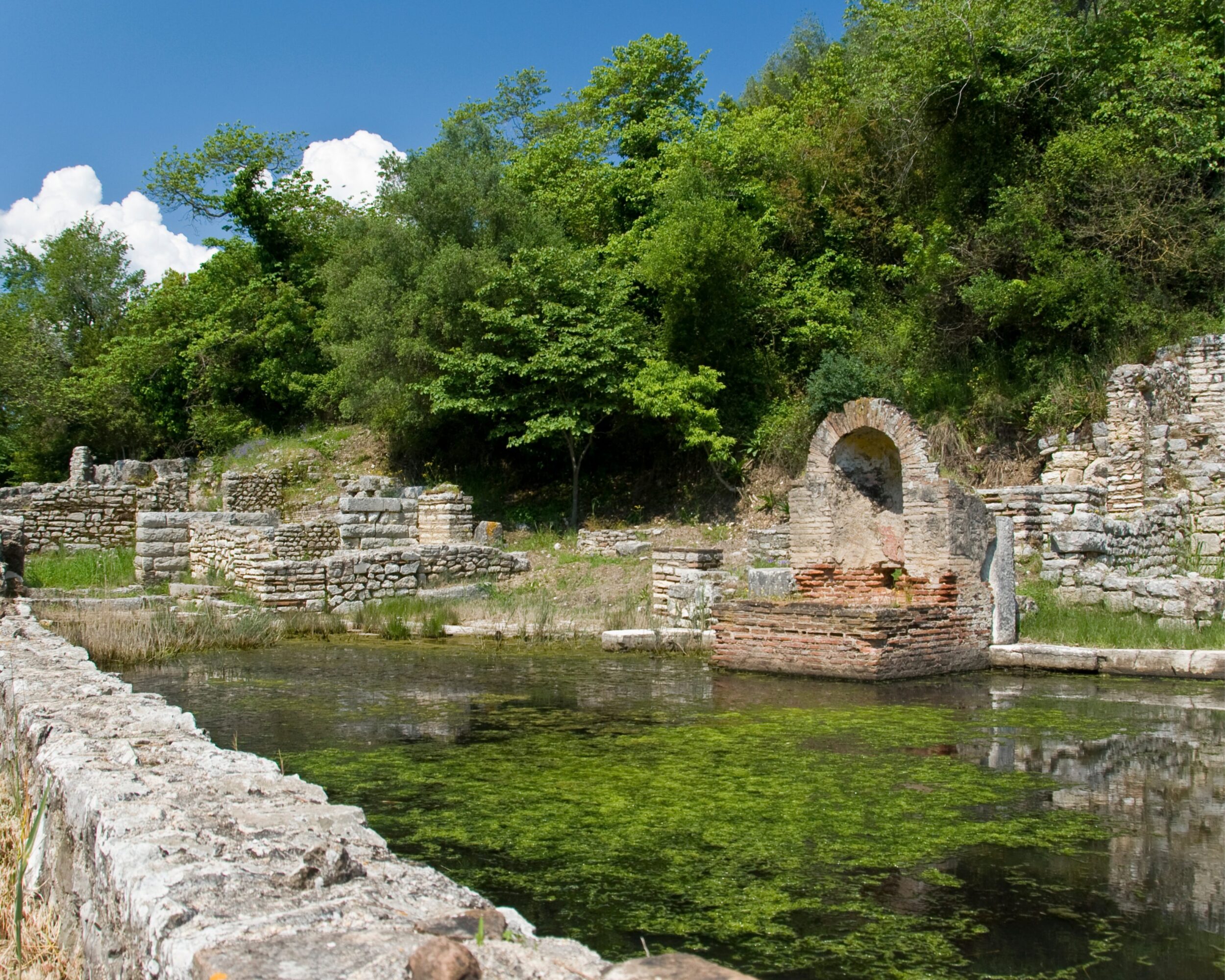
What makes Butrint special is not only its ruins. It is the feeling of walking through different layers of history in one place — from ancient Greek and Roman remains to Byzantine churches, Venetian fortifications, forest paths, lake views, and quiet corners that still feel untouched.
This guide will help you plan your visit to Butrint Albania with everything you need to know: what to see, ticket prices, opening hours, how to get there, how much time you need, and useful tips before you go.
⚡ Quick Guide – Butrint Albania 2026
Location: Near Saranda and Ksamil, southern Albania
Best for: History, culture, UNESCO sites, nature, photography
Time needed: 2–3 hours
Best time to visit: April–June and September–October
Closest cities: Saranda and Ksamil
Main highlights: Ancient Theatre, Baptistery, Great Basilica, Lion Gate, Venetian Castle, Archaeological Museum
Good for families: Yes
Walking difficulty: Easy to moderate, with uneven stone paths
Ticket price: Standard adult ticket is listed at 1,000 ALL on the official ticketing platform.
📑 Table of Contents
- Why Visit Butrint Albania?
- A Short History of Butrint
- Best Things to See in Butrint
- Butrint Ticket Prices and Opening Hours
- How to Get to Butrint from Saranda and Ksamil
- How Long Do You Need in Butrint?
- Best Time to Visit Butrint
- Practical Tips Before Visiting
- Nearby Places to Visit
- FAQ – Visiting Butrint Albania
Why visit Butrint Albania?
Butrint is one of the most complete cultural experiences you can have in Albania. Unlike a single monument or viewpoint, Butrint feels like a full journey. You walk through shaded paths, ancient ruins, old city gates, theatre remains, religious buildings, castle walls, and panoramic viewpoints, all inside a natural park surrounded by water and greenery.
It is especially worth visiting if you are staying in Saranda, Ksamil, or exploring the Albanian Riviera. The site is close enough for a half-day trip, but rich enough to feel like one of the highlights of your entire journey. Butrint is ideal for travelers who want more than beaches. It gives you history, nature, quiet walking routes, photo spots, and a deeper understanding of Albania’s southern coast.
Butrint National Park is located in southern Albania, close to the border with Greece. It sits near the Vivari Channel, Lake Butrint, and the popular beach destination of Ksamil.
The park is around:
- 18 km from Saranda
- 4–5 km from Ksamil
- Close to the Corfu–Saranda ferry route
This makes Butrint one of the easiest archaeological sites to visit if you are already traveling along the Albanian Riviera. Many visitors combine Butrint with Ksamil beaches, the Blue Eye, Lekuresi Castle, or a day trip from Saranda.
A short history of Butrint
Butrint has been inhabited and shaped by different civilizations for centuries. Over time, it developed from an ancient settlement into an important city influenced by Greek, Roman, Byzantine, Venetian, and Ottoman periods. This is why the park feels so layered. Each part of the site tells a different chapter of Mediterranean history.
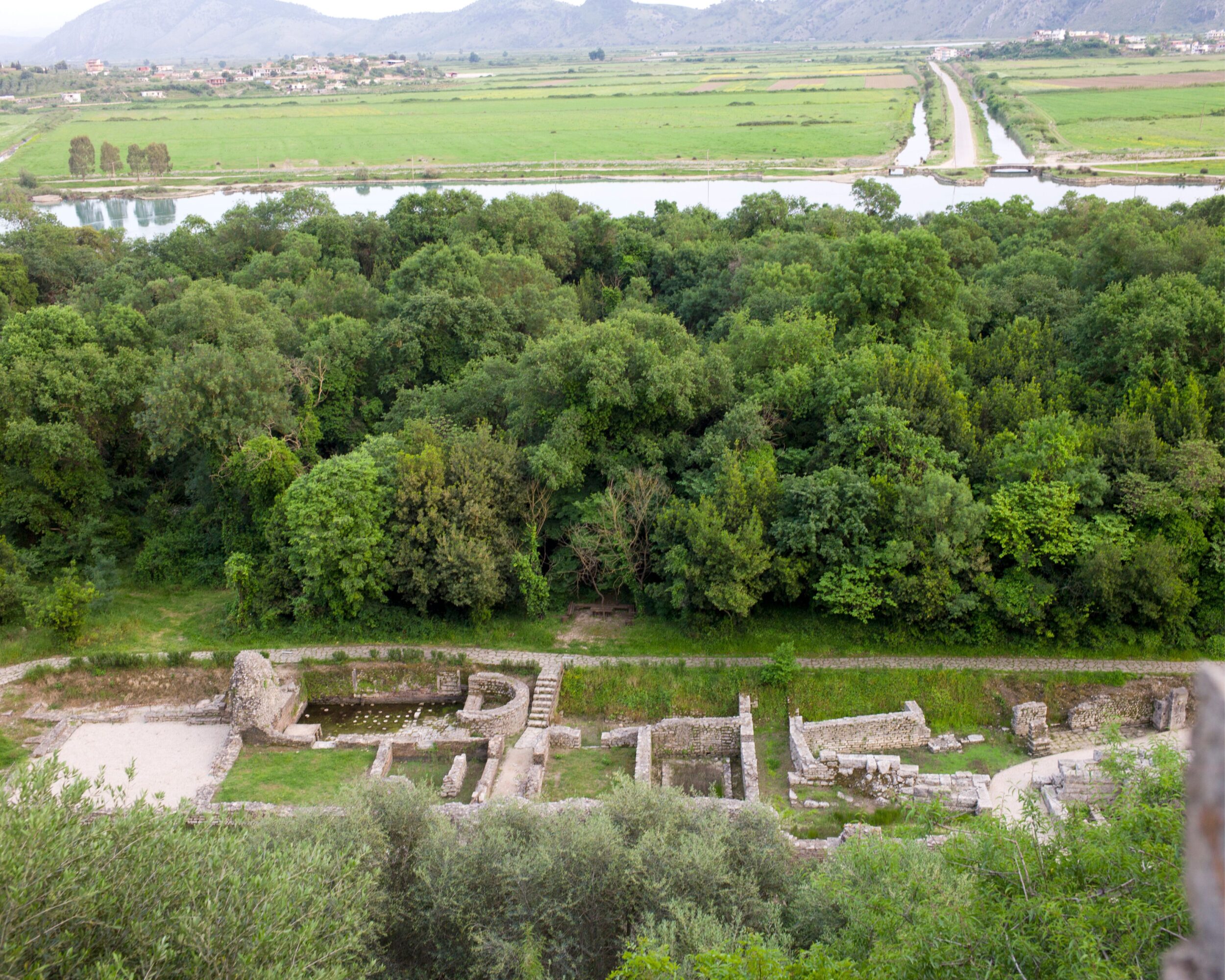
You can see remains of ancient walls, a theatre, temples, early Christian buildings, fortifications, and later Venetian structures. Instead of feeling like a simple ruin, Butrint feels like a city that slowly grew, changed, and survived through different eras. That is what makes it one of the most important historical destinations in Albania.
Best things to see in Butrint
Butrint is full of fascinating spots that make it impossible to leave without taking dozens of photos. Here are some of the attractions that should be on your list:
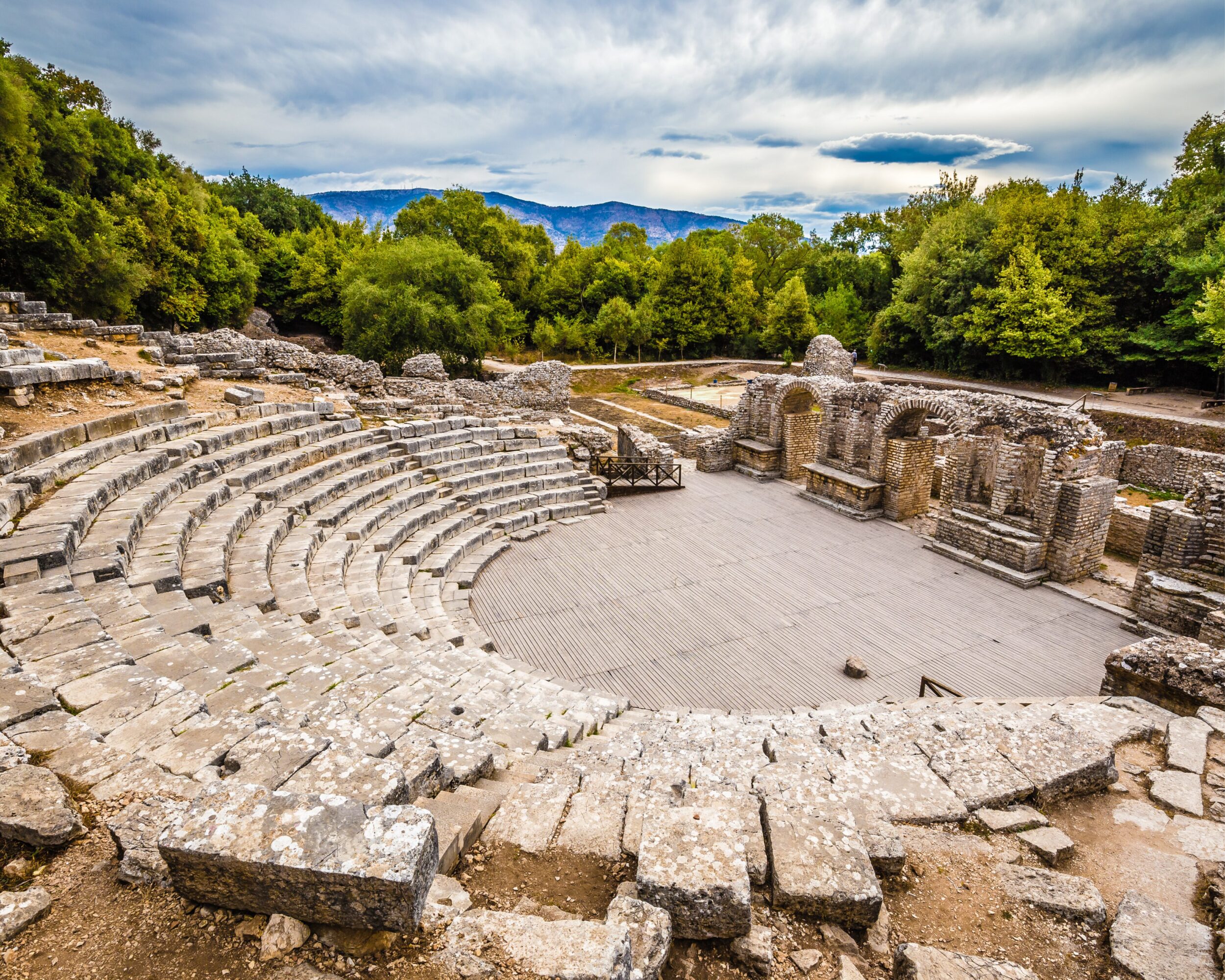
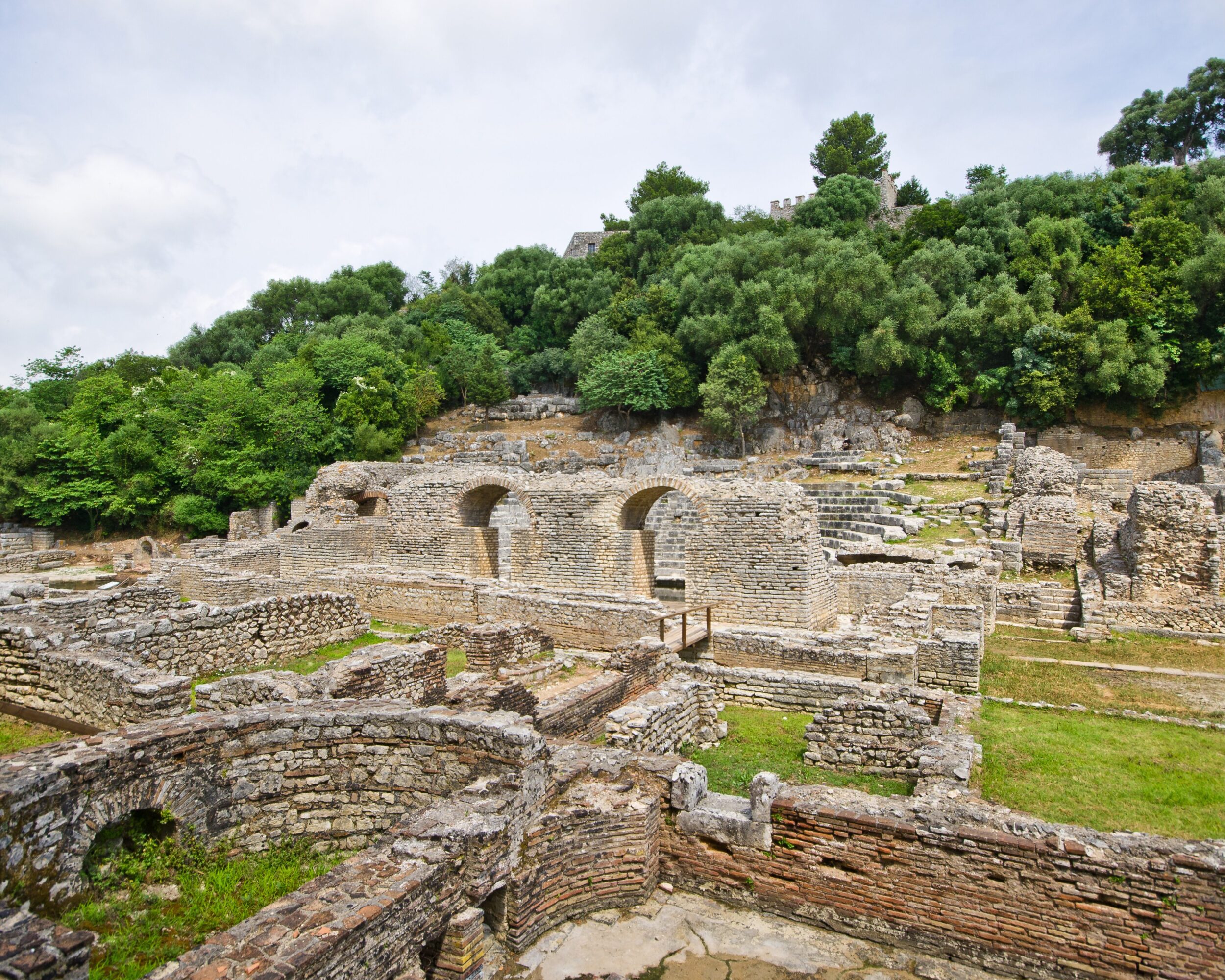
- Ancient Theatre – Built in the 3rd century BC, the theatre sits on the hillside and has a typical Hellenistic shape. With a capacity of about 1,500 spectators, it hosted plays, public ceremonies, and city gatherings. During the Roman period (2nd century AD), it was rebuilt and expanded, adding new architectural elements. In the wet season, the orchestra often fills with water, creating a magical photo opportunity.
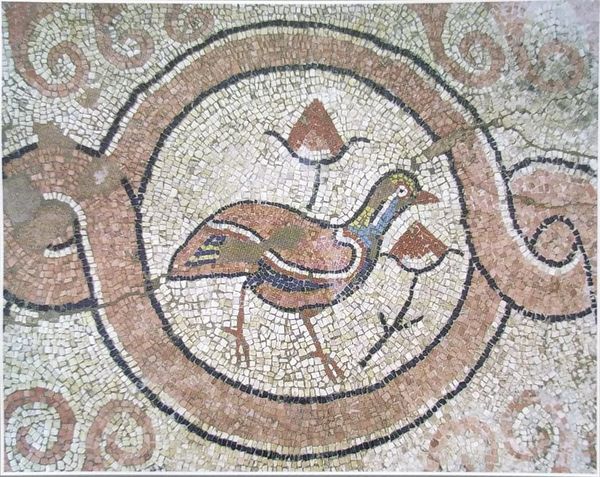
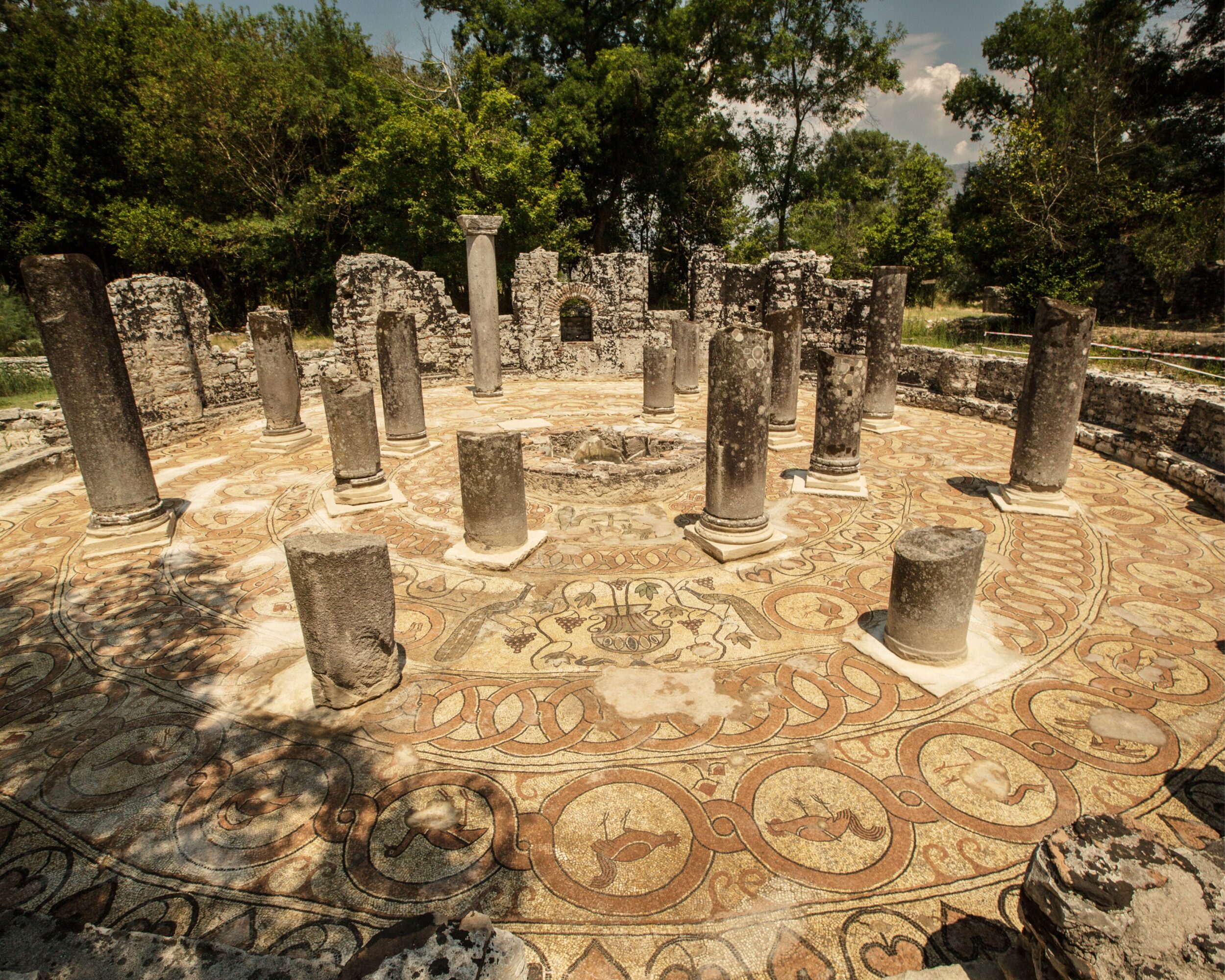
- Baptistery – One of the largest baptisteries of the late antiquity in the Mediterranean (6th century AD). It features a circular plan with two rings of columns and a floor covered in colorful mosaics depicting animals, fish, and geometric motifs. Most of the year, the mosaics are kept covered for protection, but during certain periods they are revealed to visitors – an unmissable sight.
- Great Basilica – Built at the end of the 5th century, this paleochristian church is one of the most monumental buildings in the park. Its three-nave structure, high walls, and semicircular apse reflect its importance. Today, the basilica’s walls and columns still stand amidst greenery, making it one of the most photogenic spots in Butrint.
- Lion Gate – One of the most iconic entrances to the ancient city, named after a stone relief depicting a lion attacking a bull. This symbol has caught visitors’ attention for centuries. The gate is part of the Hellenistic city walls, later reinforced in the Middle Ages.
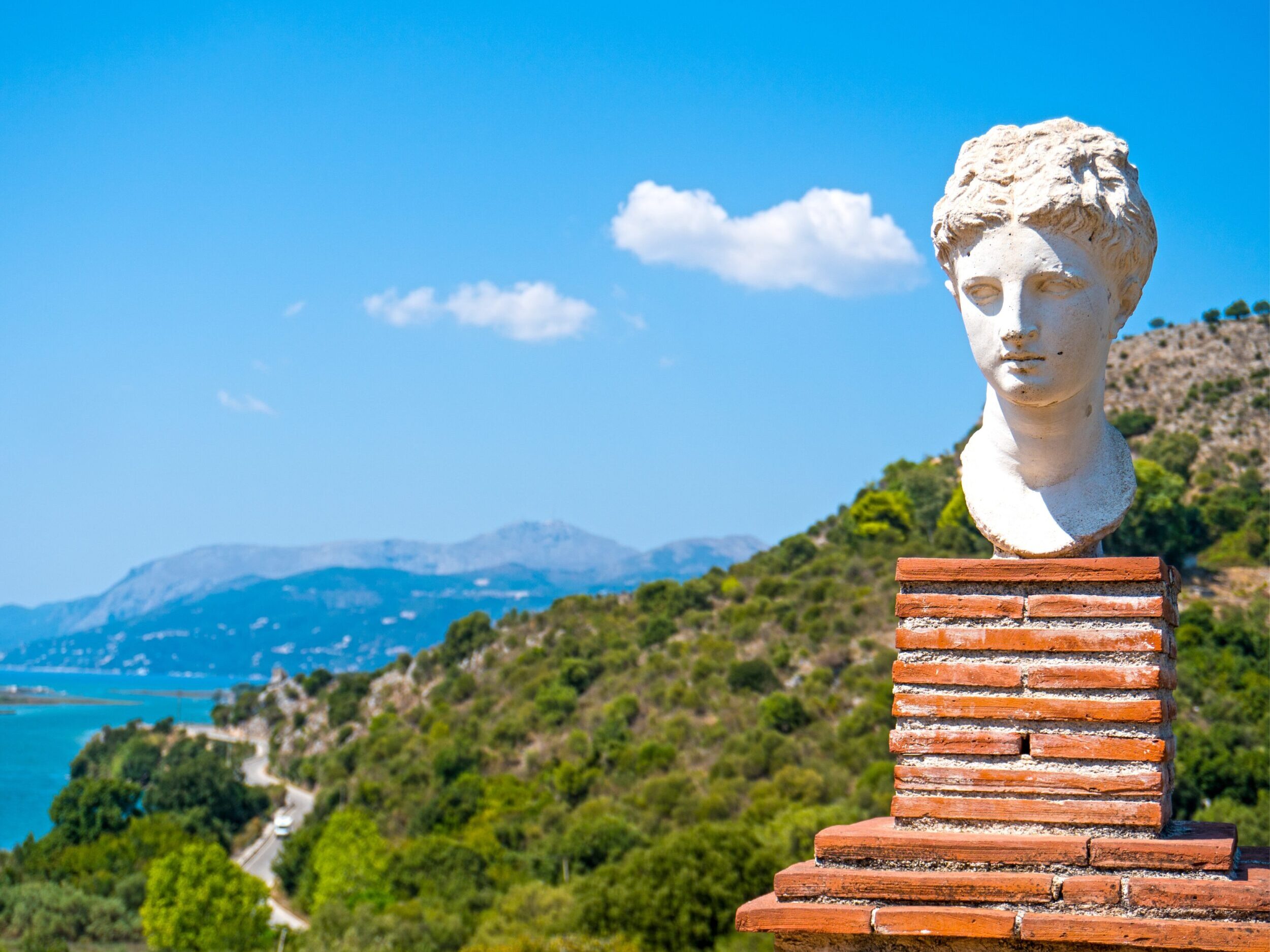
- Acropolis and Venetian Castle (Archaeological Museum) – At the top of the hill lies the castle, rebuilt by the Italians in the 1930s on the foundations of a Venetian fortress. From here, you can enjoy stunning views of the park and the Vivari Channel. Inside, the Archaeological Museum houses sculptures, coins, tools, and other artifacts unearthed during excavations.
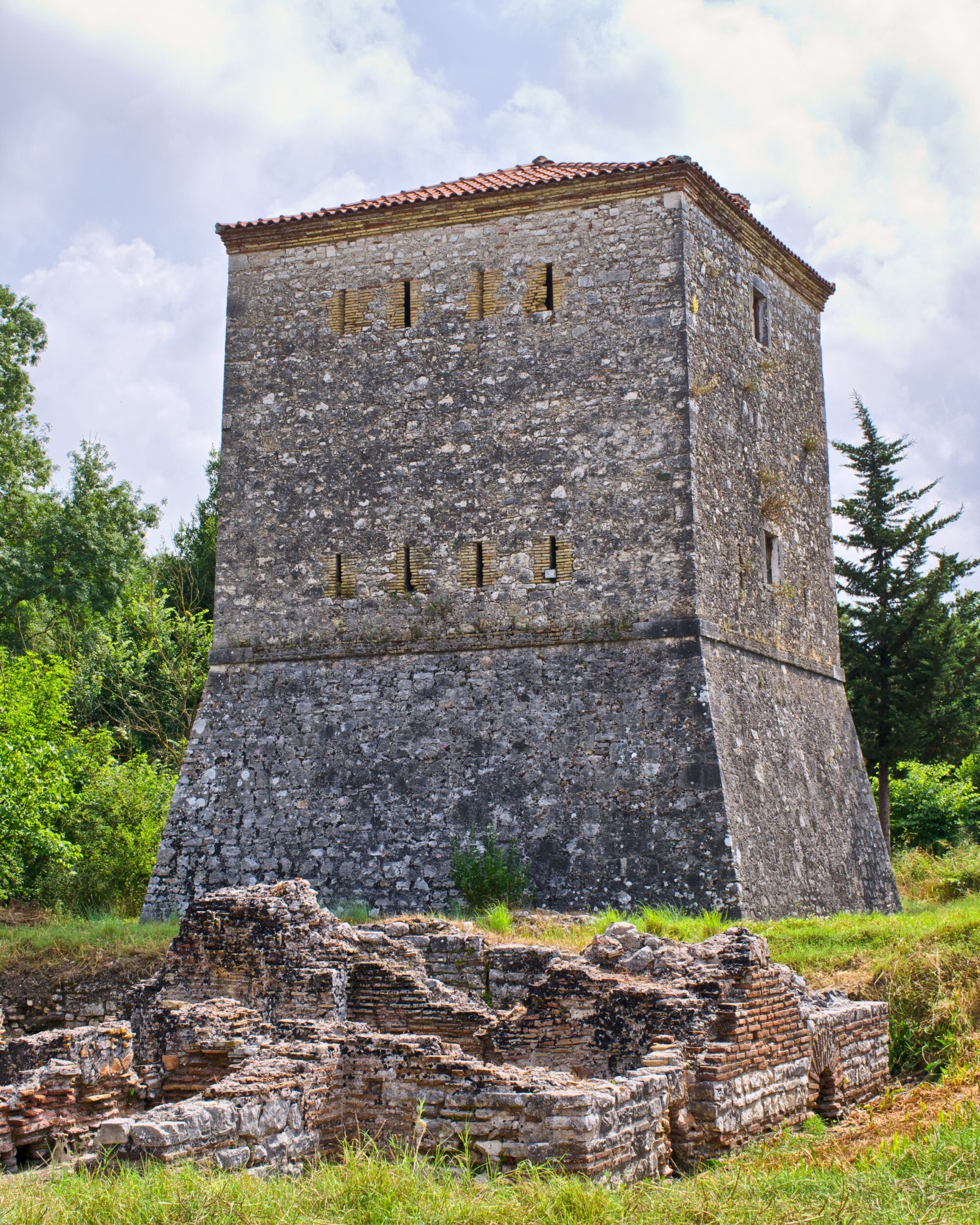
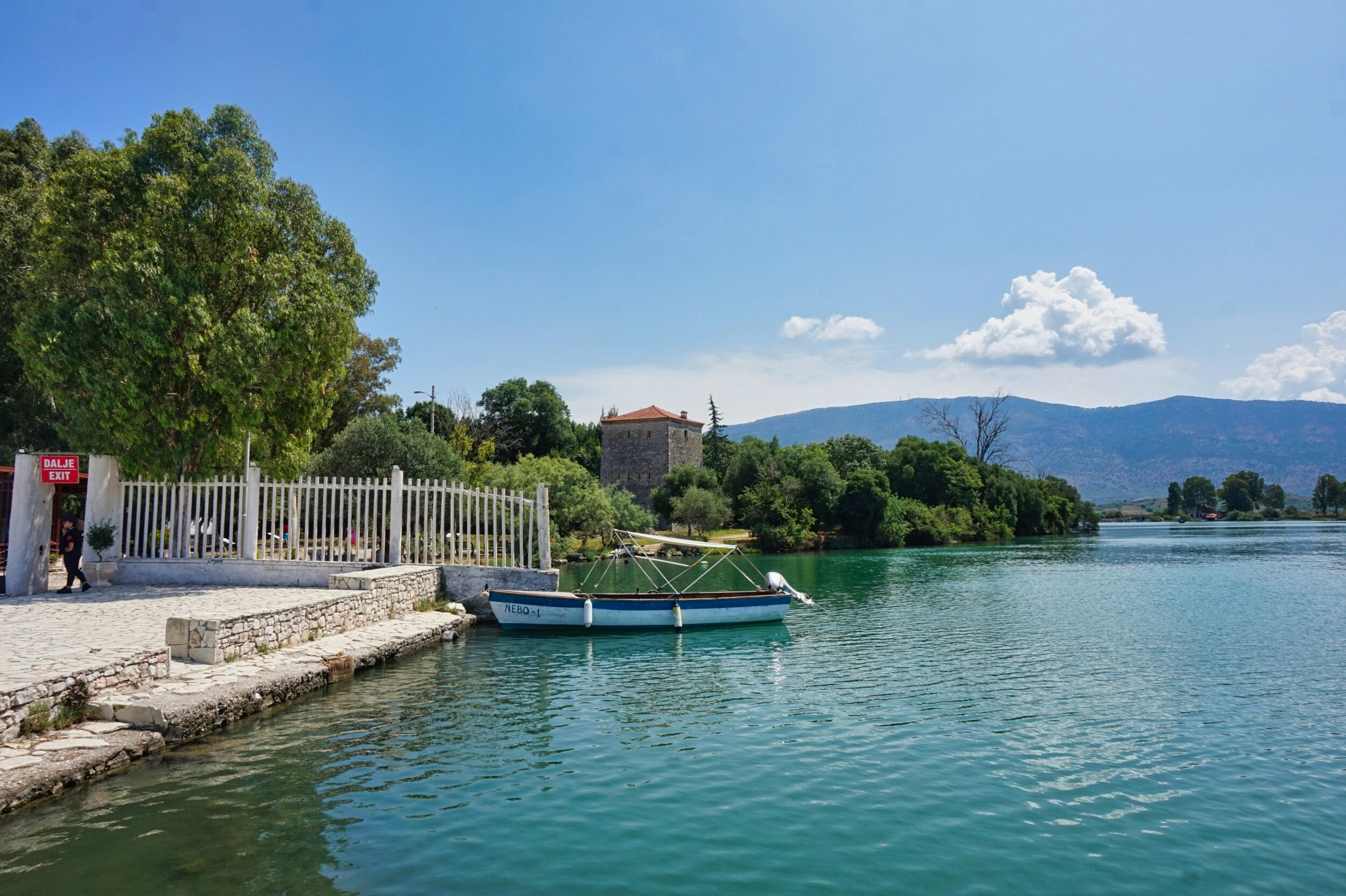
- Venetian Tower and Triangular Fortress – These two structures face each other at the entrance to the Vivari Channel. The Venetian tower (16th century) and the Triangular Fortress (rebuilt by Ali Pasha Tepelena in the 19th century) controlled access to the lake. Today, you can take a short boat trip to visit them up close.
Every attraction in Butrint is like a unique chapter of its history – so take your time to experience them all.
Butrint ticket prices and opening hours
According to the official ticketing platform for cultural sites in Albania, the opening hours are divided by season. From April 1 to October 31, Butrint opens at 08:30, last entry is at 18:00, and closing is at 20:00. From November 1 to March 31, it opens at 09:00, last entry is at 15:00, and closing is at 17:30.
📅 Summer Season (April 1 – October 31)
- Opening: 08:30
- Last Entry: 18:00
- Closing: 20:00
Perfect for making the most of long summer days and visiting when the sun begins to set, casting magical light over the ruins.
📅 Winter Season (November 1 – March 31)
- Opening: 09:00
- Last Entry: 15:00
- Closing: 17:30
Shorter hours, but fewer tourists mean you can explore at a relaxed pace.
💰 Ticket Prices (2025)
- Adults: 1,000 ALL
- Groups: (≥10 people): 800 ALL
- Reduced ticket (pensioners, disabled, orphans): 500 ALL
- Albanian students: 500 ALL
- Youths:12–18: 500 ALL
- Children under: 12: Free
💡 Tip: You can buy tickets online at MyTicket.al to skip the queues.
How to get to Butrint from Saranda and Ksamil
- From Saranda to Butrint: The easiest way to reach Butrint from Saranda is by car, taxi, local bus, or organized tour. The drive usually takes around 25–30 minutes, depending on traffic and the season. In summer, it is better to leave early because the road between Saranda, Ksamil, and Butrint can get busy. A local bus also connects Saranda with Ksamil and Butrint, making it a budget-friendly option for travelers without a car.
- From Ksamil to Butrint: Butrint is very close to Ksamil, which makes it one of the easiest cultural trips from the beach area. You can reach Butrint by car, taxi, bus, bicycle, or even on foot if you enjoy walking and the weather is not too hot. Many travelers visit Butrint in the morning and then spend the afternoon at the beaches of Ksamil.
- From Corfu to Butrint: Butrint can also be visited as part of a day trip from Corfu. Travelers usually take the ferry from Corfu to Saranda and then continue by bus, taxi, or organized tour to Butrint. This makes the site a popular cultural stop for visitors coming from Greece.
How long do you need in Butrint?
For most visitors, 2 to 3 hours is enough to explore Butrint comfortably. You can walk through the main ruins, visit the theatre, see the basilica and gates, climb up to the castle, visit the museum, and enjoy the views without rushing.
If you love archaeology, photography, or slow travel, you may want to stay longer. But if you are combining Butrint with Ksamil or Saranda, a half-day visit works very well.
Tours & Activities
One of the best ways to enjoy Butrint is to visit it with a guide, either a human or an audio device.
- 👩💼 Local guides: Professional guides at the park entrance offer tours in multiple languages, sharing not only historical facts but also legends and hidden details you might miss on your own.
- 🎧 Audio guides – Rent an audio guide or download a dedicated app for detailed explanations at your own pace.
- 🎭 Cultural events – In summer, the ancient theatre hosts the “Butrint 2000” International Theatre Festival. Occasionally, concerts, exhibitions, and educational activities are also held.
- 🌿Ecotourism & nearby adventures – Walk around Lake Butrint or take a short boat trip along the Vivari Channel to visit Ali Pasha’s Castle. From Saranda and Ksamil, you can join combined tours that include Butrint and beach stops.
Best time to visit Butrint
The best time to visit Butrint is during spring and autumn.
April, May, June, September, and October are ideal because the weather is warm but not too hot, and the park is more comfortable for walking. In July and August, Butrint is still worth visiting, but you should go early in the morning or later in the afternoon. Midday can be very hot, especially when walking through open areas.
Winter is quieter and peaceful, but opening hours are shorter.
Practical tips before visiting Butrint
- Best time to visit: Spring and autumn offer mild weather and fewer crowds. In summer, visit early morning or late afternoon to avoid the heat.
- What to wear: Comfortable walking shoes (paths are uneven), sunhat and sunscreen in hot weather, or a light jacket in cooler months. Bring water – there are few purchase points inside.
- Getting there: From Saranda, it’s just an 18-minute drive or local bus ride. From Ksamil, you can even bike or walk. From Corfu, there are day trips with ferry connections to Saranda, often including Butrint in the itinerary.
- Photography: Soft morning or late afternoon light is perfect for photos, especially at the ancient theatre and Lion Gate.
Nearby places to visit after Butrint
- Ksamil: Ksamil is the easiest place to combine with Butrint. After exploring the park, you can relax by the beach, visit the small islands, or have lunch by the sea.
- Saranda: Saranda is the main city nearby and a good base for visiting Butrint. It also offers restaurants, hotels, nightlife, boat trips, and ferry connections with Corfu.
- Blue Eye: The Blue Eye is one of Albania’s most famous natural springs and can be added to a full-day itinerary in southern Albania.
- Lekuresi Castle: Lekuresi Castle is a great sunset spot above Saranda. It offers panoramic views over the city, Corfu, and the Ionian Sea.
FAQ – Visiting Butrint Albania
Yes. Butrint is one of the most important places to visit in Albania, especially if you are interested in history, culture, nature, and UNESCO sites.
Butrint is located in southern Albania, near Saranda and Ksamil, close to the Vivari Channel and Lake Butrint.
The standard adult ticket is listed at 1,000 ALL, with reduced prices for groups, youth, and children under 12 entering free.
Most visitors need around 2 to 3 hours to explore the main archaeological park comfortably.
Yes. Butrint is one of the easiest day trips from Saranda and can be reached by car, taxi, bus, or organized tour.
Yes. Butrint is very close to Ksamil and can easily be visited in the morning before heading to the beach.
Yes. Butrint is suitable for families, but parents should keep an eye on children near stone paths, stairs, and open ruin areas.
Butrint awaits you
Butrint is more than an archaeological park. It is one of the rare places in Albania where history, nature, and landscape come together in a way that feels calm, beautiful, and unforgettable.
Whether you are staying in Saranda, relaxing in Ksamil, or exploring the Albanian Riviera, Butrint Albania deserves a place on your itinerary. It is easy to reach, rich in history, and one of the best cultural experiences in southern Albania.
👉 Planning more stops in the south? Continue with our guides to Ksamil, Saranda, Blue Eye, and the best beaches of the Albanian Riviera.