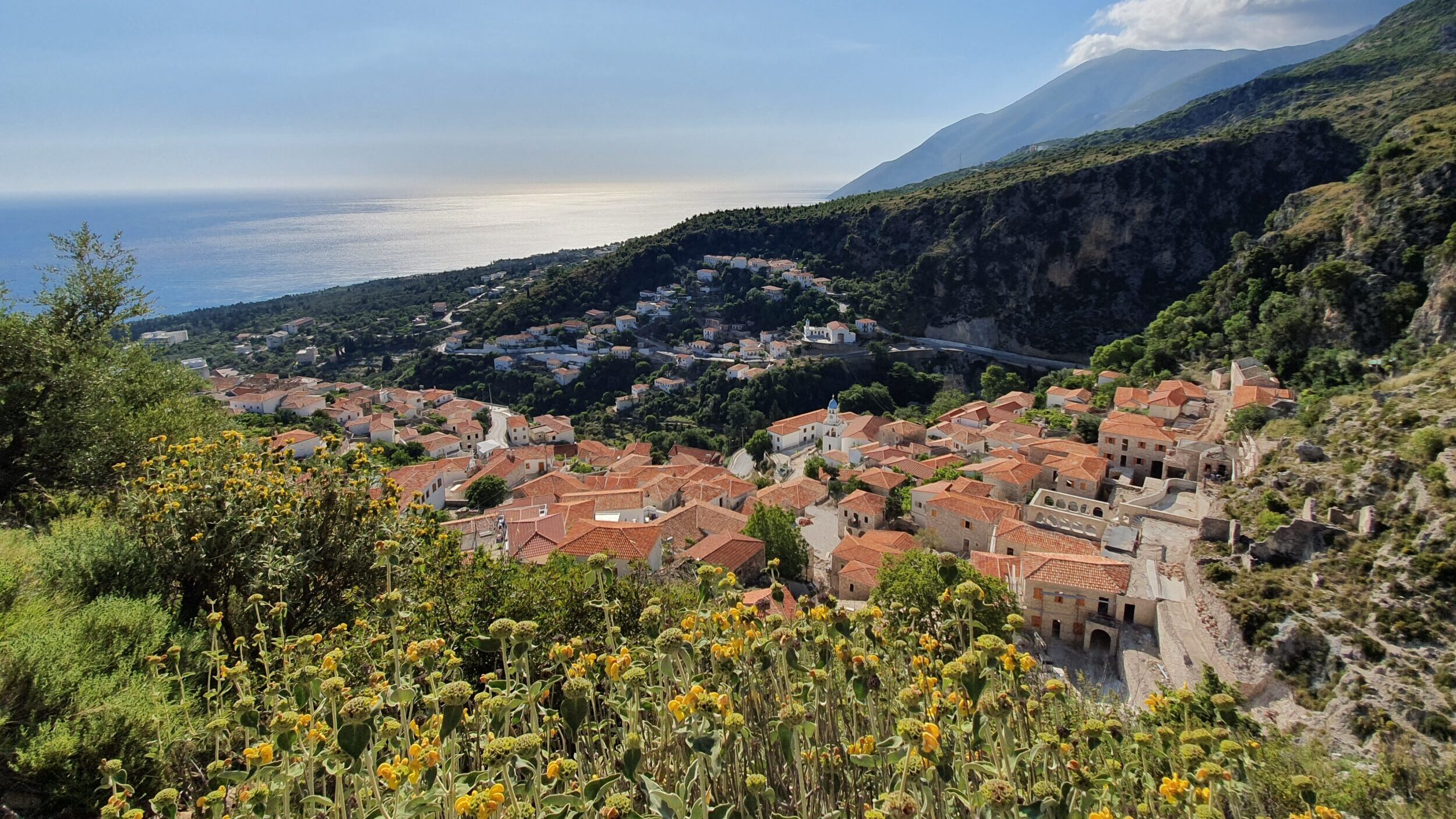


Hidden between the Morava Mountains and the fertile plains of Korça, Boboshtica Village is one of the most unique cultural and gastronomic destinations in southeastern Albania. Known for its centuries-old black mulberry trees, traditional raki production, Orthodox heritage, stone houses, and famous local cuisine, Boboshtica offers a completely different atmosphere from the typical mountain villages near Korça.
Located only around 7 km from Korça, this peaceful village combines rural landscapes, history, gastronomy, and authentic local traditions into one experience. Unlike destinations focused only on nature or hiking, Boboshtica is deeply connected to food culture, artisan traditions, religious heritage, and village life that has survived for centuries.
Today, Boboshtica is increasingly becoming one of the best villages to visit near Korça for travelers searching for authentic Albania, traditional restaurants, local products, cultural tourism, and peaceful countryside escapes.
But Boboshtica is much more than a simple rural village. It is a place shaped by centuries of coexistence between Albanian, Vlach, and Slavic-Bulgarian communities, creating a rare cultural identity that still survives today through architecture, festivals, language, cuisine, and traditions.
What makes Boboshtica special is the balance between history and everyday life. Mulberry plantations still surround the village, traditional recipes continue to define local restaurants, old Orthodox churches preserve medieval frescoes, and rural hospitality remains part of the village identity.
For travelers visiting Korça, Boboshtica is one of the most rewarding destinations to explore beyond the city itself.
Table of Contents
- Where is Boboshtica Village?
- History of Boboshtica Village
- Why Visit Boboshtica Village?
- The Famous Mulberry Tradition of Boboshtica
- Traditional Architecture and Village Atmosphere
- Things to Do in Boboshtica
- Traditional Festivals and Local Traditions
- What Food to Try in Boboshtica
- Best Restaurants in Boboshtica
- Nature and Hiking Around Boboshtica
- How to Get to Boboshtica?
- FAQ – Boboshtica Village Albania
Where is Boboshtica Village?
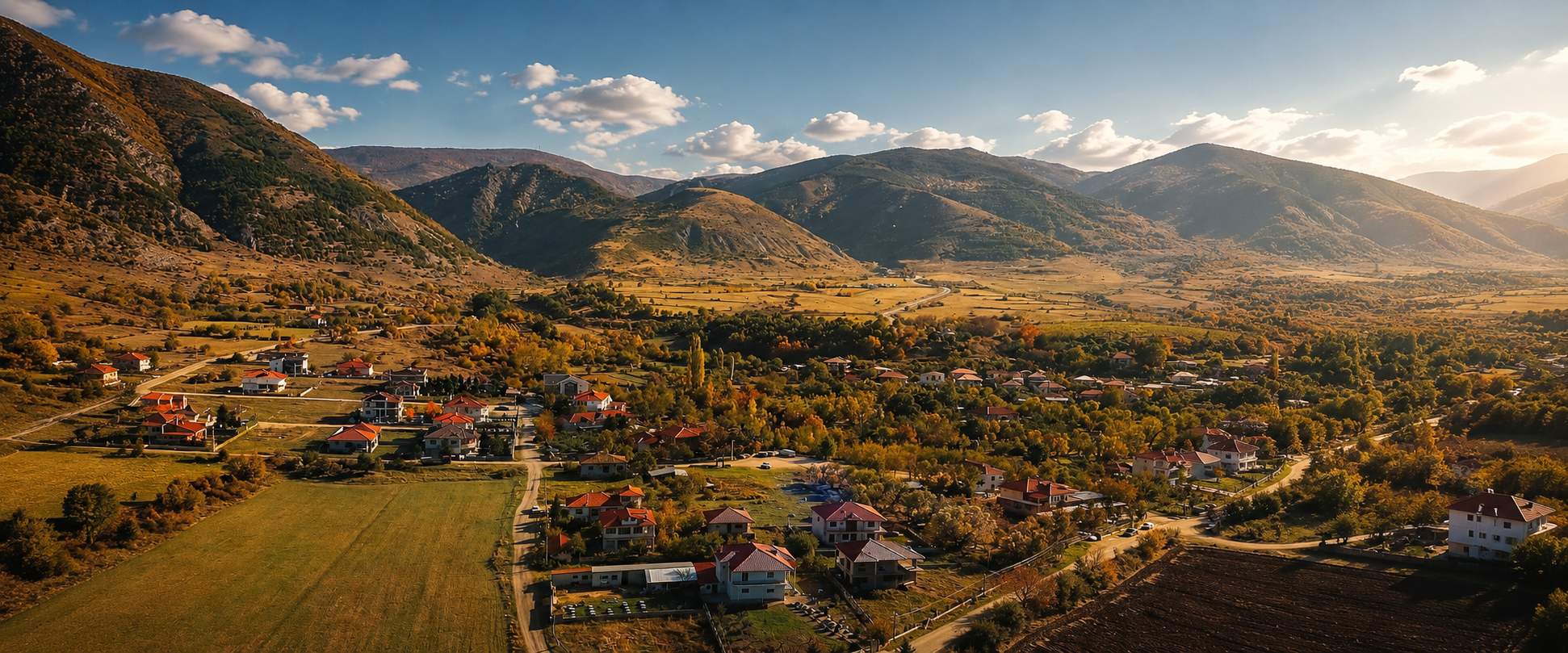
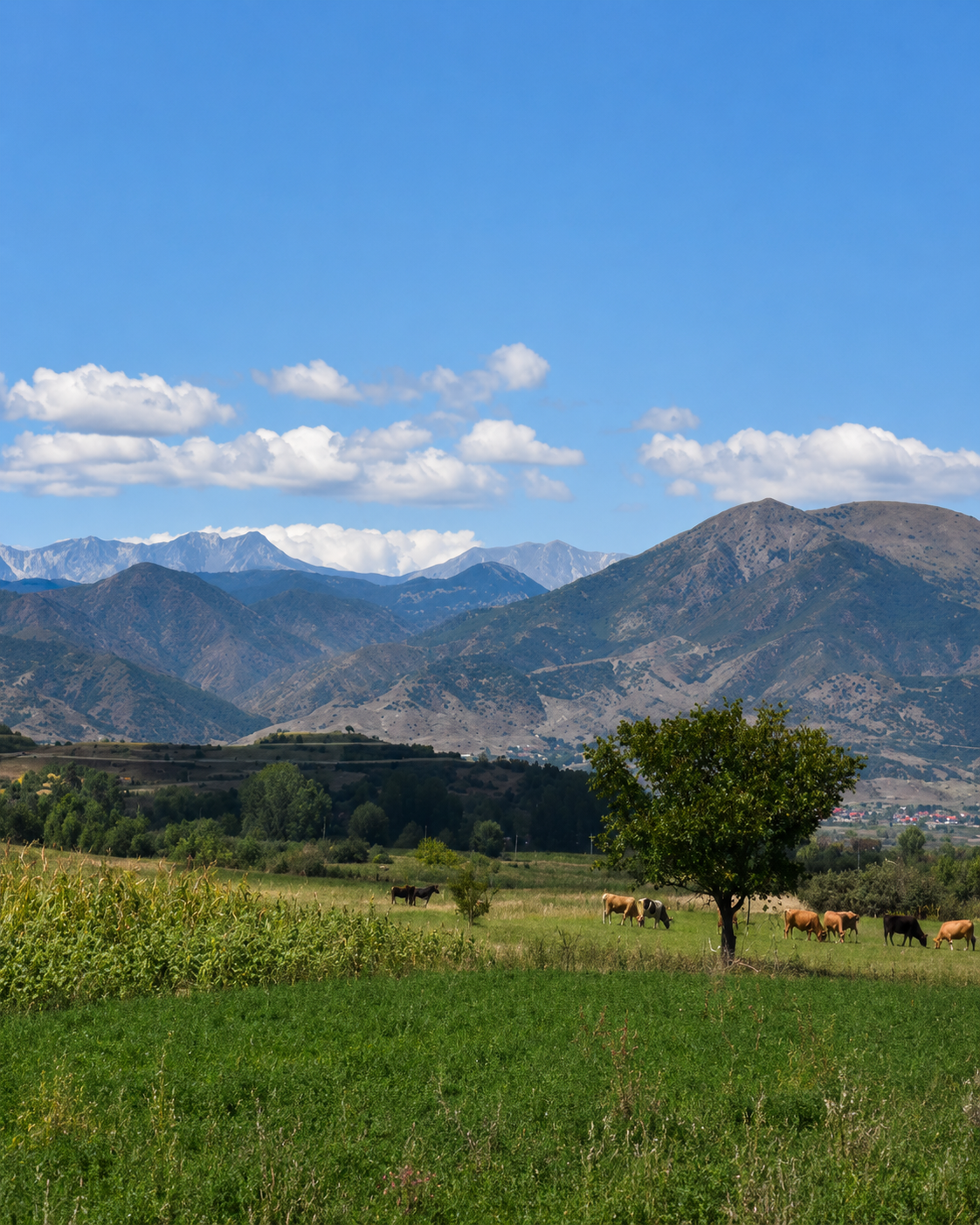
Boboshtica Village is located in southeastern Albania, within the Korça region and part of the Drenovë Administrative Unit. The village lies around 7 km from the city of Korça, positioned between the agricultural plains and the lower slopes of the Morava Mountains.
Situated at approximately 920 meters above sea level, Boboshtica offers a unique geographical setting where rural farmland landscapes meet mountain scenery. The drive from Korça takes only around 15 minutes, making it one of the easiest and most popular day trips near the city.
Its location makes Boboshtica ideal for:
- Day trips from Korça
- Traditional food experiences
- Rural tourism in Albania
- Gastronomic tourism
- Cultural and religious tourism
- Relaxing countryside escapes
- Exploring villages near Korça
The road to the village passes through agricultural landscapes, mulberry plantations, and quiet rural scenery that immediately creates a slower and more authentic atmosphere.
History of Boboshtica Village
Boboshtica is one of the oldest settlements in the Korça region and carries a long and layered history shaped by migration, religion, craftsmanship, and cultural coexistence. Historical evidence suggests the area has been inhabited since ancient times, with nearby archaeological discoveries connected to the Late Bronze Age.
The village itself is believed to have developed during the medieval period and later received Slavic influences during migrations into the Balkans between the 6th and 9th centuries. Over time, Boboshtica became a mixed community where Albanian, Vlach, and Slavic-Bulgarian populations lived together while preserving strong social and economic connections with the Korça region.
During the Ottoman period, Boboshtica developed into an important Orthodox settlement known for agriculture, mulberry cultivation, wool processing, and artisan production. The village also became famous for producing black mulberry raki, a tradition that continues today and remains one of its strongest cultural symbols.
Migration played a major role in shaping the identity of the village. From the 19th century onward, many residents emigrated to Romania, Greece, and later the United States, contributing financially to the development of the community and influencing its social structure. According to historical accounts, Boboshtica developed a relatively prosperous and entrepreneurial rural class compared to many neighboring villages.
The village also became known for important Orthodox pilgrimages connected to the monasteries of Saint Nicholas and Saint Mary, attracting visitors from across the Korça region and neighboring Balkan territories.
Today, Boboshtica still preserves much of this historical identity through its churches, village layout, gastronomy, traditions, and rural atmosphere.
Why Visit Boboshtica Village?
What makes Boboshtica different from many villages near Korça is its strong cultural identity.
While destinations like Dardha and Voskopoja are known mainly for mountain tourism, Boboshtica stands out because of its gastronomy, mulberry traditions, Orthodox heritage, and authentic village atmosphere.
Visitors come to Boboshtica for several reasons:
- Traditional Albanian food
- Famous mulberry raki
- Historic churches and monasteries
- Rural landscapes and village life
- Traditional architecture
- Peaceful atmosphere close to Korça
- Authentic local hospitality
- Cultural festivals and traditions
The village also offers a slower and more intimate experience compared to more commercial tourism destinations. Walking through Boboshtica feels like discovering a living rural community rather than a tourism-oriented attraction.
The Famous Mulberry Tradition of Boboshtica
Boboshtica is especially famous for its centuries-old black mulberry trees and the traditional products made from them. The village has historically cultivated mulberry plantations that still shape the landscape today.
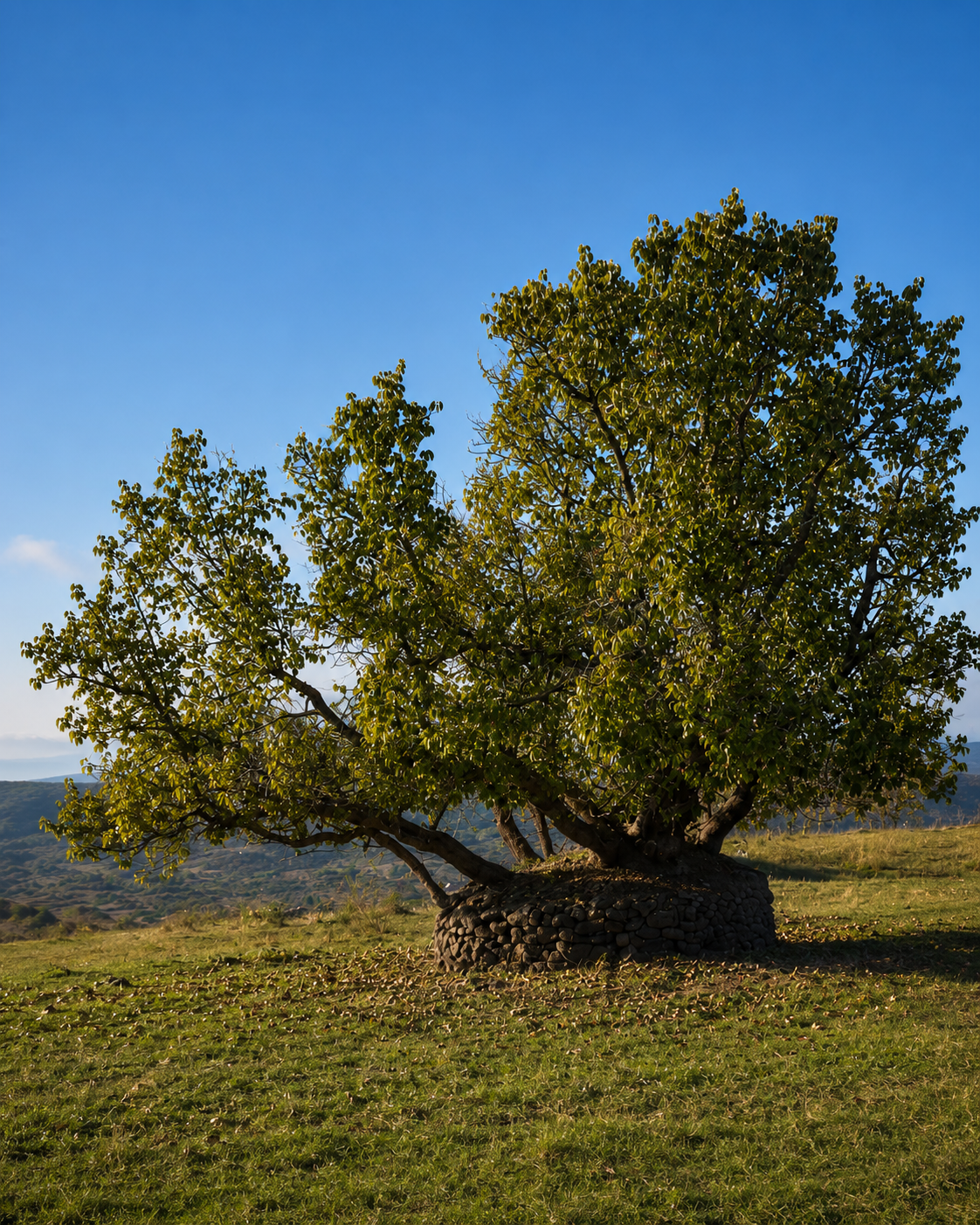
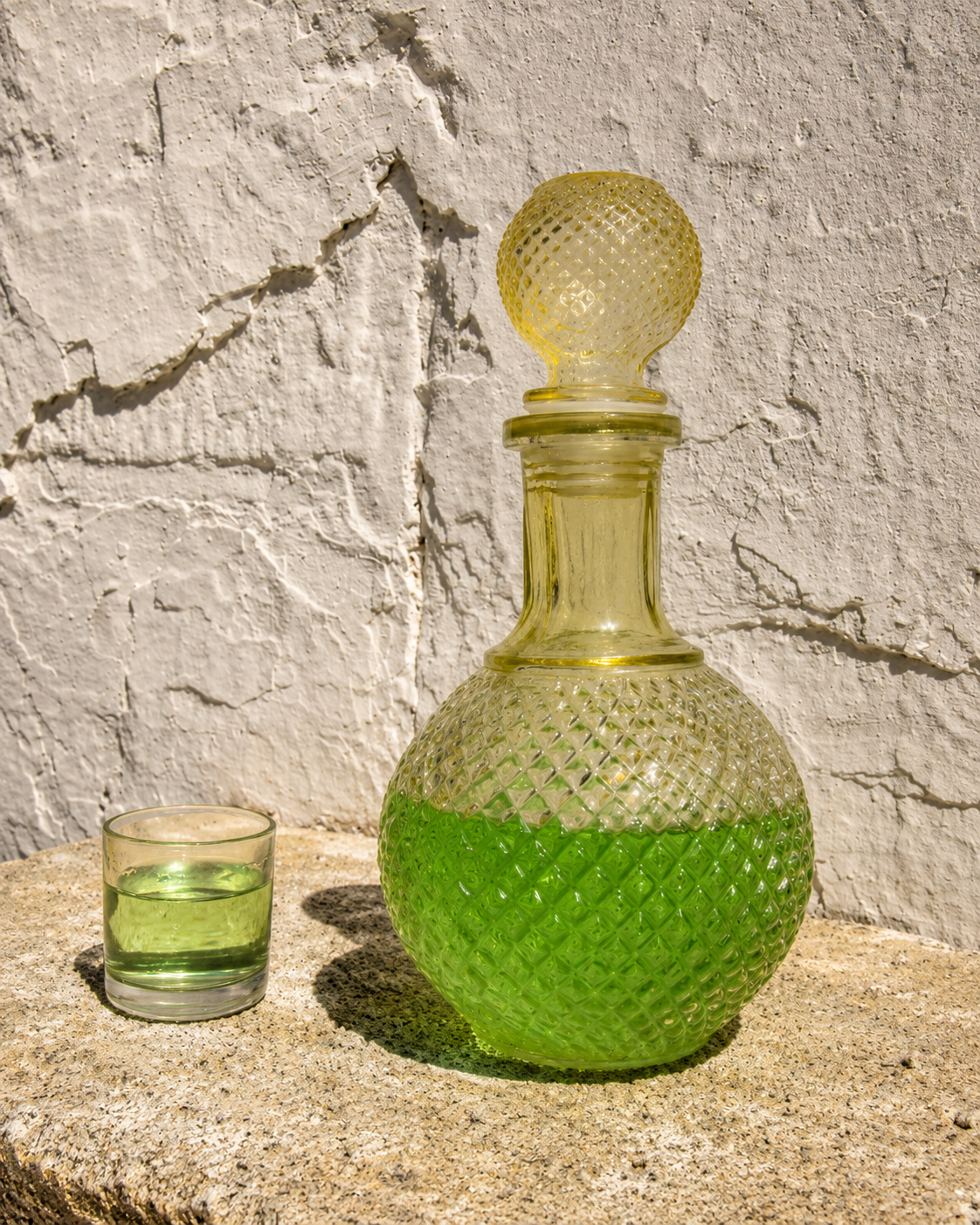
These mulberry trees are deeply connected to the identity and economy of the village. For generations, local families have produced:
- Mulberry raki
- Mulberry liqueur
- Homemade jams
- Traditional syrups
Among them, black mulberry raki remains the most famous local product and one of the strongest symbols of Boboshtica.
The landscapes created by these old mulberry plantations are also part of the village’s charm. Stone-lined agricultural plots, old rural pathways, and traditional cultivation methods create one of the most authentic rural sceneries near Korça.
Traditional Architecture and Village Atmosphere
Boboshtica preserves a soft rural character shaped by traditional stone houses, gardens, narrow village roads, and small courtyards filled with flowers and fruit trees.
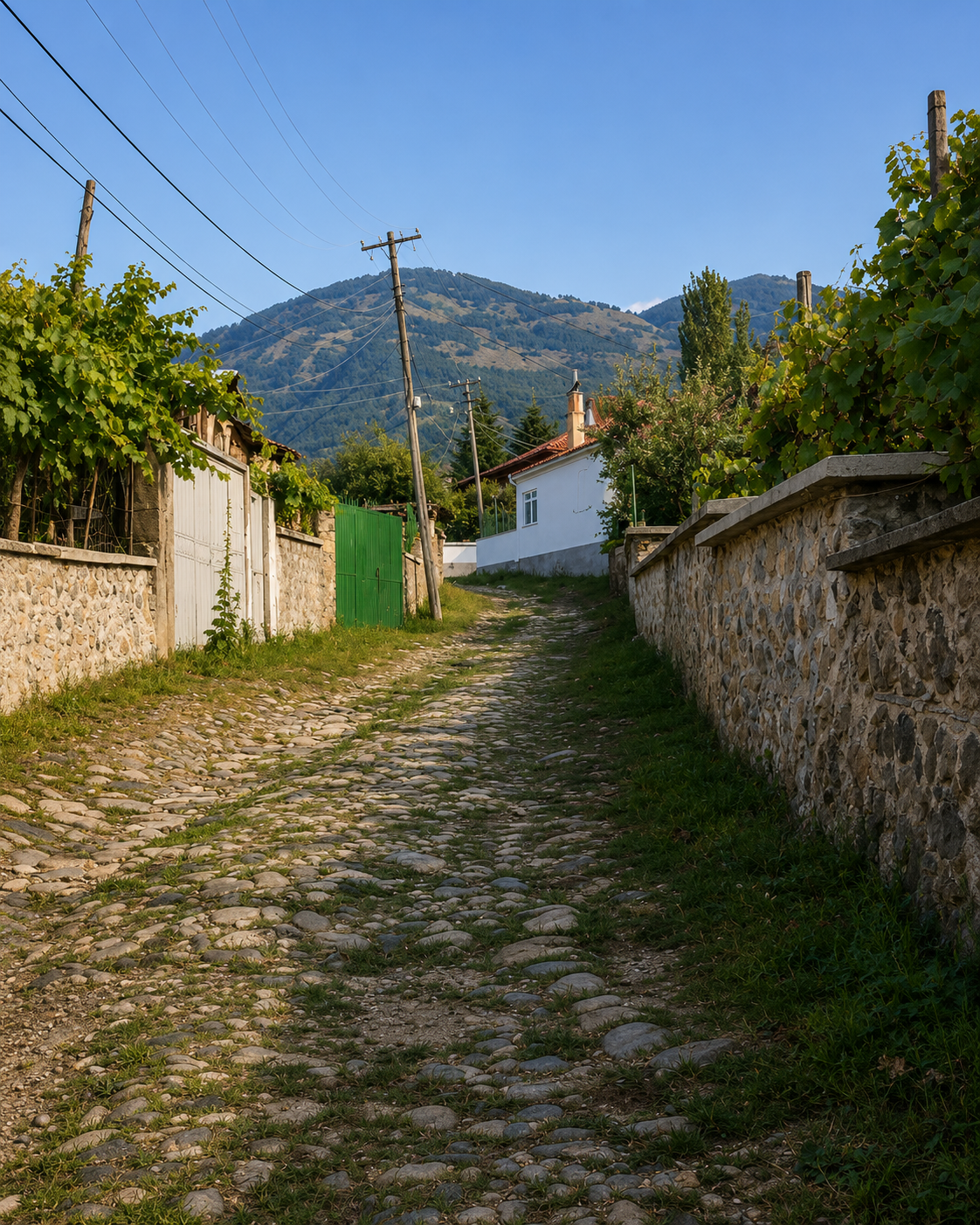
Although the village does not have the same architectural density as Dardha, it still contains important examples of traditional rural architecture connected to the Korça region.
The houses are generally built using:
- Stone walls
- Wooden structural elements
- Traditional roof tiles
- Enclosed gardens
- Low stone fences
One of the most important preserved buildings is the House of Ilo Kuneshka, officially recognized as a Cultural Monument.
The atmosphere of Boboshtica is defined less by monumental architecture and more by its harmony between houses, gardens, agricultural land, and village life.
Things to Do in Boboshtica
Boboshtica offers a combination of gastronomy, cultural tourism, rural exploration, and nature experiences.
1. Explore the Mulberry Landscapes
The mulberry plantations at the entrance of the village are among the most characteristic landscapes in Boboshtica. Walking through these rural areas offers visitors a glimpse into one of the oldest agricultural traditions in the region.
Religious and Cultural Heritage
Boboshtica is one of the most historically significant Orthodox villages near Korça, preserving a rich religious heritage that dates back to the Byzantine and post-Byzantine periods. Historically, the village was home to numerous churches and monasteries and became an important pilgrimage destination, attracting visitors from Korça, Ohrid, Bitola, Prilep, and other parts of the Balkans. Today, some of its most important religious monuments include:
- Saint John Church (Shën Jovani) – Considered one of the oldest surviving monuments in Boboshtica, this church dates back to the 13th–14th centuries and is often referred to by locals as the “Old Church.” It preserves valuable Byzantine and post-Byzantine frescoes depicting scenes from the life of Christ, saints, and Saint John the Forerunner, the church’s patron saint. The structure reflects multiple construction and restoration phases over the centuries, offering important insights into the evolution of Orthodox architecture and religious life in the Korça region. Its historical significance and artistic heritage make it one of the most important cultural landmarks in the village.
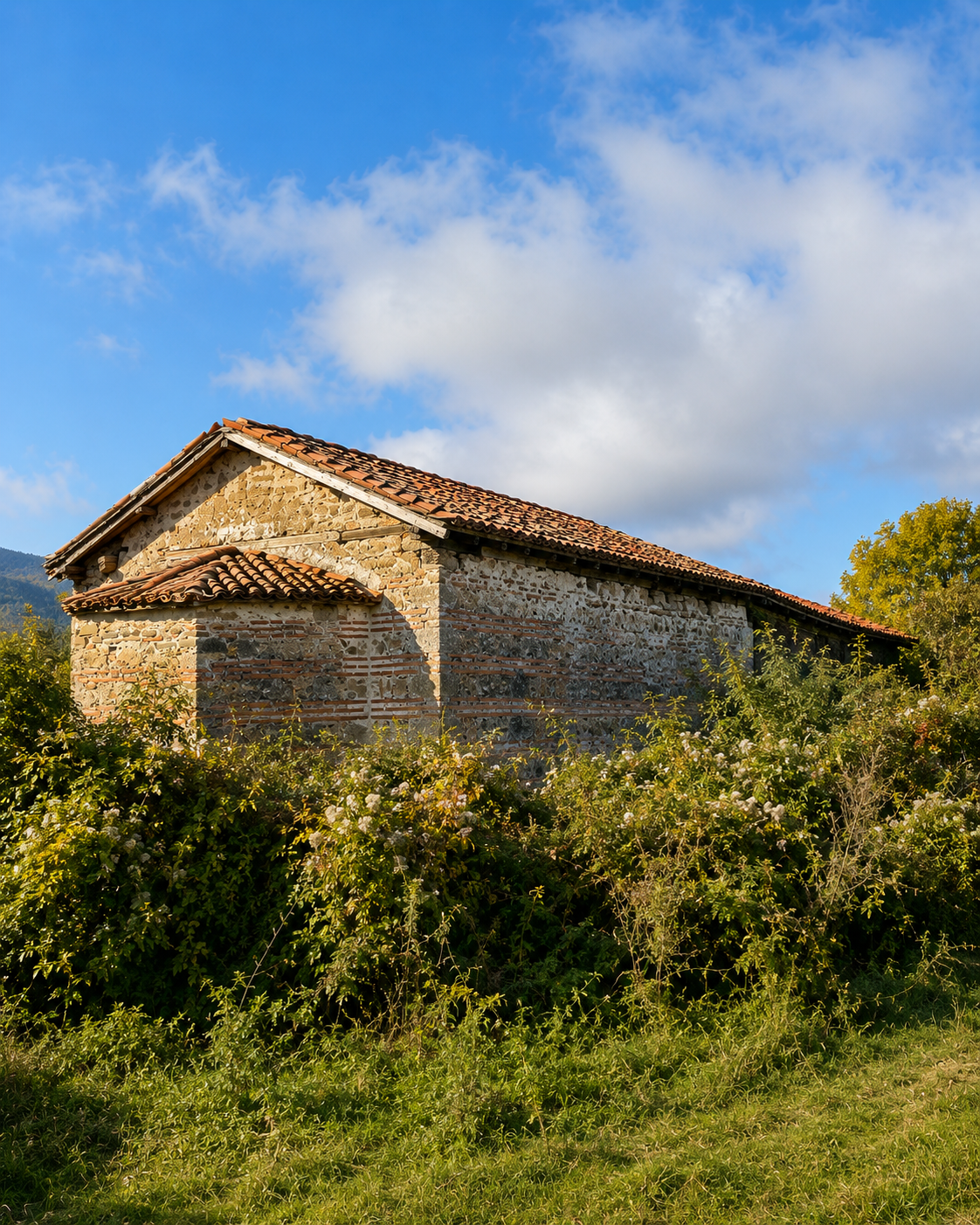
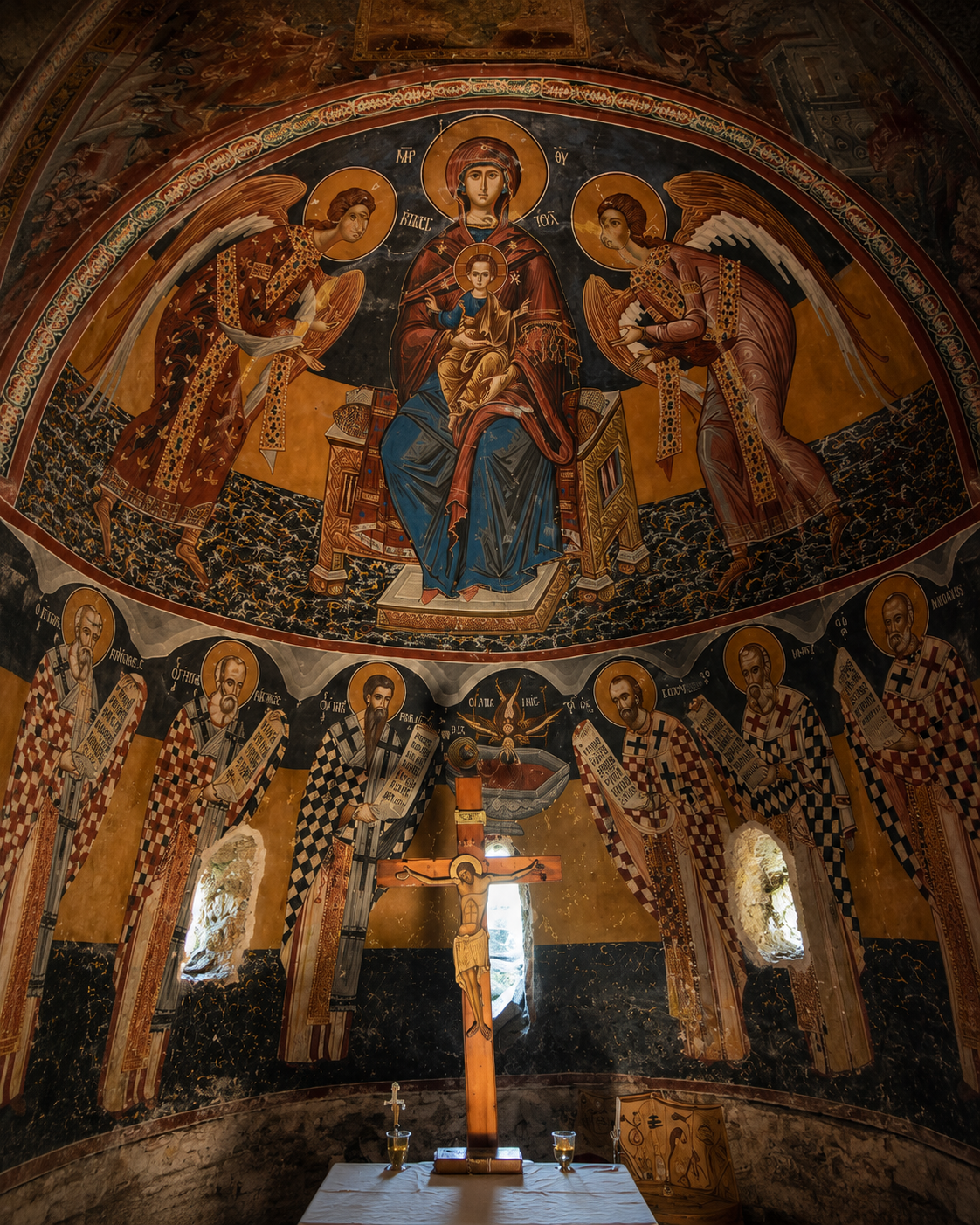
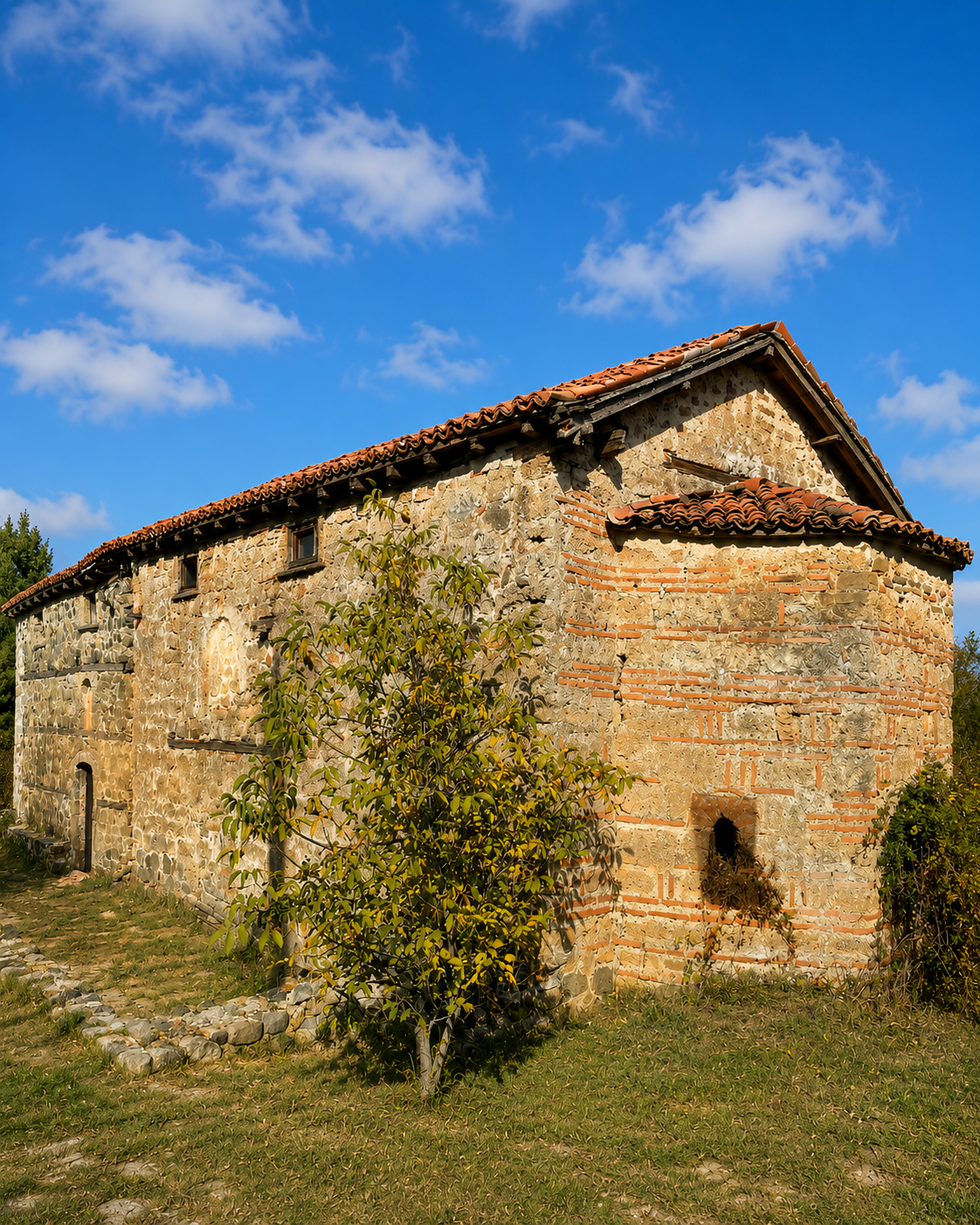
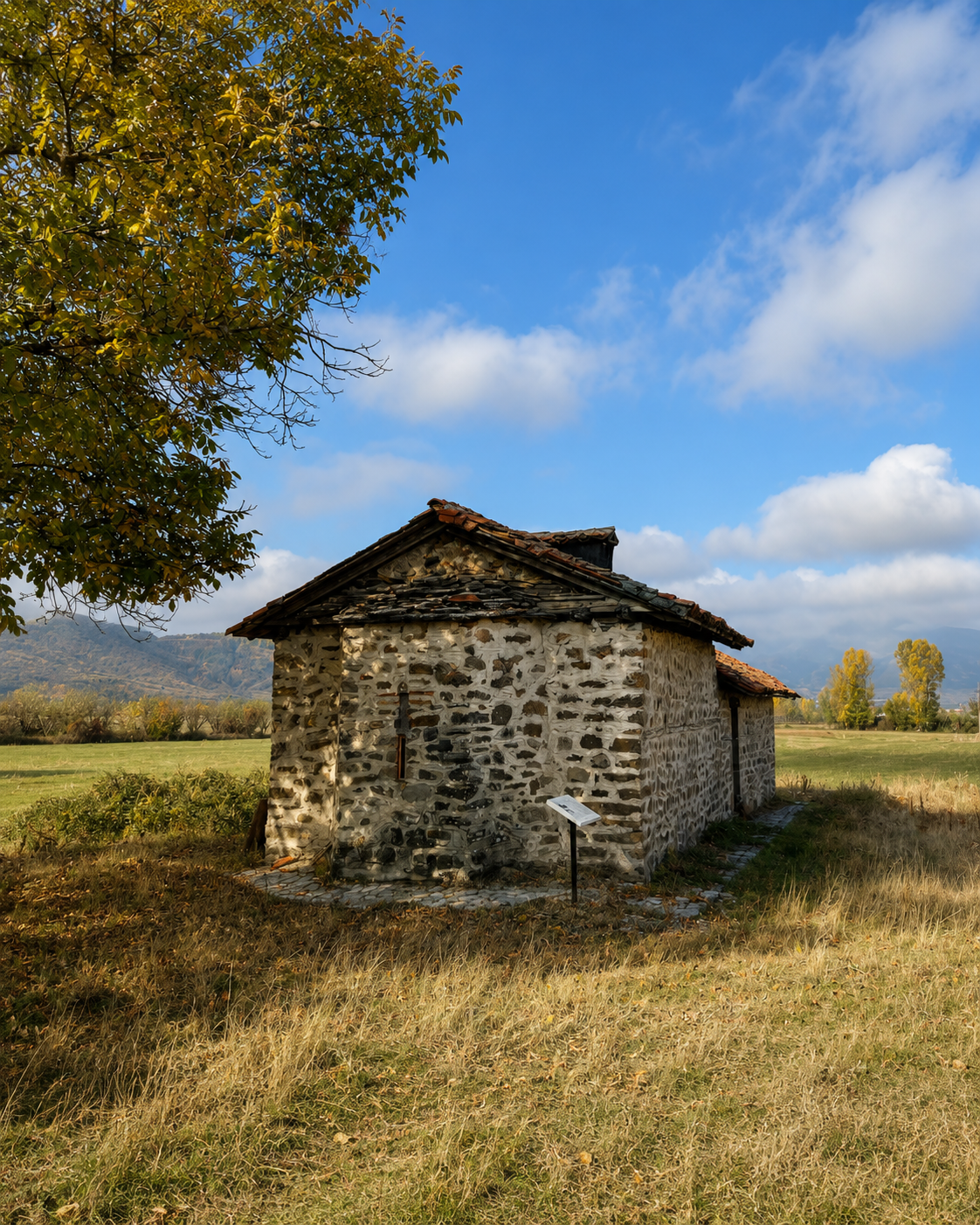
- Saint Demetrius Church (Shën Mitri) – A Category I Cultural Monument dating to the 14th century, Saint Demetrius Church is located in the northwestern part of Boboshtica, surrounded by open countryside and panoramic views of the Korça plain. Built in a simple Byzantine style with traditional stone masonry and a tiled roof, the church preserves remarkable frescoes covering its walls and interior vaults. Among the most notable artworks are depictions of the Virgin Mary with Christ, angels, saints, and scenes inspired by biblical and liturgical themes. Combining medieval art, architecture, and a tranquil rural setting, Saint Demetrius Church remains one of Boboshtica’s most fascinating attractions for visitors interested in history, culture, and Orthodox heritage.
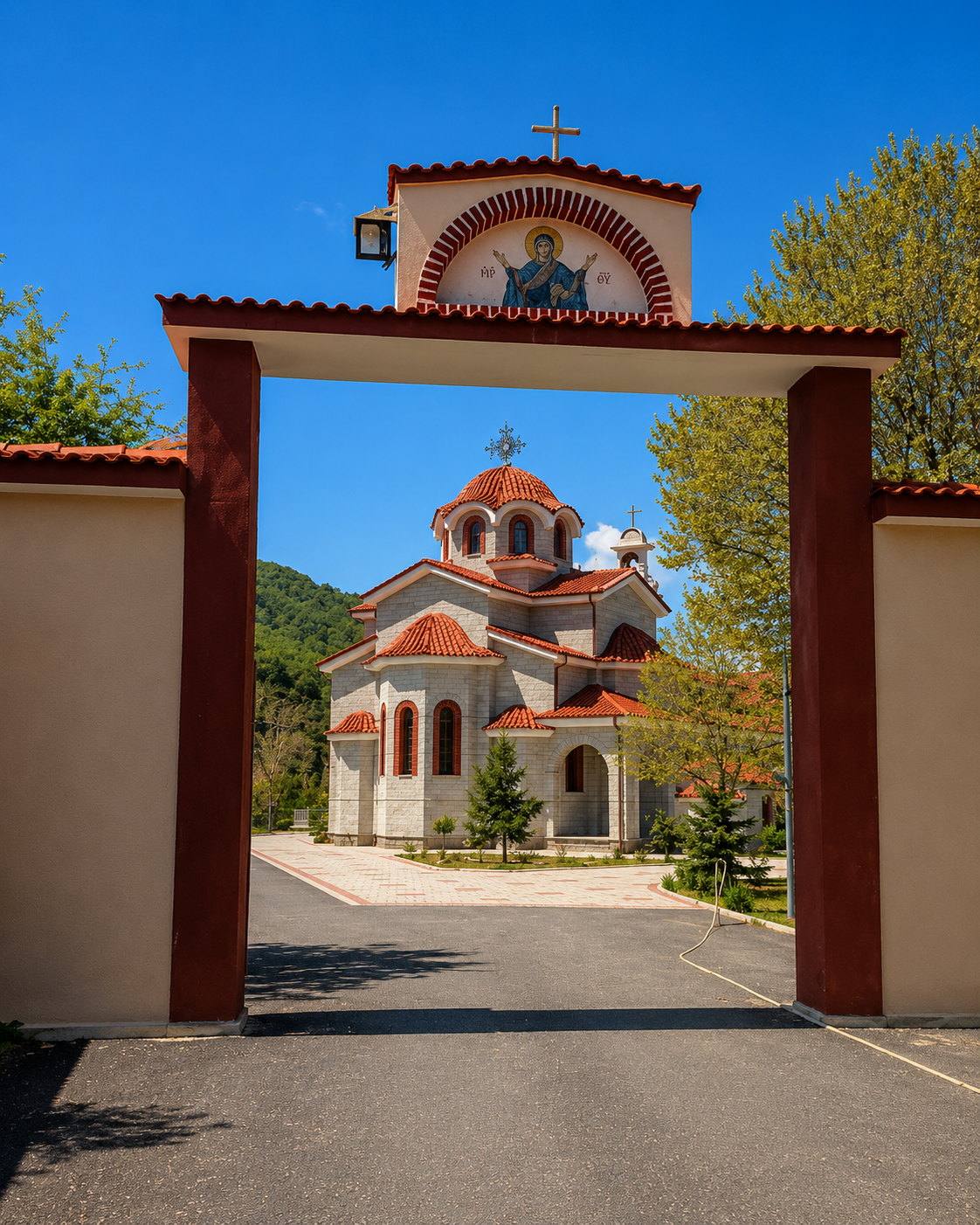
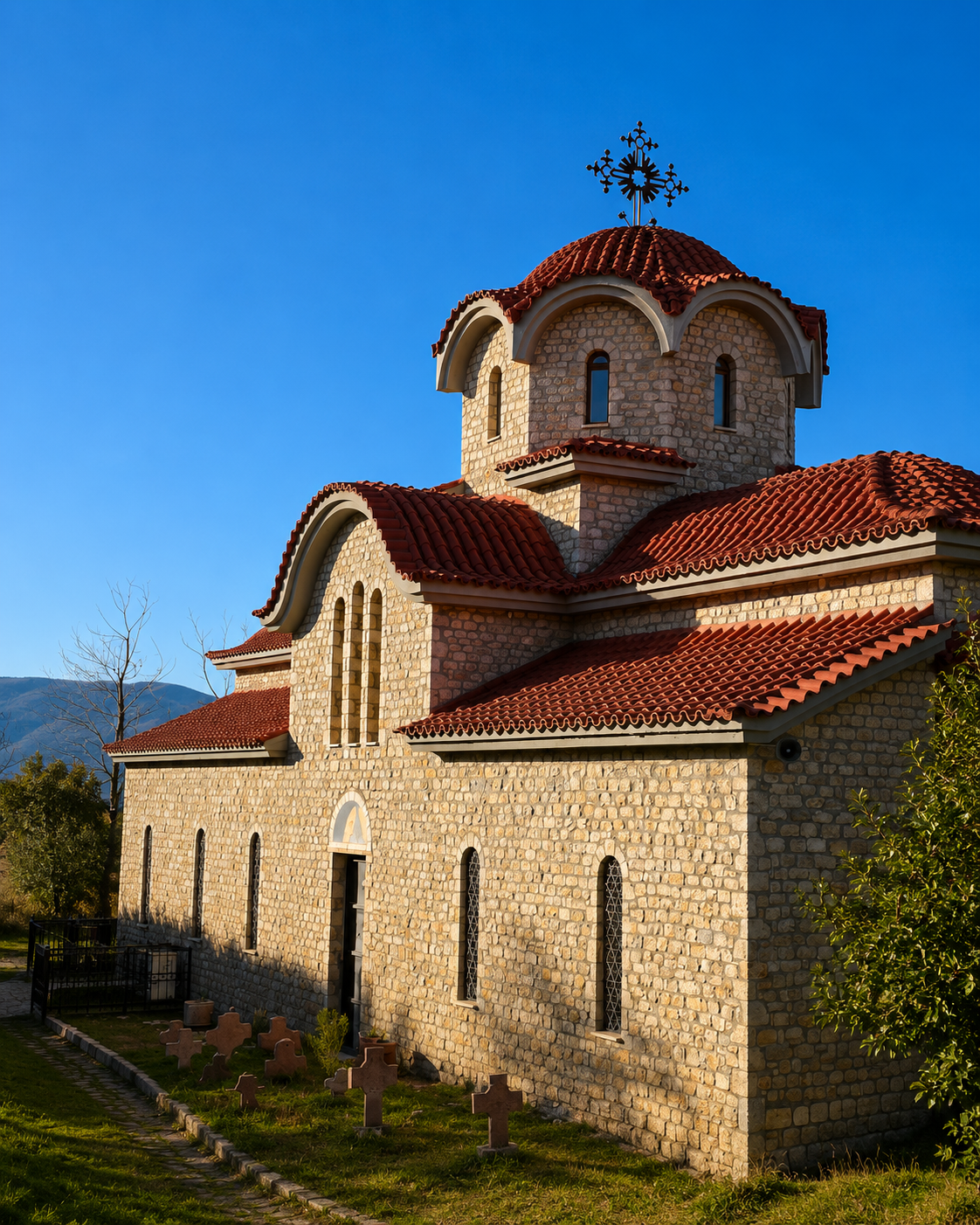
- Saint Mary Monastery (Fjetja e Shën Mërisë) – Historically one of the village’s most important pilgrimage sites and still an important symbol of Boboshtica’s Orthodox tradition.
- Saint Nicholas Monastery (Shën Nikolla) – Another significant religious center that played an important role in the spiritual and cultural life of the village for centuries.
Beyond their architectural and artistic value, these monuments are set within peaceful rural landscapes and offer visitors a unique glimpse into the history, faith, and cultural identity of Boboshtica. Together, they remain among the village’s most fascinating attractions and continue to preserve the centuries-old spiritual traditions that define this historic village today.
3. Taste Traditional Food
Food is one of the main reasons tourists visit Boboshtica today. The village has become one of the top gastronomic destinations near Korça thanks to its traditional restaurants and homemade cuisine.
4. Walk the Rural Trails
Several old village trails connect Boboshtica with nearby villages such as Drenova and Dvoran. These routes pass through agricultural fields, streams, and panoramic viewpoints overlooking the Korça plain.
5. Explore Povrok Stream
The Povrok stream area south of the village offers a more natural and adventurous landscape with small canyon-like formations, natural pools, and forested areas historically used as summer recreational spots by local residents.
Traditional Festivals and Local Traditions
Boboshtica still preserves traditional celebrations that survived even during the communist period when religious practices were restricted.
One of the most important celebrations is the Feast of Saint Mary on August 15, which continues to attract visitors and pilgrims from Korça and surrounding areas.
Another unique tradition is the Rosicat Festival, celebrated three weeks after Easter and connected to the arrival of spring. During this celebration, women traditionally wear the black traditional costume of Boboshtica decorated with red, blue, and golden embroidery.
The village is also known for:
- Traditional songs
- Handmade carpets and wool products
- Artisan embroidery
- Folk traditions
- Local dialect heritage
What Food to Try in Boboshtica
Traditional cuisine is one of the strongest tourism attractions in Boboshtica and one of the main reasons travelers choose to visit the village. Over the years, Boboshtica has built a reputation for authentic homemade dishes prepared using local ingredients, family recipes, and cooking techniques that have been passed down through generations. The village’s culinary identity is deeply connected to its agricultural traditions, with many ingredients sourced directly from local farms, gardens, and orchards.
Visitors can enjoy specialties such as lakror baked over an open fire, slow-cooked meat dishes, traditional village-style tavë, fresh dairy products, homemade bread, local honey, seasonal vegetables, and the village’s most famous product—mulberry raki, produced from the centuries-old black mulberry trees that have become a symbol of Boboshtica. Local families also prepare mulberry jam, liqueurs, and other traditional products that reflect the area’s long-standing connection to this unique fruit.
What makes the culinary experience truly memorable is not only the food itself but also the atmosphere in which it is served. Traditional taverns, stone courtyards, wooden interiors, fireplaces, and the warm hospitality of local families create an authentic rural dining experience that is increasingly difficult to find elsewhere. Whether stopping for a leisurely lunch or enjoying a traditional dinner after exploring the village, visitors quickly discover why Boboshtica has become one of the leading gastronomic destinations near Korça.
Best Restaurants in Boboshtica
Boboshtica has become one of the most popular gastronomic destinations near Korça, attracting visitors who come specifically to enjoy traditional Albanian cuisine in a peaceful rural setting. The village is known for its family-run taverns, authentic recipes, and warm hospitality, offering a dining experience that combines local flavors with the charm of the countryside.
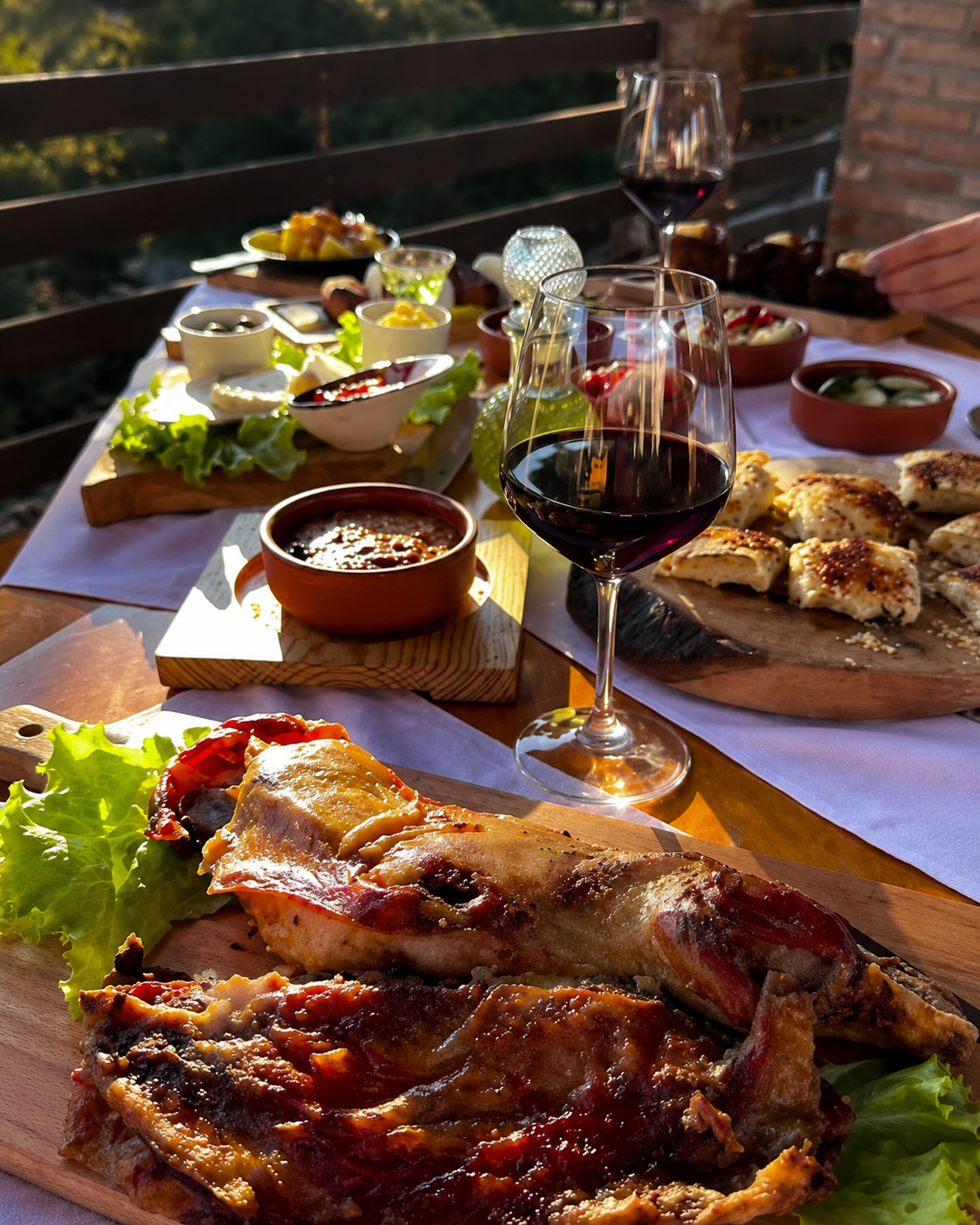
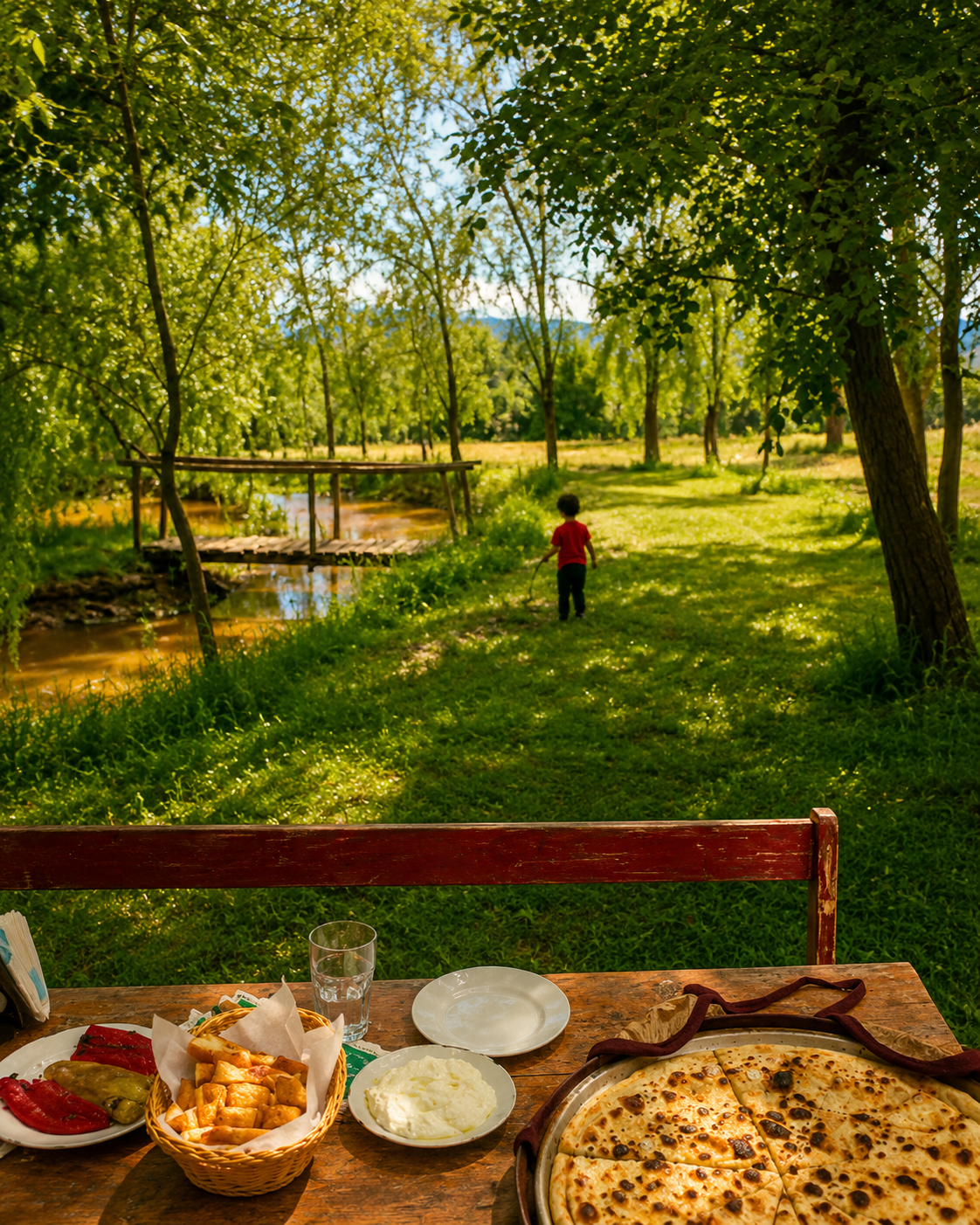
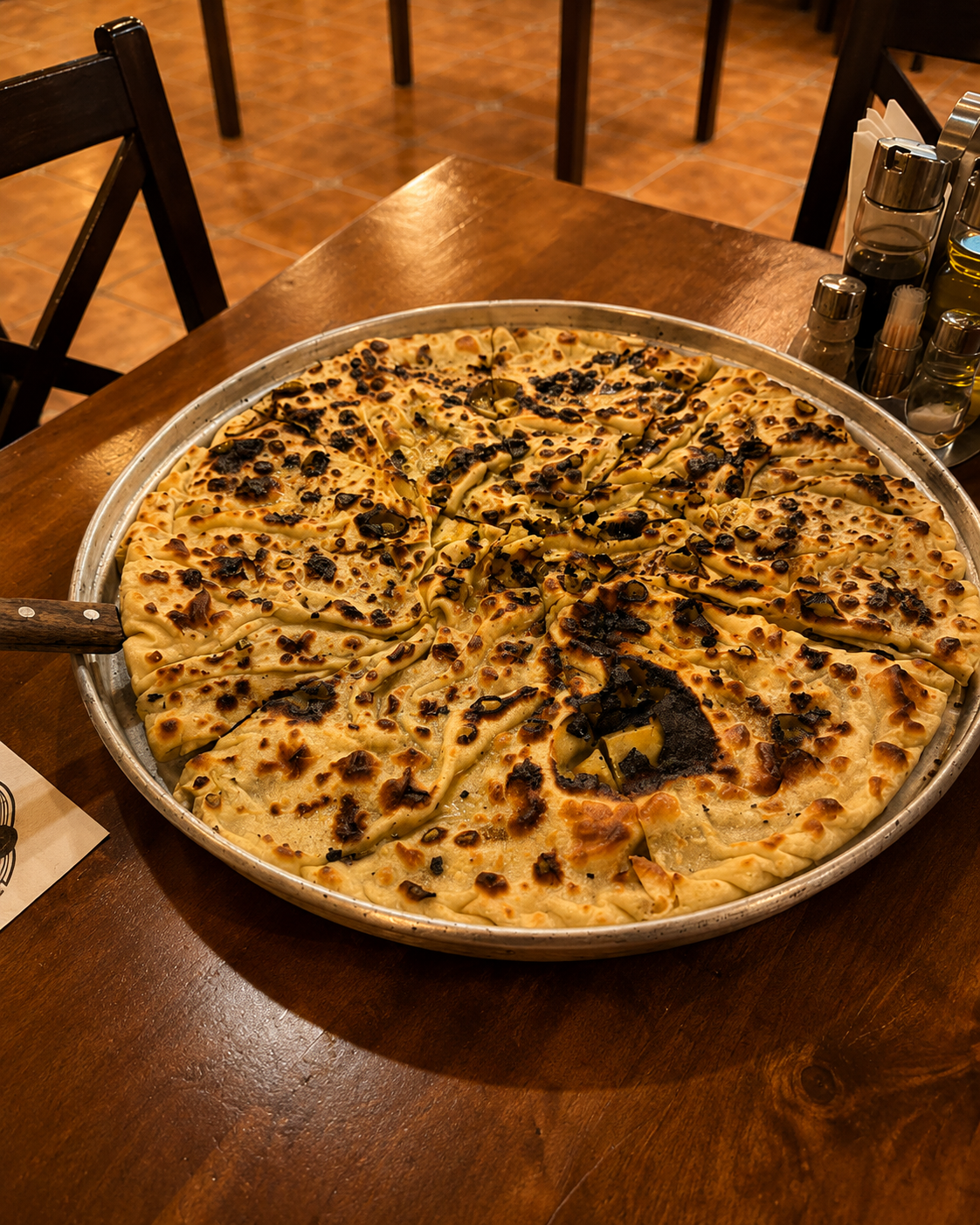
Some of the most recommended places to eat in Boboshtica include:
- Agroturizëm/Taverna Xhufka – famous for traditional Boboshtica cuisine, homemade products, local mulberry raki, and an authentic agritourism atmosphere.
- Taverna Antoneta – a popular family-run restaurant known for its beautiful garden setting, generous portions, and traditional Korça specialties prepared with local ingredients.
- Vila Melko Restaurant Farm & Rooms – combines accommodation and dining in a rustic countryside environment, offering traditional dishes, fresh local produce, and a cozy mountain-style atmosphere.
Many travelers visiting Korça make a stop in Boboshtica specifically for lunch or dinner, making the village one of the most rewarding destinations in the region for those interested in authentic food and rural tourism.
Nature and Hiking Around Boboshtica
Although Boboshtica is best known for its gastronomy, history, and cultural heritage, the surrounding countryside also offers attractive opportunities for nature tourism and outdoor exploration. The village is surrounded by a diverse landscape of agricultural fields, gentle hills, streams, natural springs, and scenic walking routes that showcase the peaceful beauty of the Korça region. These landscapes create an ideal setting for visitors looking to escape the city and experience a slower rhythm of life connected to nature.
One of the most interesting natural landmarks near the village is Korija e Polenkës, a small hill that rises above the surrounding countryside and offers panoramic views over Boboshtica, the Korça plain, and the nearby agricultural landscapes. The viewpoint is particularly beautiful during sunrise and sunset, when the changing light highlights the contrast between the fertile plains and the distant mountains. In addition to Korija e Polenkës, visitors can explore rural paths that connect Boboshtica with neighboring villages, follow streams that descend from the Morava Mountains, or discover small canyon-like sections and natural landscapes that remain largely unknown to most tourists.
The surrounding area is ideal for photography, picnics, relaxing countryside walks, light hiking, birdwatching, and rural exploration. While Boboshtica may not offer the dramatic mountain scenery of nearby Dardha, its combination of traditional village life, agricultural landscapes, and peaceful natural surroundings provides a rewarding experience for travelers seeking authenticity and tranquility in southeastern Albania.
How to Get to Boboshtica?
From Korça
- Distance: Around 7 km
- Travel time: Around 15 minutes
From Tirana
- Travel time: Around 3.5–4 hours
The easiest way to visit Boboshtica is by car from Korça. Local taxis are also available from the city center.
Because of its proximity to Korça, the village is often combined with visits to:
- Dardha
- Voskopoja
- Drenova
- Korça city itself
Best Time to Visit Boboshtica
- Spring: Perfect for rural landscapes, flowers, village walks, and festivals.
- Summer: Ideal for traditional food experiences, outdoor dining, and escaping city heat.
- Autumn: One of the best seasons because of harvest landscapes, colorful scenery, and mulberry-related traditions.
- Winter: Offers a peaceful village atmosphere and cozy traditional restaurants near Korça.
Boboshtica works well as a year-round destination because it combines gastronomy, culture, and relaxation rather than seasonal tourism only.
FAQ – Boboshtica Village Albania
Yes. Boboshtica is one of the best villages near Korça for traditional food, culture, and authentic rural experiences.
Boboshtica is famous for black mulberry raki, traditional restaurants, Orthodox churches, and rural gastronomy.
Boboshtica is located around 7 km from Korça.
Lakror, homemade meat dishes, dairy products, and mulberry raki are among the most famous local specialties.
Yes. It is one of the easiest and most popular day trips from Korça.
Yes. The surrounding hills, streams, and rural trails offer light hiking and walking experiences.
The village preserves important Orthodox heritage, Byzantine churches, and centuries-old cultural traditions connected to the Korça region.
Boboshtica is one of the most authentic villages near Korça, offering a rare combination of gastronomy, culture, history, religion, and rural atmosphere. Whether you visit for traditional food, mulberry raki, historic churches, or simply to experience a quieter side of Albania, the village delivers one of the most genuine countryside experiences in southeastern Albania.
Looking to explore more beyond Boboshtica? Discover the region’s most charming mountain destinations in our guide “Tourist Villages Near Korça: Hidden Mountain Gems You Should Explore in Albania”, featuring Dardha, Voskopoja, Vithkuq, and other authentic villages rich in history, nature, and local traditions.