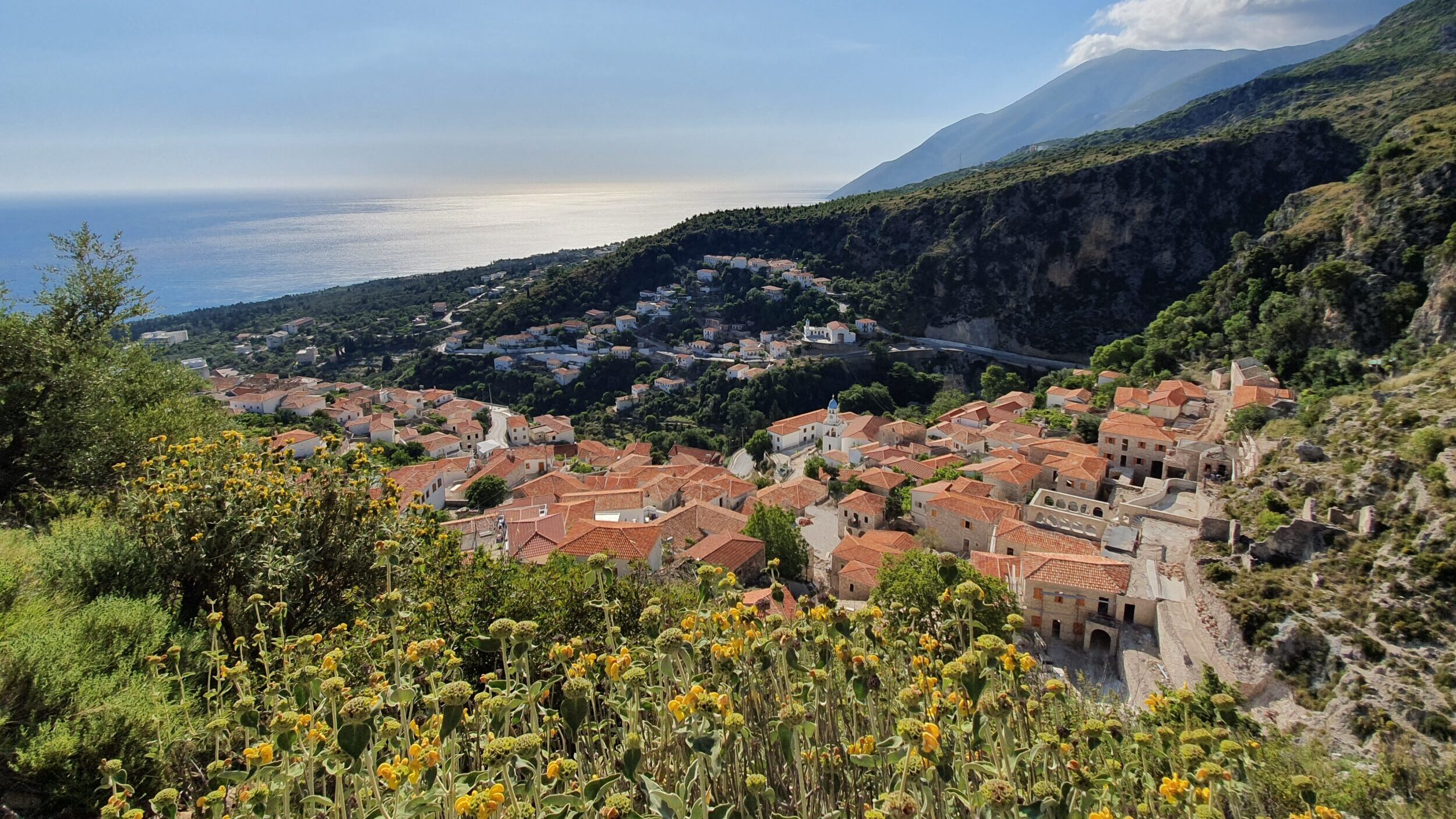


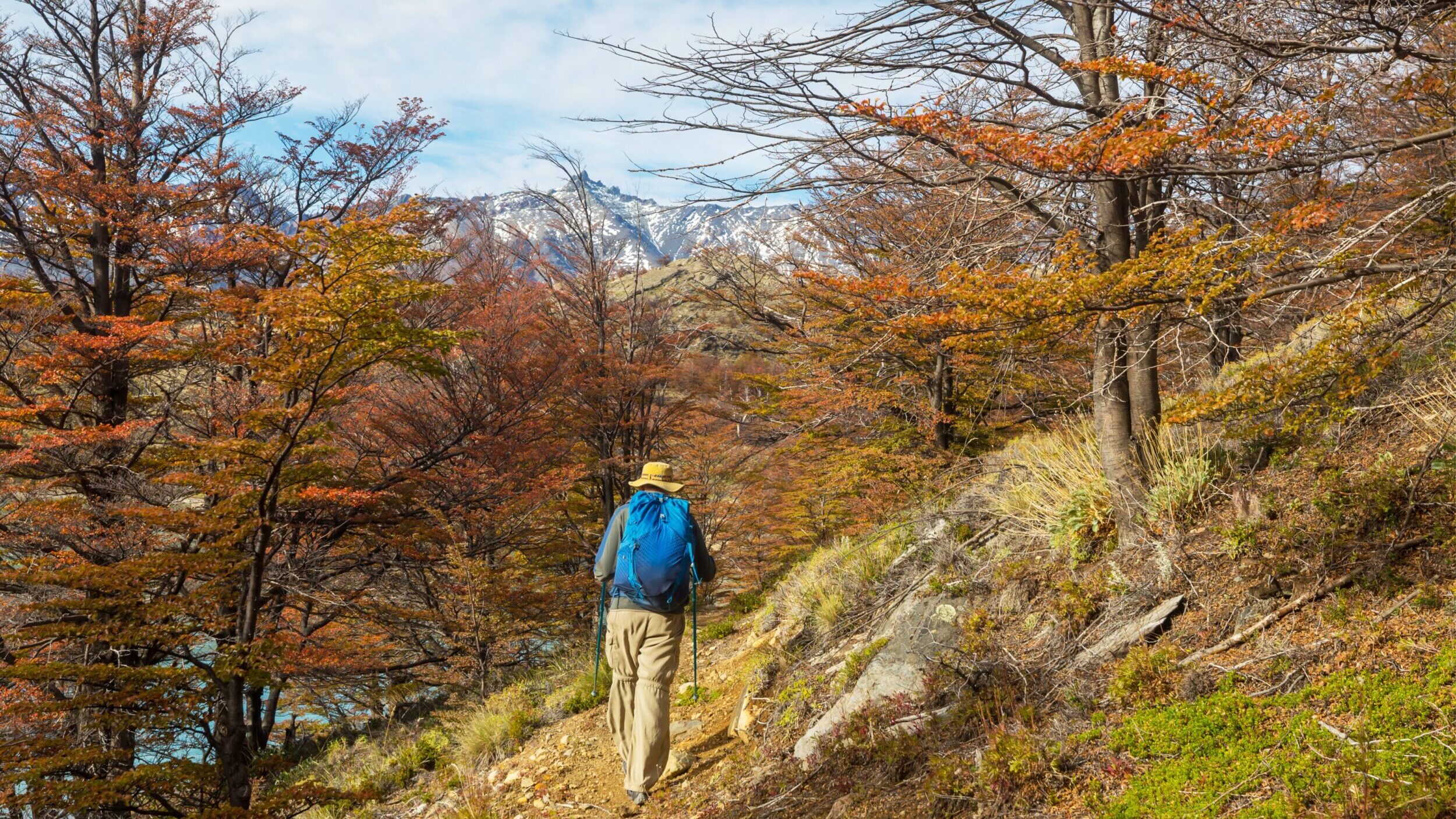
Hiking in Albania in autumn is more than just an outdoor activity it’s one of the best ways to experience the country’s wild beauty in 2025. From the legendary Valbone–Theth Pass in the Albanian Alps to coastal peaks like Maja e Thanasit, this guide to the 10 best autumn hikes in Albania highlights trails of all levels, from short waterfall walks to demanding alpine ascents.
When the summer crowds leave and the temperatures drop, Albania’s mountains turn into golden landscapes with colorful forests, peaceful valleys, and breathtaking summits. In this complete 2025 guide, you’ll find distances, average hiking times, difficulty levels, tips for gear and safety, and even transport and accommodation options to make your autumn hiking adventure in Albania unforgettable.
📋 Overview of the best autumn hikes in Albania
| Trail | Distance | Average time | Total ascent | Difficulty |
|---|---|---|---|---|
| Valbone – Theth | 15–17 km | 7–9 hours | ~1,200 m | Moderate |
| Maja e Rosit | 21 km | 8–9 hours | ~1,700 m | Challenging |
| Grunas Waterfall | 4 km | 1–1.5 hours | ~100 m | Easy |
| Maja e Tujanit | 6–7 km | 3–4 hours | ~700 m | Moderate |
| Maja e Thanasit | 7.1 km | 3–4 hours | ~700 m | Easy – Moderate |
| Mount Korab | 20–22 km | 6–8 hours | 1,500+ m | Hard |
| Mount Gamti | 7–9 km | 3–5 hours | ~800 m | Moderate |
| Maja e Murges | ~18 km | 6–7 hours | ~700 m | Moderate |
| Maja e Vajushës | 9 km | 4.5–5 hours | ~716 m | Moderate |
| Selce – Vermosh Pass | 14–15 km | 3.5–4 hours | ~700 m ↑ / 1,000 m ↓ | Moderate |
1. Valbone – Theth Pass
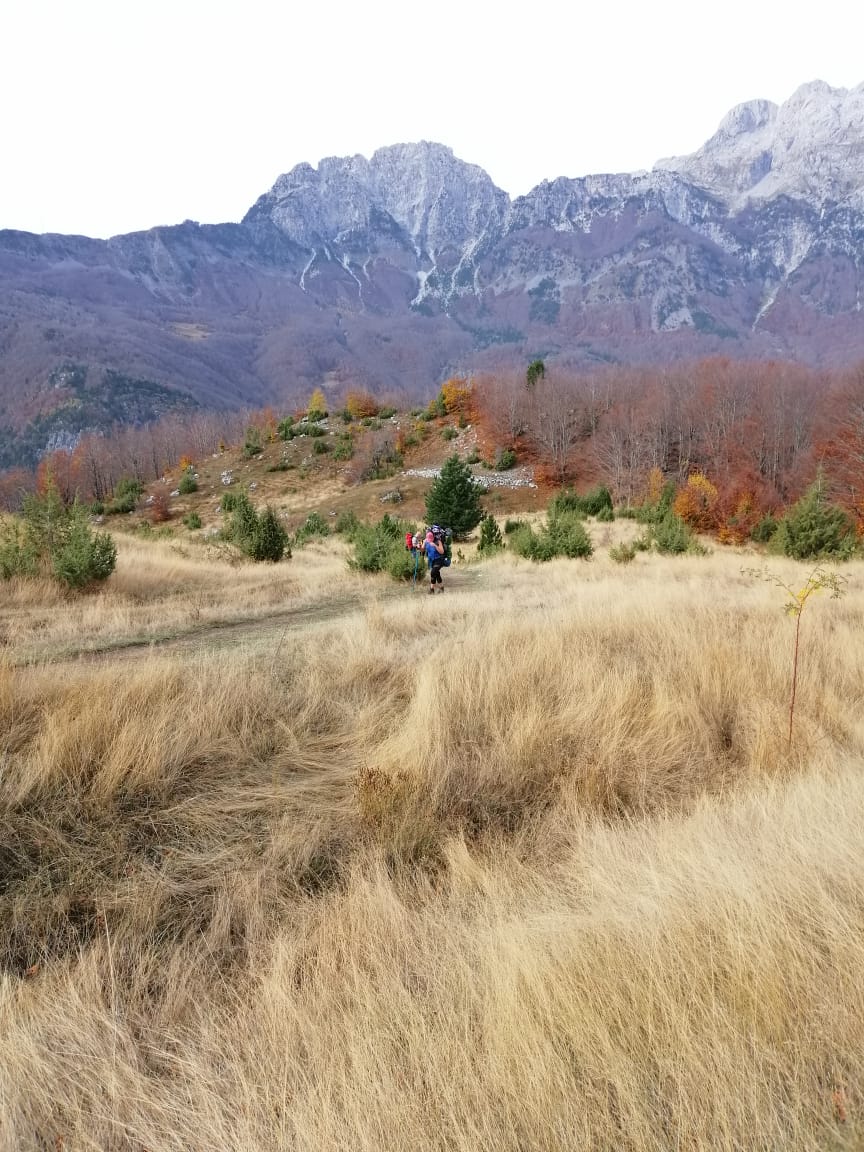
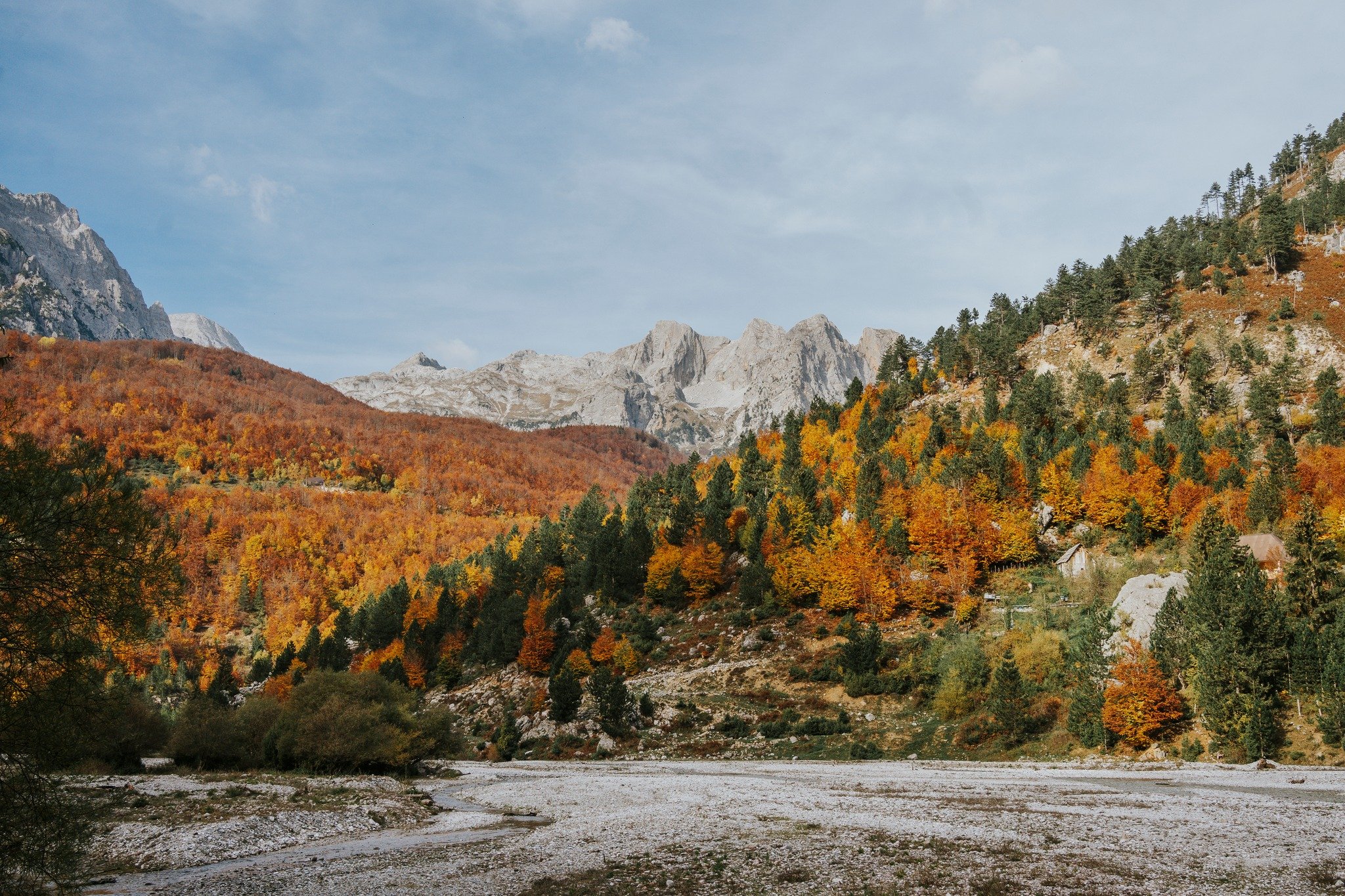
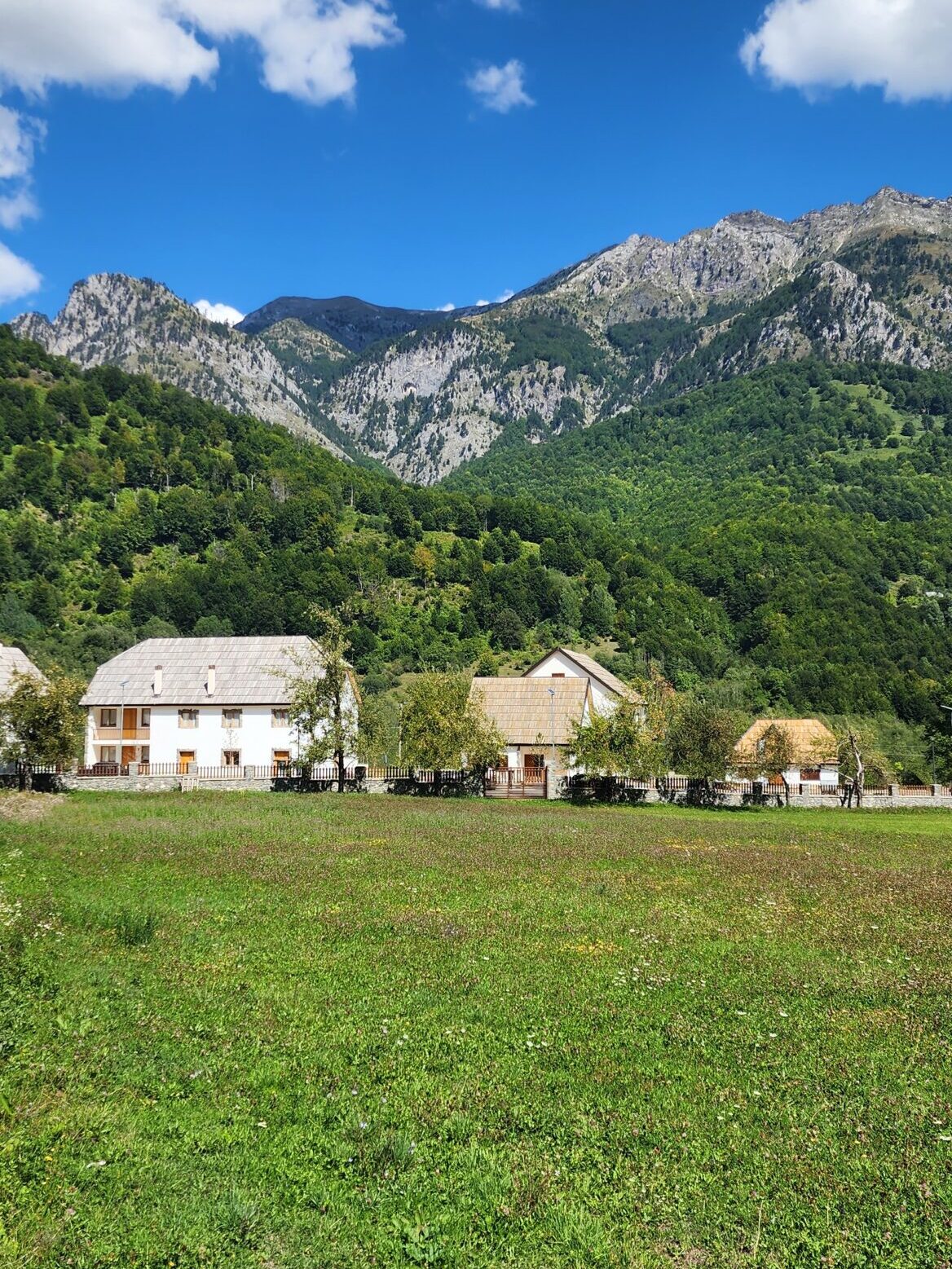
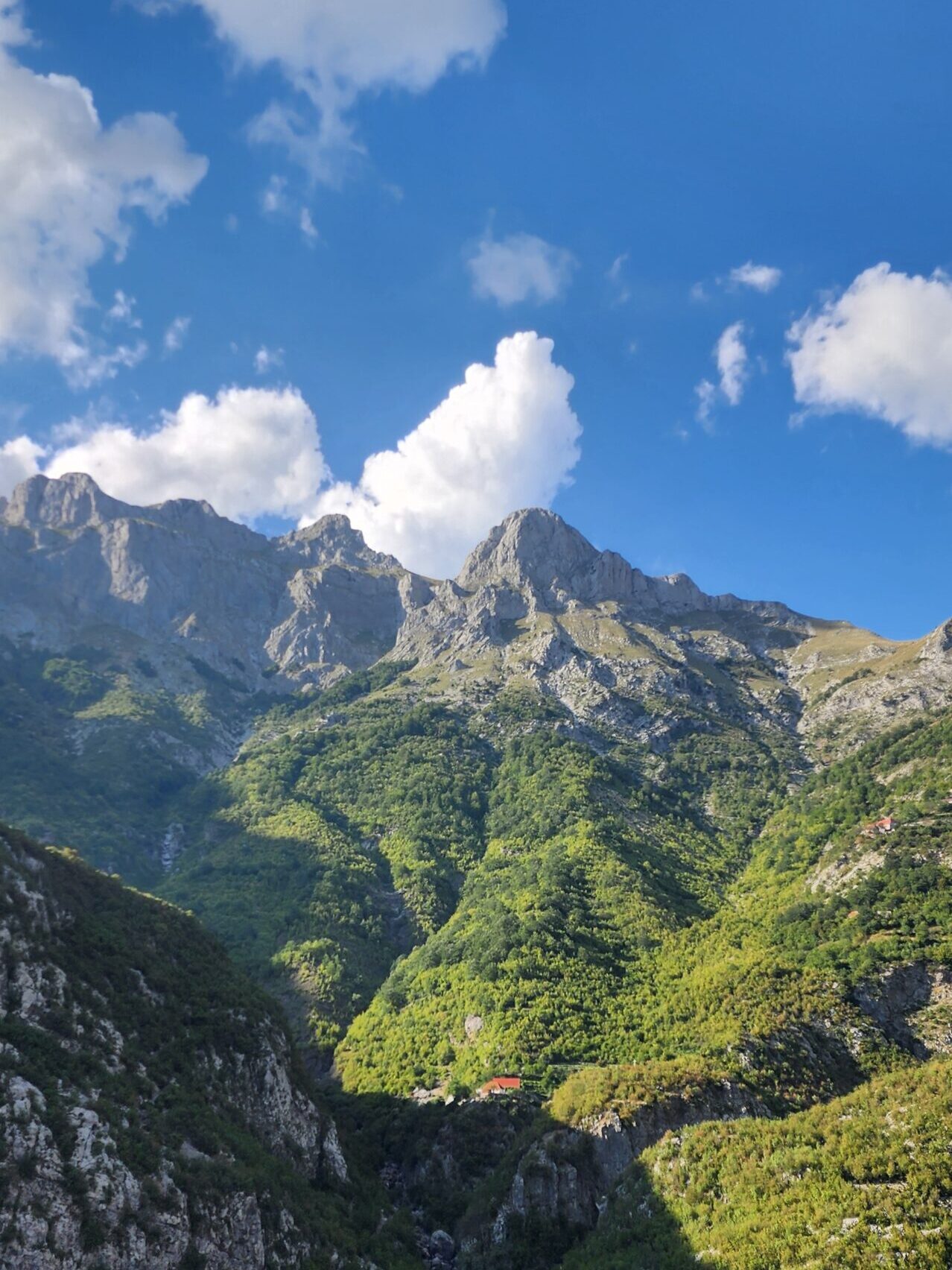
This is perhaps Albania’s most legendary trail, connecting two of the country’s most beautiful alpine villages in the heart of the Albanian Alps. Around 15–17 km long, with an average duration of 7–9 hours, the route traverses some of the Balkans’ most stunning landscapes: jagged mountains, golden autumn forests, crystal-clear rivers, and snow-capped peaks on the horizon.
- Difficulty: Moderate – requires good physical shape but no technical climbing.
- Highest point: Valbona Pass (~1,800 m) – a perfect stop for panoramic photos.
- Unforgettable views: Alpine meadows, golden-colored beech forests, the Lock-in Tower, Theth Church, and Grunas Waterfall.
- Accommodation: Stays in Theth and stays in Valbone offer traditional guesthouses with hospitality, local food, and authentic atmosphere.
- Transport: Theth can be reached by minibus from Shkodra (~2.5 hrs). Valbonë is reached via the Koman Lake ferry + local minibus.
- Best time in autumn: September and early October – forests are at peak colors, temperatures are cool, and trails less crowded.
This trail is more than just a hike – it’s a spiritual journey that connects you with the nature and history of the Albanian Alps.


2. Maja e Rosit
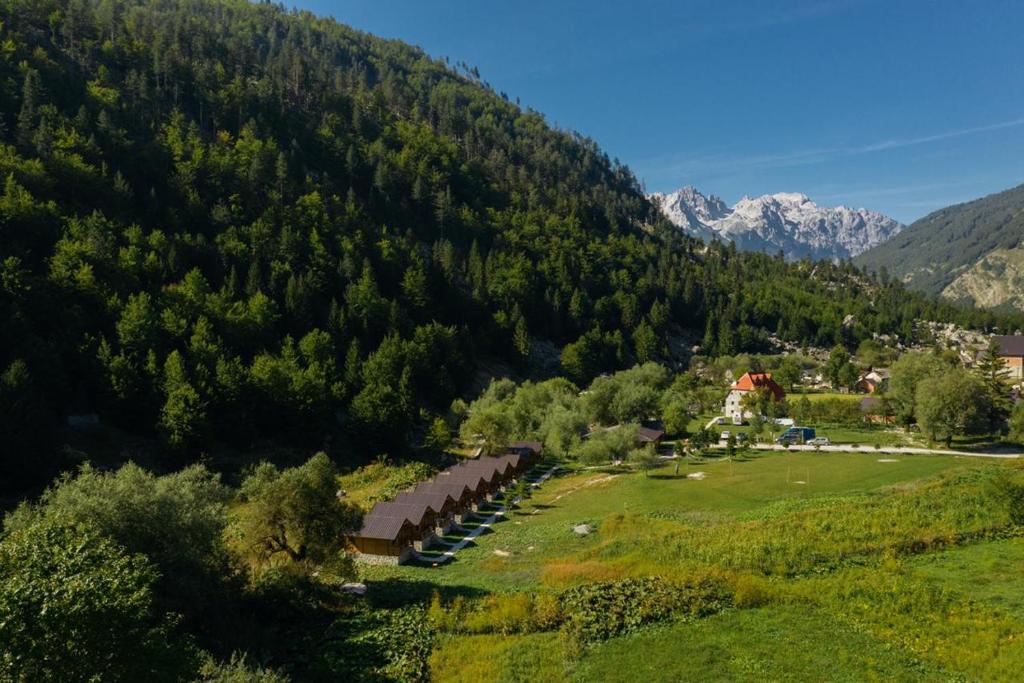
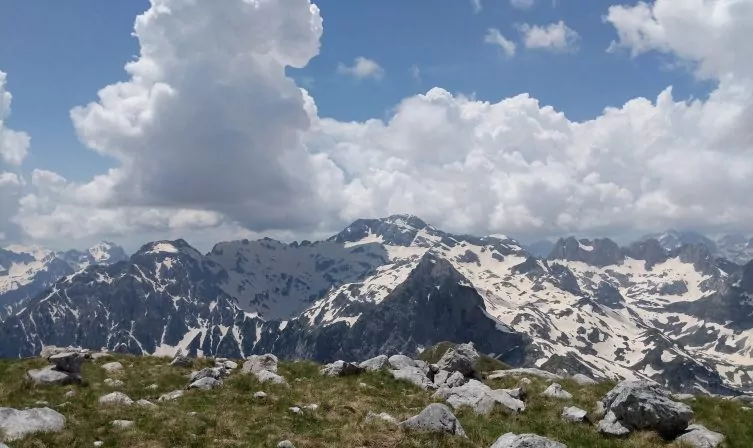
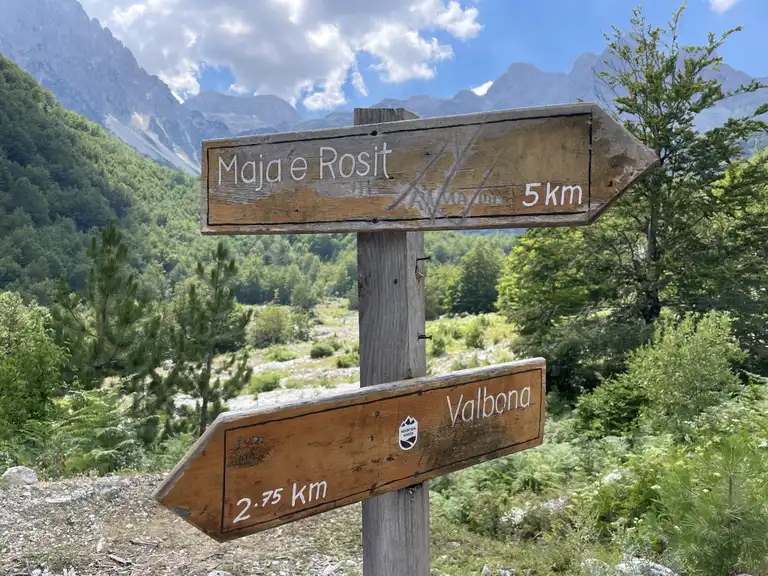
Overlooking the Valbonë Valley and stretching views into Montenegro, Maja e Rosit (2,524 m) is one of the most impressive hiking destinations in the Albanian Alps. With an itinerary of about 21 km round trip, this trail demands endurance and determination, but the reward is extraordinary.
- Difficulty: Challenging due to length and steepness, but manageable for experienced hikers. No technical parts, but solid preparation is required.
- Average time: Around 8–9 hours with short breaks.
- Elevation gain: ~1,600–1,700 m ascent from Valbonë village.
- Views: Starts with dense forests, continues through alpine meadows, and ends with majestic ridges marking the Albania–Montenegro border.
- Accommodation: Stay in one of Valbone’s guesthouses, as listed in Love Albania’s ranking: Valbone accommodations.
- Autumn tip: Early September to mid-October is best. Clearer skies, fresh air, quieter trails – but start early and pack for unpredictable mountain weather.
This hike is not for everyone, but for those seeking authenticity and a true sense of achievement, Maja e Rosit is among the most rewarding experiences in our Alps. If you’re planning hiking in Albania in autumn, don’t miss this trail.
3. Grunas Waterfall
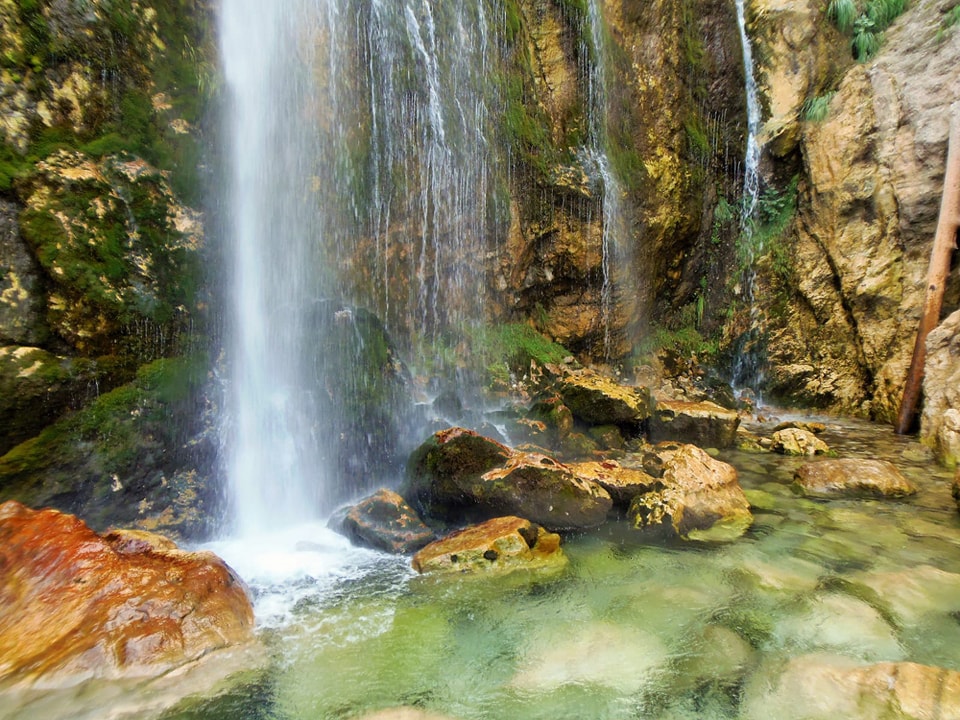
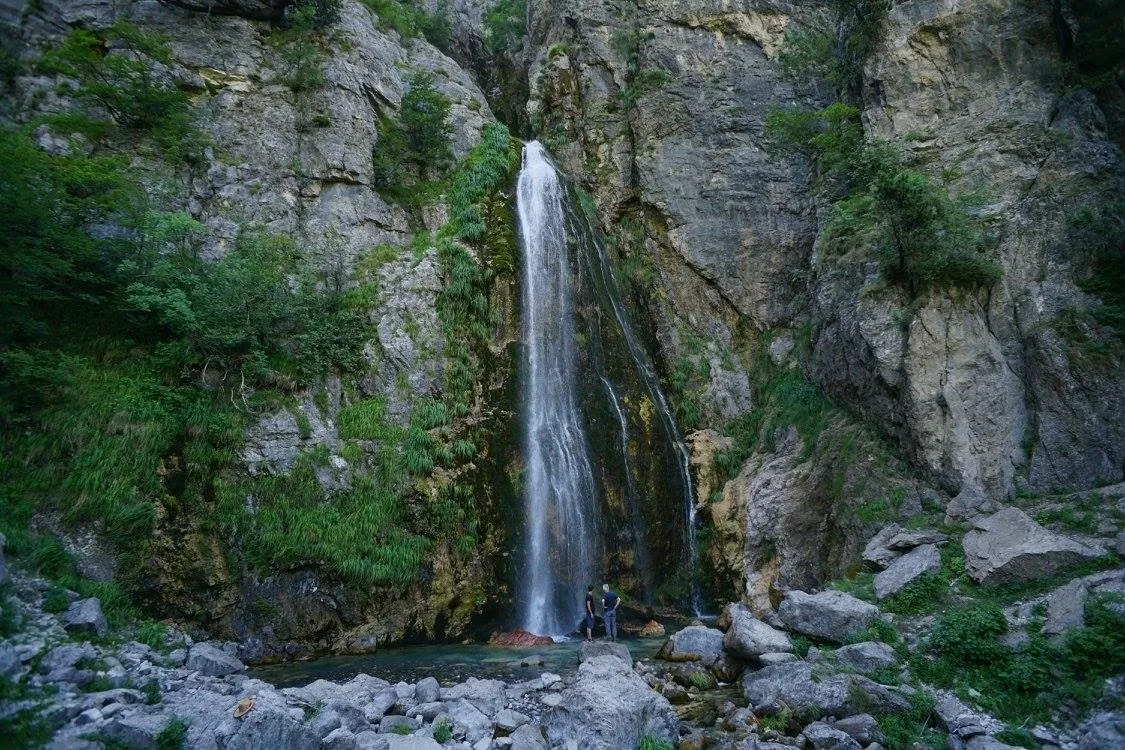
If you’re looking for a short hike with instant visual reward, Grunas Waterfall in Theth is the perfect choice. Located only about 4 km from the village center, this 25-meter-high waterfall is one of the most beautiful in Albania and a classic destination for light autumn hiking.
- Difficulty: Easy, suitable for all ages and levels.
- Average time: About 1–1.5 hours round trip on a well-marked trail.
- Scenery: The waterfall lies in a narrow canyon with rocky walls and a crystal pool below. In autumn, the golden forest colors create a spectacular contrast with the clear waters.
- Accommodation: Plenty of guesthouses in Theth, ideal for a quiet stay after the walk.
- Autumn tip: Late September to early October is best – the trail is still dry and the waterfall at its strongest.
This short hike delivers the full experience: nature, fresh air, water, and spiritual calm, perfect for a morning or afternoon in Theth.
4. Maja e Tujanit
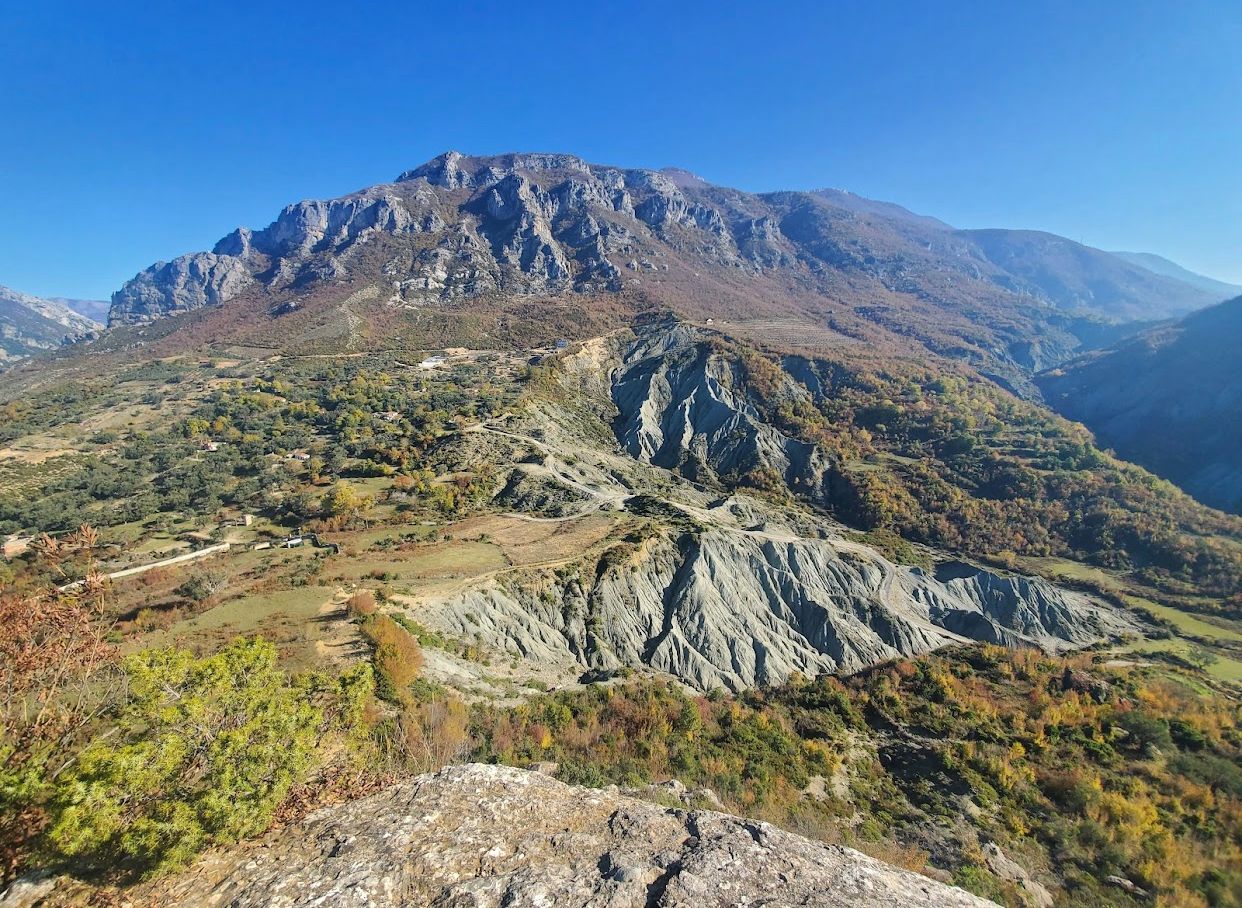
Just minutes away from the capital, Maja e Tujanit offers a quick escape and spectacular views over Tirana, Mount Dajti, and the Adriatic Sea on the horizon. At 1,580 meters high and 6–7 km round trip, this is one of the most popular day hikes.
- Difficulty: Moderate, suitable for people with basic fitness, no technical parts.
- Average time: 3–4 hours total at a moderate pace.
- Scenery: Pine forests and progressively wider views, culminating with a panoramic summit. Autumn’s soft light and colors create a unique atmosphere.
- Access: Start from Linzë village or from the antenna area on Mount Dajti (accessible by cable car).
- Autumn tip: Perfect temperatures and fewer crowds than summer make this one of the most enjoyable hikes near Tirana.
For city residents and travelers who want a short hike without going far, Maja e Tujanit is a real hidden gem.
5. Maja e Thanasit
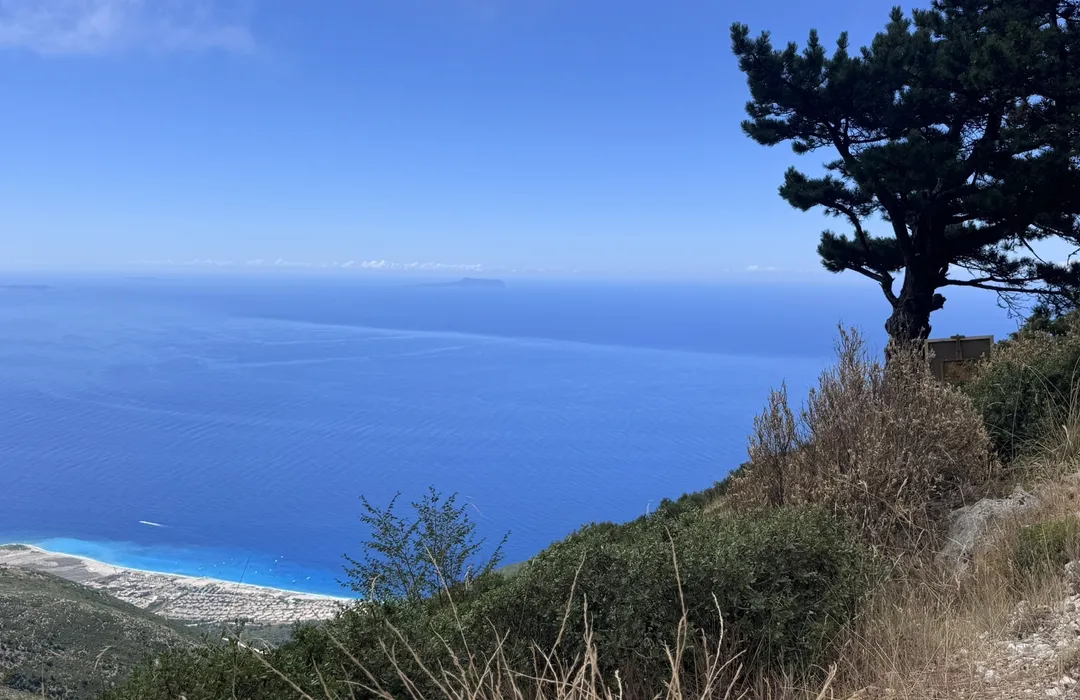
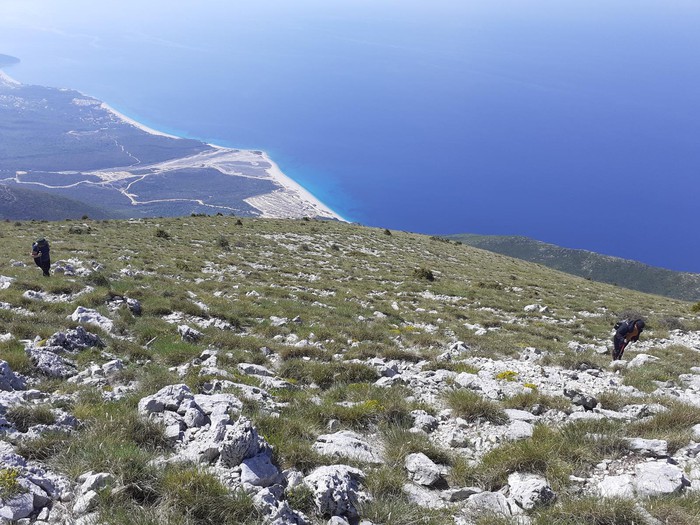
Located in the heart of Llogara National Park, Maja e Thanasit (~1,381 m) offers one of Albania’s rarest combinations: breathtaking mountain and sea views at the same time. The trail is short, accessible, and ideal for a day hike while traveling along the Albanian Riviera.
- Difficulty: Easy to moderate, also suitable for beginners with little experience.
- Distance & time: Around 7.1 km round trip, taking 3–4 hours.
- Scenery: From the summit you can see the Ionian Sea, Dhërmi and Palasë beaches, and the rugged Karaburun peninsula. In autumn, warm-colored forests contrast beautifully with the deep blue sea.
- Access: Starting point near the national road that passes through Llogara Pass – one of Albania’s most scenic drives.
- Autumn tip: Cooler weather, clear air, and empty trails make this the perfect time for exploration.
Maja e Thanasit is the perfect example of what Albania offers: strong natural contrasts and memorable experiences with minimal effort.
6. Mount Korab
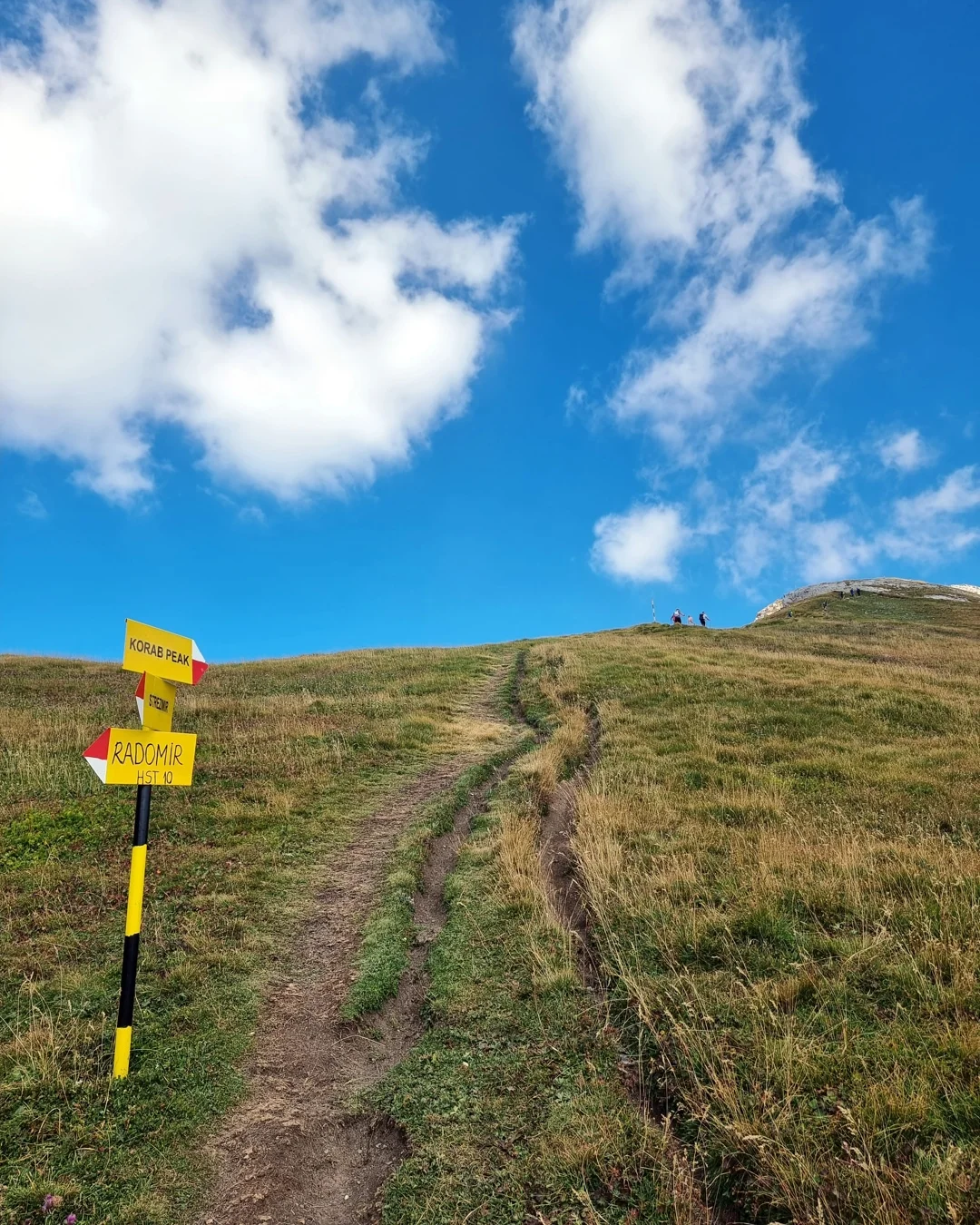
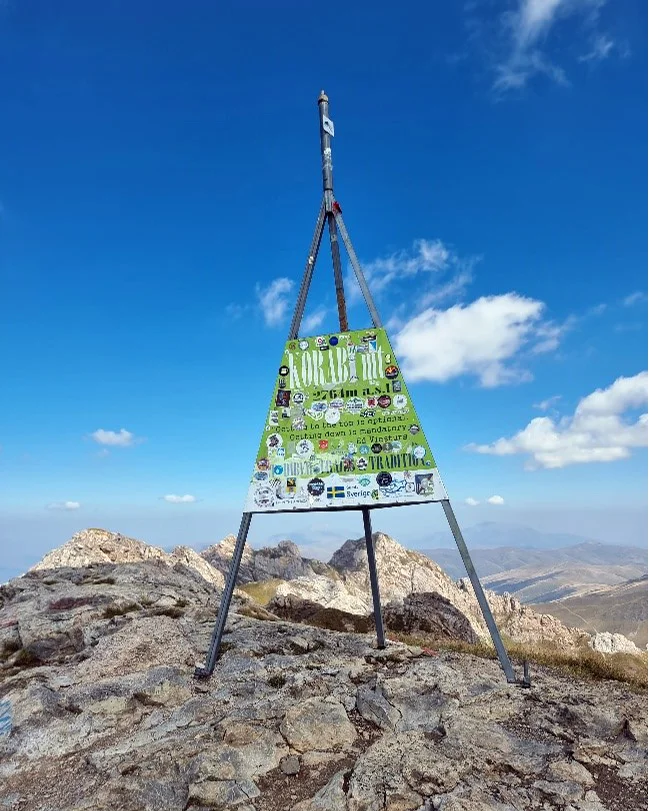
At 2,764 meters, Mount Korab is not only the highest peak in Albania but also one of the most challenging and breathtaking adventures in the Balkans. The classic trail starts from the village of Radomirë, offering a pure alpine itinerary for well-prepared hikers.
- Difficulty: Hard – requires fitness, navigation skills, and proper gear.
- Distance & time: About 20–22 km round trip, taking 6–8 hours.
- Total ascent: Over 1,500 meters, mixed terrain with rocky parts and exposure near the summit.
- Scenery: Spectacular panoramas where you can see both Albania and North Macedonia at once. Untouched alpine landscapes stretching to the horizon.
- Accommodation: Guesthouses in Radomirë or Peshkopi. Bring your own gear.
- Autumn tip: Late September to early October is the last chance before snow. Earthy colors are vivid and skies clear, but always check weather and start early.
Climbing Mount Korab is not just a physical challenge, it’s a symbolic journey to Albania’s highest point, where every step brings you closer to wild nature and absolute freedom.
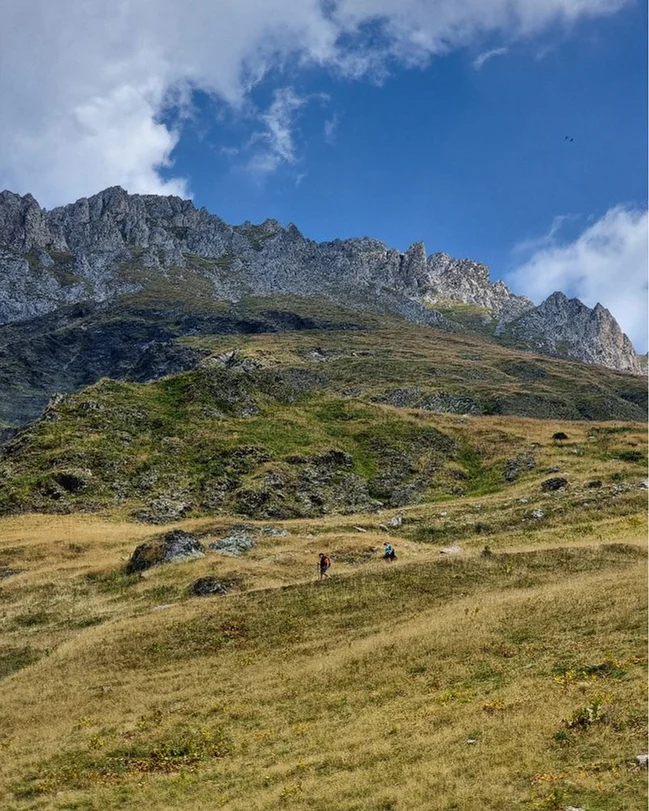
7. Mount Gamti
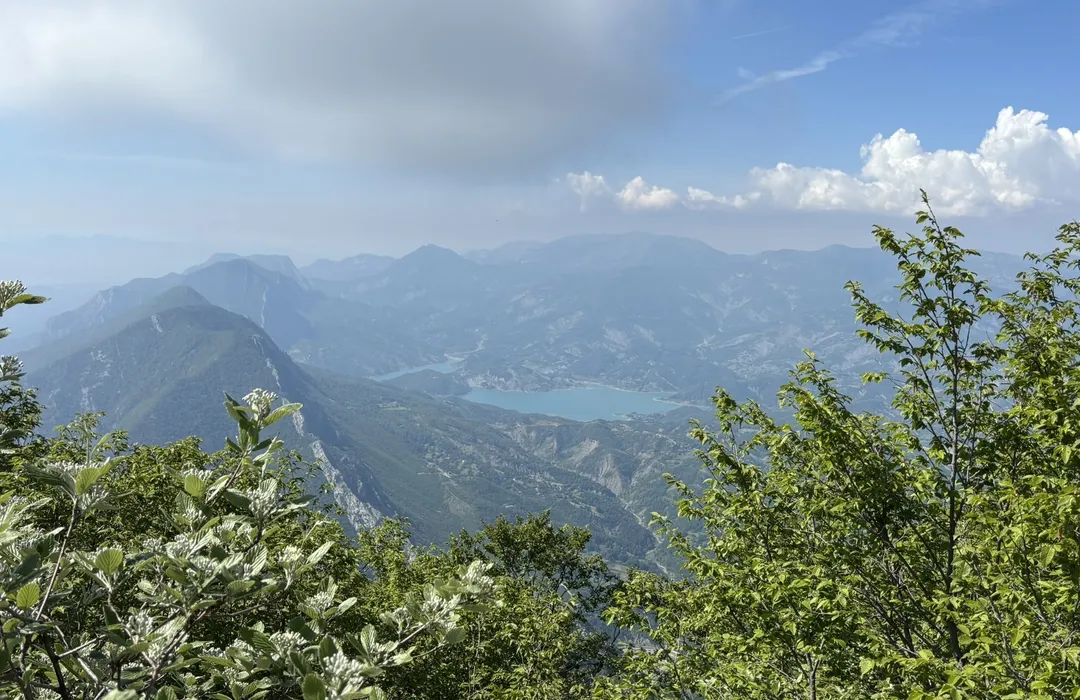
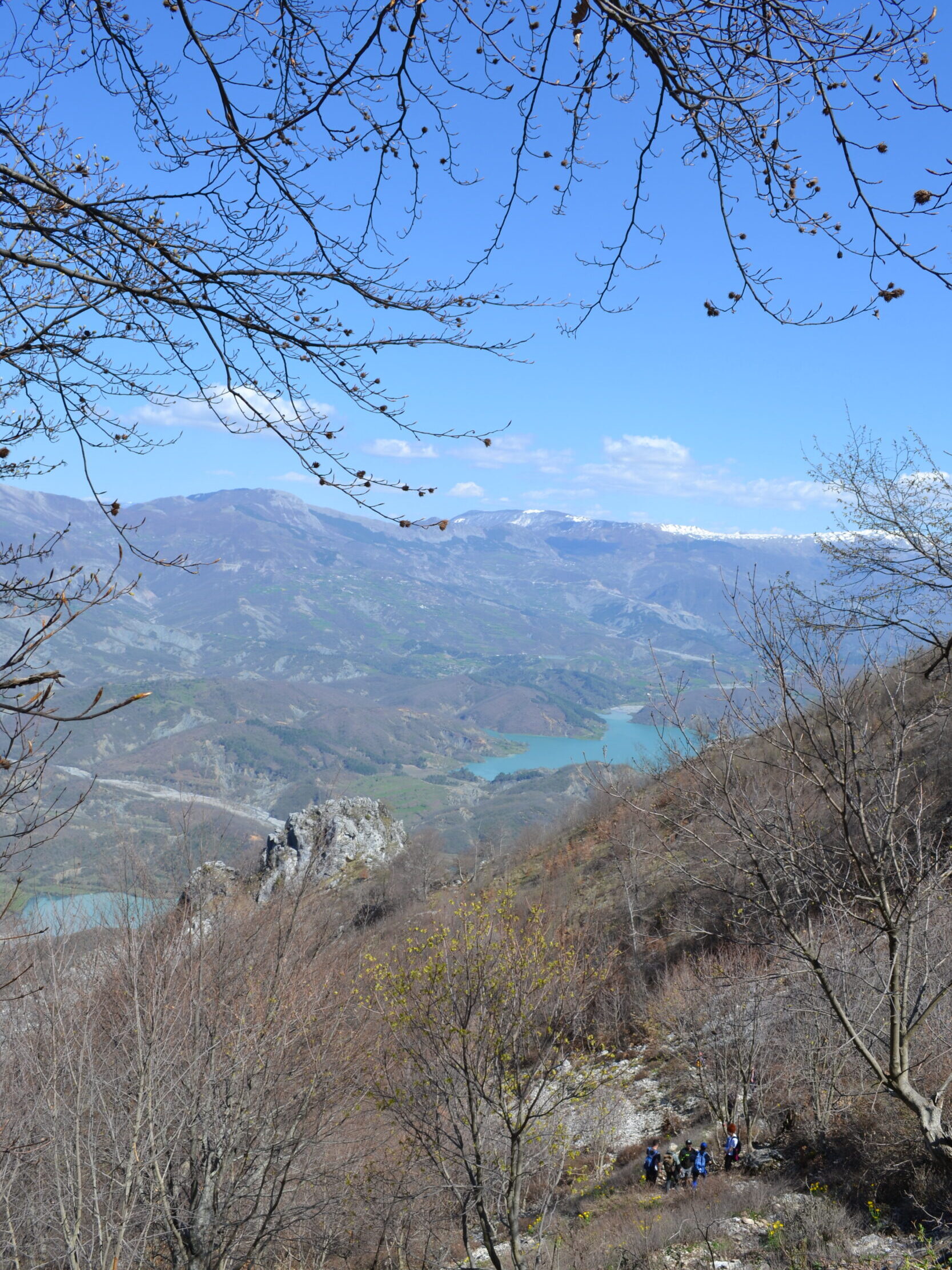
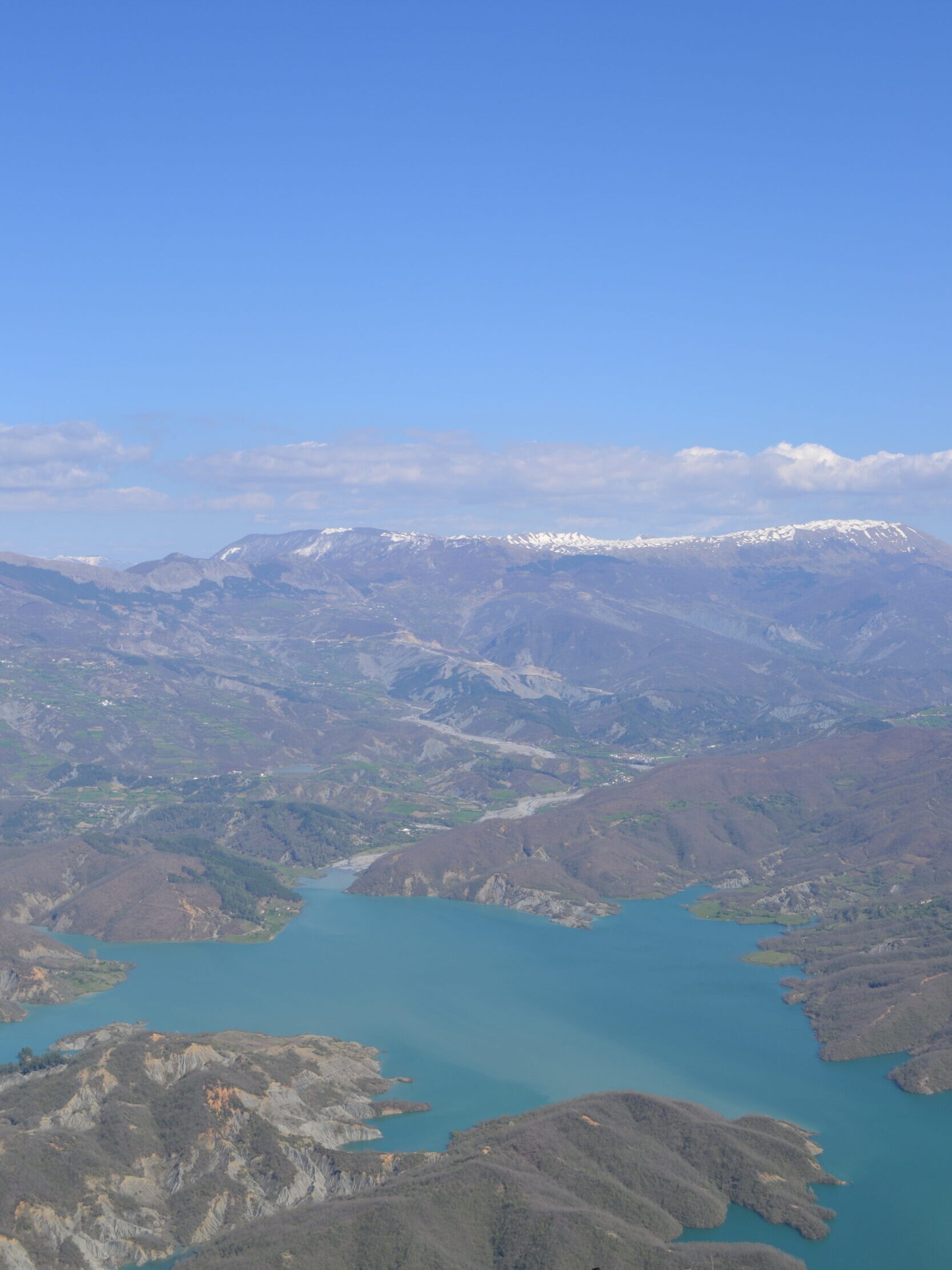
Located just a few kilometers from Tirana, Mount Gamti is one of the most attractive quick hiking destinations, with stunning views over Lake Bovilla and beyond toward the highlands of Tirana and Dibra. This trail combines easy access, adrenaline, and untouched nature, a perfect weekend choice.
- Difficulty: Moderate to hard, manageable for active people even if not regular hikers, but caution needed on steep sections.
- Distance & time: About 7–9 km round trip, 3–5 hours depending on the route.
- Total ascent: Around 700–800 meters, mixed terrain with bushes, rocks, and narrow paths.
- Scenery: From the summit, Lake Bovilla shines below like a postcard, surrounded by ridges – on clear days, views stretch to Dajti and beyond.
- Access: Trail starts from Zall-Mner village or near the Bovilla dam, reachable by car.
- Autumn tip: Softer ground, richer colors, fresher air. Avoid post-rain days due to slippery soil.
Mount Gamti proves you don’t need to go far to find real adventure, just outside Tirana, but you’ll feel miles away from civilization.
8. Maja e Murges
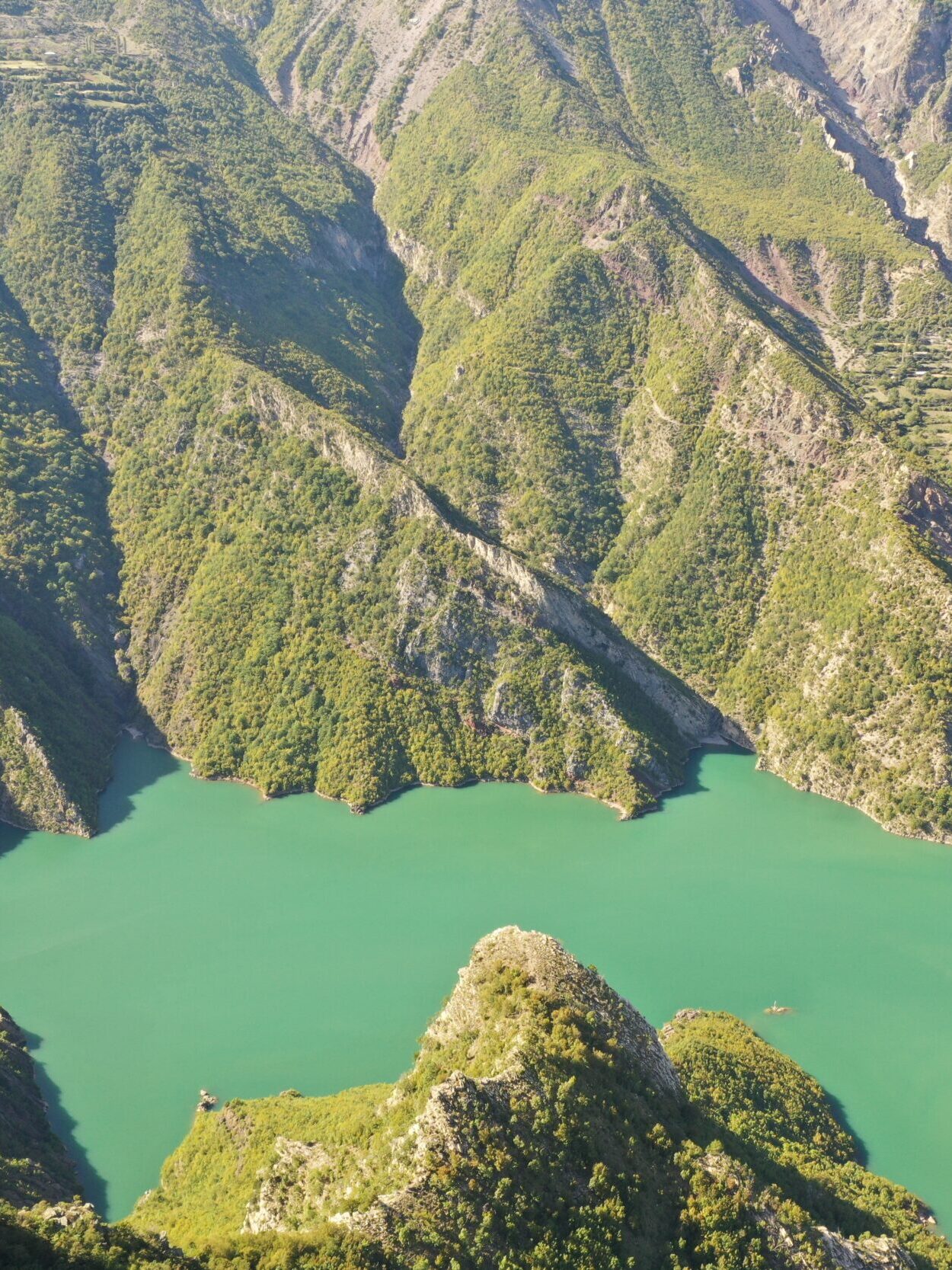
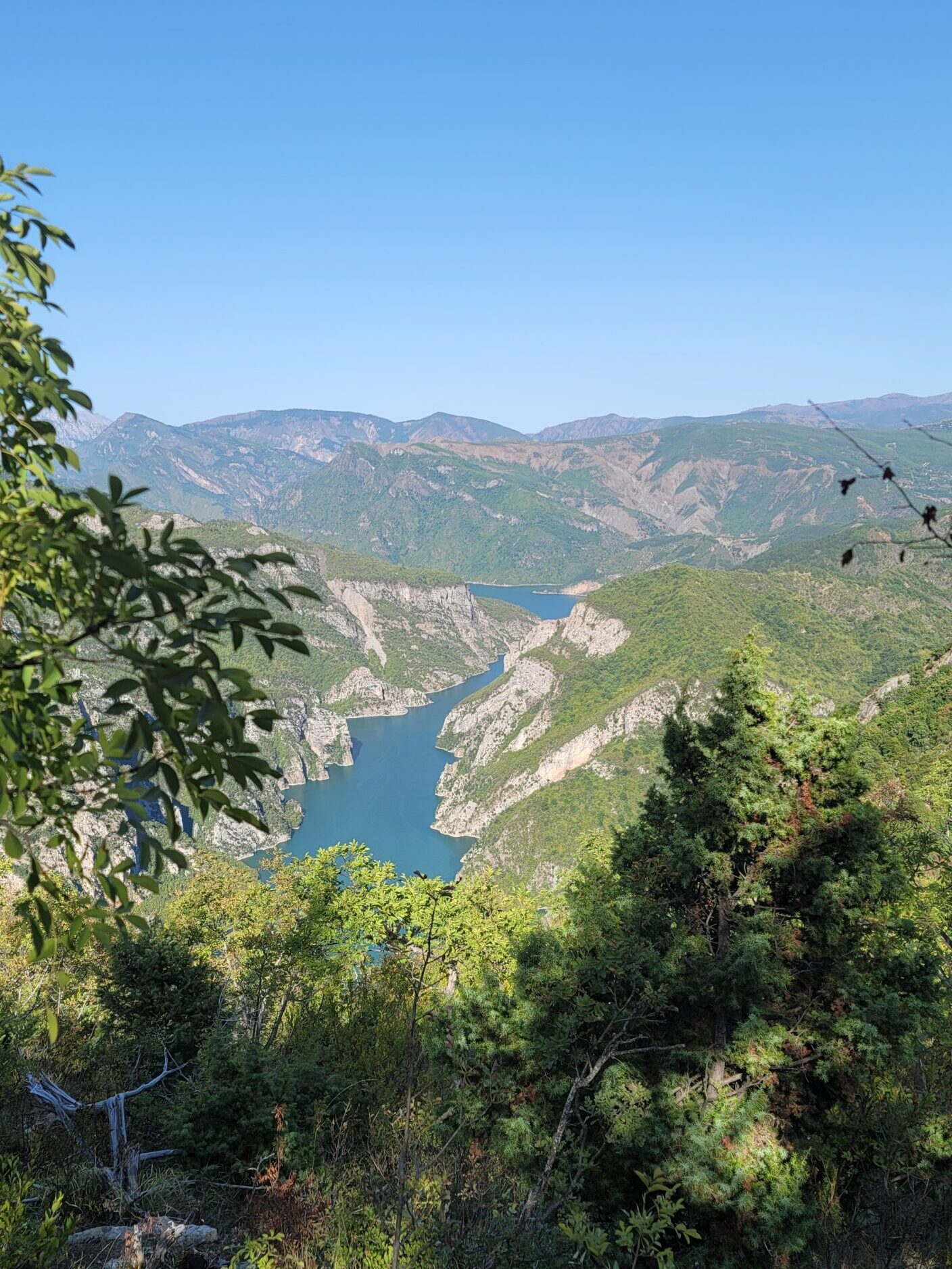
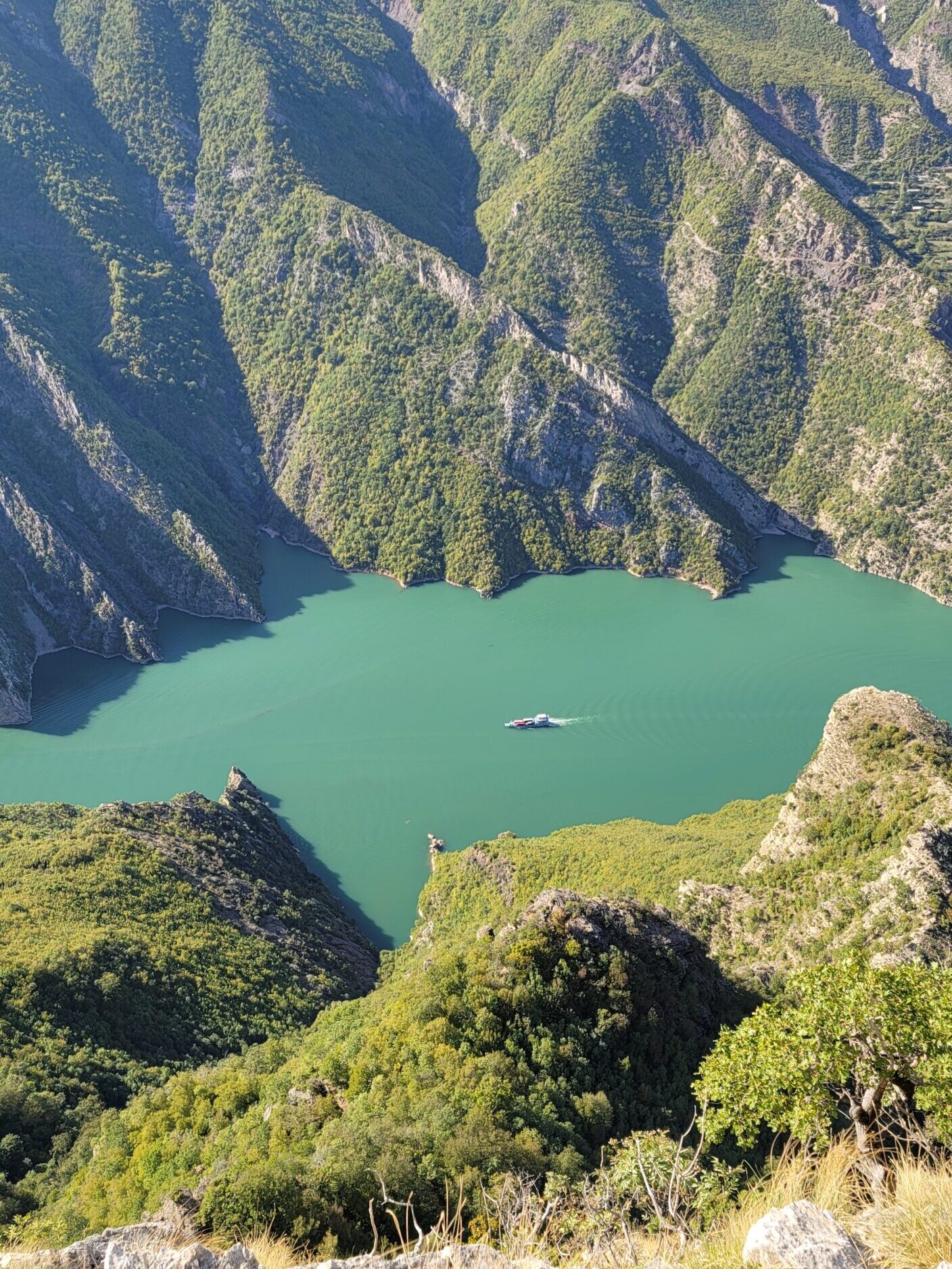
One of the lesser-known yet most rewarding trails for those seeking absolute tranquility is Maja e Murges, near Lake Koman and Puka. At around 680 m, it offers a rare blend of water views and gentle mountains – an alternative to classic alpine routes.
- Difficulty: Moderate, no technical parts but requires endurance.
- Distance & time: Full version is about 18 km round trip, taking 6–7 hours.
- Total ascent: ~700 meters, alternating gentle slopes and panoramic fields.
- Scenery: Quiet valleys, sparse forests, and lake views. In autumn, the deep blue water contrasts with fiery red and yellow landscapes.
- Accommodation: Local guesthouses in Buzhalë or Puka (advance booking recommended).
- Access: Trail starts near Buzhalë village, reachable by car from Puka or Koman.
- Autumn tip: Few people on the trail, mild weather, and clear paths. Avoid rainy days due to slippery terrain.
Maja e Murgës is an authentic off-the-beaten-path experience, offering unmatched peace and beauty.
9. Maja e Vajushes
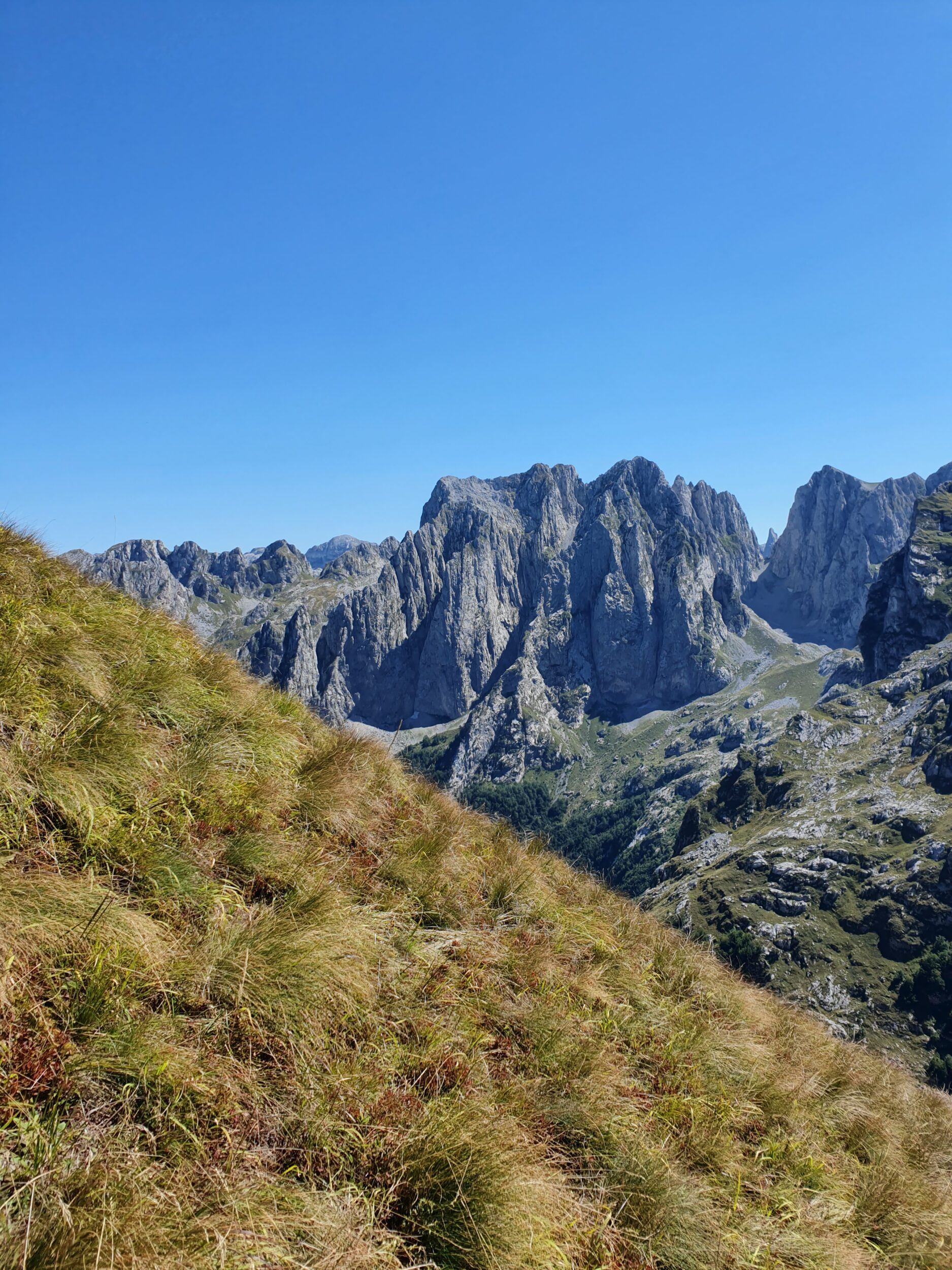
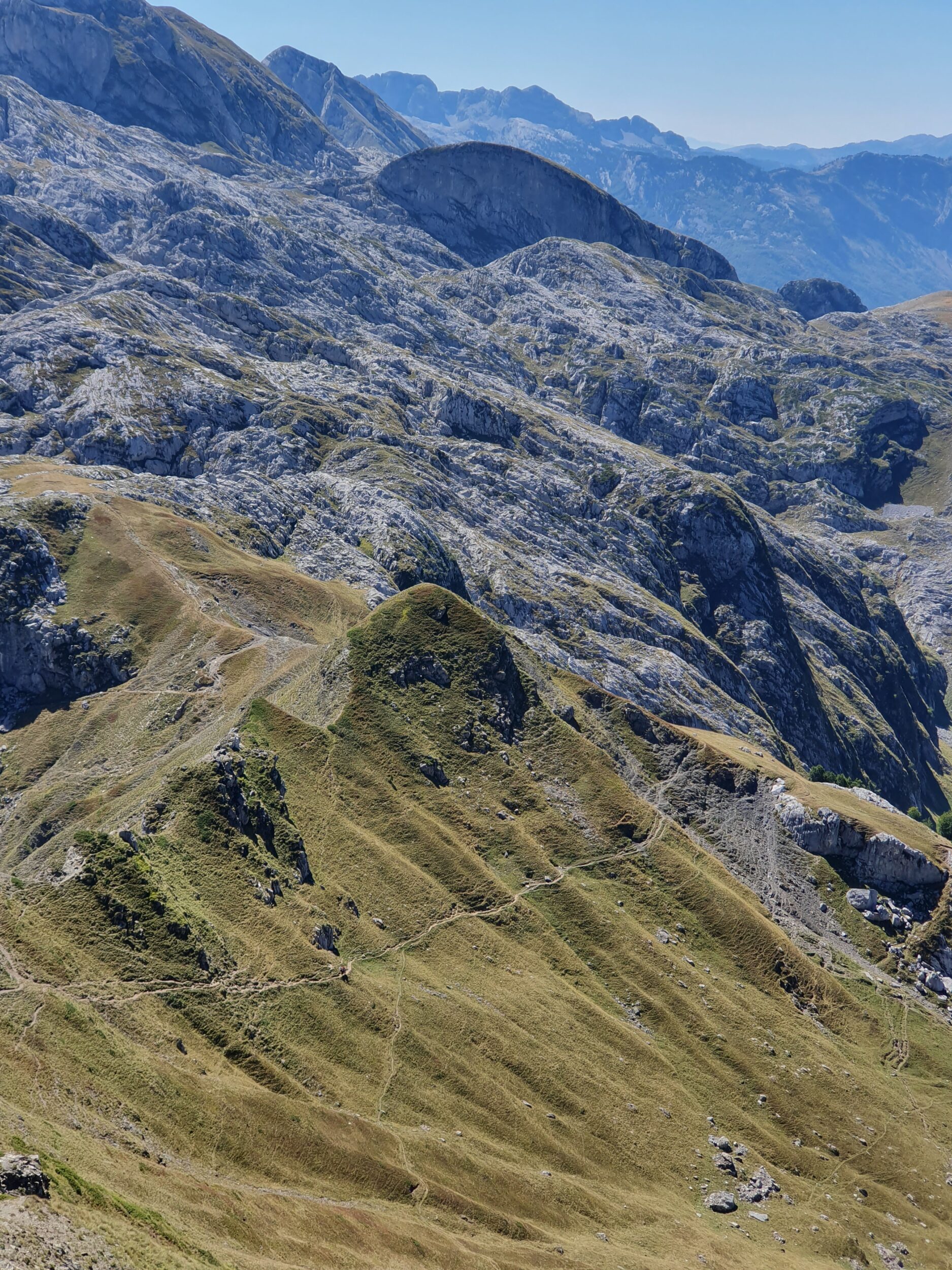
Located in the heart of Kelmend, Maja e Vajushës (2,057 m) is one of the hidden treasures of the Albanian Alps. Starting from the picturesque village of Lepushë, the trail offers peace, dramatic panoramas, and a personal sense of discovery.
- Difficulty: Moderate, no technical parts, but steady fitness required.
- Distance & time: About 9 km round trip, taking 4.5–5 hours.
- Total ascent: +716 meters, through alpine meadows and shrubs.
- Scenery: From forests to open meadows, ending at a summit with magnificent views toward Montenegro.
- Accommodation: Guesthouses in Lepushë, e.g., “Bjeshkët e Nemuna.”
- Access: Road to Lepushë accessible by car, winter tires recommended in autumn.
- Autumn tip: Brightest seasonal colors and crisp air – ideal for photography and reflection.
In a place where life moves slowly, Maja e Vajushës gives you the feeling of discovering a world untouched by many footsteps.
10. Selce – Vermosh Pass
For those who want to walk between traditional villages of Kelmend and follow an ancient path connecting alpine communities, the Selce – Vermosh Pass is an extraordinary trail. It crosses deep valleys, wild forests, and alpine shrubs, offering the perfect mix of nature, culture, and isolation.
- Difficulty: Moderate, no technical parts but requires stamina and orientation.
- Distance & time: About 14–15 km, taking 3.5–4 hours.
- Ascent & descent: ~700 m up and 1,000 m down.
- Scenery: Untouched landscapes, Vermosh Valley views, beech and pine forests, small villages frozen in time.
- Accommodation: Guesthouses available in both Selcë and Vermosh – advance booking advised.
- Access: Usually starting in Selcë, finishing in Vermosh (or reverse). Arrange private transport or local minibus for return.
- Autumn tip: Among the most magical trails for colors and tranquility – crisp air and dramatic scenery make hiking far more pleasant.
The Selce – Vermosh Pass is not just a trail, but a journey through history, identity, and the wild nature of northern Albania.
Weather, Gear & Safety Tips
Autumn in Albania is the most photogenic and comfortable season for hiking, but it carries risks. Mountain weather changes quickly – a sunny morning may end with fog, rain, or strong wind. Planning is essential.
Practical Recommendations:
- 📅 Choose stable weather days – check forecasts 2–3 days in advance, avoid storms/heavy rain.
- 🧥 Wear functional layers – base thermal, insulating mid-layer, wind/rain jacket.
- 🥾 Use proper hiking boots – autumn brings slippery terrain.
- 🗺️ Download offline maps – apps like Maps.me or AllTrails are essential.
- 📍 Always inform someone of your route – especially for Korab, Vajushë, or Murgës.
- 🧭 Avoid hiking alone in remote areas unless experienced and properly equipped.
Getting There – Local transport & access
Most hiking trails in Albania are in remote mountain areas, making access part of the adventure. With good planning, it’s very manageable.
🚌 Public Transport:
- Villages like Theth, Valbonë, Lepushë, and Vermosh have organized minibuses from Shkodra, Tirana, or nearby towns.
- They usually leave early morning – book in advance, especially weekends.
- For Valbone, the most scenic way is the Koman Lake ferry + minibus.
🚗 Private Car:
- Best option for trails like Maja e Tujanit, Mount Gamti, or Maja e Murgës, where buses are rare.
- Mountain roads often unpaved – 4×4 recommended for Lepushë, Radomirë, Bovilla.
- In autumn, beware of slippery and muddy sections.
📌 The Road is Part of the Adventure:
In Albania, the roads to the trailheads are often spectacular themselves valleys, tunnels, panoramic stops. Take time for photos and chats with locals hiking here is not just the destination, but the entire journey.
FAQ
The top 10 include Valbonë–Theth, Mount Korab, Maja e Rosit, Grunas Waterfall, Maja e Tujanit, and more.
September and October are ideal months for autumn hiking in Albania – cooler weather, colorful forests, and clear skies.
Waterproof boots, layered clothing, and offline maps are essential for safe hiking in Albania’s mountains.
Share this guide with your adventure crew!
If this article inspired you to explore Albania in autumn, share it with friends, family, or your hiking community. Whether it’s someone planning a trip, a passionate hiker, or a traveler seeking new horizons this guide helps them discover an Albania they never imagined.
👉 Copy the link and share it on social media, hiking groups, or chats.
The more it’s shared, the more people will discover the beauty hidden in Albanian autumn.