

Albania is experiencing a period of public demonstrations, particularly in the capital, Tirana, where recent protests have led to confrontations between demonstrators and police, temporary traffic disruptions, and increased security measures in parts of the city. For international visitors currently exploring Albania or planning an upcoming trip, these developments have raised questions about safety, transportation, and access to popular attractions. Although the situation requires awareness and additional caution, it is important to distinguish between locations directly affected by demonstrations and other areas where tourism activities may continue as usual.
This guide provides essential information about the Albania protests in October 2026, including the reasons behind the demonstrations, areas in Tirana where travelers should exercise caution, possible transportation disruptions, and practical recommendations for visitors. Our aim is to help travelers stay informed and make confident decisions based on reliable information without creating unnecessary concern.
Table of Contents – In This Guide
- What Is Happening in Albania Right Now?
- Why Are People Protesting in Albania?
- Is Tirana Safe to Visit During the Protests?
- Which Areas in Tirana Should Tourists Be Cautious Around?
- Are Roads and Public Transport Affected in Tirana?
- Can Tourists Still Explore Albania?
- Practical Safety Tips for Tourists in Albania
- Emergency Numbers and Official Travel Information
- Should Tourists Cancel Their Trip to Albania?
- FAQ About the Albania Protests
What Is Happening in Albania Right Now?
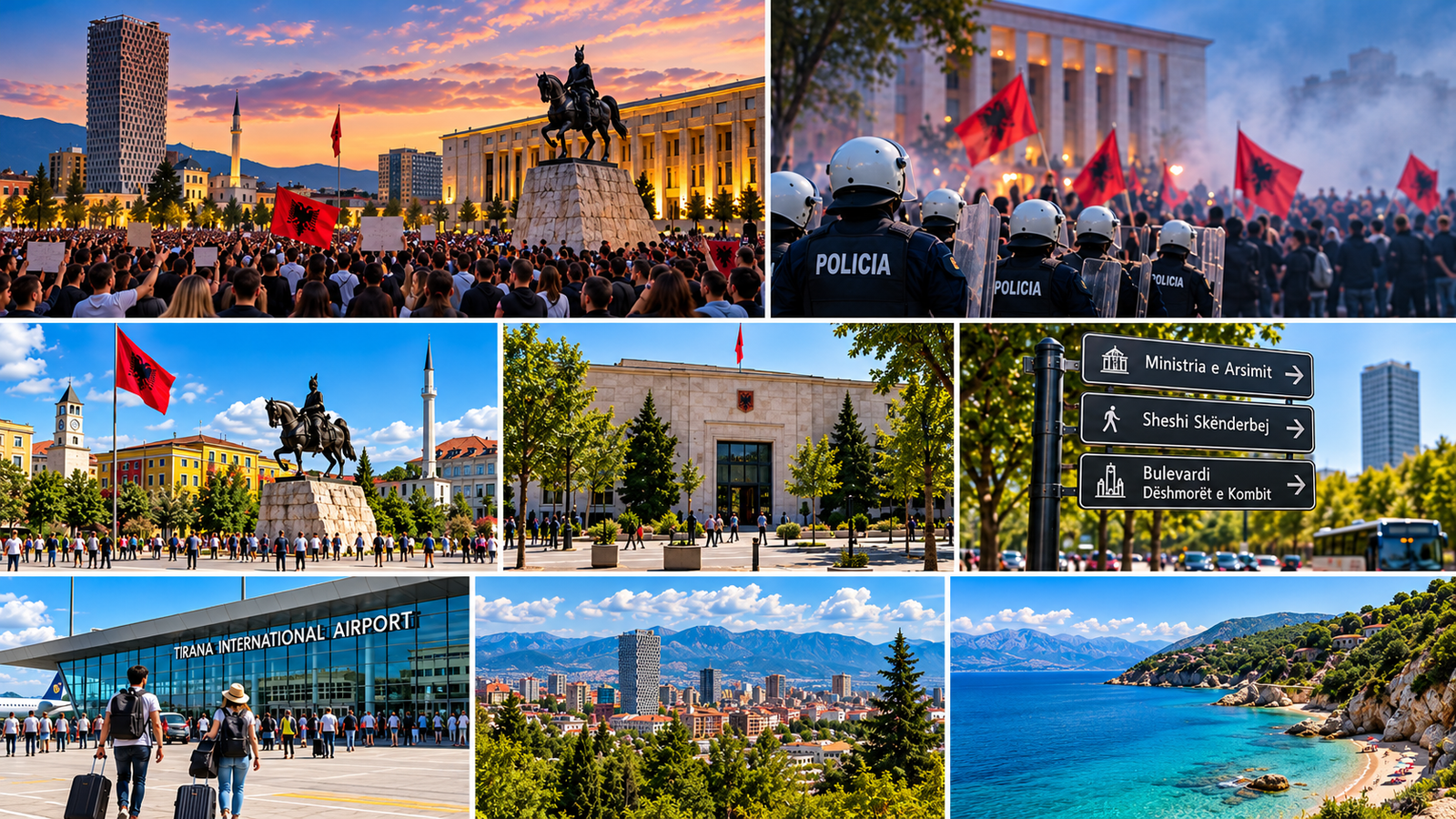
Throughout October 2026, Albania has witnessed a wave of public demonstrations, with significant gatherings taking place in Tirana and protest activity also reported in other cities. Many of the demonstrations have involved students and young people expressing concerns about education, employment opportunities, rising living costs, allegations of corruption, and government accountability. These issues have attracted wider public attention and contributed to discussions about social and economic conditions in the country.
While many participants have demonstrated peacefully, some gatherings have escalated into confrontations with police. International media organizations, including Reuters and Associated Press, have reported incidents involving property damage, objects thrown at police, and the use of tear gas and water cannons. Several of these incidents have occurred near government institutions and major public spaces in central Tirana. As developments can change quickly, visitors should rely on current official announcements rather than assuming that conditions reported on previous days remain unchanged.
Why Are People Protesting in Albania?
The demonstrations reflect a combination of social, economic, and political concerns raised by different groups of participants. Students have expressed dissatisfaction with aspects of the education system, including university conditions and costs, while other protesters have highlighted difficulties related to employment, living expenses, and allegations of corruption. Calls for greater transparency, government accountability, and political change have also featured in public discussions surrounding the protests.
Some demonstrators have called for Prime Minister Edi Rama’s resignation, while the government has rejected these demands and condemned violent incidents associated with certain gatherings. The situation has received attention from national and international news organizations, with different groups expressing their concerns through public demonstrations. For international visitors, understanding this background provides useful context, although the most immediate consideration remains how protest activity may affect local transportation, access to public spaces, and planned activities.
Is Tirana Safe to Visit During the Protests?
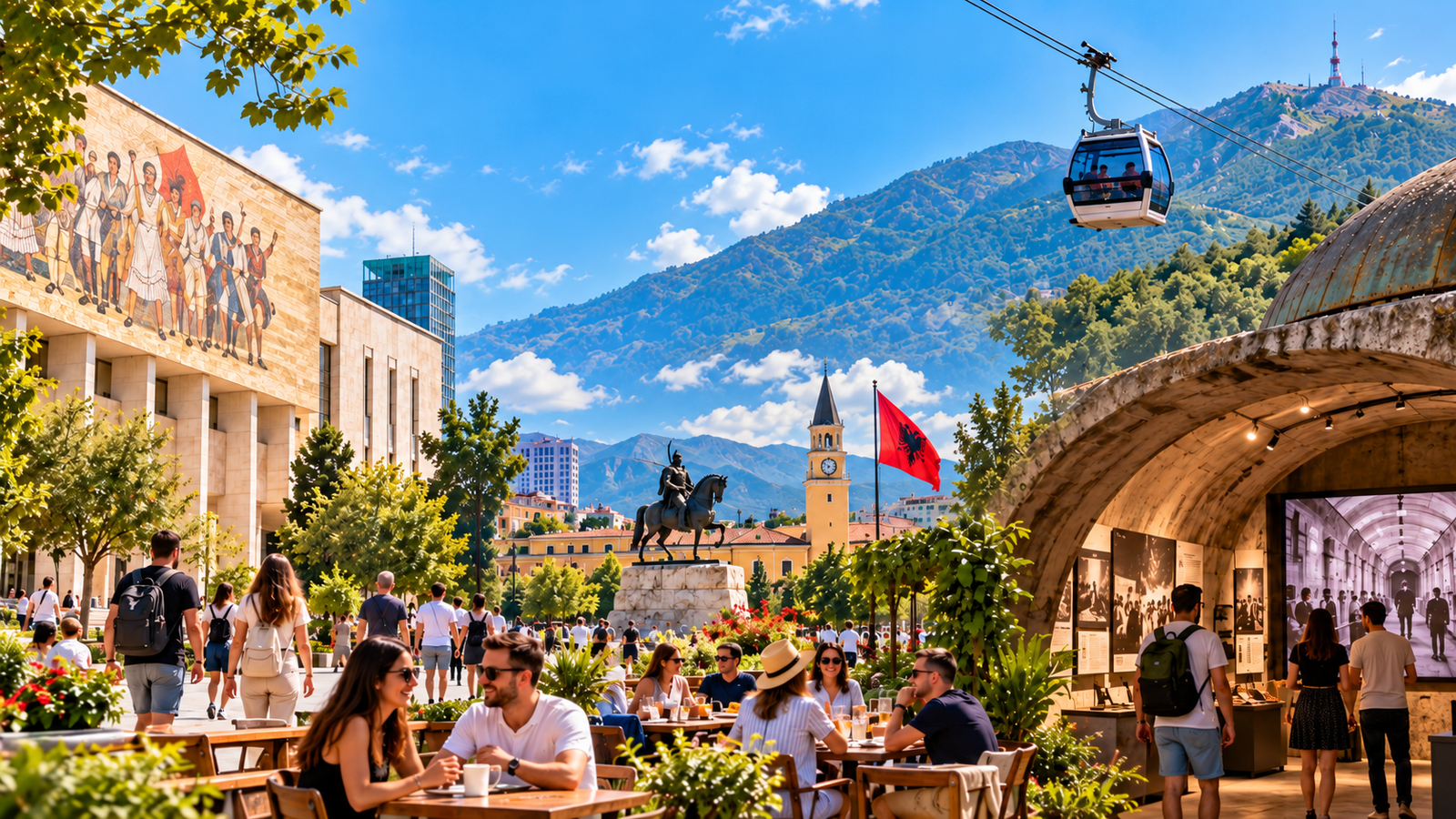
Tirana remains one of Albania’s most important tourist destinations, known for its cultural attractions, museums, historical landmarks, restaurants, cafés, and lively neighborhoods. However, recent demonstrations have created additional safety concerns around certain locations in the city center, particularly near government institutions and areas where large gatherings have taken place. Travelers should therefore remain attentive to local developments and exercise additional caution when planning activities in central Tirana.
The UK Foreign, Commonwealth & Development Office has updated its travel advice for Albania, drawing attention to demonstrations in the capital and reported incidents involving violence and property damage. Visitors are advised to avoid protest gatherings, monitor reliable local news sources, and follow instructions issued by local authorities. A demonstration in one part of Tirana does not necessarily mean that the entire city is affected, but conditions may vary between neighborhoods and change throughout the day. Before leaving their accommodation, travelers should check whether their intended destination or route is accessible and ask local hosts about possible disruptions.
Which Areas in Tirana Should Tourists Be Cautious Around?
Recent demonstrations have taken place in several central locations, particularly around government buildings and important public spaces. Although these areas are not necessarily affected continuously, visitors should pay attention to announcements about demonstrations, temporary road restrictions, and police operations. The following locations have been associated with protest activity and deserve particular attention when travelers are planning routes through central Tirana.
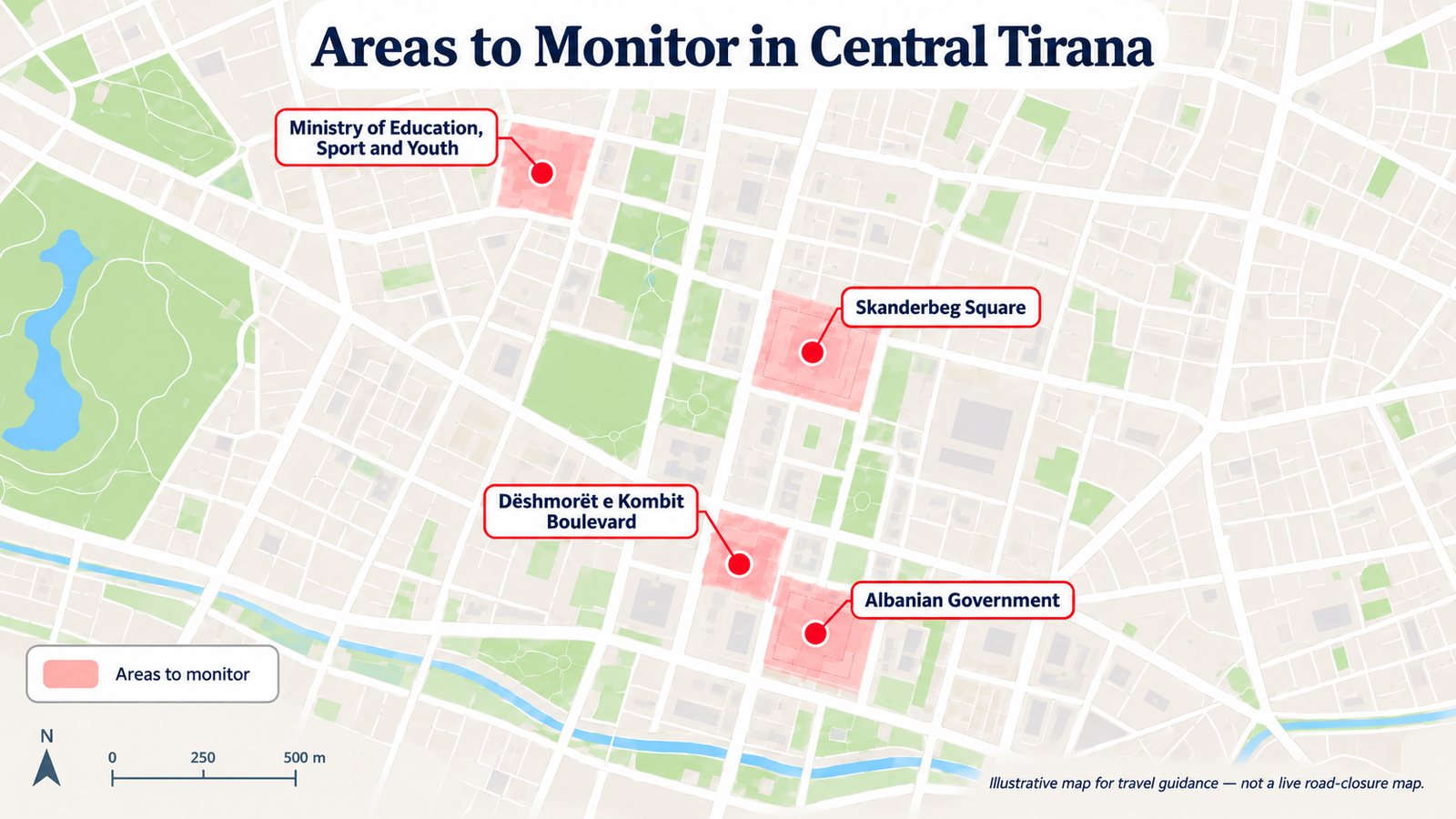
- Ministry of Education and Sports: The area surrounding the Ministry of Education and Sports has been an important gathering point during the October demonstrations, with confrontations between protesters and police reported nearby. Because gatherings may affect surrounding streets and pedestrian access, visitors should avoid the immediate area whenever demonstrations or security operations are taking place. Travelers staying nearby are encouraged to consult their accommodation providers and follow official announcements before leaving.
- Prime Minister’s Office and Dëshmorët e Kombit Boulevard: The area near the Prime Minister’s Office and Dëshmorët e Kombit Boulevard has also experienced protest activity. As one of Tirana’s principal routes, the boulevard connects important government buildings, cultural landmarks, and public spaces, making temporary restrictions particularly relevant for visitors moving through the city center. Demonstrations may lead to traffic diversions, delays, or changes in pedestrian access, so travelers should check local conditions and consider alternative routes when necessary.
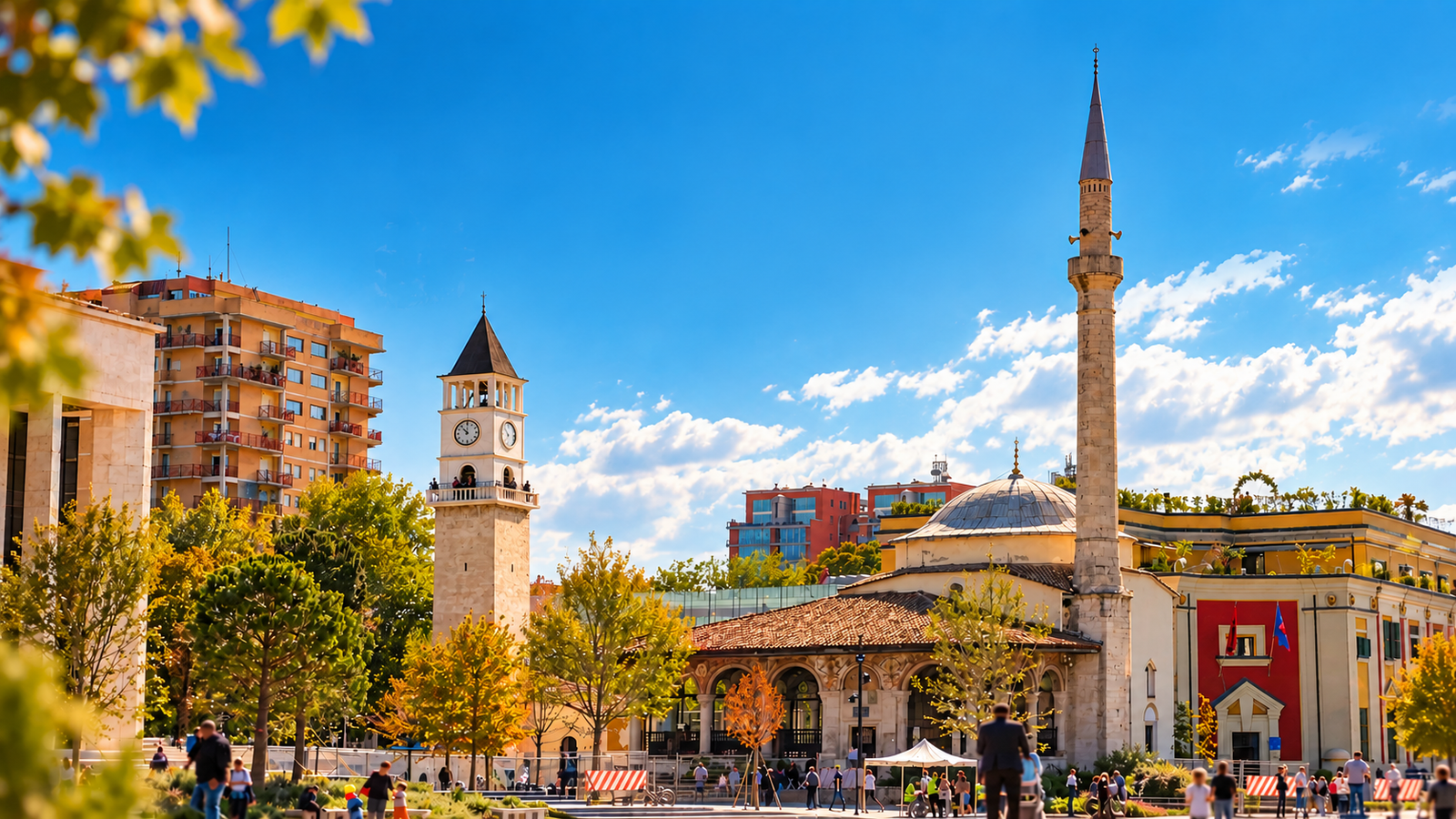
- Skanderbeg Square and the City Centre: Skanderbeg Square is one of Tirana’s most recognizable landmarks and a popular starting point for sightseeing, surrounded by cultural attractions and important public buildings. While the square should not be considered permanently closed or unsafe because of earlier demonstrations, visitors should monitor announcements regarding gatherings and temporary restrictions in nearby streets. If large crowds or police cordons are present, choosing another route or postponing a visit may be the most practical option.
- Important travel note: These locations are areas that travelers should monitor, not a confirmed list of streets currently closed. Road access and local conditions may change, and visitors should follow the latest information issued by local authorities.
For additional context, you can also read our earlier article, Is Albania Safe to Visit?, which explores the demonstrations that took place in June 2026. Please note that the earlier article refers to a different period and should not be used as a source of current protest updates.
Are Roads and Public Transport Affected in Tirana?
Public demonstrations can temporarily affect transportation in central Tirana, particularly when gatherings take place along major boulevards or near government institutions. Depending on their location and size, protests may lead to short-term road closures, traffic diversions, delays, or changes to public transport routes. Taxis, buses, private transfers, and other transportation services may need to adjust their usual routes when restrictions are introduced, although this does not mean that all services across the city are disrupted.
Visitors planning to travel through central Tirana should allow additional time for journeys, confirm transportation arrangements in advance, and check local traffic information before departure. Hotels, taxi drivers, and tour operators may be able to provide practical updates about alternative routes or pickup locations. Travelers should also remember that navigation applications may not always reflect temporary police restrictions immediately, making local guidance particularly useful during periods of demonstrations.
Can Tourists Still Explore Albania?
Albania offers a diverse range of travel experiences beyond Tirana, including historic towns, mountain landscapes, traditional villages, national parks, lakes, and coastal destinations. Although some of the most widely reported incidents have occurred in the capital, protest activity has also been reported in other Albanian cities. This means that visitors should not assume all destinations are affected equally, but should also avoid assuming that every location is entirely unaffected by current developments.
Travelers planning to visit Berat, Gjirokastër, Shkodër, Korçë, Përmet, the Albanian Riviera, or other destinations can consult local authorities, accommodation providers, and tour operators for information relevant to their itinerary. Many tourism services may continue operating, although individual activities or transportation arrangements can be affected by changing local conditions. Confirming reservations and maintaining flexibility allows visitors to make informed decisions without unnecessarily changing their entire travel plans.
What Can Tourists Do in Tirana During This Period?
Visitors who prefer to avoid areas where demonstrations may take place can consider alternative activities elsewhere in Tirana, depending on accessibility and local conditions. Museums, galleries, restaurants, cafés, cultural centers, and creative workshops may offer options for travelers who wish to adjust their sightseeing plans. However, opening hours and access should be confirmed before visiting, particularly when venues are located close to areas experiencing demonstrations or traffic restrictions.
For additional inspiration, Love Albania’s guide to what to do in Tirana when it rains features indoor activities and experiences that may be useful when organizing a flexible itinerary. Travelers can also contact local guides or their accommodation providers for recommendations based on conditions in the areas they plan to visit.
Practical Safety Tips for Tourists in Albania
Staying informed and taking a few practical precautions can help travelers navigate changing circumstances more comfortably. Visitors do not need to follow every development throughout the day, but checking reliable information before traveling through central Tirana or visiting areas associated with demonstrations is recommended. The following precautions are particularly useful during periods when public gatherings or temporary restrictions may affect local movement.
- Avoid demonstrations and large gatherings. Even protests that begin peacefully can change quickly, particularly when police operations or confrontations occur. Visitors should avoid entering protest areas or approaching large crowds to observe or photograph events.
- Follow reliable local updates. Official announcements, reputable news organizations, and travel advisories issued by your country’s authorities can provide useful information about changing conditions. Social media posts should be treated cautiously when their timing or source cannot be verified.
- Check routes before entering central Tirana. Travelers should ask their hotel, host, or transportation provider whether nearby streets are affected by demonstrations or temporary restrictions. Planning alternative routes in advance can help reduce delays.
- Exercise caution near government buildings. Locations associated with demonstrations may experience temporary changes in access or increased police presence. Visitors should respect security measures and follow any instructions provided by local authorities.
- Keep travel plans flexible. Allowing additional time between activities and remaining open to alternative sightseeing options can make it easier to accommodate transportation disruptions or changing access conditions.
- Move away from confrontations. If you encounter police cordons, tear gas, water cannons, or signs of escalating tension, leave the surrounding area calmly and follow official guidance. Avoid remaining nearby to record incidents or observe confrontations.
- Keep essential information accessible. Save your accommodation address, emergency contact numbers, travel documents, and embassy details in a location you can easily access. This can be particularly useful if transport arrangements change unexpectedly.
Emergency Numbers and Official Travel Information
Travelers visiting Albania should keep emergency contact information readily available, particularly when spending time in unfamiliar areas or adjusting their plans because of local developments. Albania has emergency services that can be contacted when urgent assistance is needed, while foreign embassies and consulates may offer additional support to their citizens. For non-emergency travel questions, accommodation providers and transportation operators are often useful first points of contact.
| Emergency service | Phone number |
|---|---|
| General emergency | 112 |
| Police | 129 |
| Ambulance | 127 |
| Fire service | 128 |
Visitors are also encouraged to consult official travel advice before and during their stay, as government advisories may be updated in response to significant developments. Useful resources include the UK Government’s Albania Travel Advice, the US Department of State’s Albania Travel Advisory, the Australian Government’s Albania Travel Advice, and the Tirana International Airport website. For immediate decisions involving public safety, local authority instructions should always take priority over previously published travel articles.
Should Tourists Cancel Their Trip to Albania?
The presence of public demonstrations does not automatically mean that every planned trip to Albania must be cancelled. However, recent confrontations, potential transportation disruptions, and changing local conditions are important considerations, especially for visitors planning to spend significant time in central Tirana. The appropriate decision depends on travel dates, destinations, accommodation arrangements, personal circumstances, and the official travel advice issued by the traveler’s country.
Before cancelling or modifying reservations, travelers should contact their airline, accommodation provider, tour operator, or insurance company to understand available options. Those planning to visit areas associated with demonstrations may wish to maintain flexibility, adjust sightseeing schedules, or consider alternative routes where appropriate. Making decisions based on verified information and the circumstances of a specific itinerary is more useful than drawing conclusions about the entire country from events in individual locations.
FAQ
Yes. Demonstrations have been reported in Tirana and other Albanian cities during October 2026, with some gatherings involving confrontations between protesters and police. The locations, timing, and scale of demonstrations may change, so visitors should consult current official announcements to establish whether a gathering is taking place near their intended destination.
Travelers should exercise additional caution in central Tirana, particularly around active demonstrations and government institutions. Conditions may vary between neighborhoods, and earlier reports do not necessarily describe the situation at the time of a visitor’s arrival. Avoiding large gatherings, following local authority instructions, and confirming transportation arrangements can help travelers plan more safely.
The demonstrations involve a combination of concerns about education, employment opportunities, living costs, allegations of corruption, and government accountability. Different groups of participants have expressed their views through public gatherings, and some protesters have called for political change. Visitors seeking additional background can consult reliable news organizations covering developments in Albania
Travelers should avoid active demonstrations, police cordons, and locations subject to temporary restrictions. Recent gatherings have been reported around the Ministry of Education and Sports, the Prime Minister’s Office, and Dëshmorët e Kombit Boulevard, while nearby central streets may also be affected when demonstrations take place. These locations should be monitored rather than treated as permanently restricted.
Tirana International Airport was reported to be operating normally in Love Albania’s October 17 update, but that information does not confirm its current status. Travelers should check directly with the airport and their airline for the latest operational information, while also confirming transportation arrangements between the airport and their accommodation.
Skanderbeg Square remains an important tourist landmark, but access may be affected temporarily if demonstrations, police restrictions, or traffic diversions occur nearby. Visitors should consult current local information before traveling to the square and consider an alternative route or time if restrictions are announced.
Demonstrations have also been reported outside Tirana, although their impact may vary by destination and date. Travelers visiting other cities or regions should confirm local conditions, transportation services, and planned activities rather than assuming the same circumstances apply across the country.
Official government travel advisories, Albanian authority announcements, airline notices, and reputable news organizations are useful sources for current information. Visitors can also contact their accommodation providers and local tour operators for practical updates relating to specific routes, attractions, or services.
Visiting Albania During the October Protests
Albania’s October 2026 demonstrations are an important development for international travelers to understand, particularly those staying in Tirana or planning activities near locations associated with public gatherings. Recent confrontations have created genuine safety concerns in some areas, while transportation and access to central streets may be affected temporarily. At the same time, conditions can differ considerably between neighborhoods and destinations, making it important to evaluate travel plans according to the most recent available information.
For visitors, the most practical approach is to remain informed, avoid demonstrations, follow official instructions, and maintain flexibility when organizing activities. Albania continues to offer a wide range of cultural and natural experiences, but travelers should not overlook relevant safety information when making decisions about where and when to visit. At Love Albania, our priority is to provide clear, reliable, and practical travel guidance that helps visitors make informed decisions while exploring the country.
Editor’s note: This article was last updated on October 19, 2026. Information concerning demonstrations, road access, transportation, and public safety may change. This guide provides general travel information and should not replace official safety announcements or advice from relevant authorities.