

If you are searching for Theth National Park, you are likely looking for one of the most breathtaking mountain destinations in the Balkans. Located in the heart of the Albanian Alps, Theth is more than just a village — it is a protected natural sanctuary, a cultural landmark, and one of Albania’s officially recognized 100 Tourist Villages.
Surrounded by towering limestone peaks, deep forests, crystal-clear rivers, and alpine pastures, Theth National Park represents the wild, dramatic face of northern Albania. Yet beyond its landscapes, what makes Theth truly special is the way nature, history, and mountain traditions still coexist in harmony.
Where is Theth National Park?
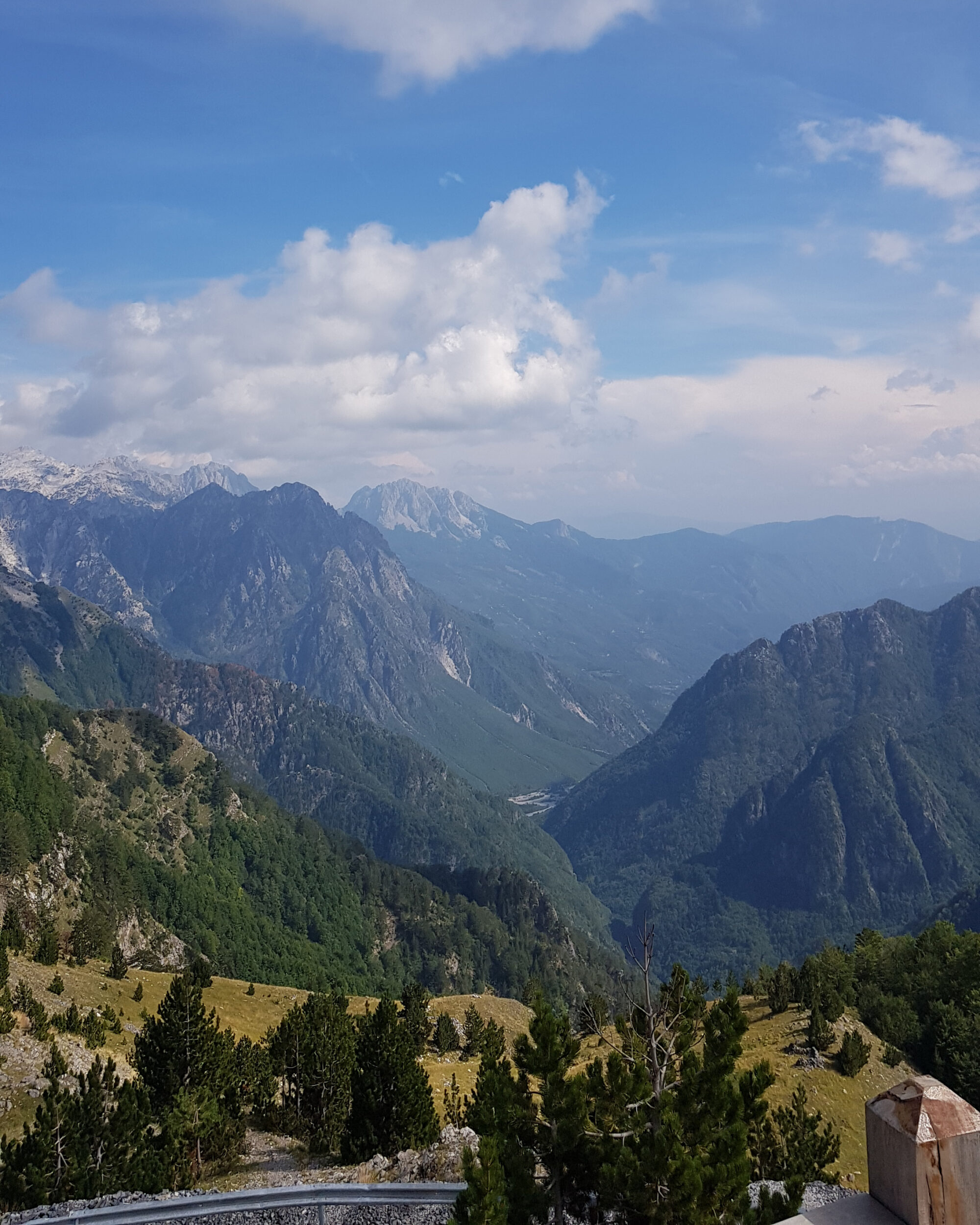
Theth lies in the Shalë Valley, part of Shkodër Municipality in northern Albania. The journey itself is part of the adventure. Travelers typically reach Theth via the scenic mountain road over Qafa e Thores, a spectacular pass that reveals panoramic views of the Albanian Alps before descending into the valley.
Declared a National Park in 1966, the protected area covers approximately 2,630 hectares. The valley floor sits between 700 and 950 meters above sea level, while the surrounding peaks — including Jezerca, the highest in the Albanian Alps — rise dramatically above 2,600 meters. This striking contrast creates one of the most photogenic landscapes in Albania.
Why Theth National Park is so special?
Theth is often described as “the heart of the Albanian Alps,” and that description feels accurate the moment you arrive. The valley opens quietly between sharp mountain ridges, with scattered stone houses, wooden fences, and grazing livestock completing the alpine scene.
Despite growing tourism, Theth has managed to preserve its authenticity. Stone-built guesthouses follow traditional architectural principles, local families still produce cheese, honey, and raki using old techniques, and hospitality remains deeply rooted in custom. Visitors are not treated as strangers but as welcomed guests.

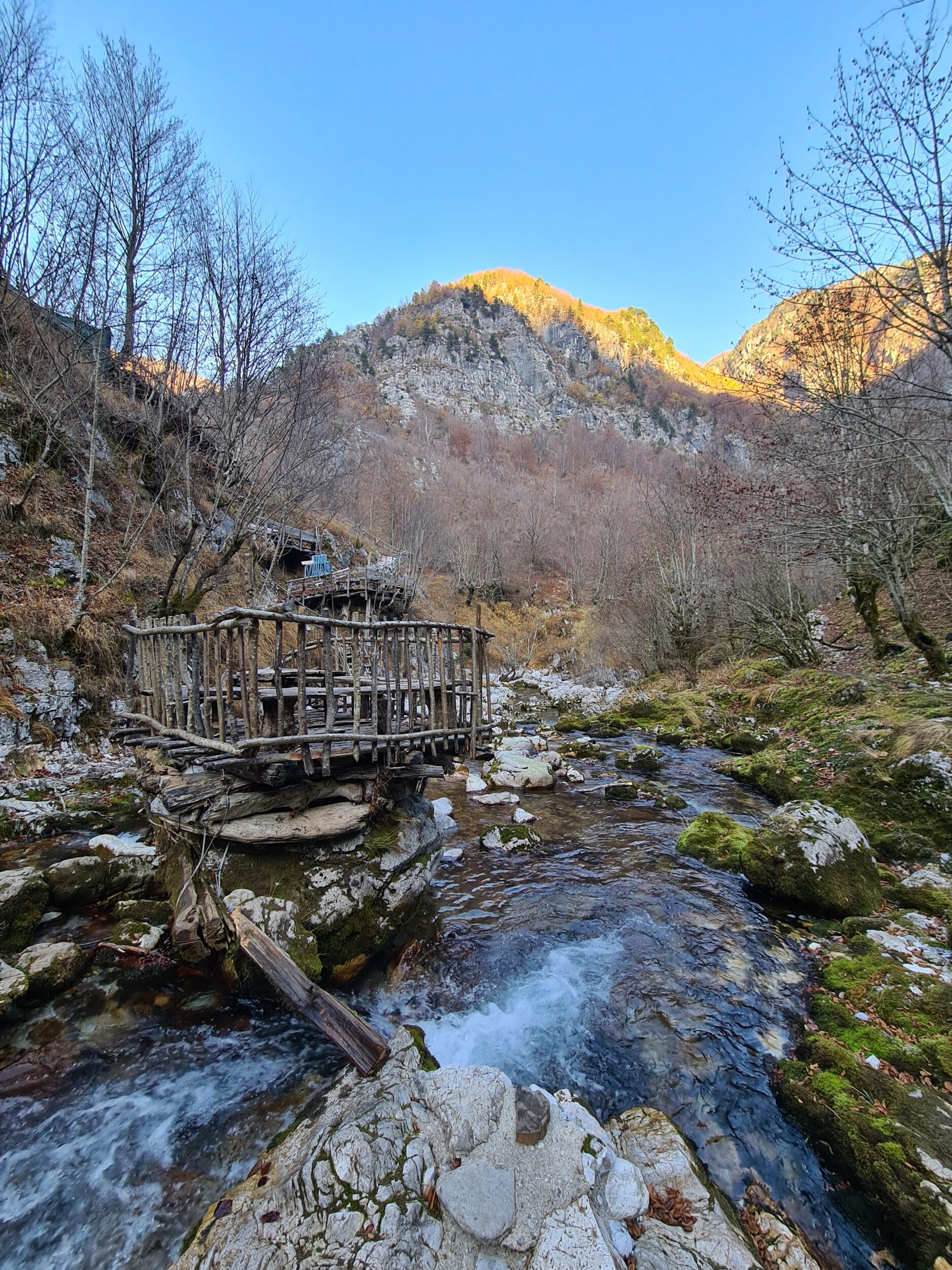

Nature here is powerful yet peaceful. The air is crisp, the rivers are icy and clear, and even in the busiest months, the vastness of the mountains creates a sense of isolation and calm.
The Most Beautiful Natural Attractions in Theth National Park
Grunas Waterfall – A Perfect Introduction to Theth
One of the first places most travelers visit is Grunas Waterfall, and for good reason. The hike to reach it is accessible and rewarding, making it ideal even for visitors who are not experienced hikers.
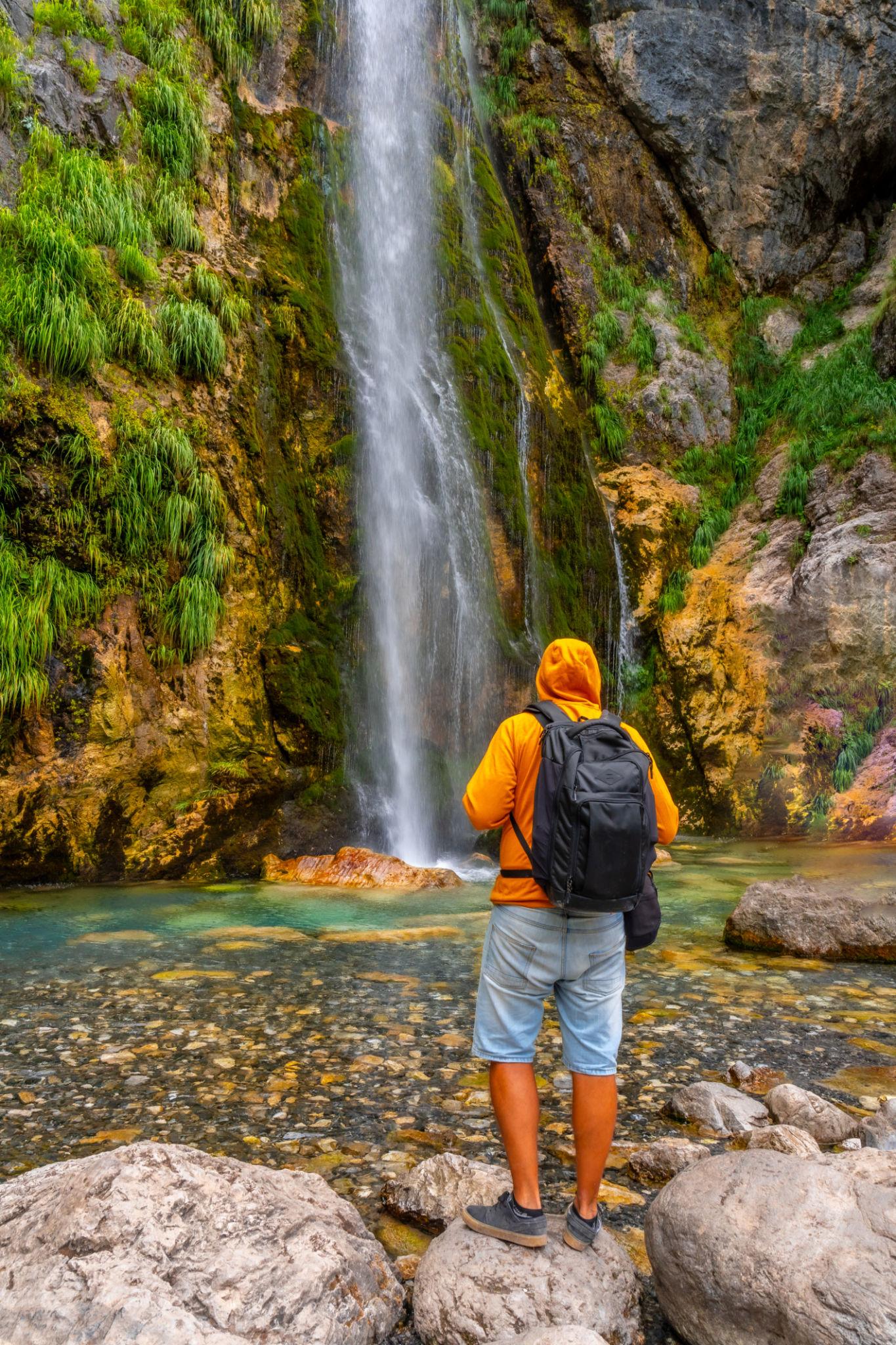
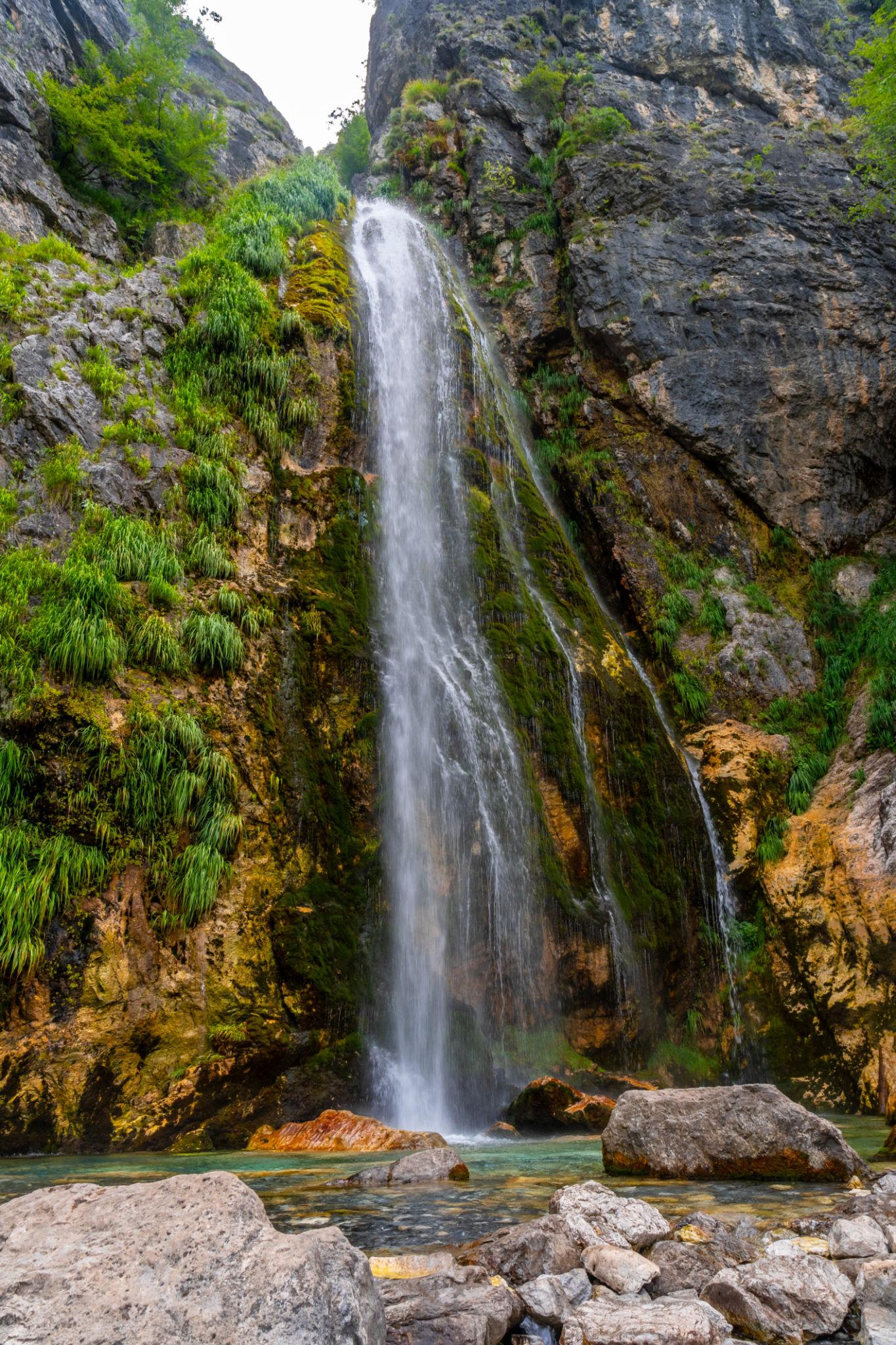
The trail begins near the village and follows the river through a peaceful forest path. After around 45 to 60 minutes of walking, the sound of rushing water grows louder, and suddenly the waterfall appears — dropping approximately 25 to 30 meters down a rocky limestone wall into a clear natural pool.
On sunny days, light reflects through the mist and often creates subtle rainbow effects, making it one of the most photographed spots in Theth National Park. There is no entrance fee, and the hike is considered easy to moderate, suitable for families and casual walkers.
Blue Eye of Theth & Nderlysa Pools – The Turquoise Wonder
If there is one place that captures the wild beauty of Theth National Park, it is the Blue Eye of Theth. This natural spring, glowing in intense turquoise and deep blue shades, looks almost unreal against the surrounding rock formations.


The journey typically begins at Nderlysa Pools, where visitors park before following a scenic riverside trail for about 40 to 60 minutes. The walk is pleasant and mostly gentle, with a slightly steeper section near the end. Families with children who are comfortable with light hiking can usually complete it without difficulty.
The Blue Eye itself is fed by icy mountain water and remains extremely cold year-round. While some brave visitors attempt a quick swim, most simply sit on the rocks, enjoying the contrast of colors and the sound of water echoing between limestone walls.
Nderlysa Pools, located along the way, offer a more relaxed swimming experience. These natural limestone pools are ideal for resting, picnicking, or stopping for lunch at nearby guesthouses.
Theth–Valbona Trail – Albania’s Most Iconic Hike
For those searching for serious hiking in Theth National Park, the Theth–Valbona trail is the highlight. Part of the wider Via Dinarica network, this route is considered one of the most beautiful mountain crossings in Southeast Europe.
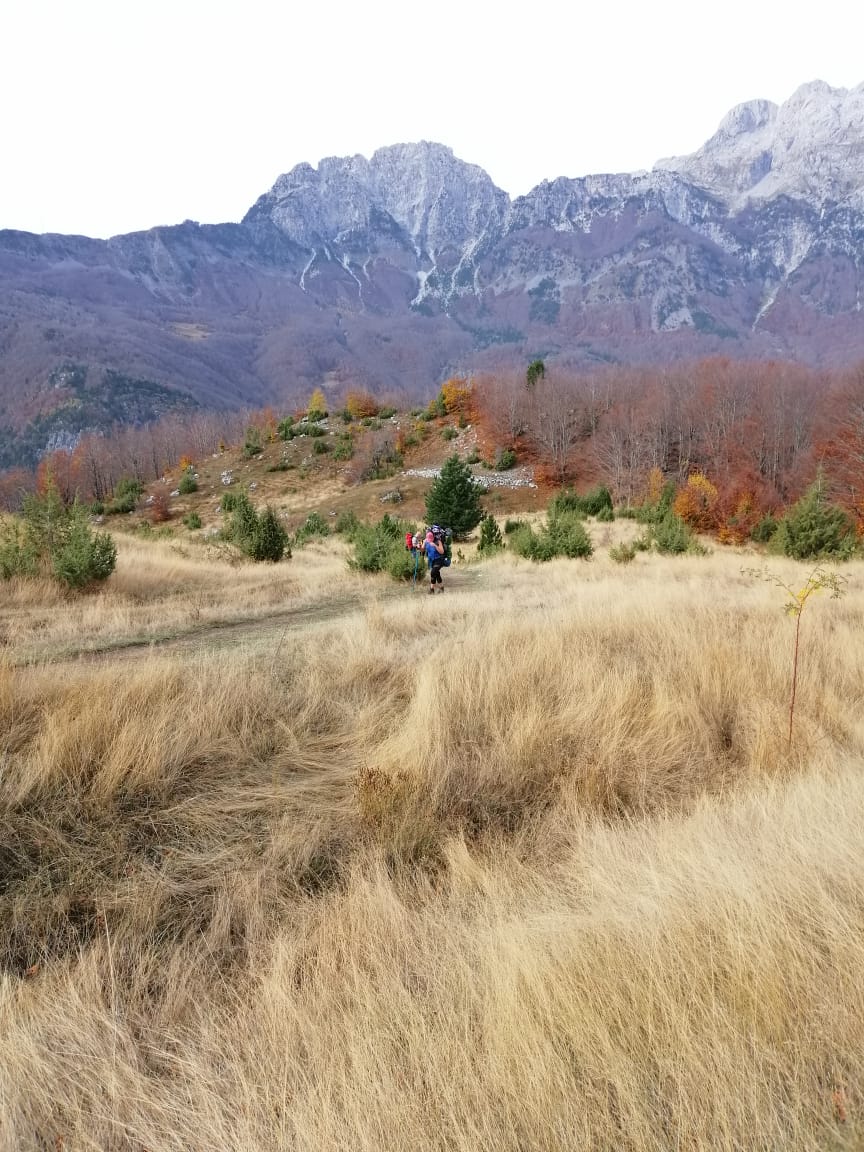

The hike takes approximately five to six hours one way, climbing steadily toward Valbona Pass before descending into the Valbona Valley. Along the route, hikers encounter open alpine landscapes, panoramic mountain views, small natural springs, and quiet rest spots where tea is sometimes offered.
The trail can be completed in a single day or combined with an overnight stay in Valbona, turning it into a multi-day alpine adventure. It is moderately challenging but accessible for travelers with basic fitness and proper hiking shoes.
Cultural Landmarks of Theth
The Church of Theth (1892)
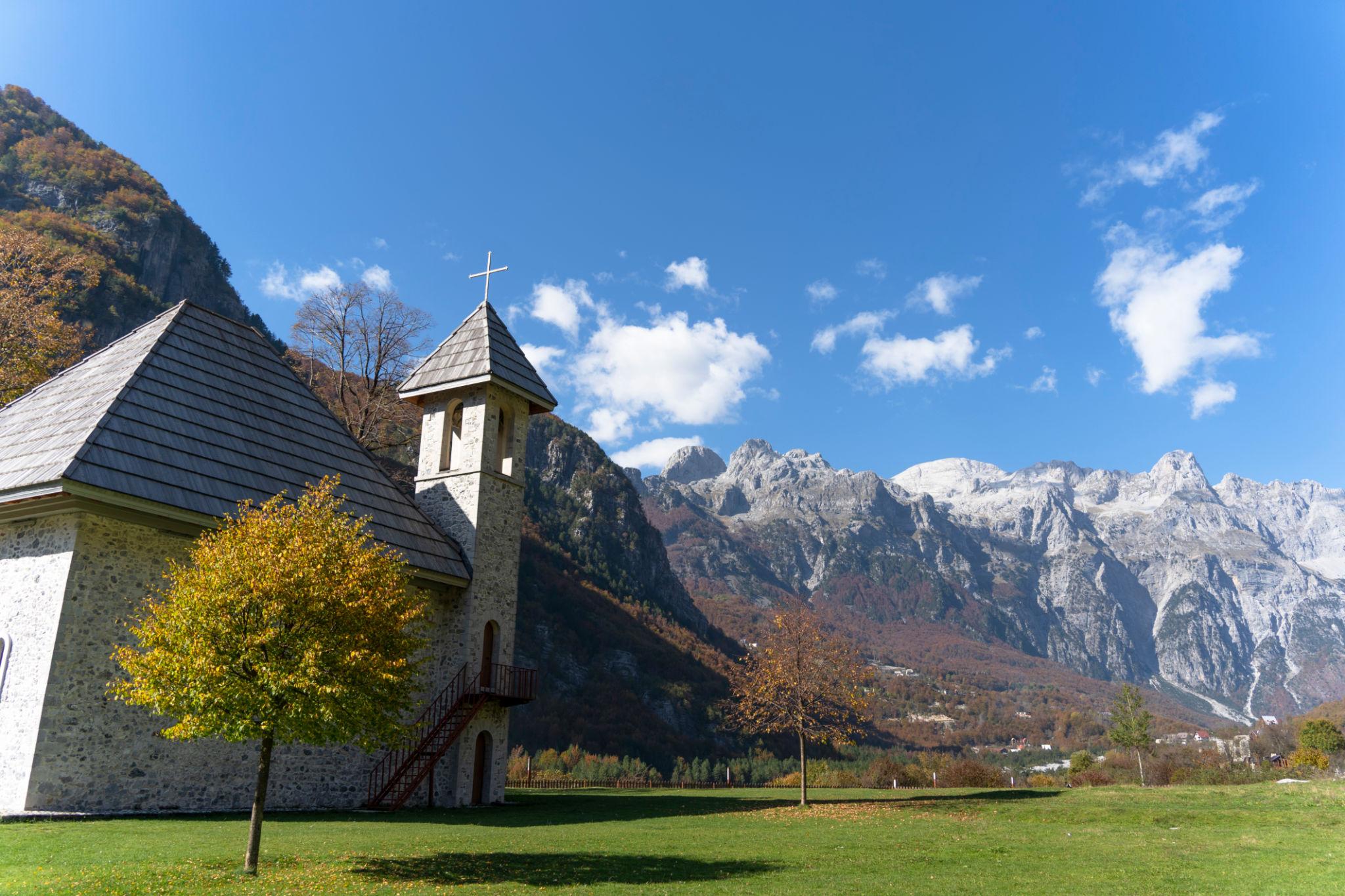
Standing quietly in the center of the valley, the Church of Theth, built in 1892, is one of the most recognizable symbols of the village. Its simple white structure contrasts beautifully with the dramatic alpine backdrop.
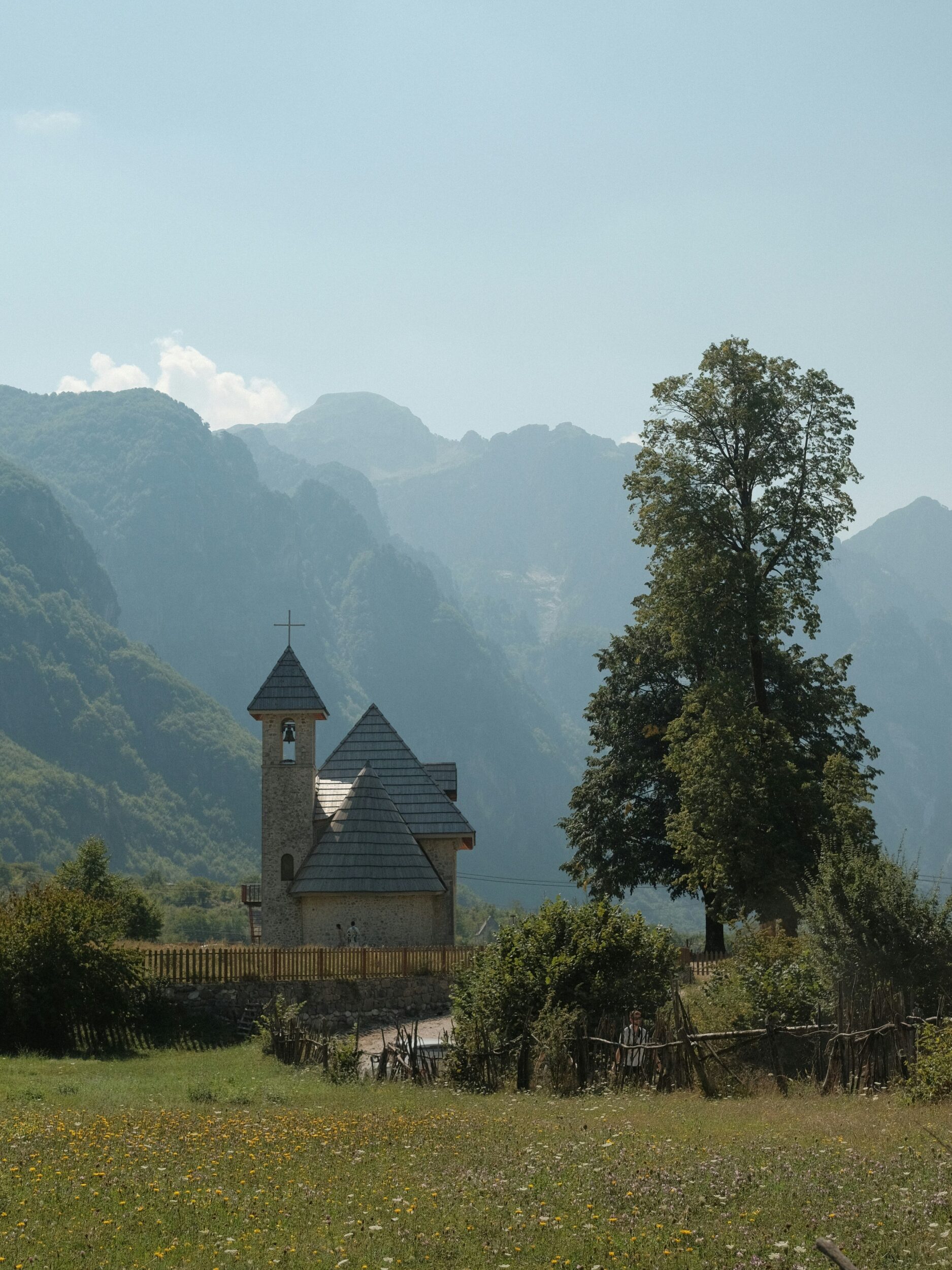
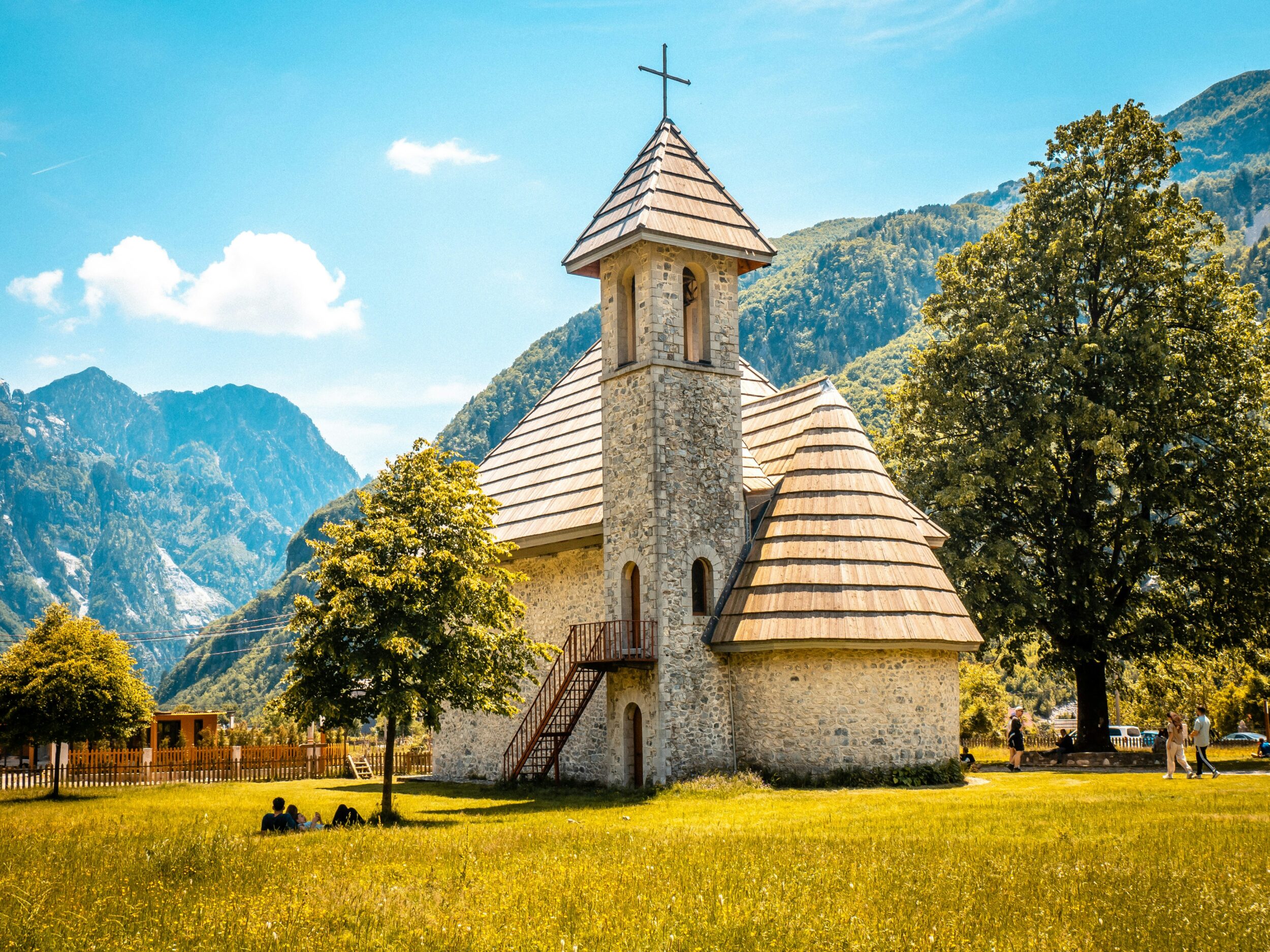
Beyond its religious function, the church once hosted the area’s first school in the early twentieth century. During the communist period in Albania, it was closed, but after the 1990s it regained its spiritual and community role.
Today, visitors stop here not only for photographs but also to experience a moment of calm that reflects the quiet resilience of mountain life.
The Lock-In Tower (Kulla e Ngujimit)
Facing the church stands the Lock-In Tower, known locally as Kulla e Ngujimit. This stone structure offers insight into Albania’s traditional legal system, the Kanun of Lekë Dukagjini.


Historically, the tower functioned as a place where blood feuds were examined and reconciled by village elders. Rather than encouraging violence, the Kanun acted as a social code in periods when no formal state justice existed. Elders would protect individuals involved in disputes and work toward mediation and reconciliation.
Visiting the tower reveals a deeper layer of Theth beyond its landscapes — a story of honor, community authority, and complex social traditions.
For a detailed day-by-day plan including walking times, difficulty levels, and practical tips, read our full itinerary here: What to Do in Theth in 3 Days – Best Things to Visit & See
Nature, Wildlife & Biodiversity
Theth National Park is not only scenic but ecologically rich. The park hosts over 1,500 plant species, including rare endemic varieties found only in the Albanian Alps. Dense beech forests dominate much of the landscape, while alpine pastures bloom with wildflowers in late spring and summer.
Wildlife includes brown bears, wild goats, foxes, wolves, lynx, and golden eagles. The Shala River, flowing through the valley, supports trout populations and adds to the park’s biodiversity.
Because of this ecological value, Theth remains a protected area, and sustainable tourism is increasingly important for its future.
Traditional Life & Local Food
Life in Theth has historically revolved around agriculture and livestock. Even today, many families produce dairy products, honey, and homemade raki. Traditional meals often include roasted lamb, cornbread, fresh mountain cheese, and herbal tea collected from alpine meadows.
Hospitality is part of the cultural identity. Visitors often hear the local saying that their “door is open for everyone,” reflecting a long tradition of welcoming travelers in this once-isolated valley.
When to Visit Theth National Park
The best time to visit Theth National Park is from May to October, when hiking trails are accessible and weather conditions are stable. Winters are harsh, with heavy snowfall that can isolate the village for months, creating a completely different but less accessible landscape.
Why Theth National Park Should Be on Your Albania Itinerary
Theth National Park is not simply a place to visit — it is a place to experience. It offers dramatic alpine landscapes, legendary hiking trails, cultural depth, and genuine hospitality, all within one valley.
For travelers searching for authentic mountain destinations in Europe, Theth represents one of the last places where nature still feels untamed and traditions remain alive.