

If you’re planning a trip and wondering what to pack for Albania, the answer depends on three key factors: the season, the region, and the type of tourism you’re planning. Although Albania is geographically small, its climate varies significantly between the Mediterranean coastline, the mountainous north, and the inland cultural cities. You can be sunbathing on the Albanian Riviera during the day and needing a light jacket in the Albanian Alps by evening.
This seasonal packing guide for Albania will help you pack strategically and avoid common tourist mistakes.
Understanding Albania’s Climate by Region
The Coast – South & West Albania
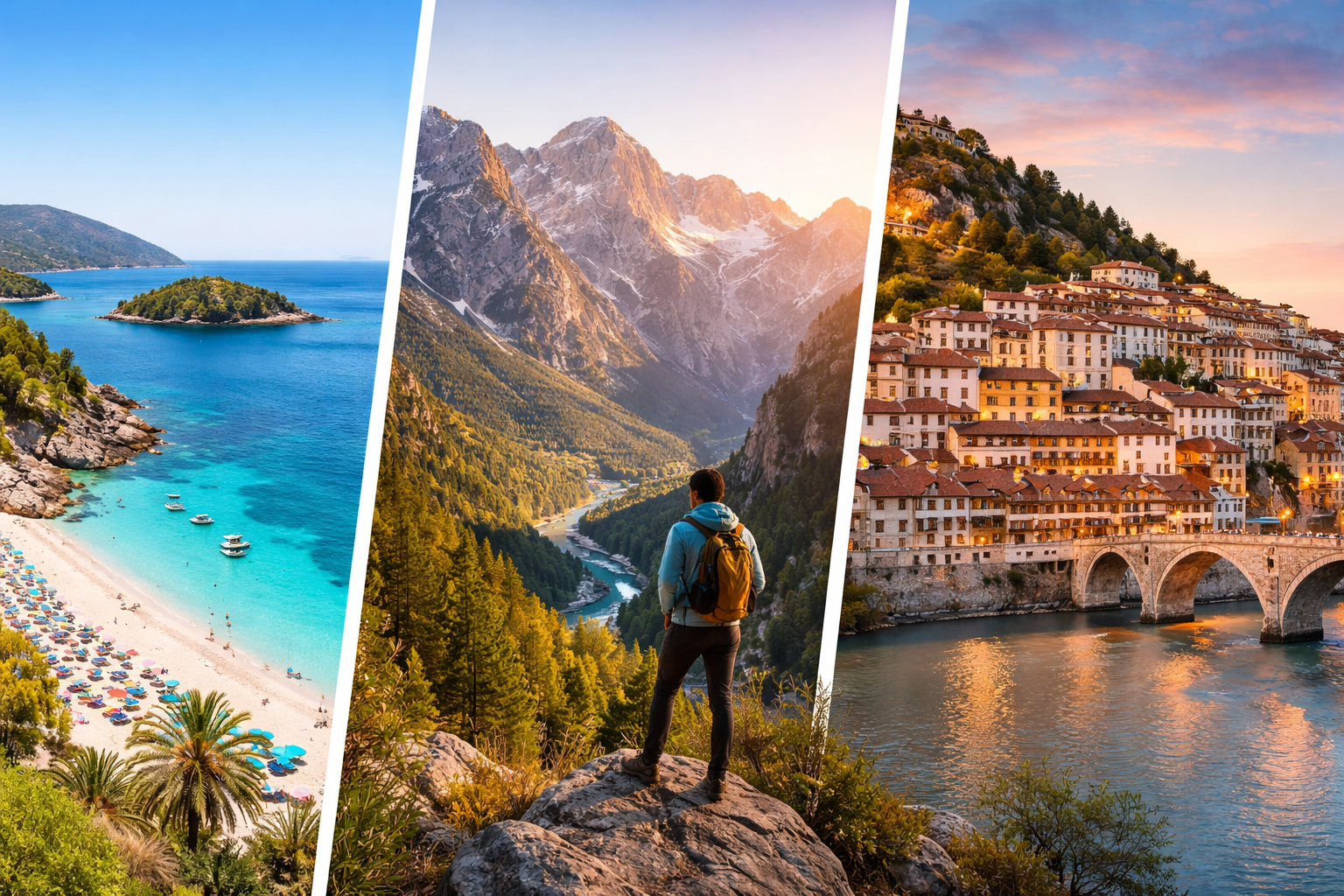
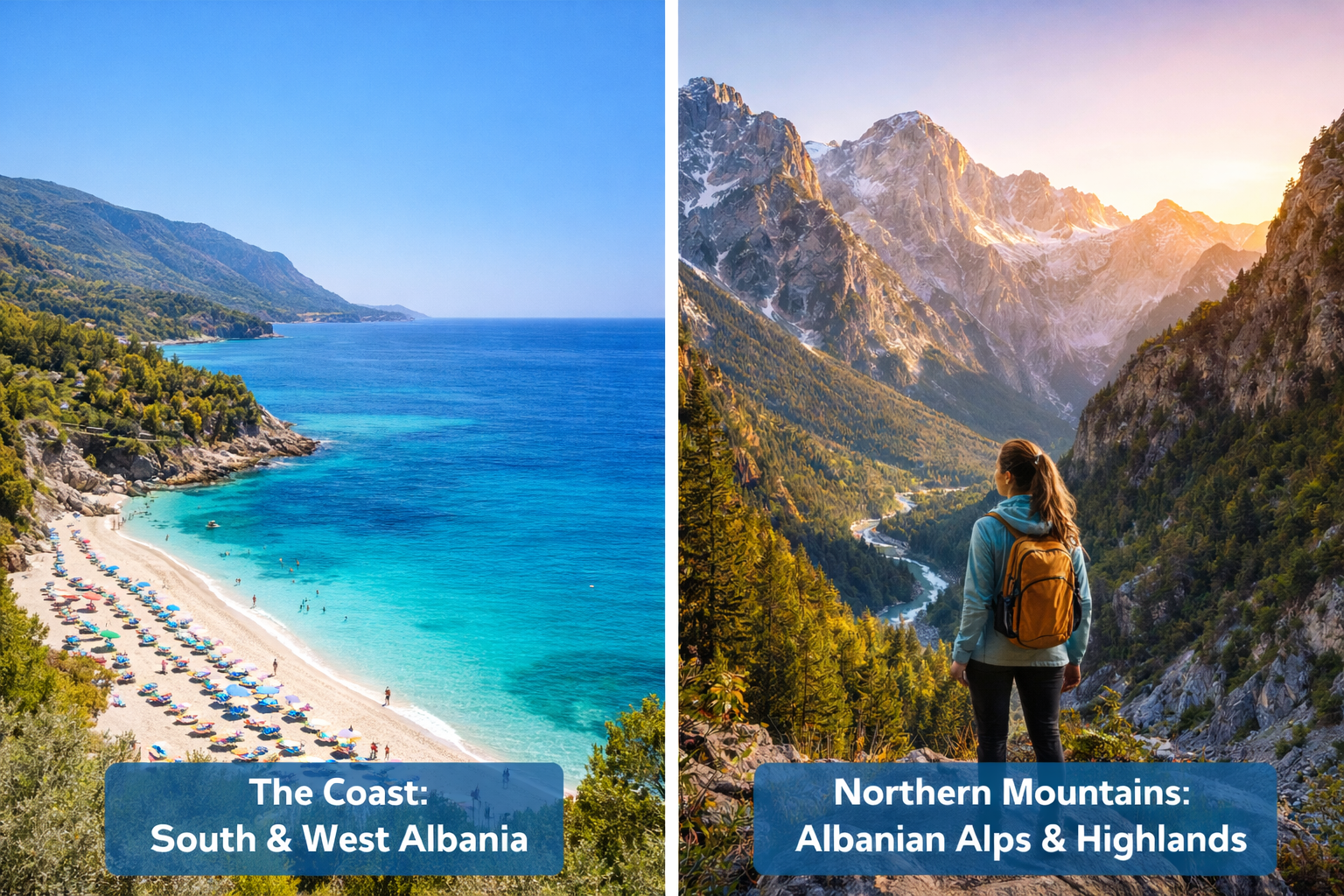
Albania’s coastline, especially in the south, follows a classic Mediterranean climate. Summers are long, hot, and dry, with temperatures often reaching 35°C or even higher in July and August. Coastal destinations such as Ksamil, Dhermi, or Saranda can feel intensely warm during peak summer hours, especially between 12:00 and 16:00. Winters, however, are relatively mild compared to the rest of Europe, with temperatures rarely dropping below 8–10°C.
If your trip focuses on beach tourism, boat tours, or nightlife along the coast, your packing list should prioritize lightweight fabrics, breathable clothing, and strong sun protection.
Northern Mountains – Albanian Alps & Highlands
Northern Albania has a completely different climate profile. Areas like Theth and Valbona experience alpine conditions. Even in the middle of summer, daytime temperatures are pleasant rather than extreme, usually between 18–28°C. However, evenings can become surprisingly cool, especially in higher elevations.
In winter, these regions transform into snowy landscapes, and heavy snowfall is common. Roads may become difficult to access, and proper winter clothing becomes essential.
If you are planning hiking, trekking, or adventure tourism in northern Albania, your packing strategy must include layers and weather-resistant clothing.
Inland Cities – Tirana, Berat, Gjirokastër
Inland cities combine hot summers with cooler winters. Tirana, for example, can become very warm in July and August, often similar to the coast but with less sea breeze. Meanwhile, historic cities such as Berat and Gjirokastër have cobblestone streets and stone architecture that retain heat during the day but cool down noticeably at night.
Spring and autumn are particularly comfortable in these regions, making them ideal for city exploration and cultural tourism.
What to Pack for Albania by Season
Summer in Albania (June – September)
Summer is peak travel season, especially along the coast. If your trip includes beach destinations, you should focus on light, breathable fabrics such as linen and cotton. Swimwear is essential, and bringing more than one swimsuit is practical due to frequent swimming and quick turnarounds between beach visits.
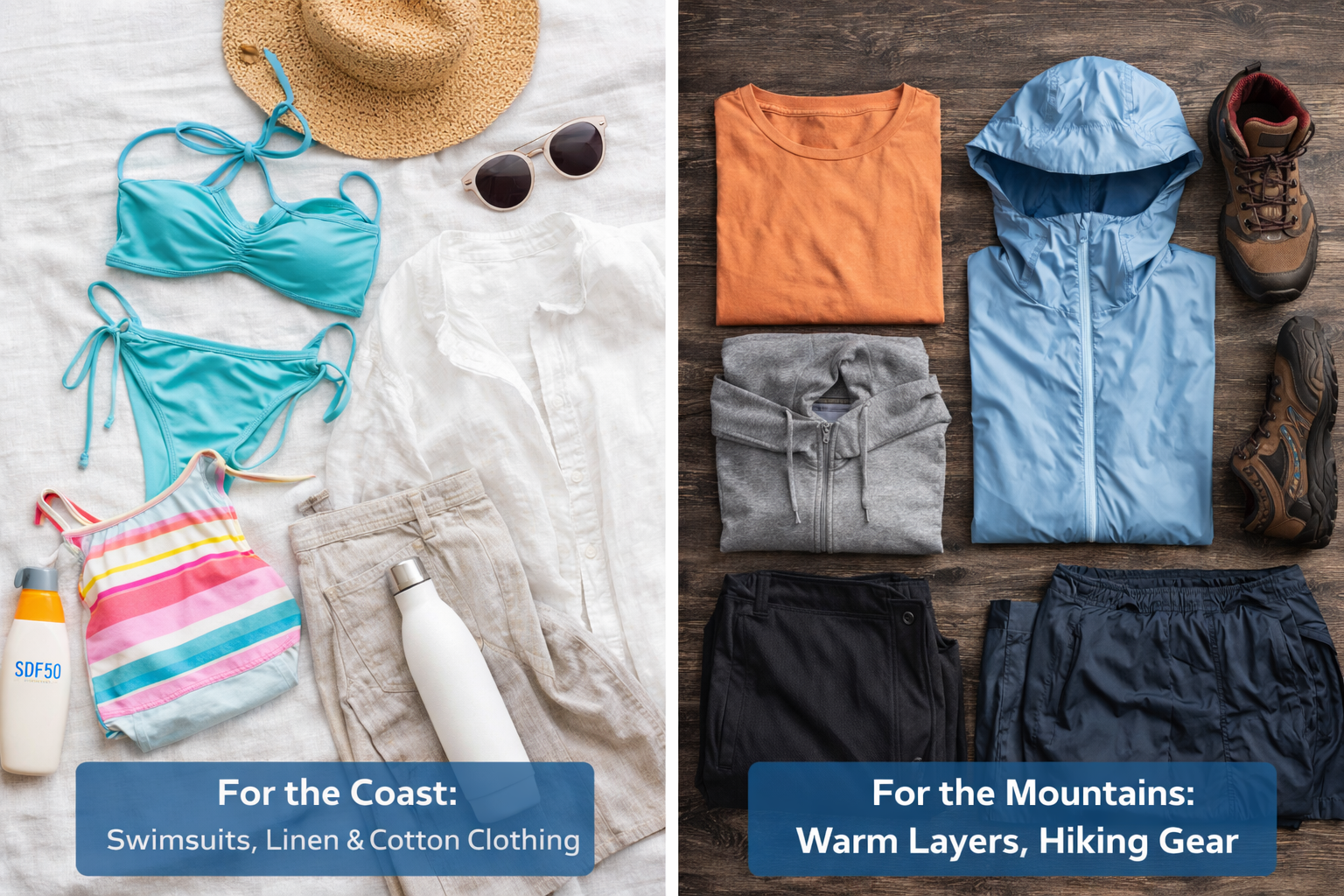
However, if your itinerary includes northern Albania, you should not rely only on summer clothing. Even in August, evenings in Theth or Valbona can require a light jacket, hoodie, or long-sleeve shirt. Mountain weather can change quickly, so a light rain jacket is also useful.
A key tip for summer travel in Albania is to pack layers. Coastal areas are hot and humid, while mountainous regions can cool down rapidly after sunset.
Autumn in Albania (October – November)
Autumn is one of the best times to visit Albania. The crowds decrease, temperatures become milder, and landscapes turn colorful, especially in mountainous and rural regions.
On the coast, early October can still allow swimming, particularly in the south. During this period, light sweaters and long trousers are usually sufficient, with a medium jacket for evenings. In northern or inland areas, layering becomes more important, and waterproof footwear may be useful if you plan outdoor activities.
Rain becomes more frequent during late autumn, so a compact umbrella or light waterproof jacket is advisable.
Winter in Albania (December – February)
Winter packing depends entirely on location. Southern coastal cities such as Saranda and Vlora experience mild winters compared to most European destinations. A medium-weight jacket, sweaters, and comfortable walking shoes are usually enough.
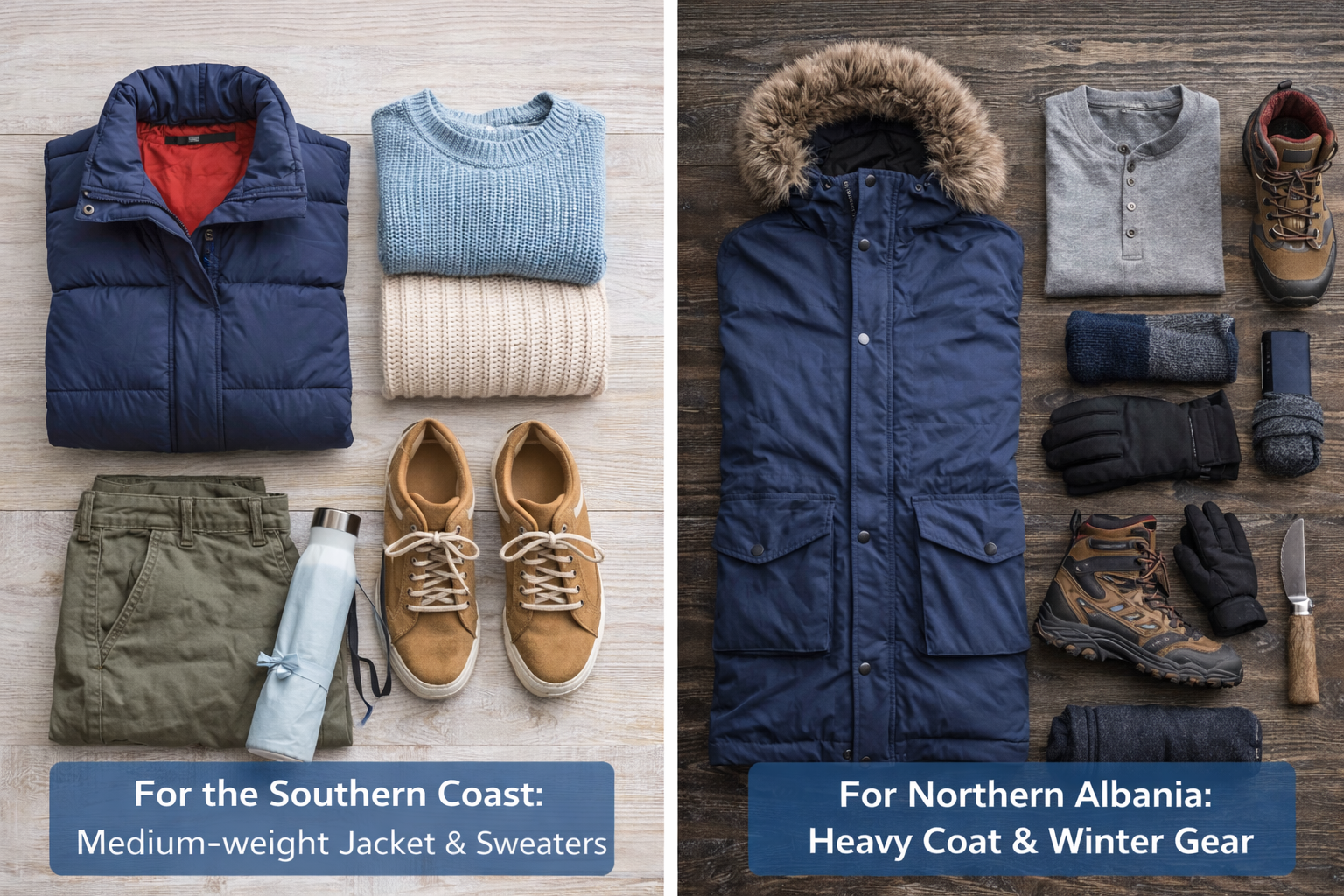
In contrast, northern Albania requires proper winter preparation. Heavy coats, thermal layers, waterproof boots, gloves, and warm accessories are necessary. Snowfall is common in mountainous regions, and temperatures can drop below freezing.
If you are planning winter hiking or visiting mountain villages, do not underestimate the cold conditions.
Spring in Albania (March – May)
Spring offers balanced weather and is ideal for cultural exploration and hiking. Temperatures gradually rise from 15°C to 25°C, but sudden weather changes are possible.
Layered clothing works best during this season. A light waterproof jacket, comfortable walking shoes, and a sweater for cooler evenings are generally sufficient. Spring is especially pleasant in inland cities and for exploring archaeological sites or UNESCO towns.
Packing by Type of Tourism
If your trip focuses on beach tourism in southern Albania, prioritize sun protection, sandals, swimwear, and lightweight evening outfits for restaurants or nightlife.
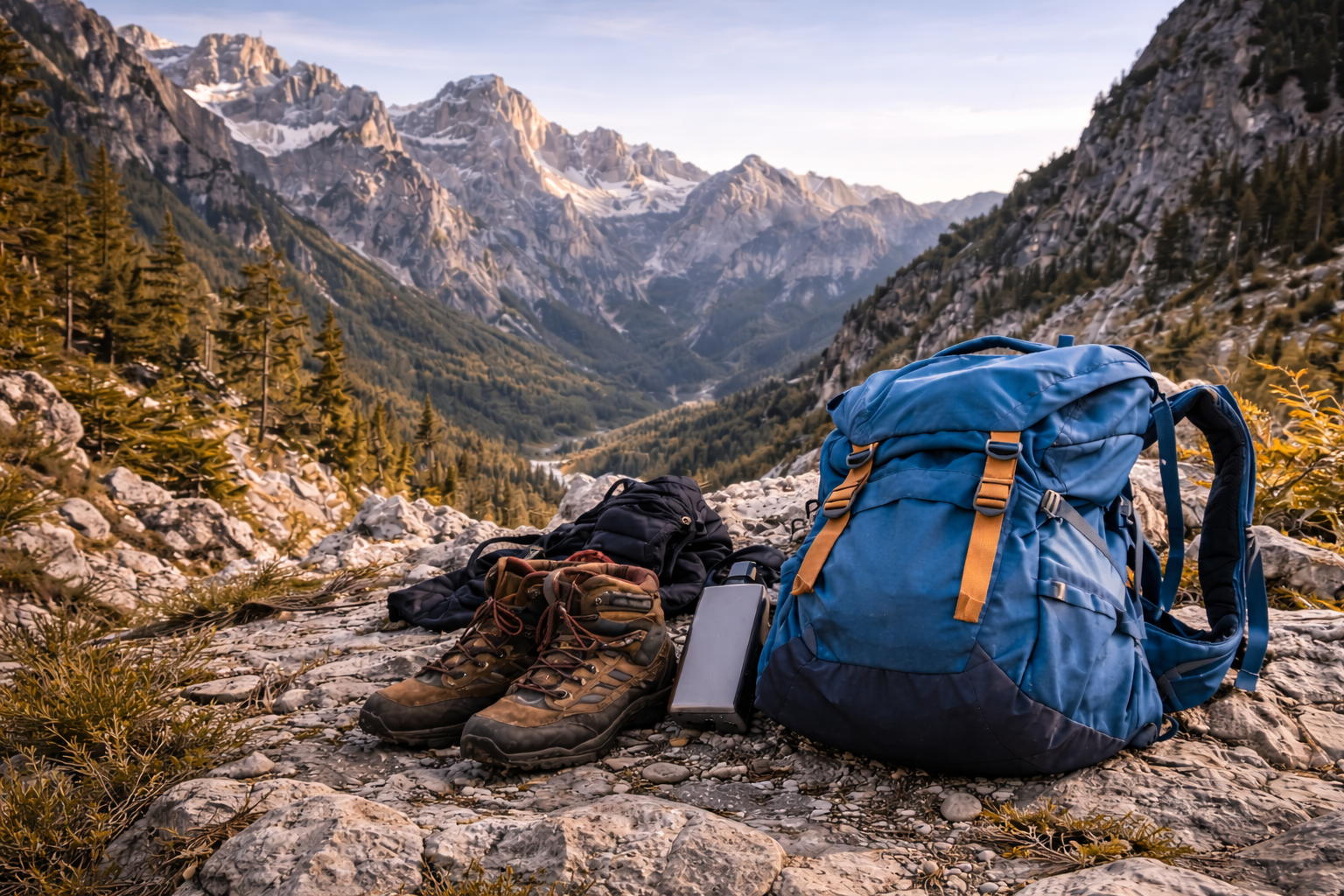
If you are traveling for hiking and adventure tourism in northern Albania, prioritize durability and functionality. Hiking boots, quick-dry clothing, layered outfits, and a day backpack are essential. In remote areas, electricity can be limited, so a power bank may also be useful.
For cultural and city tourism, comfortable walking shoes are important due to cobblestone streets. Modest clothing may be required when visiting religious sites, and a small backpack for daily exploration is practical year-round.
Final Advice: Pack Smart for Albania
The key to knowing what to pack for Albania is understanding that the country combines Mediterranean warmth with alpine coolness. The south is hot and sunny in summer, while the north can feel fresh and even cold at night — sometimes on the same day.
Rather than overpacking, focus on versatile, layered clothing that adapts to different regions and activities. Albania’s diversity is one of its greatest strengths, and if you pack according to season and destination, you’ll be fully prepared to enjoy every part of the journey.
If you’re planning to explore Albania on your own, read our guide on Albania solo travel: Safe and authentic local tips for practical advice and cultural insights to help you travel confidently and respectfully.