

If there is one way to travel through time, it is through the monasteries of Albania. Hidden among mountains, on the shores of lakes, or atop panoramic hills, these silent monuments are witnesses to a millennia-old spiritual and cultural history. From the early days of Christianity to modern times, monasteries have served not only as places of prayer but also as centers of knowledge, resistance, and national identity. For the curious tourist or the spiritual traveler, Albania offers a hidden treasure of monasteries waiting to be discovered—each with its own unique history, architecture, and atmosphere.
🏛️ A rich history that defied centuries
The monastic tradition in Albanian lands has deep roots dating back to the early period of Christianity. During the Middle Ages, especially under Byzantine rule, monasteries flourished as spiritual and cultural centers. Orthodox and Catholic monks established monasteries across the north and south, leaving behind monuments whose architecture and art continue to inspire today. Notable examples include the Monastery of the 40 Saints in Saranda and the Monastery of Saint Sergius and Bacchus near Shkodra—a Benedictine monastery from the 13th century, preserved today as monumental ruins.
With the arrival of the Ottoman Empire, many monasteries were damaged or abandoned, while others became hidden refuges for believers and guardians of the Albanian language and identity. During the communist regime, in 1967, Albania was officially declared an atheist state, and monasteries were closed, destroyed, or repurposed as public buildings.
After 1990, a period of revival began. Religious communities—especially the Orthodox and Catholic Churches—restored many monasteries and revived spiritual life within them. Today, these sacred sites represent not only faith, but also the resilience of Albanian culture through time.
🕍 Ardenica Monastery – Where history meets the spirit
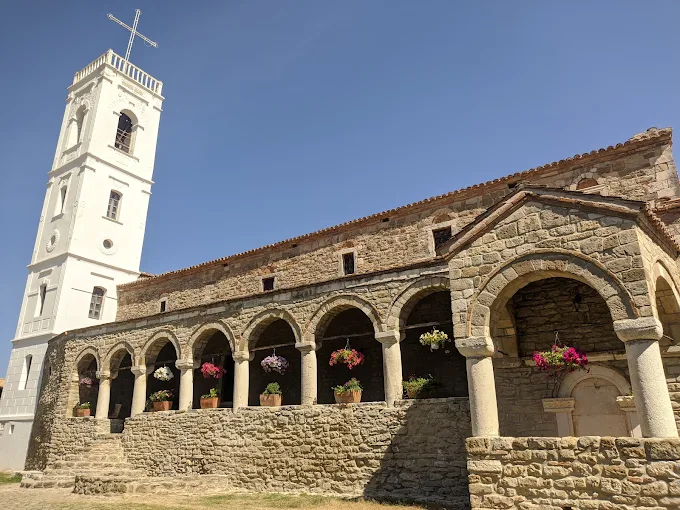
Perched on a hill between Lushnja and Fier, the Ardenica Monastery is one of the best-preserved gems of Albanian Orthodoxy. Built in 1282 by order of Byzantine Emperor Andronikos II Palaiologos, this monastery is not merely a sacred site but also a key landmark of national history: it is where Skanderbeg married Donika Arianiti in 1451.
The Church of Saint Mary in Ardenica follows a cruciform plan with a Byzantine-style dome, decorated with frescoes painted in 1744 by Albanian artists Kostandin and Athanas Zografi. The complex also includes monks’ quarters, a refectory, and an old olive oil mill—an exceptional combination of spiritual and practical life.
During the communist period, the monastery was damaged and closed, but after the 1990s it was restored and today functions as an active monastery with a small brotherhood of monks. Ardenica has become a major attraction for pilgrims and tourists alike, drawn by its architecture, frescoes, and sweeping views over the Myzeqe plain.
📍 Location: Ardenica Monastery on Google Maps
🏛️ Apollonia Monastery – Where antiquity intertwines with faith
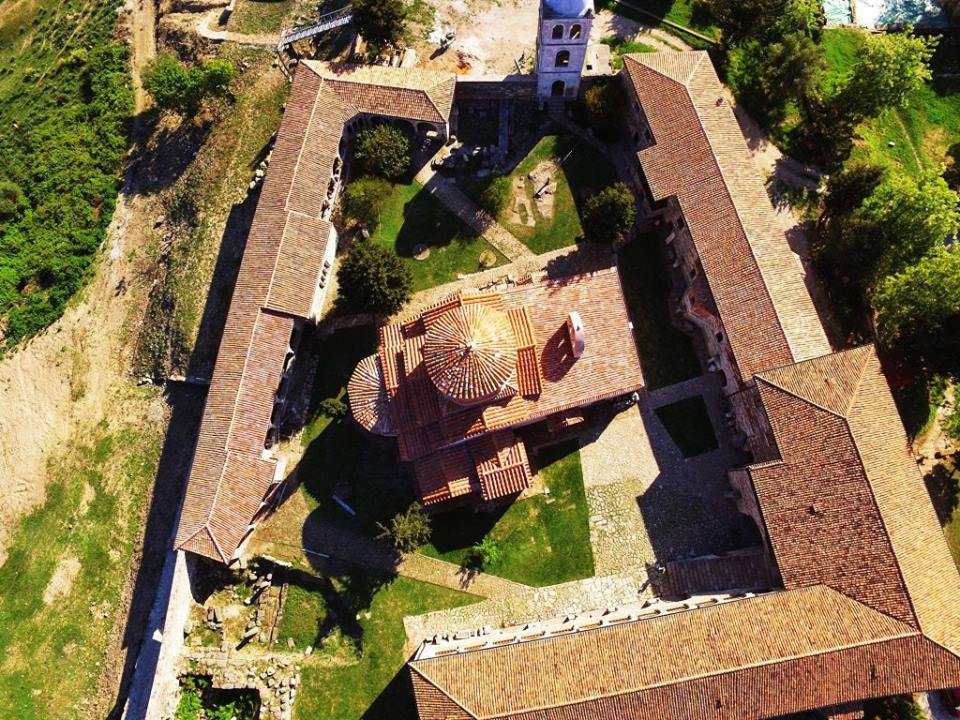
Within the Archaeological Park of Apollonia, about 12 km from Fier, stands the Monastery of Saint Mary of Apollonia—one of the most remarkable monuments of Albania’s religious and cultural heritage. Built atop the ruins of the ancient Illyrian city, the monastery represents a rare fusion between pagan civilization and Christian faith.
The Church of Saint Mary dates back to the 12th–13th centuries and reflects Byzantine architecture with a cruciform plan and central dome. The walls were built using the cloisonné technique, while the exterior decorations reveal Romanesque-Gothic influences, featuring mythological figures carved in stone. Inside, visitors can admire a carved iconostasis, fragments of 16th-century frescoes, and architectural elements reused from the surrounding ancient structures.
After centuries of prominence, the monastery gradually declined, but following 1990 it was restored and today forms part of the Apollonia Archaeological Park’s visitor circuit. Some areas function as a museum, while the church is still used for religious services on special occasions. The Apollonia Monastery offers a unique experience where antiquity and faith coexist in perfect harmony.
🌿 Zvernec Monastery – Harmony between nature and spirit
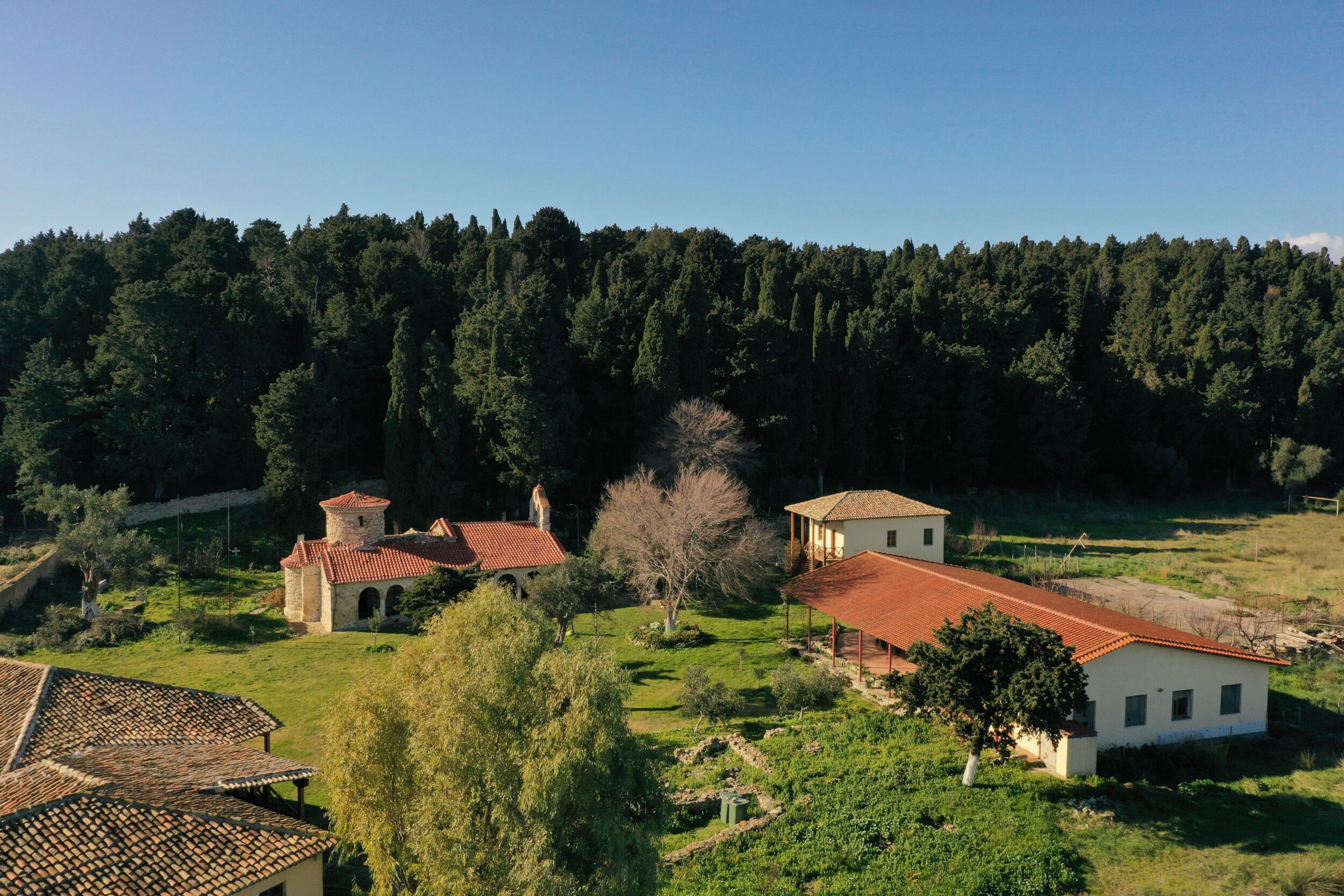
On a small island within the Narta Lagoon, near Vlora, stands the serene Zvernec Monastery of Saint Mary—one of the most picturesque monasteries in Albania. To reach it, visitors cross a wooden bridge approximately 270 meters long, connecting the shore to the island and creating a memorable entrance into a place of spiritual calm.
The monastery church dates back to the 13th–14th centuries and was built in the Byzantine style with a “free cross with dome” plan. Stone and brick walls, a simple narthex, and partially preserved frescoes give the church an authentic and understated beauty. The icon of Saint Mary, painted by Terpo Zografi in 1782, is one of the most valued works of Albanian post-Byzantine art.
During the communist period, the monastery was damaged and used for non-religious purposes, but after 1990 it was restored and today functions as an active pilgrimage site. Every year on August 15, the Feast of the Dormition of Saint Mary, hundreds of believers gather here for liturgy and traditional rites. Zvernec remains an ideal destination for those seeking peace, reflection, and a blend of natural beauty with spirituality.
📍 Location: Zvernec Monastery on Google Maps
⛪ Rubik Monastery – The heart of Catholicism in Mirdita
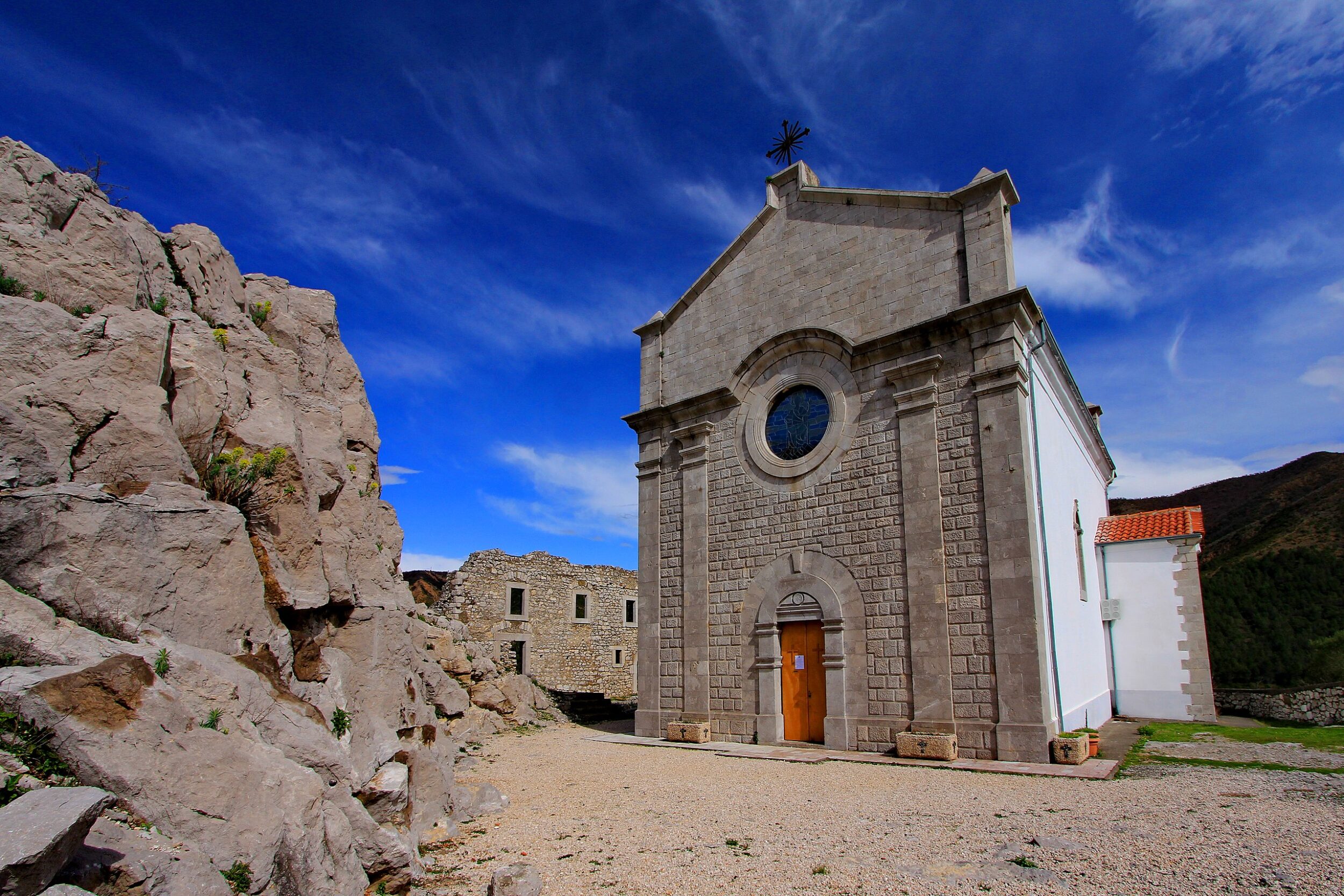
Set atop a rocky hill overlooking the Fan River valley, the Rubik Monastery, also known as the Church of the Savior, is one of the most important monuments of Catholicism in Albania. Founded around 1166 by the Benedictine order, it became a major spiritual, cultural, and educational center for the Mirdita region.
The church consists of a single nave and preserves elements of Romanesque and Gothic architecture. Its frescoes—especially the Deesis scene dated to 1272—are among the oldest and most valuable in the country. Latin inscriptions further testify to the activity of the clergy during the Middle Ages.
During Ottoman rule, the monastery came under Franciscan administration and remained a stronghold of Catholic faith in northern Albania. Under the communist regime, it was closed and severely damaged, and its last abbot, Father Marin Shkurti, was executed in 1946.
After the 1990s, the monastery was restored and today stands as a pilgrimage site and a symbol of pride for the local community. Although it no longer hosts an active monastic community, the Church of Rubik remains a powerful testament to spiritual resistance and Christian identity in Albania.
📍 Location: Rubik Monastery on Google Maps
🕊️ Monastery of Saint John Vladimir – Pilgrimage and national identity
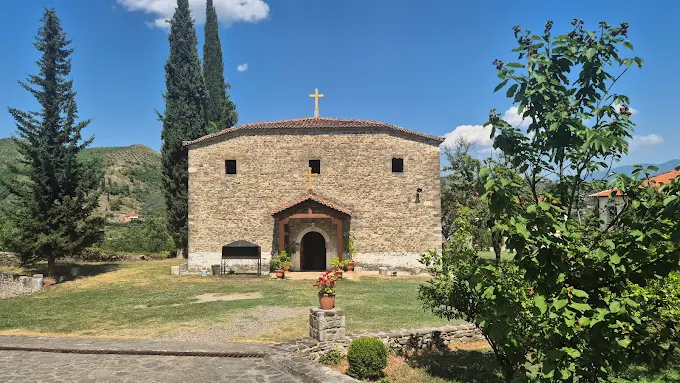
About 7 km from Elbasan lies the Monastery of Saint John Vladimir, one of the most important Orthodox pilgrimage sites in Albania. Originally built in the 14th century by Karl Topia to house the relics of the saint, the monastery is closely linked to Saint John Vladimir—a Christian prince martyred in 1015 and venerated throughout the Balkans.
The present-day church is a three-nave basilica with Byzantine and post-Byzantine elements, featuring frescoes painted by Kostandin Shpataraku in the 18th century. Inside stands the symbolic sarcophagus of the saint, where believers pray for healing and protection.
Every year on June 4, thousands of pilgrims from Albania and neighboring countries gather here for a grand ceremony that includes liturgy, processions, and a traditional fair. Despite damage suffered during the communist period, the monastery has been restored and continues to play a vital role in Albania’s religious and national identity.
📍 Location: Monastery of Saint John Vladimir on Google Maps
🚶♂️ Pilgrimage and religious tourism – A living heritage
After the fall of the communist regime and the restoration of religious freedom in the 1990s, monasteries in Albania have been reborn not only as spiritual centers but also as vital elements of national cultural heritage. They have become major pilgrimage destinations, bringing together believers of different faiths and reflecting Albania’s unique interfaith harmony.
Festivals such as the Feast of Saint John Vladimir in Shijon on June 4 or the Dormition of Saint Mary in Zvernec on August 15 attract thousands of people every year in ceremonies that bring tradition and community to life. These events go beyond religious rituals—they are popular celebrations where faith, culture, and heritage merge.
At the same time, an increasing number of monasteries are being included in cultural tourism itineraries, visited for their architecture, frescoes, history, and surrounding landscapes. Travel agencies now incorporate monasteries into tours that combine nature, history, and spirituality—offering a unique and meaningful travel experience.
Today’s monasteries function as living museums and places of meditation. They tell our collective history and offer tranquility to anyone seeking a moment of refuge from the noise of everyday life.
🏛️ Preserving heritage – A shared responsibility
Although many monasteries have been restored and designated as Cultural Monuments, challenges to their preservation remain. Some are located in remote areas and risk degradation due to lack of maintenance, funding, or sustained institutional care. Heritage specialists emphasize the need for long-term investment and the active involvement of local communities in preservation and promotion efforts.
At a time when cultural tourism is gaining increasing importance, Albanian monasteries have the potential to become bridges connecting the past with the present. They stand as testimonies of spiritual strength, religious harmony, and a history that deserves to be protected and shared.
📢 Share this article with your friends so more people can discover and appreciate the treasures of Albania’s spiritual and cultural heritage!
👉 And if you are passionate about spiritual journeys, also read:
10 Churches You Should Visit in Albania