

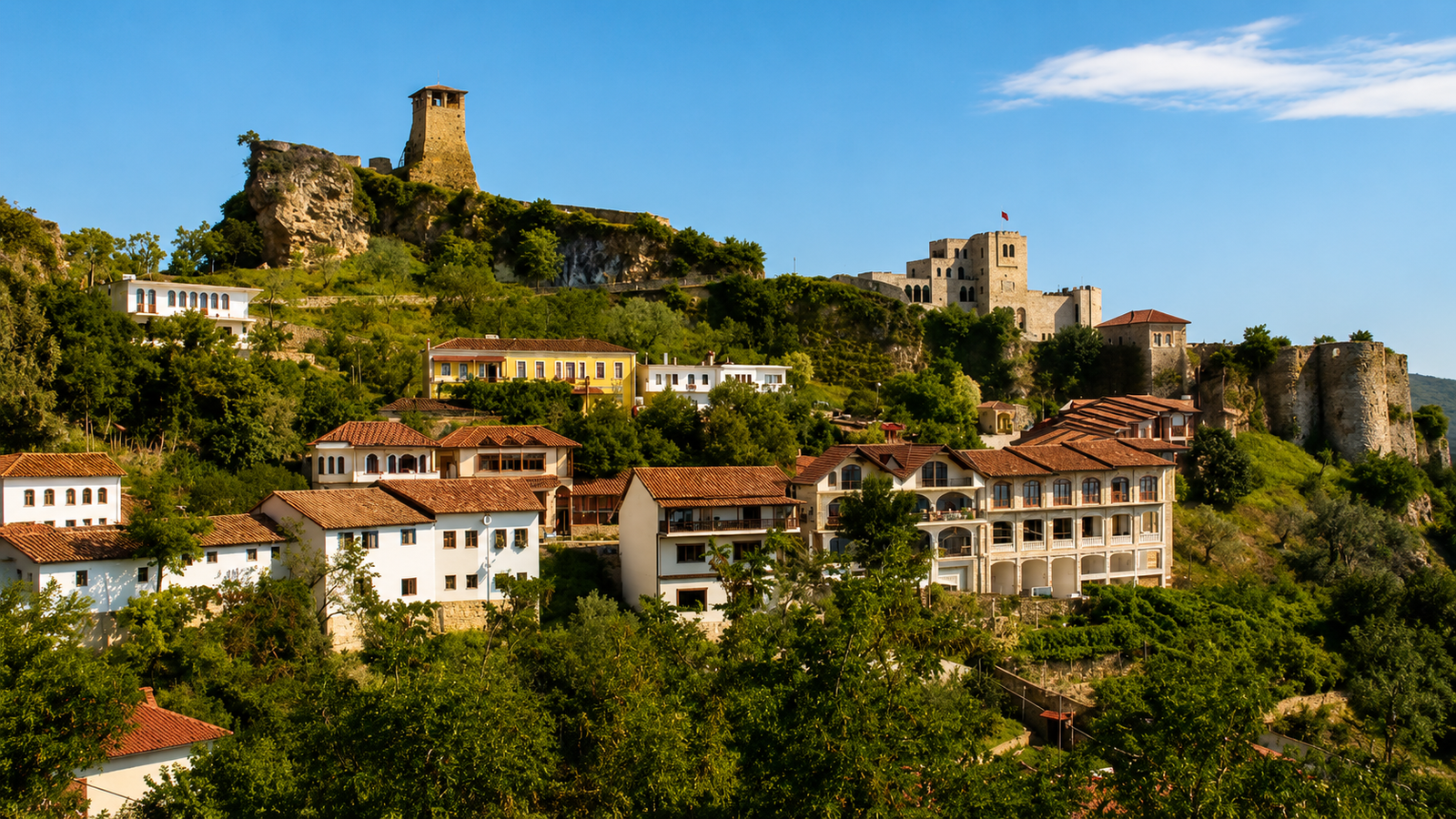
Rising above the historic town of Kruja, Kruja Castle is one of the most important historical landmarks in Albania and one of the places most closely connected with the story of Gjergj Kastrioti Skanderbeg.
But the history of Kruja Castle began long before Skanderbeg. The fortress developed over many centuries, served as an important political and military center in medieval Albania, became the heart of resistance against the Ottoman Empire in the 15th century, and later continued to evolve under Ottoman rule and into the modern period.
Today, visitors can walk through the historic castle area, see surviving walls and towers, visit the Skanderbeg Museum and Ethnographic Museum, discover religious and Ottoman-era monuments, and continue directly into the famous Old Bazaar of Kruja.
This guide explores the history of Kruja Castle, its connection with Skanderbeg, the Ottoman sieges, its architecture, what remains today, and everything you need to know before visiting in 2026.
Kruja Castle – Quick Guide 2026
- 📍 Location: Kruja, Albania, around 20 km north of Tirana
- 🏰 Origins: Early fortification traditionally dated to the 5th–6th centuries
- ⛰️ Elevation: Around 600 metres above sea level
- 🧱 Castle perimeter: Approximately 800 metres
- 🗼 Defensive towers: Nine documented towers
- ⚔️ Famous for: Skanderbeg and the Albanian resistance against the Ottoman Empire
- 📅 Key historical period: 1443–1478
- 🏛️ Main museums: Skanderbeg Museum and Ethnographic Museum
- 🕘 Museum hours: 09:00–19:00, Monday–Sunday
- ⏱️ Recommended visit: 2–4 hours
- 🛍️ Nearby: Kruja Old Bazaar
- 👟 Good to know: Expect cobbled streets, slopes and uneven historic surfaces
Table of Contents
- Why is Kruja Castle important?
- History of Kruja Castle
- Why was Kruja difficult to conquer?
- Architecture of Kruja Castle
- What to see inside Kruja Castle
- Is the Skanderbeg Museum the original castle?
- Kruja Castle after Skanderbeg
- Earthquakes and restoration
- Opening hours and ticket information
- How to get to Kruja Castle
- How long do you need?
- What to visit nearby
- Where to Eat and Stay Near Kruja Castle?
- Best time to visit
- Practical tips
- FAQ
Why Is Kruja Castle So Important?
Kruja Castle is much more than a medieval fortress. Its importance comes from the different roles Kruja played throughout Albanian history: as a fortified settlement, a political center, a medieval stronghold and, most famously, the headquarters of Gjergj Kastrioti Skanderbeg’s resistance against the Ottoman Empire.
Kruja was already significant centuries before the 15th century. Historical and archaeological evidence places the site within the early medieval development of the region, while Kruja appears as an important Byzantine and episcopal center by the 9th century. By around 1190, Kruja had become the seat of the Principality of Arbanon, one of the earliest known medieval Albanian political formations.
Its greatest symbolic importance, however, comes from the 15th century. From Kruja, Skanderbeg organized resistance against one of the most powerful empires of the period. Ottoman armies repeatedly attempted to capture the fortress, but Kruja resisted several major campaigns during Skanderbeg’s lifetime.
For this reason, the castle became deeply associated with resistance, political independence and Albanian national identity. Its importance today is therefore both historical and symbolic.
History of Kruja Castle: From Early Fortification to Medieval Stronghold
The history of Kruja Castle cannot be reduced to a single construction date. What visitors see today is the result of centuries of construction, rebuilding, destruction, repair and adaptation.
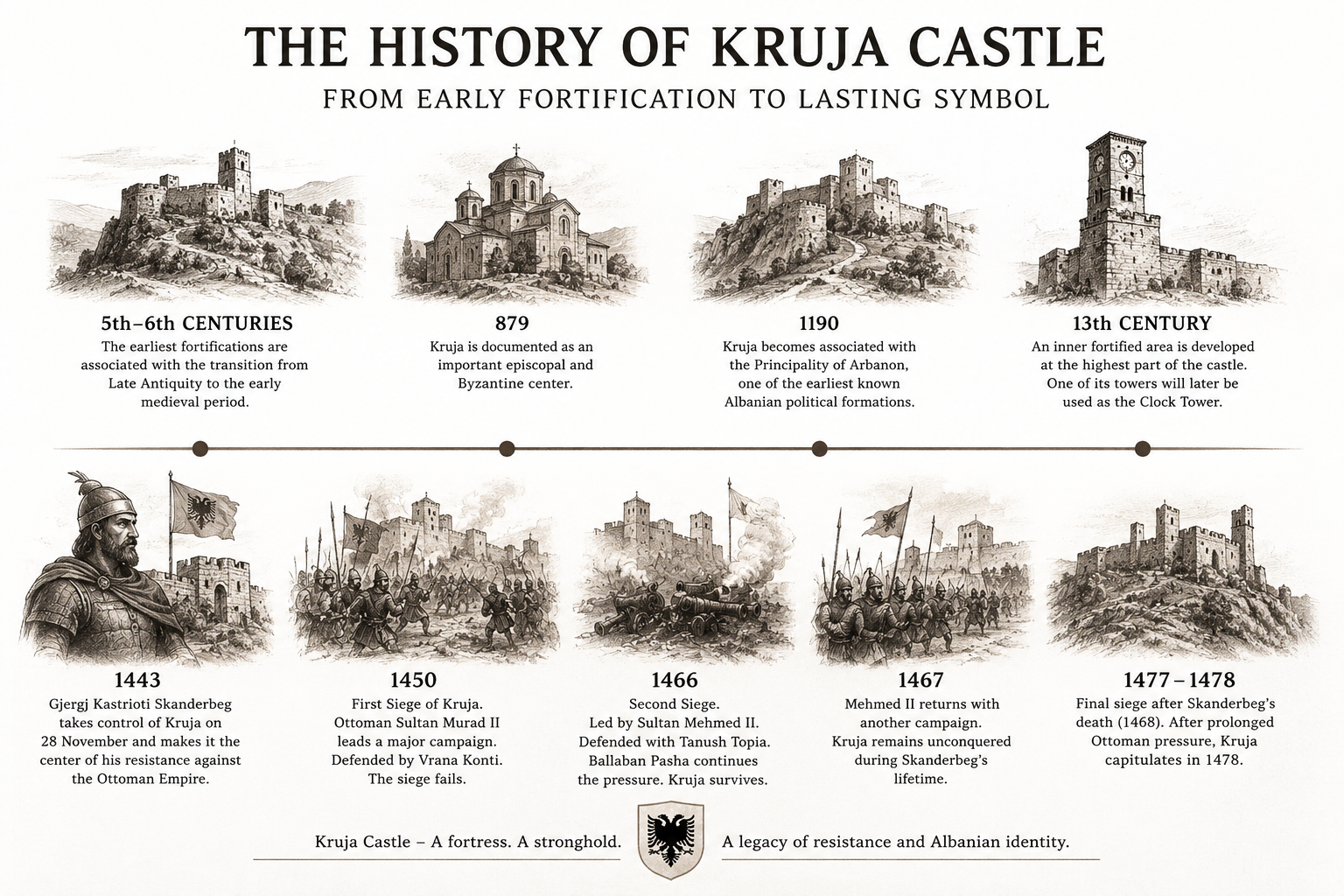
The earliest fortifications are generally associated with the 5th–6th centuries AD, during the transition from Late Antiquity into the early medieval period. Archaeological excavations carried out in the castle in 1978 also revealed material dating from the 6th–8th centuries, confirming activity on the hill during this early period. This does not mean that all the walls visible today are 1,500 years old. Kruja Castle is a multi-period monument: different sections belong to different phases of its history.
By 879, Kruja is documented as an important episcopal and Byzantine center. Its political importance increased further during the Middle Ages, and around 1190 it became associated with the Principality of Arbanon. During the 13th century, an inner fortified area was developed at the highest part of the castle. One of the towers connected with this inner defensive system would later be used as the Clock Tower.
Over the following centuries, control of central Albania changed repeatedly between local Albanian rulers and larger regional powers. The fortress was consequently repaired and adapted many times before it entered the most famous period of its history in the 15th century.
- Skanderbeg Takes Control of Kruja in 1443
The turning point came in 1443, when Gjergj Kastrioti Skanderbeg broke with the Ottoman authorities and returned to the Albanian territories. He regained control of Kruja toward the end of that year and made the fortress the political and military center of his resistance.
The traditional account places the recovery of Kruja on 28 November 1443. Later narratives also describe Skanderbeg using a forged Ottoman document to persuade the authorities in Kruja to hand over control of the fortress. The recovery of Kruja itself is fundamental to the history of the period, but some of the dramatic details surrounding exactly how it happened come from later narrative traditions and should not all be treated as equally certain historical facts.
From Kruja, Skanderbeg was able to use both the fortress and the mountainous terrain of central Albania to organize a much wider resistance.
- The Ottoman Sieges of Kruja
The story that made Kruja famous across Albanian history is not one battle but a sequence of Ottoman attempts to break the resistance centered around the fortress.
Numbers given for the size of Ottoman and Albanian forces vary considerably between historical sources, particularly in later narratives. For that reason, it is more reliable to focus on the commanders, strategies and outcomes than on dramatic army figures that cannot always be verified.
- The First Siege of Kruja – 1450
The first great test came in 1450, when Ottoman Sultan Murad II led a major campaign against Kruja.
Inside the fortress, the defence was entrusted to Vrana Konti, one of Skanderbeg’s most important commanders. Skanderbeg did not simply remain behind the castle walls. His forces operated outside the fortress, using the surrounding terrain to harass and pressure the besieging army while the garrison continued to defend Kruja from within.
This combination was crucial. The Ottomans had to confront both a fortified position and mobile forces operating in difficult terrain around them.
The siege ultimately failed. Kruja remained under Skanderbeg’s control, and the successful defence became one of the defining episodes of his resistance.
- The Siege of 1466
More than a decade later, Kruja faced another major Ottoman offensive. This time the campaign was led by Sultan Mehmed II, the conqueror of Constantinople.
In 1466, Ottoman forces again attempted to break the Albanian resistance and capture its symbolic center. The defence of Kruja continued, with Tanush Topia associated with the command of the garrison during this phase.
Unable to secure Kruja immediately, Ottoman pressure continued after Mehmed II’s departure, with Ballaban Pasha playing a major role in the campaign against Skanderbeg and the fortress. Once again, Kruja survived.
- The Ottoman Campaign of 1467
In 1467, Mehmed II returned with another campaign against the Albanian resistance. Kruja again became a central target.
Despite the scale of Ottoman pressure, the fortress was not permanently taken during Skanderbeg’s lifetime. By this point, Kruja had become more than a strategic stronghold: its continued survival carried enormous political and symbolic value.
- The Fall of Kruja – 1478
Skanderbeg died on 17 January 1468, but an important detail is often overlooked: Kruja did not fall immediately after his death.
The resistance continued for approximately another decade under increasingly difficult conditions.
The final siege took place in 1477–1478. After prolonged Ottoman pressure and with the strategic situation having changed dramatically since Skanderbeg’s death, Kruja finally capitulated in 1478.
The fall of the castle ended one of the longest and most famous chapters of Albanian medieval resistance, but it also transformed Kruja into a lasting historical symbol.
Why Was Kruja Castle So Difficult to Conquer?
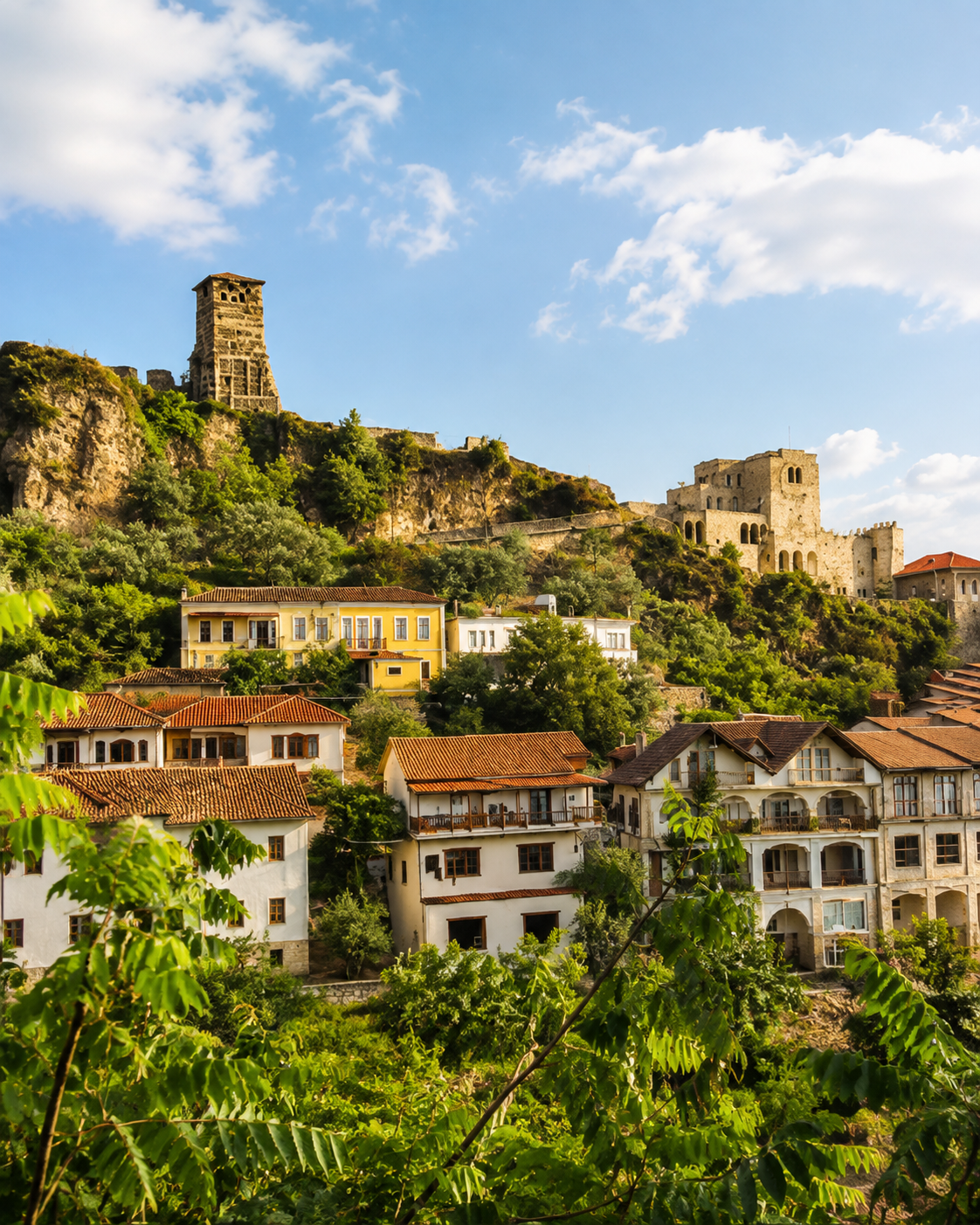
To understand why Kruja resisted repeated attacks, you have to look at the landscape as well as the walls. The fortress stands on a rocky ridge at roughly 600 metres above sea level, dominating the surrounding landscape. Its elevated position gave defenders excellent visibility and made access considerably more difficult for an attacking army.
The fortified perimeter extended for approximately 800 metres and was reinforced by nine towers of different forms. Historical documentation also identifies two main gates on the northeastern side and another entrance connected with a fortified courtyard. One particularly important defensive advantage was access to water sources within the fortified system. During a prolonged siege, access to water could determine whether a garrison could continue resisting or would eventually be forced to surrender.
Kruja therefore combined strong fortifications with difficult terrain, controlled access points, internal resources and the possibility for Skanderbeg’s mobile forces to operate in the mountains surrounding the fortress.
Architecture of Kruja Castle
Kruja Castle is not a single building but a large fortified complex that developed over different historical periods.
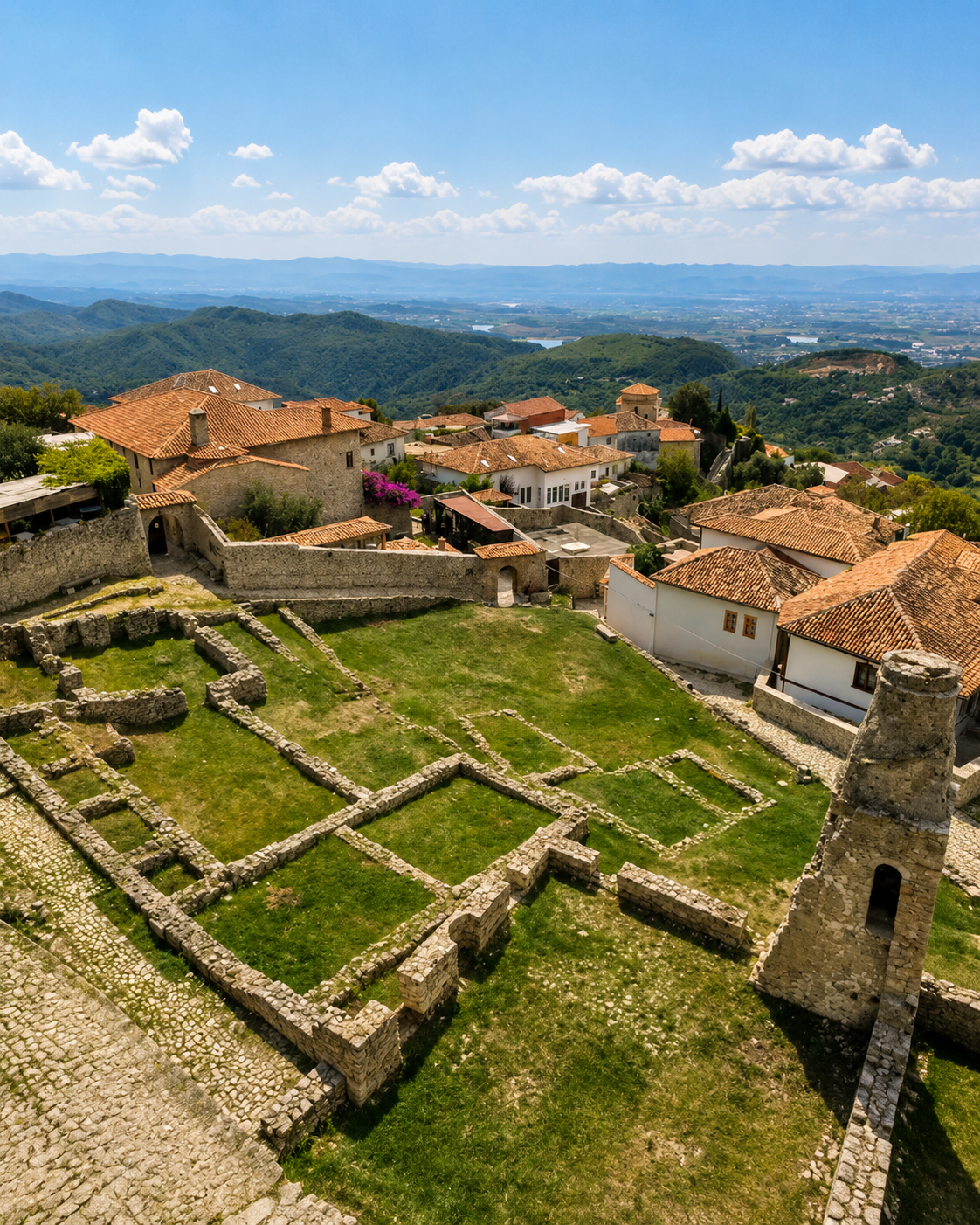
The castle occupies roughly 2.5 hectares and follows the shape of the rocky ridge on which it was constructed. Its irregular defensive system reflects both the natural terrain and centuries of rebuilding.
- Castle Walls and Defensive Towers
The defensive perimeter was reinforced by nine towers. Not all sections visible today belong to the same period: the castle was repeatedly repaired, expanded and altered from the early medieval period through the Ottoman centuries. - The Main Gates
The main access system was itself part of the castle’s defence. Two principal gates are documented on the northeastern side, while another entrance connected to a protected courtyard with water sources. - The Inner Citadel
During the 13th century, a more strongly protected inner fortification was developed in the highest part of the castle. This created another defensive layer inside the wider fortress. - The Clock Tower
One of the towers associated with this inner fortified area was later adapted as the Clock Tower of Kruja. It is one of the most recognizable surviving historical structures within the complex today.
Technical documentation also identifies 15th-century work on a tower near the main entrance and associates this phase specifically with the period of Skanderbeg. This is important because it is more accurate than simply describing every surviving wall in Kruja as a structure “built by Skanderbeg.”
What to See Inside Kruja Castle Today?
Exploring Kruja Castle today means walking through several layers of Albanian history rather than visiting one preserved medieval building.
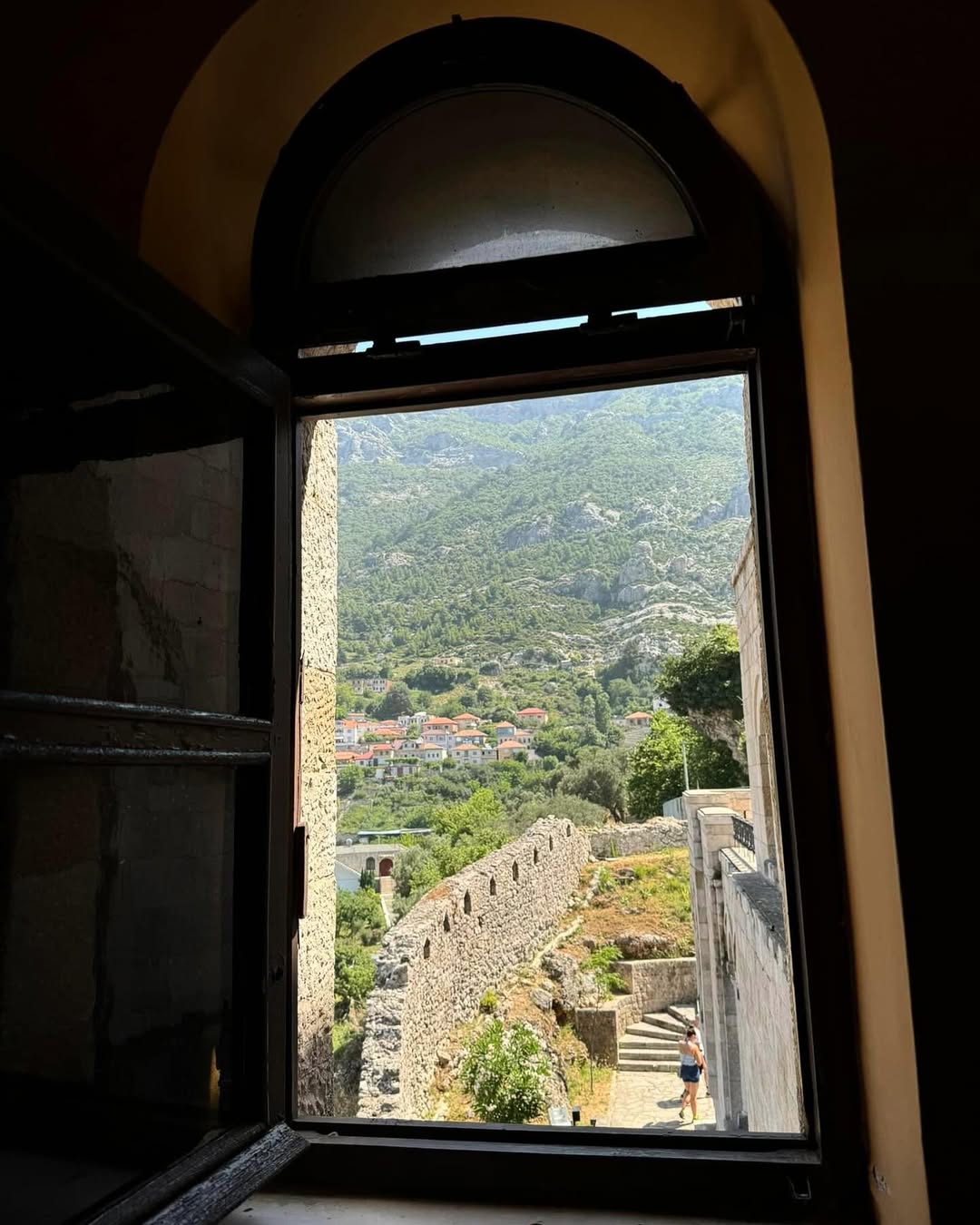
- The surviving castle walls and towers
- The Clock Tower
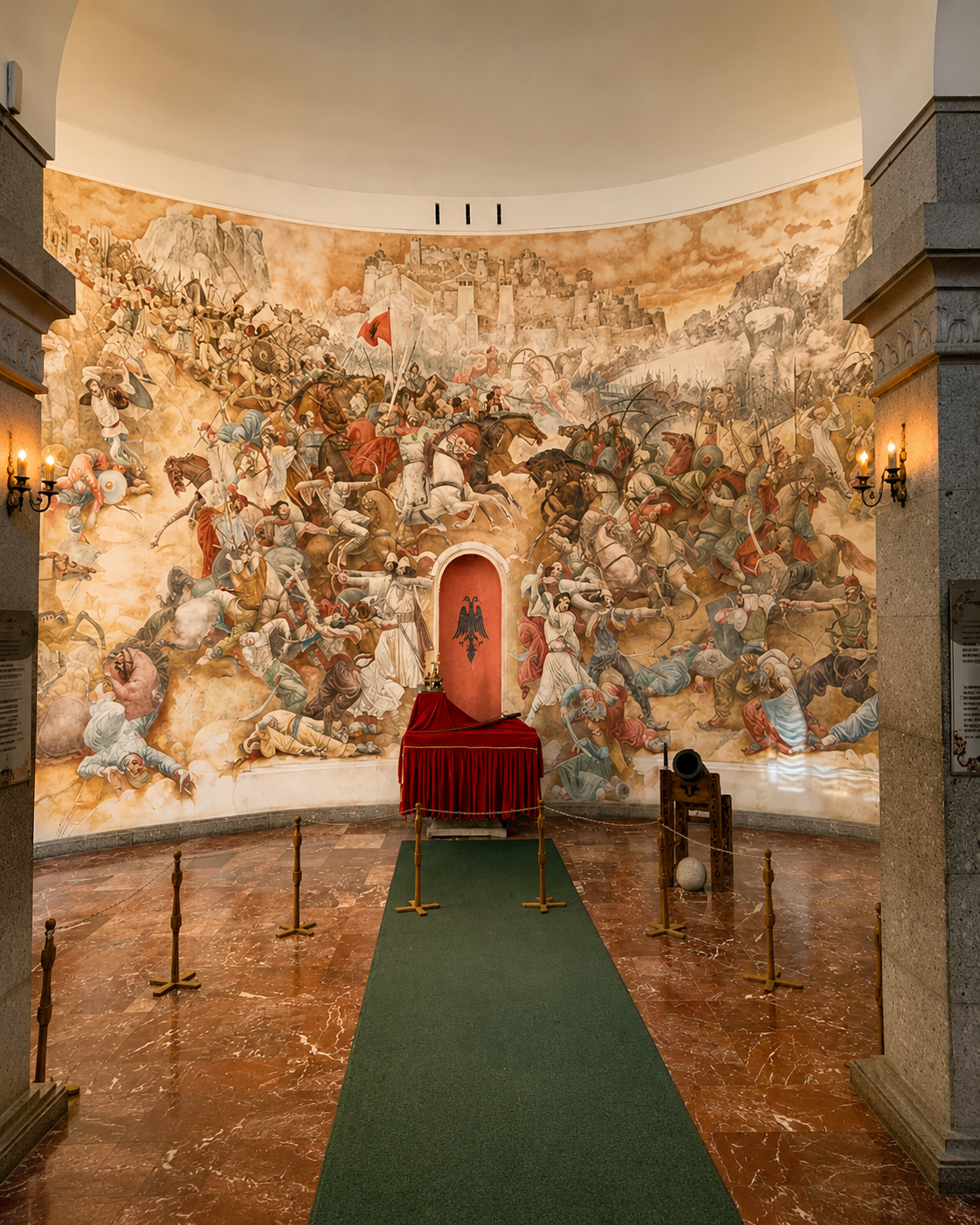
- Skanderbeg National Museum
- National Ethnographic Museum
- Dollma Tekke
- The historic Kruja Hammam
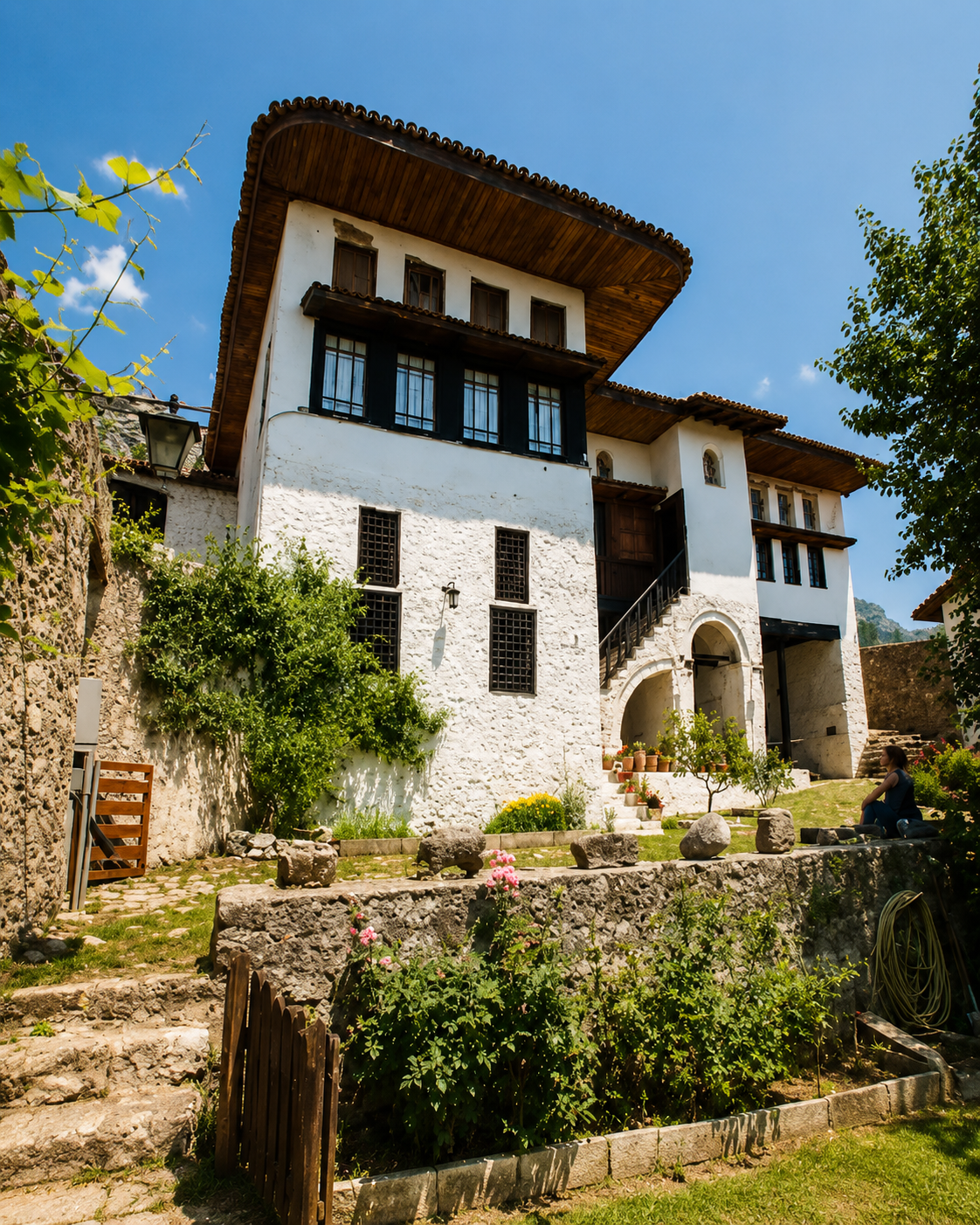
- Traditional houses and stone streets
- Panoramic viewpoints overlooking Kruja and the surrounding landscape
Rather than covering every museum and monument in detail here, we have created a separate guide dedicated to them. See Museums in Kruje: 6 Historical & Cultural Places You Should Visit for the main museums, religious monuments and historic sites to explore in and around the castle.
Is the Skanderbeg Museum the Original Medieval Castle?
No. This is one of the most important distinctions to understand when visiting Kruja.
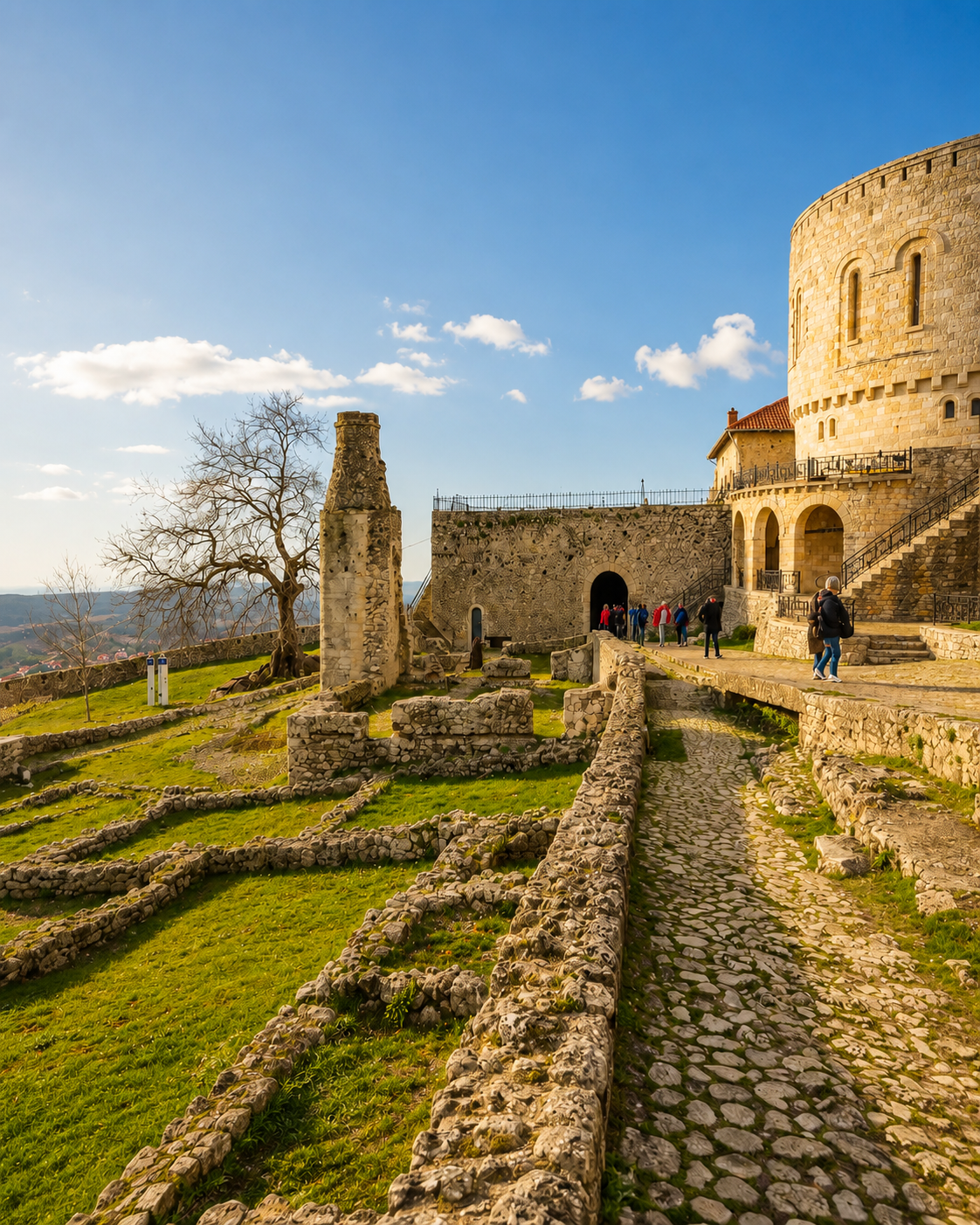
The large monumental building that dominates many modern photographs of Kruja Castle is the National Museum “Gjergj Kastrioti Skanderbeg”. It stands inside the historic fortress, but it is not a surviving 15th-century palace or castle built for Skanderbeg. The museum was constructed in the 20th century and officially inaugurated on 1 November 1982. Its architecture was deliberately designed with monumental, fortress-like forms inspired by Albanian historical architecture.
In other words, there are two different things to distinguish when looking at Kruja: the historic multi-period fortress and the modern Skanderbeg Museum built within it. This distinction does not make the museum less important. On the contrary, the museum has become one of Albania’s major national historical institutions and helps visitors understand the events that made Kruja famous.
Kruja Castle After Skanderbeg
After the Ottoman conquest of Kruja in 1478, the castle did not simply disappear from history. The fortress continued to be used, inhabited and modified during the Ottoman period. Buildings and religious structures from later centuries became part of the castle landscape, adding another historical layer to what had originally been a medieval defensive complex.
This is why today’s Kruja Castle should not be viewed only as “Skanderbeg’s castle.” Its surviving landscape reflects early medieval, Albanian medieval, Ottoman and modern Albanian history.
Earthquakes, Damage and Restoration of Kruja Castle
Centuries of weathering, geological instability and earthquakes have also shaped the fortress. Major stabilization work was carried out during the late 20th century, including interventions in 1987 and 1998 to address instability in the rocky mass supporting parts of the castle.
The powerful earthquake that struck Albania in November 2019 caused further damage to cultural monuments in Kruja, including the Clock Tower and Dollma Tekke. This led to new conservation and structural investigations involving archaeological, geological and seismic studies. In February 2025, a new conservation project for Kruja Castle was formally approved, with archaeological supervision required during the works.
Conservation should therefore be understood as an ongoing part of the castle’s history. The fortress visitors see today is not frozen in the 15th century; it is a monument that has been repaired, transformed and protected repeatedly over hundreds of years.
Kruja Castle Opening Hours and Ticket Information 2026
There is an important difference between visiting the outdoor castle complex and entering the museums located inside it.
- Kruja Castle Grounds
The historic outdoor castle area can be explored independently and there is no separate general admission ticket required simply to walk through the exterior castle area. However, an official separate opening schedule for the entire outdoor fortress complex is not currently published in the same way as museum opening hours.
- Skanderbeg Museum & Ethnographic Museum Opening Hours
As of 1 May 2026, the official Kruja Museum Center lists the following opening hours for both the National Museum “Gjergj Kastrioti Skanderbeg” and the National Ethnographic Museum:
- Monday–Sunday: 09:00–19:00
The museums require separate paid admission. Because ticket prices can change and a clear current tariff is not published on the official visitor information consulted for this update, we recommend checking the current price before your visit rather than relying on older ticket prices found online.
Accessibility note: Parts of the historic complex involve slopes, cobblestones and uneven surfaces. The Skanderbeg Museum includes stairs, while wheelchair access at the Ethnographic Museum is limited, so visitors with specific accessibility requirements should check in advance.
How to Get to Kruja Castle?
Kruja is located around 20 km north of Tirana and is one of the easiest historical day trips from the Albanian capital.
- By Car
Driving from Tirana to Kruja usually takes around 40–50 minutes, depending on traffic. Follow the main road toward Fushë-Krujë and then continue uphill toward Kruja. Parking areas are available around the historic center, but during busy summer days and weekends it is better to arrive earlier. - By Bus
Public transport connects Tirana and Kruja, making the castle possible to visit without renting a car. Bus and minibus schedules can change, so check the latest departure information locally before travelling.
For more information about Kruja beyond the castle, read our Complete Kruja Travel Guide.
How Long Do You Need at Kruja Castle?
- 1–2 hours: castle grounds, viewpoints and Old Bazaar
- 2–3 hours: castle + one museum + Old Bazaar
- 3–4 hours: castle + Skanderbeg Museum + Ethnographic Museum + Old Bazaar
- Half or full day: add lunch, more of Kruja and nearby attractions
For most first-time visitors coming from Tirana, we recommend allowing at least 3–4 hours. The castle itself is not enormous, but once you add the museums, viewpoints, photography stops and Old Bazaar, it is easy to spend half a day in Kruja.
What to Visit Near Kruja Castle?
- Kruja Old Bazaar
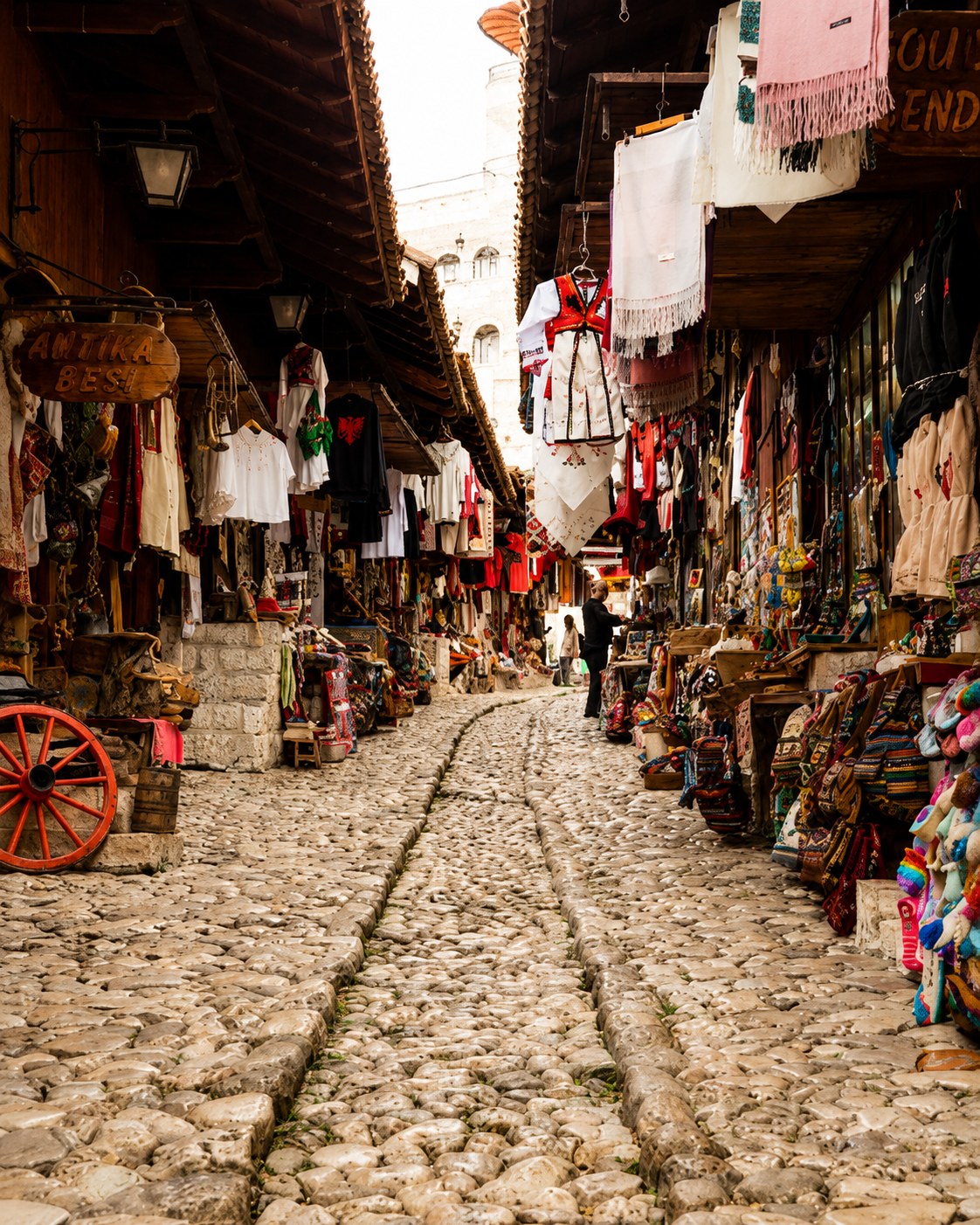
The Old Bazaar of Kruja is located directly below the castle and should be part of the same visit. Its cobbled street is lined with traditional wooden shopfronts selling carpets, textiles, copper work, antiques, souvenirs and handmade products.
Rather than treating the bazaar as a separate trip, plan to walk through it either immediately before or after entering the castle.
- Museums and Historical Monuments
Beyond the castle itself, Kruja has several museums and historical monuments worth adding to your visit. The two main museums are the Gjergj Kastrioti Skanderbeg National Museum, dedicated to Skanderbeg and the 15th-century resistance against the Ottoman Empire, and the Ethnographic Museum of Kruja, where you can discover traditional Albanian family life, crafts and household culture.
Other historical sites around the castle include the 15th-century Kruja Castle Hammam, the Dollma Tekke connected with the Bektashi tradition, and the historic Old Bazaar of Kruja.
For what to see at each place, recommended visiting times and a practical walking route, read our complete guide to Museums in Kruje: 6 Historical & Cultural Places You Should Visit.
Where to Eat and Stay Near Kruja Castle?
After exploring Kruja Castle, the museums and the Old Bazaar, you’ll find several places nearby where you can stop for traditional Albanian food, often accompanied by panoramic views over Kruja and the surrounding landscape.
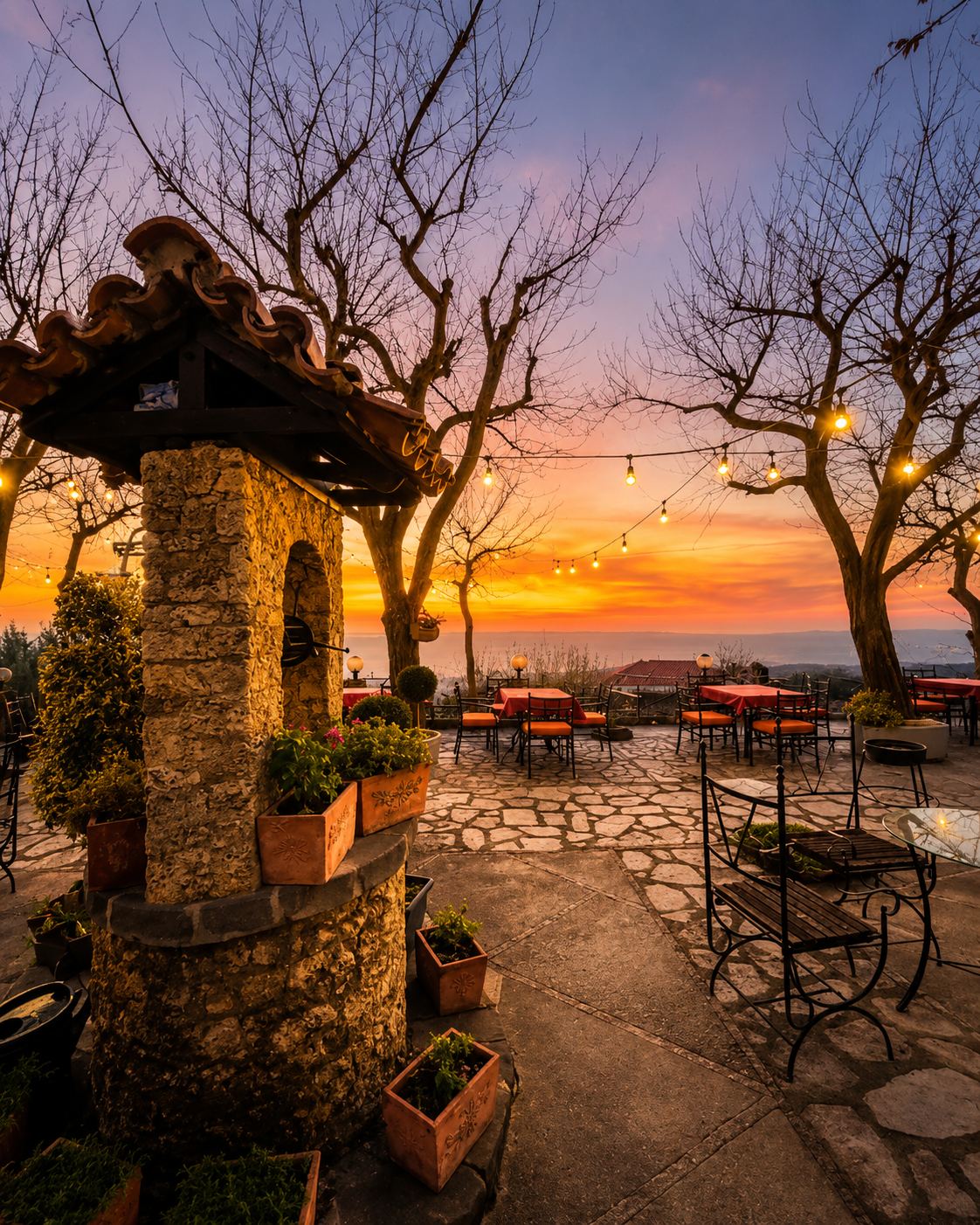
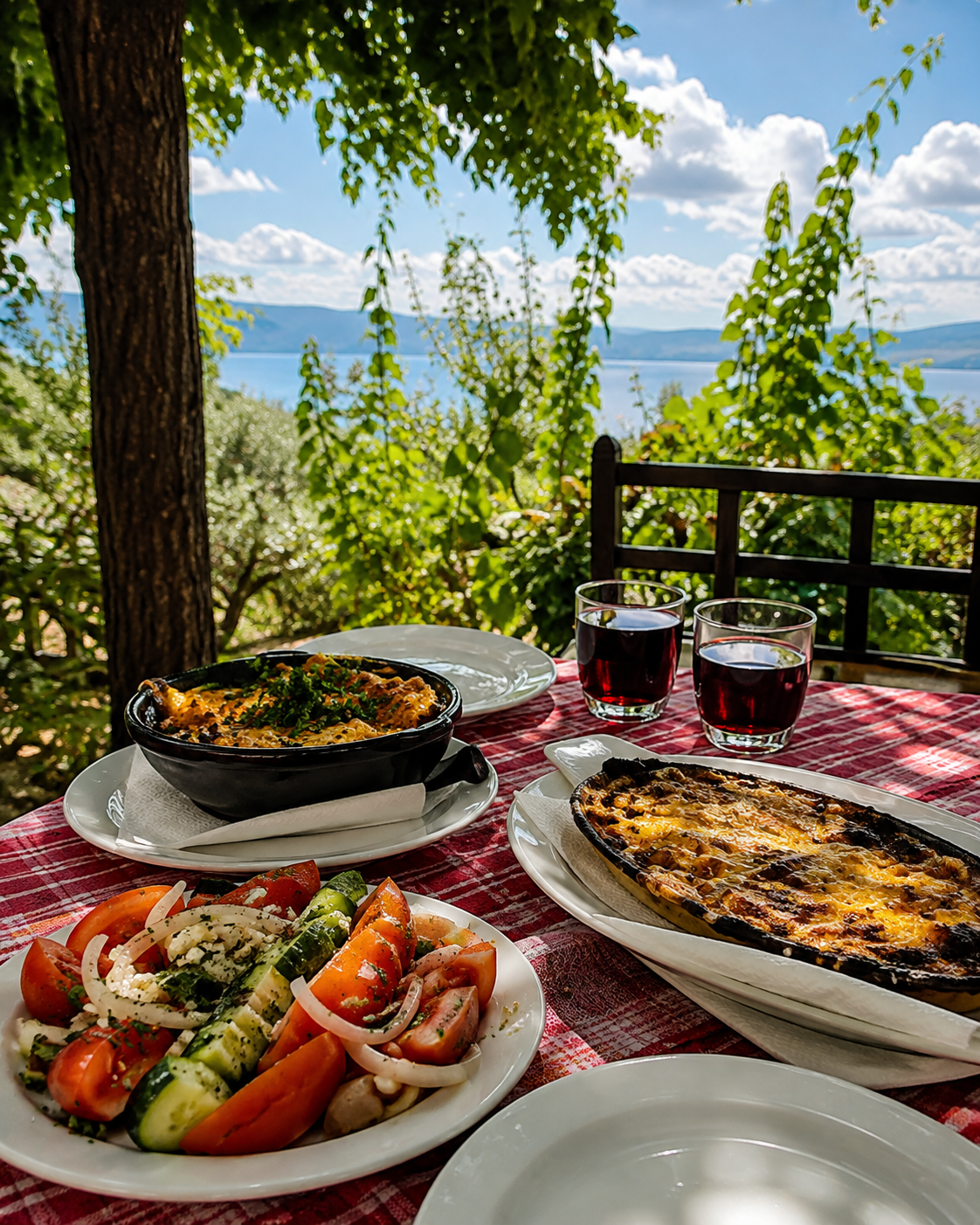
If you’re planning lunch or dinner during your visit, see our updated guide to the Top Restaurants in Kruje: Where to Eat in 2026 for our recommended places and what to expect.
Kruja is also an easy day trip from Tirana, but staying overnight allows you to experience the historic center at a slower pace, especially in the late afternoon and evening when many day visitors have left. For hotels, guesthouses and stays around the castle and historic center, explore our guide to the Best Accommodations in Kruje.
Best Time to Visit Kruja Castle
Spring and autumn are generally the best seasons to visit Kruja Castle. Temperatures are more comfortable for walking and the surrounding landscape is especially attractive.
- 🌿 April–June: pleasant temperatures and green landscapes
- 🍂 September–October: comfortable weather and generally easier sightseeing
- ☀️ July–August: visit in the morning or later afternoon to avoid the strongest heat
- 🌧️ Winter: quieter, but rain, wind and colder mountain weather are more likely
For photography, late afternoon can be particularly beautiful as the elevated position of the castle provides wide views across the surrounding landscape.
Practical Tips for Visiting Kruja Castle
- 👟 Wear comfortable shoes. Cobbled streets and uneven historic surfaces are common.
- 💧 Carry water in summer. Walking uphill in July and August can be tiring.
- 🌅 Visit early or late in the day during the summer months.
- 🏛️ Allow extra time for the museums. Do not plan your visit based only on the size of the castle grounds.
- 🛍️ Combine the castle with the Old Bazaar. They are next to each other and naturally form one visit.
- 📷 Leave time for the viewpoints. The elevated position is one of the reasons Kruja was strategically important in the first place.
Why Kruja Castle still matters today?
Few places in Albania bring together geography, medieval history and national memory as clearly as Kruja Castle.
Its significance does not come from one surviving building or one battle. Kruja developed over many centuries, became an important medieval political center, served as the heart of Skanderbeg’s resistance, survived repeated Ottoman campaigns and continued to evolve long after the 15th century.
Walking through the castle today therefore means moving through several different periods of Albanian history at once.
And while the story of Skanderbeg remains at the center of Kruja’s identity, understanding the fortress before and after his lifetime makes the site even more interesting.
If this is your first visit, give yourself enough time to explore the walls, museums and viewpoints before walking through the Old Bazaar. Kruja may be an easy trip from Tirana, but historically it is one of the most important places you can visit in Albania.
FAQ – Kruja Castle
As of May 2026, the Skanderbeg Museum and National Ethnographic Museum are open daily from 09:00 to 19:00. A separate official opening schedule for the outdoor castle complex is not currently published.
The outdoor castle area can be explored without a general admission ticket. The Skanderbeg Museum and Ethnographic Museum require separate paid tickets.
Plan around 2–4 hours. Allow closer to 3–4 hours if you want to visit the museums, explore the castle grounds and walk through the Old Bazaar.
Kruja is around 20 km north of Tirana. By car, the journey usually takes approximately 40–50 minutes, depending on traffic. Public transport between Tirana and Kruja is also available.
The main highlights include the castle walls and towers, Clock Tower, Skanderbeg Museum, Ethnographic Museum, Dollma Tekke, historic hammam and panoramic viewpoints. The Old Bazaar is located directly beside the castle.