
Traveling to Albania is generally safe, affordable, and smooth — but understanding the country’s healthcare system, emergency numbers, and travel insurance realities can make a big difference if something unexpected happens.
Whether you’re coming for a beach holiday on the Riviera, a cultural trip through Berat and Gjirokastër, or hiking in the Albanian Alps, this guide explains what every traveler should know in 2026.
Emergency Numbers in Albania
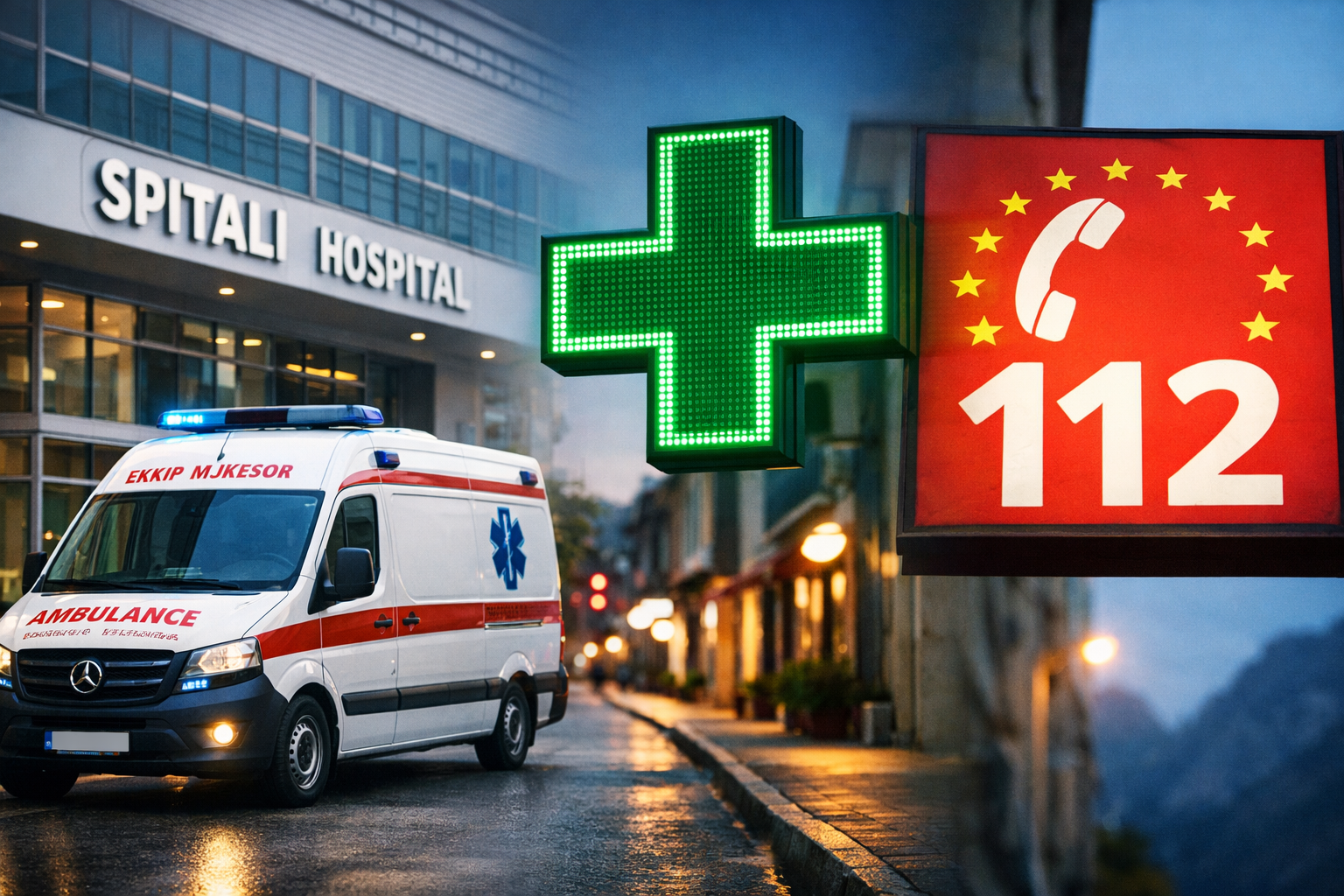
Albania uses both national and European emergency numbers. If you ever face a serious situation, you can call:
- 127 – Ambulance
- 129 – Police
- 128 – Fire brigade
- 112 – General emergency number (works like the EU system)
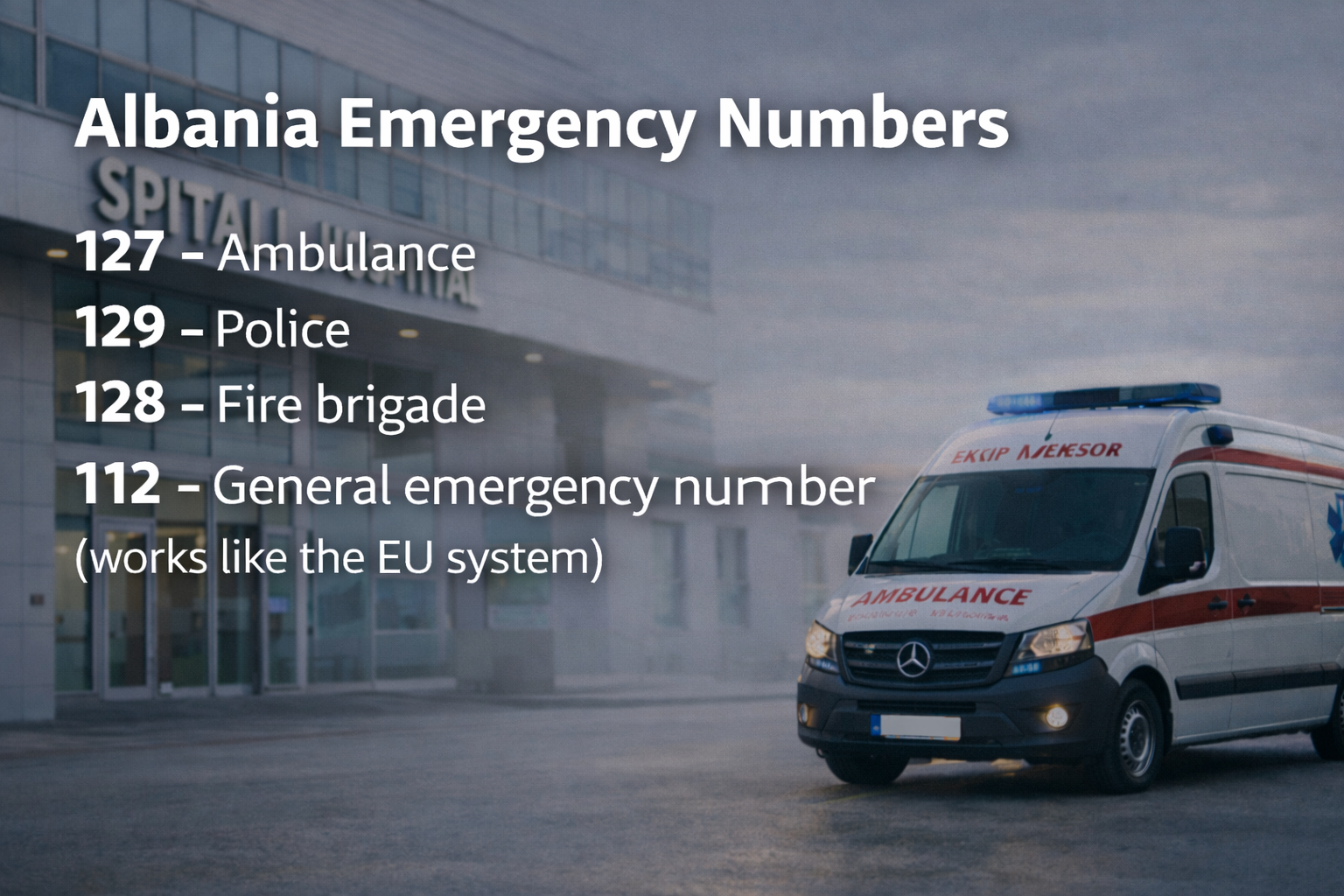
For most international travelers, 112 is the easiest and safest number to remember, as it connects you to emergency services quickly.
How Good Is Healthcare in Albania?
Albania has a mixed healthcare system, combining public hospitals and private clinics. In major cities such as Tirana, Durrës, Shkodër, and Vlora, medical services are generally reliable, especially in the private sector.
Public hospitals are affordable but can be crowded and may have limited English-speaking staff. Private clinics, on the other hand, are modern, faster, and more comfortable — and English is commonly spoken in facilities that serve international patients.
In rural areas and mountain regions like Theth or Valbona, medical access is limited. Ambulances may take longer to arrive, and evacuation from remote hiking trails can be complicated. If you’re planning outdoor adventures, preparation is essential.
Do You Need Travel Insurance for Albania?
Albania does not legally require travel insurance for most short-term tourists, especially European visitors. However, from a practical perspective, travel insurance is highly recommended.
Medical treatment in private clinics must usually be paid upfront. Even though prices are lower than in Western Europe, unexpected situations such as accidents, hospital stays, or mountain evacuation can become expensive.
Travel insurance is particularly important if you plan to:
- Hike in the Albanian Alps
- Drive long road trips
- Try adventure sports (ATV, paragliding, canyoning)
- Stay in remote villages
Even for simple beach holidays, insurance provides peace of mind.
What About European Travelers (EHIC)?
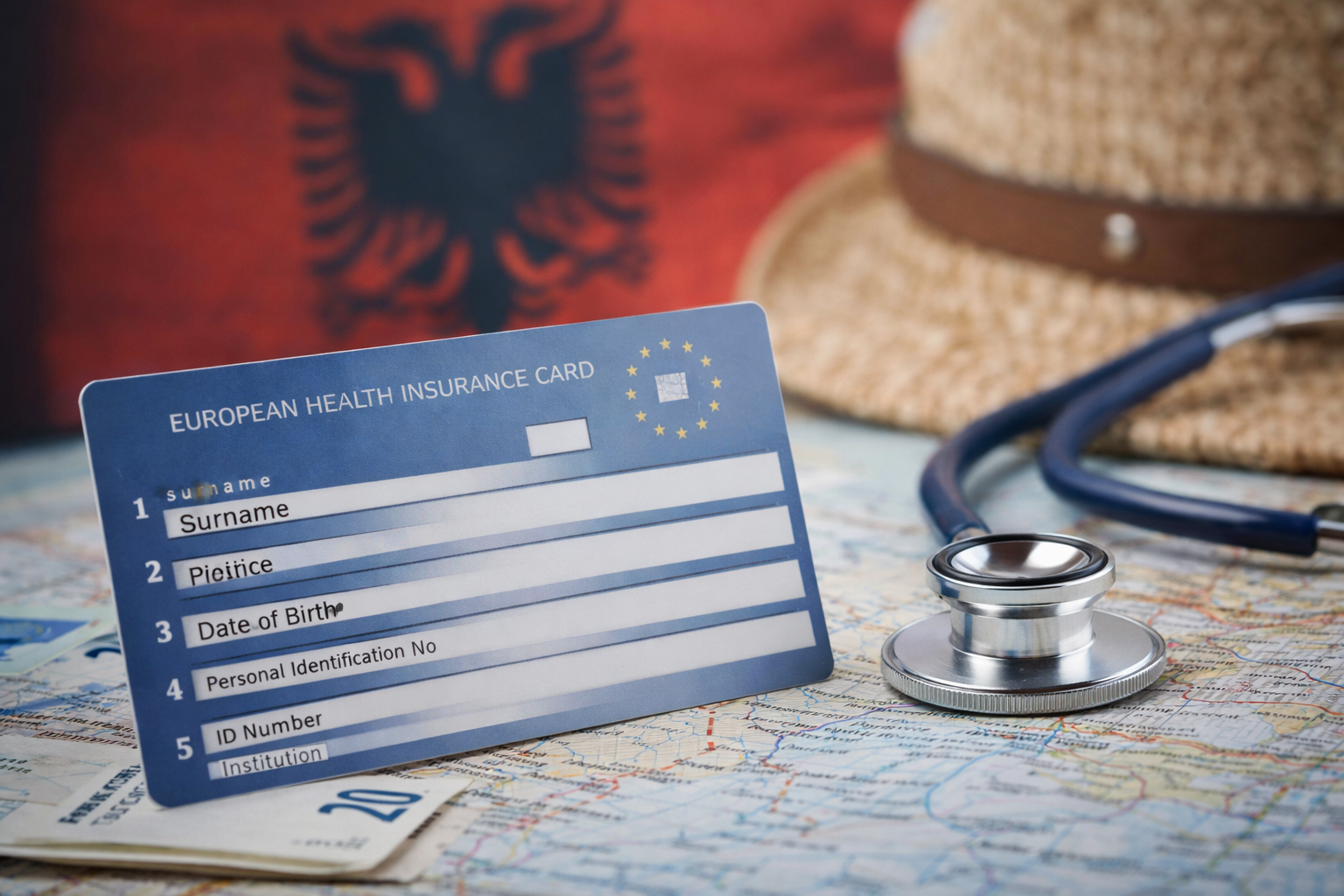
Many European tourists assume their European Health Insurance Card (EHIC) will fully cover them in Albania. However, Albania is not part of the EU healthcare system, and EHIC coverage is limited or not always accepted.
In practice, you may still need to pay medical costs upfront and request reimbursement later. For this reason, comprehensive travel insurance remains the safest option, even for EU visitors.
Pharmacies and Medication
Pharmacies are easy to find throughout Albania. In cities and tourist areas, you will often see the green pharmacy cross sign. Many pharmacies stock common medications without prescription, and staff in major cities usually speak basic English.
If you rely on specific medication, bring enough supply for your trip along with a prescription copy, especially for controlled substances.
Health & Safety Tips for Travelers
Albania is not considered a high-risk health destination. However, there are a few practical considerations:
Tap water is not recommended for drinking in most areas — bottled water is inexpensive and widely available. During summer, temperatures often exceed 35°C (95°F), so dehydration and sun exposure are common issues for visitors.
If you are hiking or exploring remote areas, always inform someone of your route, wear proper footwear, and avoid solo mountain trekking without preparation.
Healthcare costs remain affordable compared to Western Europe. A private consultation may cost between €30–€70, but emergency procedures or evacuation can increase costs significantly without insurance.
Is Albania Safe for Tourists?
Yes. Albania is widely considered one of the safest countries in the Balkans for travelers. Violent crime rates are low, locals are welcoming, and tourist areas are generally secure. Most health-related incidents involve minor injuries, heat exhaustion, or road accidents — not serious security threats.
While Albania is a safe and welcoming destination, having basic knowledge of emergency numbers and carrying proper travel insurance ensures a stress-free experience. Preparation is simple — and it allows you to fully enjoy everything Albania has to offer.
If you’re planning to explore Albania on your own, read our guide on Albania solo travel: Safe and authentic local tips for practical advice and cultural insights to help you travel confidently and respectfully.