


Last updated: November 26, 2026
Beneath the waters of Fierza Lake in northeastern Albania lies one of the country’s most fascinating historical stories: the submerged city of Old Kukës. Once a thriving trading town at the meeting point of two rivers, Old Kukës disappeared beneath the water in 1978 following the construction of the Fierza Hydroelectric Power Plant.
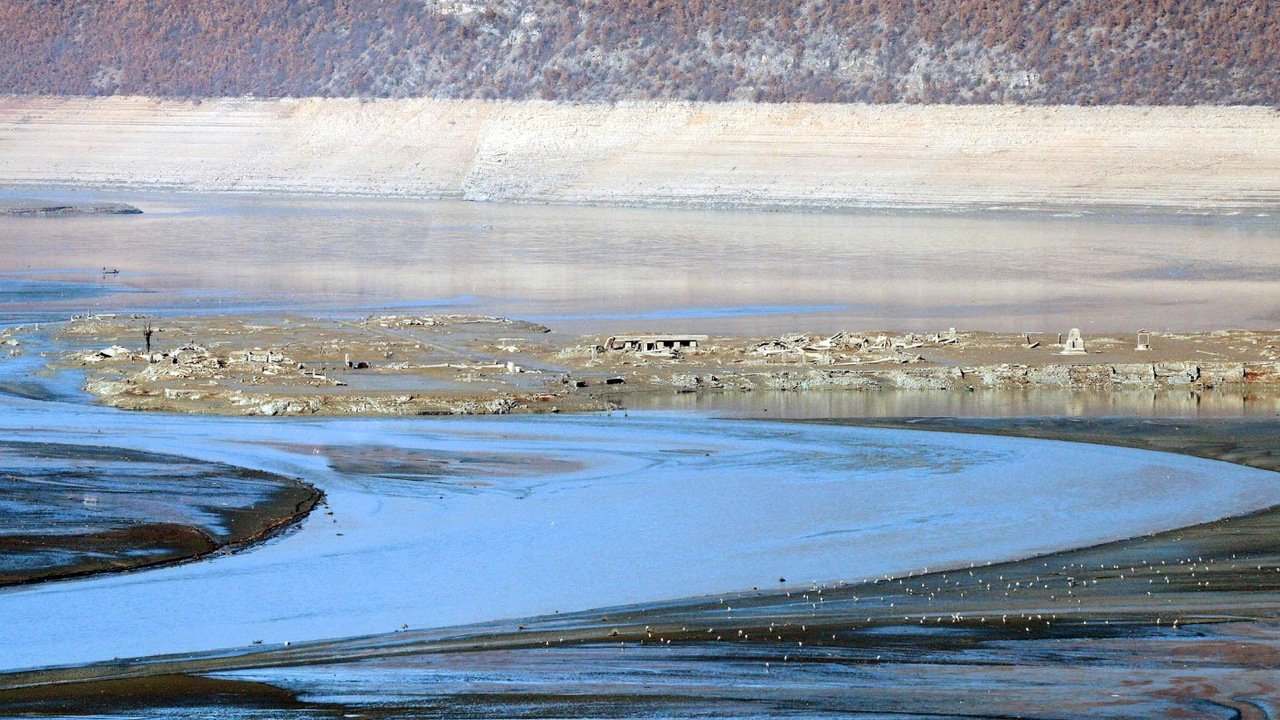
Decades later, the remains of the town occasionally emerge when water levels fall, revealing traces of former homes, streets and a community whose everyday life was transformed by one of Albania’s largest infrastructure projects.
In November 2026, Fierza Lake returned to public attention after the ruins of Old Kukës became visible during a period of low water levels, before being submerged again following rainfall.
Beyond its remarkable history, Fierza Lake offers visitors mountain landscapes, guided lake experiences, cultural attractions and the opportunity to discover a lesser-explored part of Albania through the stories of its local community.
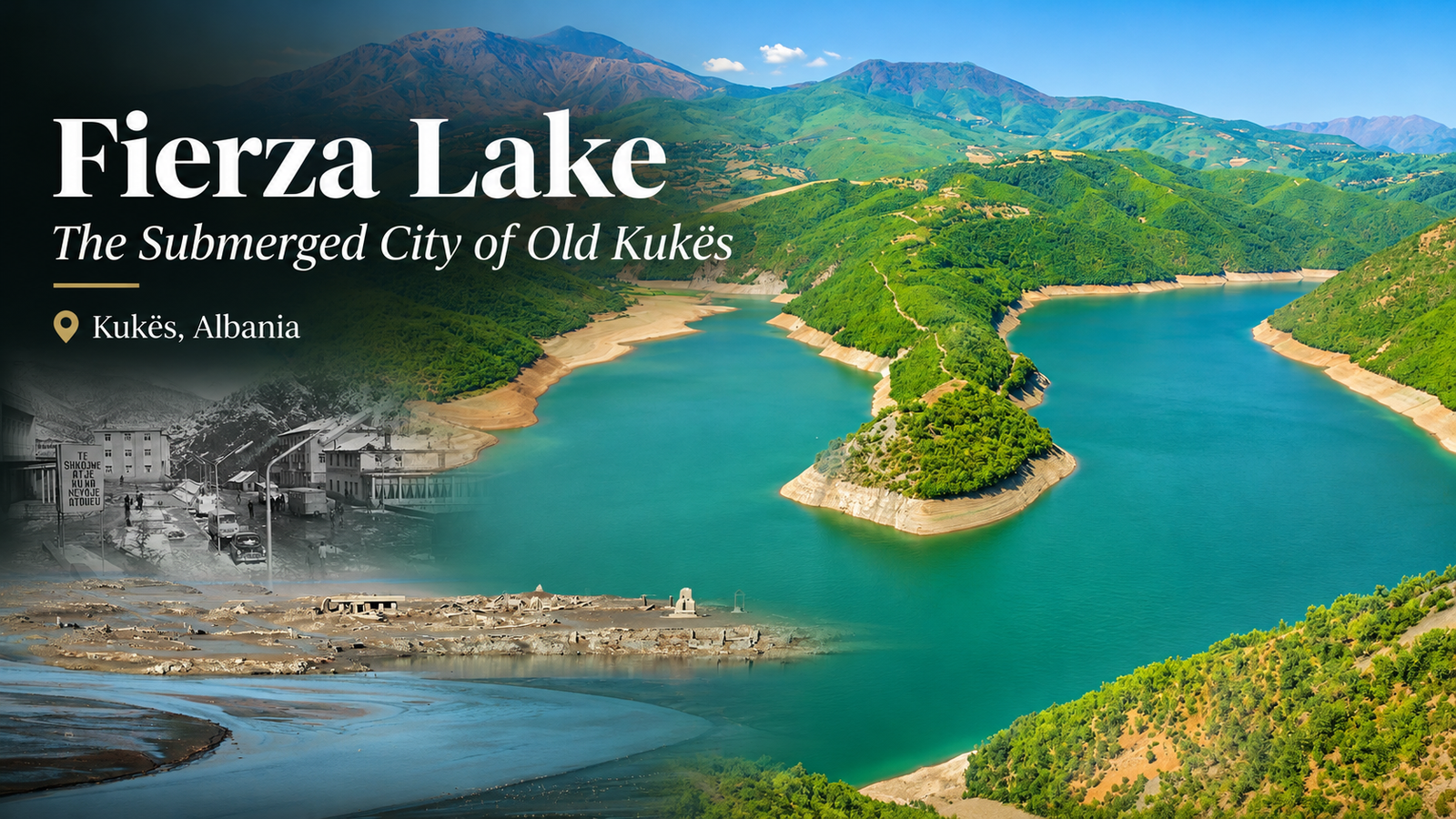
Table of Contents
- Fierza Lake and Old Kukës: Latest Update
- Where Is Fierza Lake?
- The History of Old Kukës
- Why Was Old Kukës Submerged?
- Can You See the Underwater Ruins Today?
- Best Things to Do Around Fierza Lake
- The Underground City of Kukës
- Explore Kukës with a Local Tour Guide
- How to Get to Fierza Lake from Tirana
- Best Time to Visit Fierza Lake
- One-Day Kukës and Fierza Lake Itinerary
- Practical Travel Tips
- Frequently Asked Questions
Fierza Lake and Old Kukës: Latest Update – November 2026
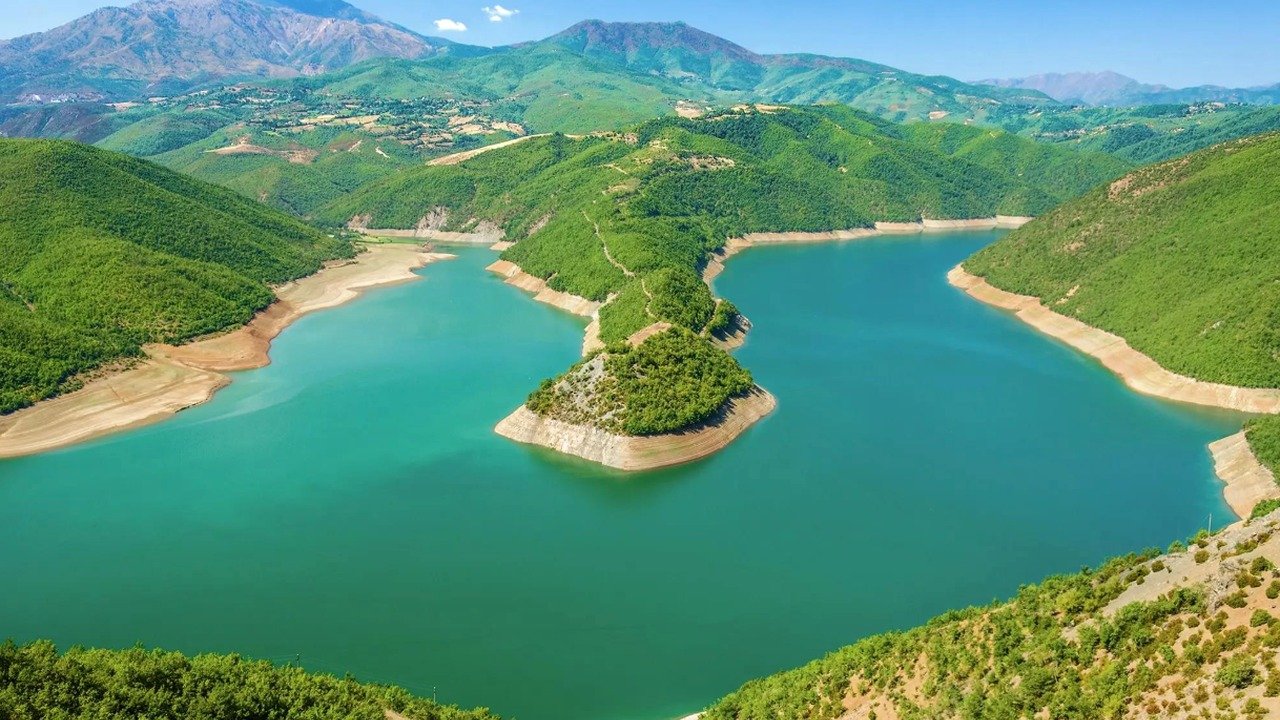
Fierza Lake has recently attracted renewed attention following significant changes in its water levels. At the beginning of November 2026, low water levels exposed parts of Old Kukës, bringing the submerged town back into public view.
However, rainfall later in the month increased water inflows into the reservoir. On November 23, Albanian media reported that the previously visible ruins had once again disappeared beneath the lake.
| Date | Development |
|---|---|
| November 2, 2026 | Low water levels expose remains of Old Kukës. The reported lake level is 259.19 metres above sea level. |
| November 16, 2026 | Media reports document visible traces of the submerged town. |
| November 23, 2026 | Following rainfall, the reported water level reaches 261.09 metres, covering the previously exposed ruins. |
The changing conditions demonstrate why the remains of Old Kukës cannot be considered a permanently accessible tourist attraction. Their visibility depends on rainfall, river inflows and reservoir management.
Visitor update: The most recent report referenced in this article, dated November 23, indicates that the ruins are submerged. Visitors should confirm local conditions before travelling specifically to see the remains.
Sources: Shqiptarja.com – November 2, 2026 and Gazeta Shqiptare – November 23, 2026.
Where Is Fierza Lake?
Fierza Lake, also known locally as Liqeni i Fierzës or Kukes Lake, is a large artificial reservoir in northern and northeastern Albania. It was created by damming the Drin River and forms an important part of the country’s hydroelectric infrastructure.
The reservoir extends through a mountainous landscape connecting the wider regions of Kukës, Has and Tropojë. The modern city of Kukës overlooks the lake, with Mount Gjallica forming a striking backdrop to the surrounding scenery.
Unlike Albania’s natural lakes, Fierza was created primarily for energy production. Over time, however, its landscapes and historical significance have also become part of the region’s tourism identity.
Fierza Lake at a Glance
| Information | Details |
|---|---|
| Location | Northern and northeastern Albania |
| Lake type | Artificial hydroelectric reservoir |
| River system | Drin River |
| Nearest major urban centre to Old Kukes | Kukes |
| Historical significance | The site of the submerged town of Old Kukes |
| Year Old Kukës was submerged | 1978 |
| Main experiences | Lake tours, landscape photography, cultural visits and mountain hiking |
| Visibility of the ruins | Dependent on water levels |
For additional information about the destination, visit the official Albanian tourism website for Kukes.
The History of Old Kukës: The Town Beneath the Water
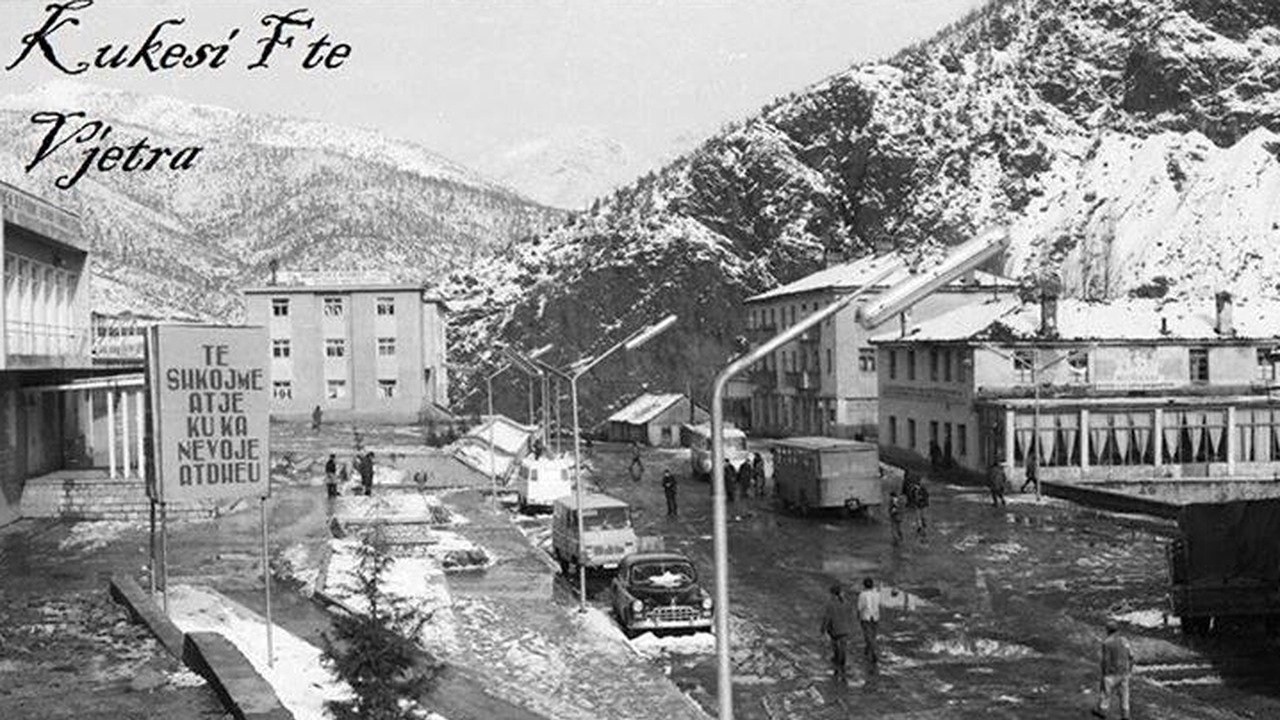
Before the creation of Fierza Lake, Old Kukës occupied a strategic position at the confluence of the White Drin and Black Drin rivers. Its geographical position encouraged commercial exchanges between northeastern Albania and neighbouring regions. By the twentieth century, the town had developed into an important regional centre, attracting merchants and craftspeople from places including Prizren, Gjakova and Shkodra.
In 1925, Kukës became a prefectural centre, strengthening its administrative and economic importance. Its commercial activity and urban atmosphere earned it the nickname Little Istanbul. For generations, the town was more than a commercial centre. It was home to families whose traditions, memories and connections to the landscape developed around the two rivers.
The decision to create the Fierza reservoir would permanently transform this community and its relationship with the surrounding environment.
From Old Kukes to New Kukes
| Year | Historical Event |
|---|---|
| 1925 | Old Kukës becomes a prefectural centre. |
| 1962 | Construction of the replacement town begins. |
| 1978 | The former town is submerged beneath Fierza Lake. |
| 1999 | Modern Kukës becomes a major centre of humanitarian assistance during the Kosovo War. |
| 2026 | Changing lake levels temporarily reveal and subsequently cover parts of Old Kukës. |
Historical source: The history and reappearance of Old Kukës – Shqiptarja.com.
Why Was Old Kukës Submerged?
The disappearance of Old Kukës was not caused by a natural disaster. It was the consequence of a planned hydroelectric development undertaken during Albania’s communist period. The construction of the Fierza Hydroelectric Power Plant required the creation of a large reservoir along the Drin River. Old Kukës lay within the area that would eventually be flooded.
A replacement town was constructed on higher ground nearby, and residents gradually relocated to the new urban centre. By 1978, water had covered the former town. While the hydroelectric project became an important part of Albania’s energy system, the relocation also represented a profound social change for the families who left their homes and neighbourhoods behind.
Today, modern Kukës and the submerged remains of its predecessor tell two connected stories: the development of Albania’s energy infrastructure and the human experience of a community displaced by that transformation.
Can You See the Underwater Ruins of Old Kukës Today?
One of the most common questions among visitors is whether the remains of Old Kukës can still be seen. The answer depends entirely on the water level of Fierza Lake. During periods of significant drought or low reservoir levels, parts of the former settlement may become visible again.
Previous reports have documented exposed foundations, fragments of streets, old wells and other physical traces of the town. These appearances are temporary. When rainfall and river inflows increase, the remains can disappear beneath the water again, as happened in November 2026.
Is It Possible to Explore the Submerged Town?
Old Kukës should be understood as a submerged historical site rather than a conventional archaeological park with permanent visitor facilities. Visitors should observe any visible remains from safe, authorised viewpoints.
Exposed reservoir areas may contain unstable ground, deep mud, concealed hazards and sudden changes in water conditions. A local tour guide can help visitors understand the location of the former town and the history behind the landscape, even when the remains are not visible.
Best Things to Do Around Fierza Lake and Kukës
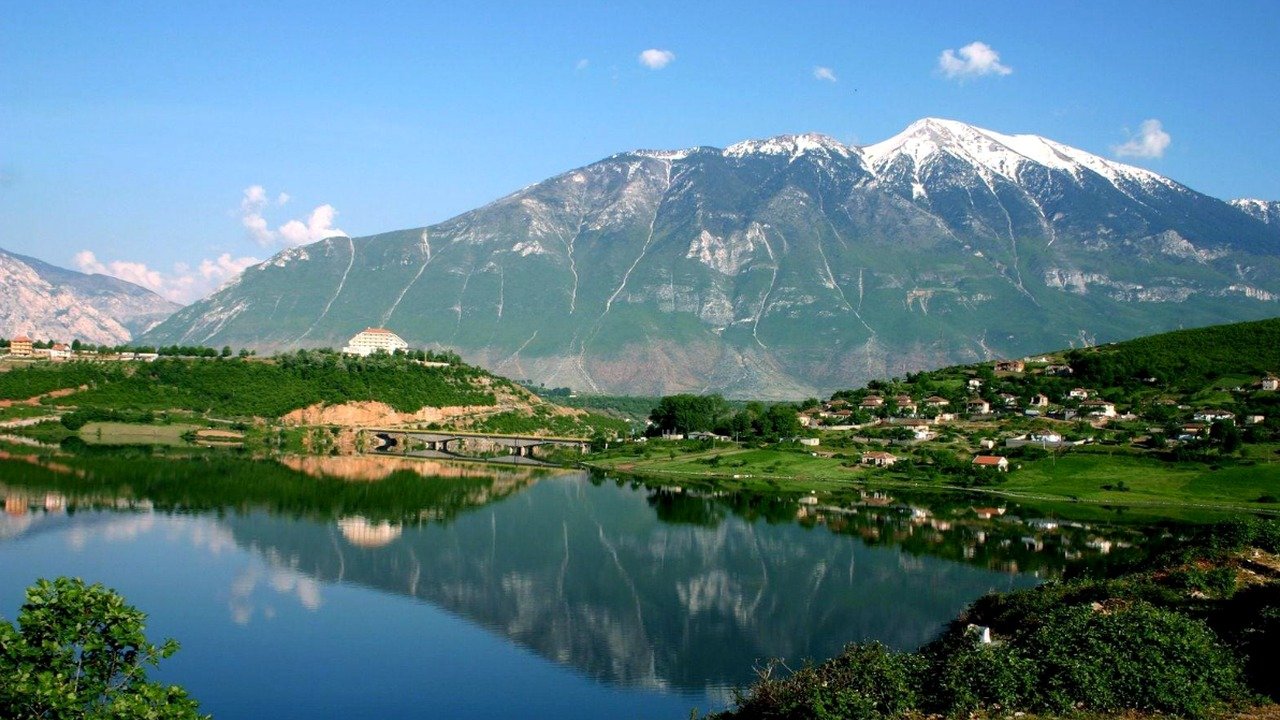
Although the submerged city is one of the most intriguing aspects of Fierza Lake, the wider Kukës region offers several experiences that combine natural scenery, historical discovery and local culture.
1. Explore Fierza Lake with a Local Guide
A guided lake tour offers an opportunity to discover the landscapes surrounding Kukës while learning about the history of the reservoir and the former town beneath its waters.
The local operator Malo Tour Guide lists tours of Kukës Lake among its available experiences. Visitors can contact the operator to discuss the itinerary, transport arrangements, current lake conditions and whether boat-based activities are available.
Exploring the area with someone familiar with its history can provide valuable context that would be difficult to discover through sightseeing alone.
2. Discover the Landscapes Around Fierza Lake
The combination of water, mountains and open valleys creates some of the most distinctive scenery in northeastern Albania. The landscape changes throughout the year, from green mountain slopes in spring and summer to autumn colours and snow-covered peaks during colder months.
Visitors interested in landscape photography can explore safe public viewpoints around modern Kukës and enjoy panoramic perspectives of the lake and surrounding mountains.
3. Visit the Ethnographic Museum of Kukës
The Ethnographic Museum offers an introduction to the cultural and natural heritage of northeastern Albania. Its collections cover the traditions of Luma, Malziu and Gora, alongside regional archaeology and biodiversity. Exhibits help visitors understand the area’s traditional clothing, crafts, domestic life and historical development.
The museum is particularly relevant for travellers interested in understanding the people and traditions associated with the wider Kukes region.
Check current opening hours through the museum or a local guide before visiting. Additional information is available on the official Albanian tourism website.
4. Visit the Exodus Tower of 1999
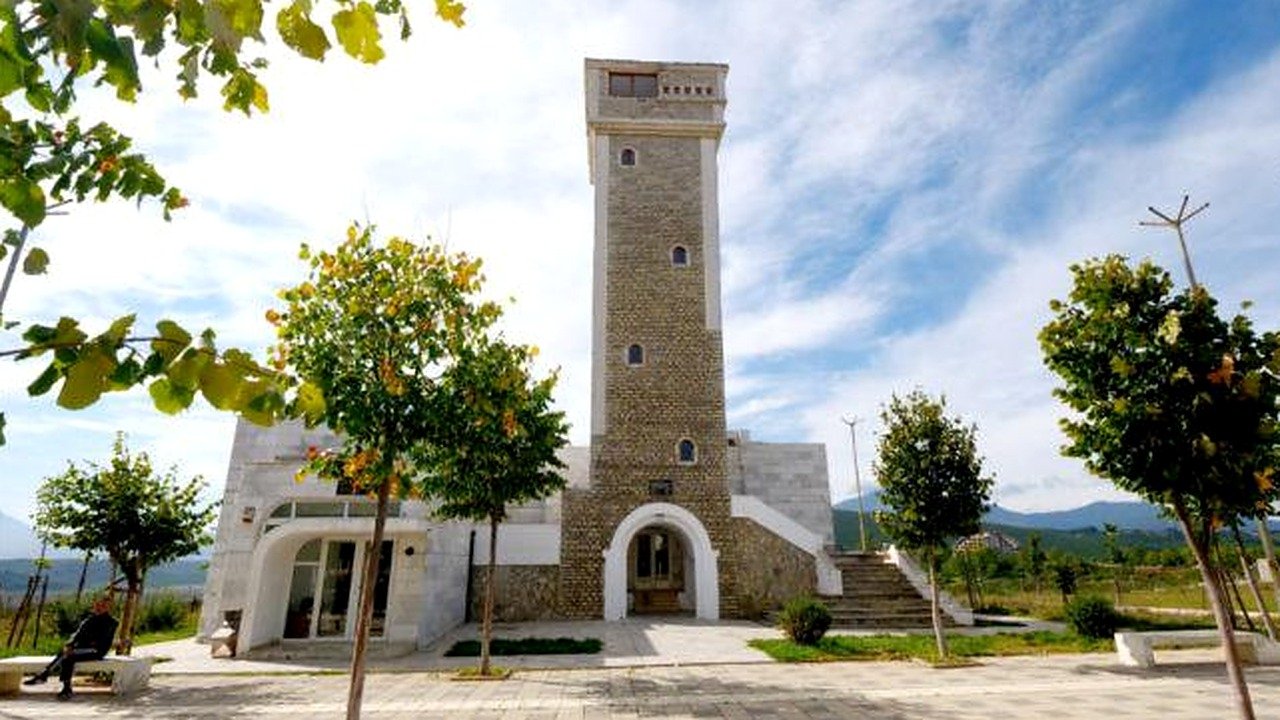
The Exodus Tower commemorates the humanitarian role of Kukes during the Kosovo War in 1999, when the region welcomed large numbers of refugees fleeing the conflict.
Today, the memorial represents an important part of the city’s modern identity and offers visitors an opportunity to learn about solidarity, displacement and the experiences of the local community during that period.
A visit to the tower can be combined with the nearby Ethnographic Museum as part of a cultural itinerary in modern Kukës.
5. Explore the Mountains of Kukës
The mountains surrounding Fierza Lake offer additional opportunities for travellers interested in hiking and outdoor adventures.
Local hiking experiences listed by Malo Tour Guide include:
- Mount Gjallica – A mountain overlooking Kukës and the surrounding region.
- Mount Koritnik – A mountain destination near the border with Kosovo.
- Shtegu i Ngjyrave (The Trail of Colours) – A nature-focused hiking experience.
- Bicaj–Tërshenë–Brekijë – A guided hiking route through the wider mountain region.
Hiking conditions vary depending on the season, weather and route difficulty. During late autumn and winter, mountain excursions should be planned with an experienced local guide and appropriate equipment.
For travellers looking to explore more of the region’s mountain landscapes, the High Scardus Trail in Kukës offers another opportunity to discover alpine meadows, traditional villages and scenic hiking routes in northeastern Albania.
6. Discover Traditional Villages and Local Food
A trip to Kukës can also include time exploring the wider countryside and discovering the hospitality of northeastern Albania. Traditional food, regional products and conversations with local residents offer a different perspective on the destination beyond its historical attractions.
Consider combining your lake experience with lunch in a local restaurant or a visit to one of the surrounding villages, depending on your itinerary and available time.
The Underground City of Kukes: Another Hidden World
Visitors interested in the story of the submerged town may be surprised to discover that modern Kukës is associated with another remarkable historical site: an extensive underground shelter complex.
Developed during the Cold War era, the underground city was designed to protect the population in the event of an emergency. Its infrastructure included facilities intended for medical care, food preparation, residential shelter and military administration.
According to Albania’s National Tourism Agency, the complex was constructed between 1979 and 1992, approximately 30 metres beneath the city.
The tunnels provide a fascinating insight into the civil defence policies and architecture of Albania during the communist period.
Submerged Kukes vs Underground Kukes
Although the two places are sometimes confused, they represent entirely different historical sites.
| Feature | Old Kukes | Underground Kukes |
|---|---|---|
| Location | Beneath Fierza Lake | Beneath modern Kukës |
| Original purpose | Residential and commercial town | Civil defence shelter |
| Historical period | Former settlement submerged in 1978 | Cold War-era construction |
| Visitor access | Visibility depends on lake levels | Subject to authorised guided access |
| Experience | History, landscapes and occasional visible ruins | Underground architecture and communist-era history |
Visitors should not enter underground tunnels independently. Access arrangements and safety conditions should be confirmed with a local guide.
Official source: National Tourism Agency – The Underground Tunnels of Kukës.
Explore Fierza Lake and Kukës with a Local Tour Guide
For visitors who want to discover more than the main viewpoints and landmarks, exploring Kukës with a local guide can provide a deeper understanding of the region’s history, culture and natural landscapes.
Malo Tour Guide – Local Experiences in Kukës
Led by Ermal Hallaçi, Malo Tour Guide is a local tourism operator based in Kukës, offering guided mountain hikes, lake experiences and cultural visits across the region.
Its combination of outdoor and historical experiences makes it an option for visitors looking to explore both the natural surroundings of Fierza Lake and the cultural heritage of modern Kukës.
| Experience | Tour Focus |
|---|---|
| Kukës Lake tours | Lake landscapes and local discovery |
| Underground City | Communist-era history and underground heritage |
| Ethnographic Museum | Regional traditions and cultural heritage |
| Exodus Tower 1999 | Modern history and humanitarian heritage |
| Mount Gjallica | Mountain hiking |
| Mount Koritnik | Mountain hiking |
| Shtegu i Ngjyrave | Nature and hiking |
| Bicaj–Tërshenë–Brekijë | Guided mountain route |
Travellers can contact Malo Tour Guide before their visit to discuss available experiences, suitable itineraries, prices, seasonal conditions and the current visibility of the Old Kukës ruins.
Contact Information
- Location: Kukës, Albania
- Local guide: Ermal Hallaçi
- Website: malotourguide.org
- Instagram: @malo_tour_guide
- Phone / WhatsApp: +39 331 507 0330
- Email: ermalhallaci200@gmail.com
- Published contact hours: Daily, 08:00–20:00
Bookings: Explore the available tours and local experiences.
Tour availability, prices, departure points and itineraries should be confirmed directly with the operator before travelling.
How to Get to Fierza Lake from Tirana
The city of Kukës is the ideal starting point for exploring Fierza Lake and discovering the history of Old Kukës.
- By car: Travel from Tirana to Kukës via the A1 motorway (Rruga e Kombit). A private or rental car offers greater flexibility for exploring the lake, panoramic viewpoints and nearby attractions.
- By bus or minibus: Intercity transport is an alternative for travellers without a car. Check departure points, current timetables and return connections before travelling.
- By private transfer: A convenient option for families and small groups looking for a more comfortable and flexible journey.
- By organised tour: Contact Malo Tour Guide to arrange local experiences around Fierza Lake, historical attractions and the surrounding mountains. Confirm whether transport is included.
- Getting around Kukës: Local transport may be necessary to reach lakeside viewpoints, hiking trails and surrounding villages.
Travel tip: Fierza Lake and Komani Lake are two separate reservoirs. If you want to discover the submerged city of Old Kukës, head towards Kukës rather than the Komani Lake ferry terminal.
Best Time to Visit Fierza Lake and Kukës
Fierza Lake and Kukës can be explored in different seasons, although the most suitable time depends on the type of experience you are looking for.
| Season | Recommended Experiences | What to Consider |
|---|---|---|
| Spring (March–May) | Nature photography, cultural visits and suitable hiking routes | Rainfall and changing mountain conditions |
| Summer (June–August) | Lake experiences, outdoor activities and mountain exploration | Heat, sun exposure and tour availability |
| Autumn (September–November) | Autumn landscapes, photography and historical visits | Variable rainfall and reservoir levels |
| Winter (December–February) | Mountain scenery and available cultural experiences | Cold weather, snow, ice and possible travel restrictions |
For outdoor experiences, late spring and early autumn may offer comfortable conditions. Summer is another option for longer outdoor itineraries, subject to weather and operator availability.
However, there is no guaranteed season for seeing the submerged ruins of Old Kukës. Their appearance depends on the reservoir’s water level rather than a fixed annual calendar.
One-Day Kukes and Fierza Lake Itinerary
If you are planning a short visit to Kukës, the following suggested itinerary combines natural landscapes with the history and cultural heritage of the city.
| Suggested Time | Activity |
|---|---|
| Morning | Arrive in Kukës and discover panoramic views of Fierza Lake. |
| Late morning | Join an available local lake tour and learn about the history of Old Kukës. |
| Midday | Enjoy lunch at a local restaurant. |
| Early afternoon | Visit the Ethnographic Museum and Exodus Tower. |
| Late afternoon | Explore the Underground City with an authorised guide, if access is available. |
| Evening | Enjoy the lake scenery before returning or staying overnight in Kukës. |
This is a suggested itinerary rather than a confirmed tour programme. Opening hours, travel time and individual activities should be arranged according to the season and local availability.
If you are interested in mountain hiking, consider extending your stay to two days and dedicating a separate day to a guided excursion.
Practical Travel Tips for Visiting Fierza Lake
- Check current lake conditions: The ruins of Old Kukës may not be visible during your visit.
- Contact a local guide: Arrange cultural visits, outdoor activities and access to historical sites in advance.
- Monitor the weather: Northern Albania can experience cold temperatures and challenging mountain conditions during winter.
- Wear suitable footwear: Lakeside paths and rural terrain may be uneven, slippery or muddy.
- Respect reservoir safety restrictions: Do not enter exposed lake beds, restricted infrastructure or unstable shoreline areas.
- Confirm museum access: Opening hours and availability may vary.
- Protect local heritage: Do not remove stones, objects or historical remains from the former settlement.
- Plan transport in advance: Confirm road conditions, return connections and local transport arrangements.
Frequently Asked Questions
Old Kukës was submerged in 1978 following the creation of Fierza Lake for hydroelectric power generation. Its residents were relocated to the newly constructed city of Kukës nearby.
Yes. Fierza Lake covers the former site of Old Kukës, where remains of the historic settlement occasionally become visible when water levels fall significantly.
The ruins were visible earlier in November 2026. However, reports published on November 23 indicate that rainfall increased the lake level and covered the previously exposed remains. Current conditions should be confirmed locally.
When the reservoir level falls sufficiently, parts of the former town can emerge above the water. This depends on rainfall, river inflows and reservoir management.
Local lake tours are offered in the Kukës area. Visitors should confirm whether boat-based excursions are available, along with departure points, safety arrangements and prices, directly with the operator.
No. Fierza Lake and Komani Lake are separate reservoirs within the Drin River hydroelectric system. The submerged town of Old Kukës lies beneath Fierza Lake.
No. Old Kukës was a former town flooded by the reservoir, while the Underground City is a Cold War-era shelter complex beneath modern Kukës.
Yes. Malo Tour Guide, led by Ermal Hallaçi, offers local lake tours, cultural visits and guided mountain hikes. Visitors can contact the operator through its official website.
A day trip is possible, particularly with private transport and an early departure. However, staying overnight allows more time to explore the cultural attractions and natural landscapes of Kukës.
Yes. The lake’s mountain scenery, historical significance, guided experiences and nearby cultural attractions provide reasons to visit even when Old Kukës is not visible.
Discovering the Hidden History of Kukes
Fierza Lake is more than a hydroelectric reservoir surrounded by mountains. Beneath its waters lies the memory of a former town, while the modern city of Kukës preserves a different chapter of Albania’s history through its cultural landmarks, underground heritage and local communities.
The occasional reappearance of Old Kukës offers a remarkable reminder of how landscapes can change while the memories associated with them endure.
Whether you are drawn by the story of the submerged town, the beauty of northeastern Albania or the opportunity to explore with a local guide, Fierza Lake and Kukës offer an experience that goes beyond conventional sightseeing.
For travellers looking to discover a different side of Albania, this region provides a meaningful combination of nature, history and local identity.
Sources & References
- Malo Tour Guide – Local guided experiences and contact information.
- National Tourism Agency – Kukës – Destination information.
- National Tourism Agency – Underground Tunnels of Kukës.
- National Tourism Agency – Ethnographic Museum of Kukës.
- Gazeta Shqiptare – November 23, 2026 water-level update.
- Shqiptarja.com – Historical information about Old Kukës and its reappearance in November 2026.