

If you’re traveling to Albania, understanding Albanian customs and etiquette for tourists will help you avoid mistakes and enjoy your trip more. Albania is one of Europe’s most welcoming destinations, but like every country, it has its own social norms and cultural sensitivities.
This complete 2026 guide explains Albanian customs, cultural rules, social etiquette, and what tourists should avoid doing in Albania — especially useful for European and international travelers visiting for the first time.
Table of content:
- Albanian Etiquette Quick Guide
- Why Understanding Albanian Culture Matters
- Hospitality in Albania
- Respect for Elders
- Religion & Cultural Sensitivity
- Dress Code in Albania
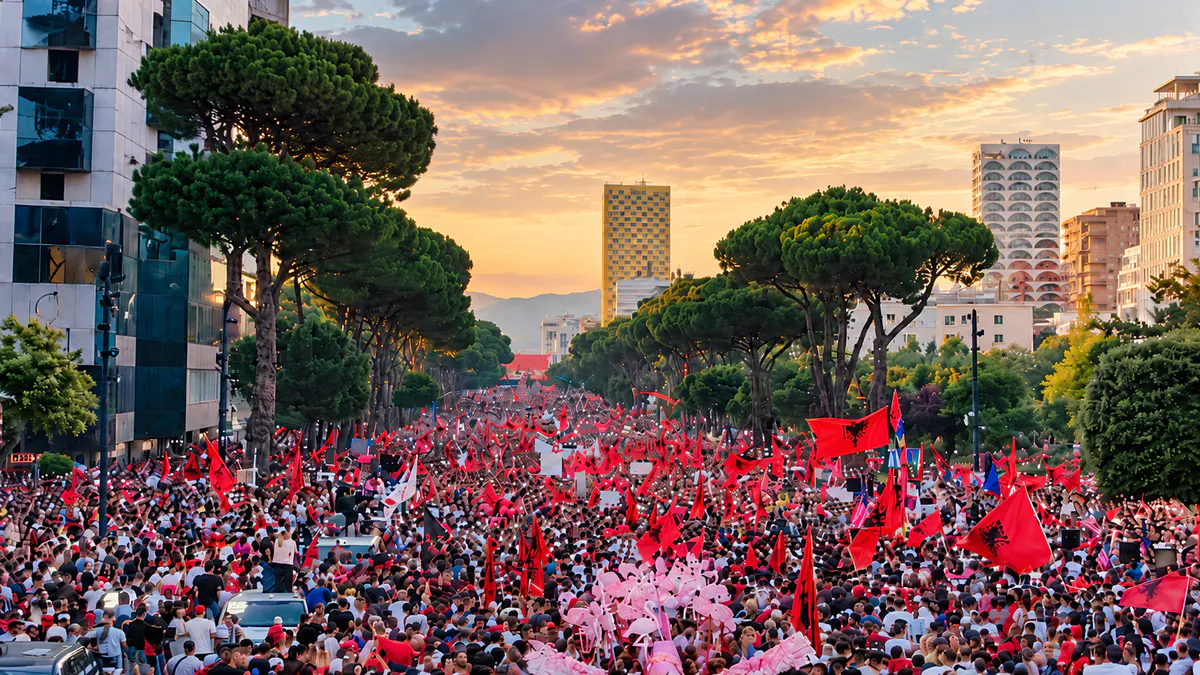
- Political Discussions – Be Neutral
- What NOT to Do in Albania
- Tipping Culture
- Communication Style
- Safety & Social Behavior
- What is Besa?
- Quick Summary: Albanian Etiquette for Tourists

⚡ Albanian Etiquette – Quick Guide (2026)
✔️ Accept hospitality (even small things)
✔️ Respect elders
✔️ Dress appropriately in cities & villages
✔️ Tip 5–10% in restaurants
❌ Don’t refuse everything offered
❌ Don’t criticize Albania openly
❌ Don’t photograph people without permission
Why Understanding Albanian Culture Matters
Albania is a country shaped by ancient Illyrian roots, centuries of Ottoman influence, Mediterranean traditions, strong family values, and a deep respect for hospitality. These cultural layers have created a society that is both traditional and modern, where guests are treated with warmth and generosity. Albanians are known for their openness and friendliness toward visitors, but understanding basic local etiquette will help you avoid awkward situations and show genuine respect for the culture during your visit.
1. Hospitality Is Serious in Albania
Expect Generosity
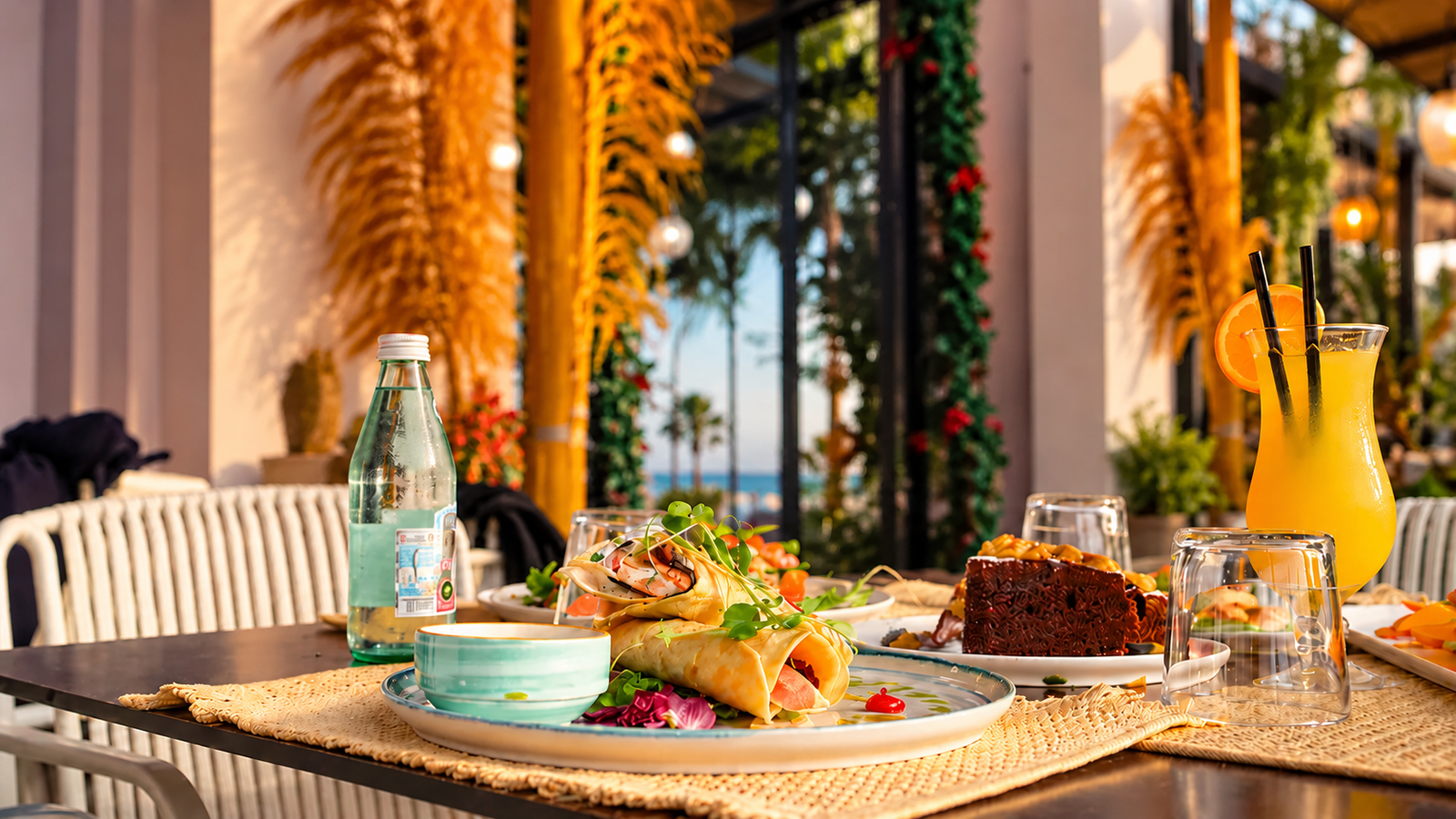
In Albania, hospitality is more than simple politeness — it is a core part of the national identity. If you are invited into someone’s home, you will almost certainly be offered coffee, raki, sweets, or a full meal, even if the visit is short. Hosts take pride in treating guests generously, and repeatedly refusing what is offered may be considered impolite. Even if you are not hungry or thirsty, it is respectful to accept at least something small as a gesture of appreciation.
When visiting an Albanian home, it is thoughtful to bring a small gift such as chocolates, wine, or sweets as a gesture of appreciation. Complimenting the food and warmly thanking your host are also highly valued and reflect good manners. On the other hand, leaving immediately after eating or refusing everything offered can be perceived as impolite, as hospitality is taken seriously and time spent together is an important part of the experience.
Who Pays the Bill in Albania?
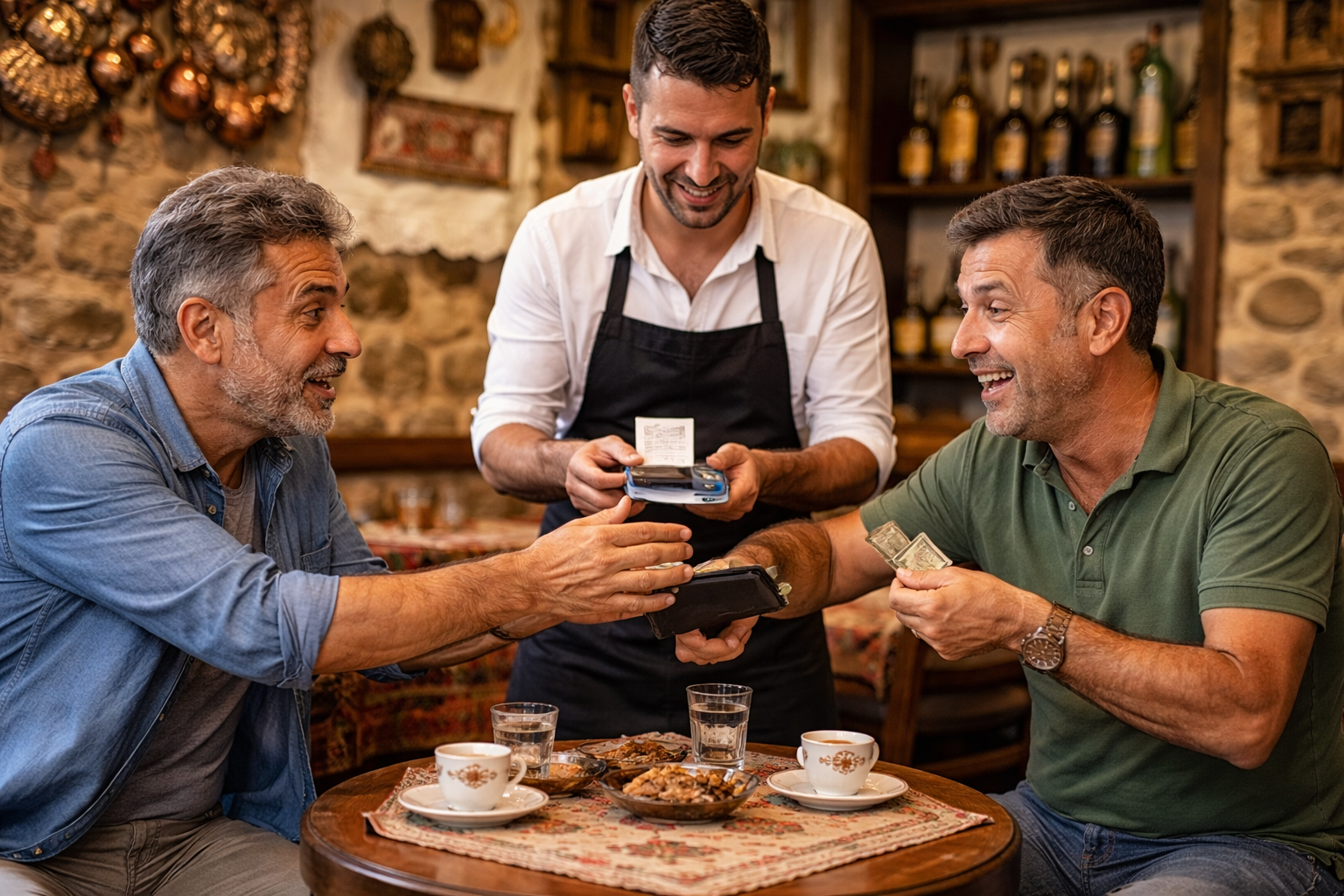
If an Albanian invites you for coffee, lunch, or dinner, it usually means they intend to pay. Offering to split the bill is polite, but insisting too much may actually create an awkward situation.
In Albanian culture, paying the bill is often seen as a matter of honor and generosity. It is very common to witness friendly “arguments” between locals about who will pay — sometimes continuing right in front of the waiter.
If you see two people debating passionately over the bill, chances are… they are Albanian. As a guest, you can offer once or twice out of courtesy, but if your host insists, it is generally respectful to accept.
2. Respect for Elders Is Important
Albanian society places great importance on showing respect to elder people, both within families and in public life. In more formal situations, it is customary to stand when greeting elders, speak politely, and use respectful forms of address. Interrupting older individuals while they are speaking is generally considered impolite. Even in casual settings, small gestures of visible respect — such as attentive listening and courteous language — are highly appreciated and reflect good manners.
3. Religion in Albania – Be Respectful but Relaxed
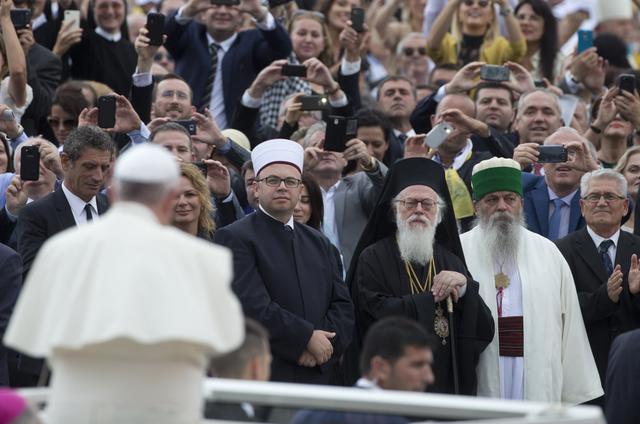
Albania is widely known for its remarkable religious tolerance and harmony. Mosques and churches often stand side by side, especially in cities like Tirana, Shkoder, and Berat, reflecting a long tradition of peaceful coexistence. People deeply respect one another’s faith, and it is common for Albanians to celebrate different religious holidays together, regardless of personal beliefs. It is rare for someone to ask which religion you belong to — as the well-known expression says, “the religion of Albanians is Albanianism,” emphasizing national unity above religious differences.
When visiting religious sites such as the Et’hem Bey Mosque or the Lead Mosque, visitors should dress modestly by covering shoulders and knees, speak quietly, and ask for permission before taking photos inside. Even in a country that is generally relaxed and welcoming, wearing beachwear or behaving loudly in religious spaces is considered disrespectful.
4. Dress code – Casual but context matters
Albania is modern and relatively relaxed, especially in Tirana and along the coastal cities. However, context still matters. Beachwear is acceptable only at the beach, while smart casual dress is preferred in restaurants, cafés, and city centers. In rural or mountain areas, modest clothing is appreciated out of respect for local traditions. Tourists should also know that Albania does not have official nude beaches, and topless sunbathing is generally not part of the local culture. Walking shirtless in cities is considered disrespectful and should be avoided.
5. Political Discussions – Be Neutral
Albanians have strong opinions about politics and history. As a tourist:
✔️ Listen respectfully
✔️ Stay neutral
Avoid:
❌ Making negative comparisons with other Balkan countries
❌ Discussing sensitive historical conflicts casually
6. Tipping Culture in Albania
Tipping is appreciated but not mandatory.
- Restaurants: 5–10% is common
- Cafés: Round up the bill
- Taxis: Round up to the nearest amount
Avoid leaving no tip in full-service restaurants if service was good.
7. What NOT to Do in Albania (Tourist Mistakes to Avoid)
This section is especially important for travelers searching: “What not to do in Albania”
❌ Do Not Assume Everyone Speaks English: English is common among young people, but older generations may not speak it.
❌ Do Not Pay Everything in Euros: The official currency is the Albanian Lek (ALL). Euros are sometimes accepted but at unfavorable rates.
❌ Do Not Show Disrespect Toward Local Traditions: Traditional values remain strong, especially outside Tirana.
❌ Do Not Photograph People Without Permission: Especially elderly people in villages — always ask first.
❌ Do Not Criticize the Country Publicly: Albanians are proud of their country’s development.
8. Personal Space & Communication Style
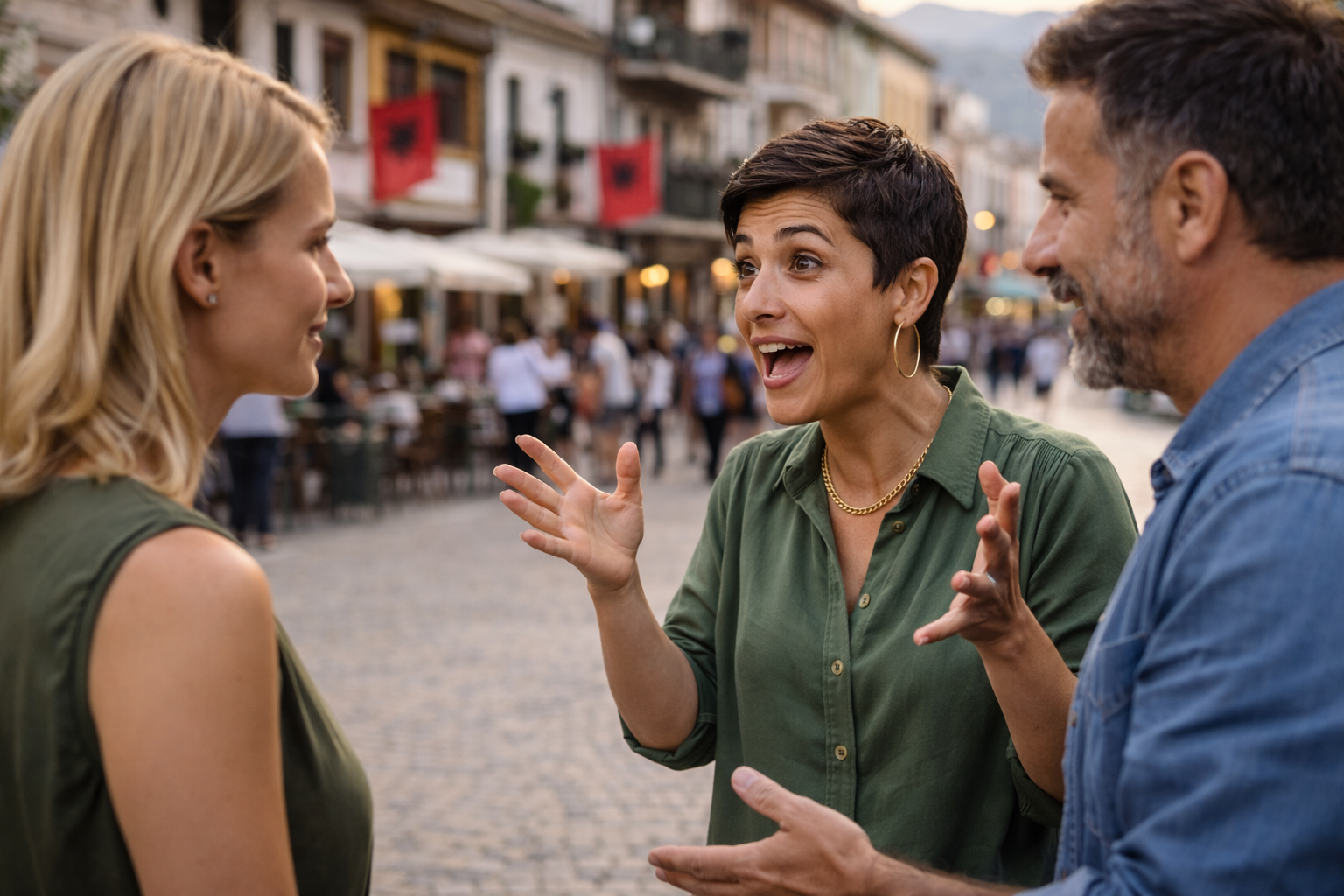
Albanians are naturally expressive in conversation and may speak louder than some visitors are used to — this is normal and not a sign of anger or aggression. Hand gestures are common and help emphasize points, and people may stand closer during conversations compared to Northern European standards. This communication style is part of the broader Mediterranean culture and reflects warmth, openness, and engagement rather than confrontation.
9. Safety & Social Behavior
Albania is considered one of the safest countries in Europe for tourists, with low levels of violent crime and a generally welcoming atmosphere toward visitors.
However, maintaining respectful behavior in public is important. Avoid excessive public drunkenness, especially in smaller towns where traditional values remain strong. Disrespectful or overly loud behavior in family-oriented environments is not well received.
You should also be mindful of social boundaries when interacting with women in public. Avoid staring at or openly complimenting women, particularly if they are accompanied by male friends or family members. In Albanian culture, this may be perceived as disrespectful and can create uncomfortable situations. While Albania is modern and open-minded, traditional social norms still influence public interactions — especially outside major cities.
10. Understanding “Besa”
One important Albanian cultural concept is Besa — a traditional code of honor meaning trust, promise, and hospitality.
It explains why Albania has a strong culture of protecting and helping guests. Respecting this value earns you deep respect in return.
Quick Summary: Albanian Etiquette for Tourists
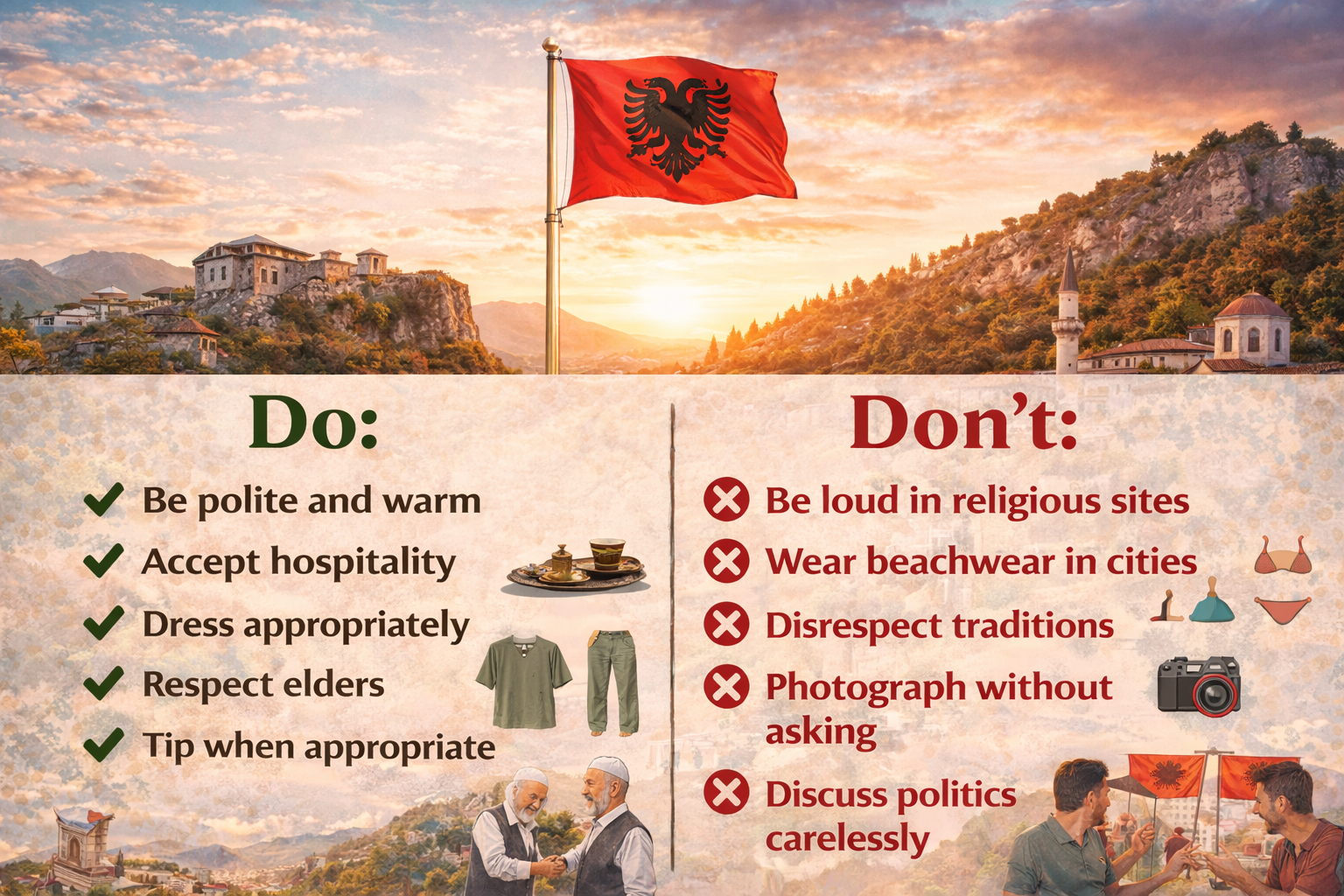
Understanding a few basic do’s and don’ts can make your experience in Albania smoother and more respectful. Albanians are warm and welcoming, but appreciating local traditions, dressing appropriately, and behaving considerately in public spaces shows cultural awareness. Small gestures — like accepting hospitality, respecting elders, and being mindful in religious sites — go a long way. By following these simple guidelines, you not only avoid misunderstandings, but also connect more genuinely with the people and culture of Albania.
Final Advice for Travelers Visiting Albania
Albania is welcoming, modern, and culturally rich. Most mistakes tourists make are small and easily forgiven — Albanians understand that visitors may not know every custom. If you show basic respect and curiosity about local culture, you will be treated not just as a tourist, but as a guest.
If you’re planning to explore Albania on your own, read our guide on Albania solo travel: Safe and authentic local tips for practical advice and cultural insights to help you travel confidently and respectfully.