

If you’re looking for a way to discover Albanian history and culture up close, then this guide is the perfect place to start. “10 museums you must visit in Albania” is a comprehensive list that brings together some of the country’s most inspiring cultural landmarks – from iconic iconographic masterpieces in Berat to the powerful, thought-provoking bunker museums of Tirana. These museums are not just exhibition spaces, but living journeys through time that connect you with the roots of a nation rich in history and art. Ready to begin the adventure?
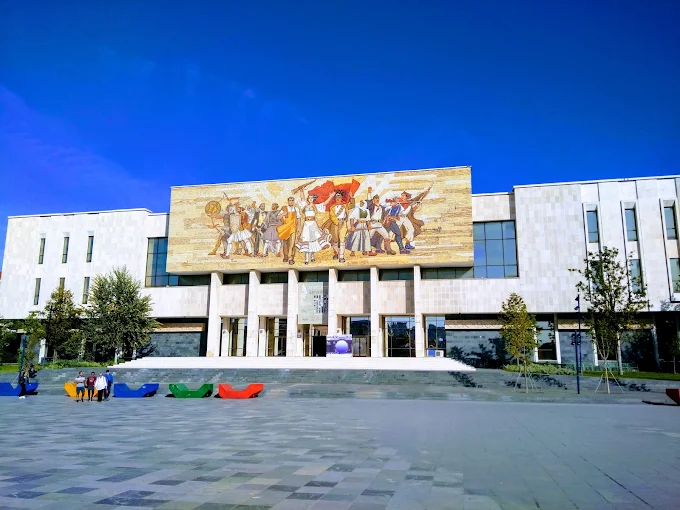
1. National Historical Museum (Tirana)
Located in the very heart of the capital, on Skanderbeg Square, the National Historical Museum is the first stop for anyone who wants to understand Albania’s history in depth. Opened in 1981, it is the largest museum in the country, housing over 6,000 objects that span periods from prehistory to the first half of the 20th century.
The most iconic feature? The giant mosaic “Skanderbeg and the Albanians” that welcomes you at the entrance. Inside, you’ll find thematically organized pavilions covering Antiquity, the Middle Ages, the National Renaissance, the Anti-Fascist War, and the Communist Period. For every visitor, this is an experience that informs, moves, and inspires.
- Address: “Aleksander Moisiu” Street, No. 76, Tirana
- Status: Currently closed for reconstruction until 2028
- Official website: mhk.gov.al
2. Bunk’Art 1 (Tirana – Dajti)
Just a few minutes from the center of Tirana, at the end of the Dajti cable car, lies one of the most unique cultural experiences in Albania: Bunk’Art 1. This massive underground bunker, built between 1972 and 1978 to shelter the communist elite in the event of a nuclear war, has today been transformed into a museum that leaves a lasting impression.
The exhibition begins with a dramatic entrance into the secret rooms of the leadership, then continues through pavilions that explain the anti-fascist resistance, the military system, and life under dictatorship. Audio guides and sound effects turn this visit into an emotional and historical journey you won’t soon forget.
- Address: “Fadil Deliu” Street, near the Dajti Ekspres terminal
- Opening hours: Monday – Sunday 09:30–16:30
- Price: 500 ALL (individual); audio guide available for an additional fee
- Official website: bunkart.al

3. Bunk’Art 2 (Tirana)
In the very center of Tirana, opposite the City Hall, stands another museum you should not miss: Bunk’Art 2. Unlike Bunk’Art 1, which focuses on war and the military, this museum immerses visitors in the dark world of political persecution during the communist regime.
Built between 1981 and 1986 as a secret bunker for the Ministry of Interior, it is now a labyrinth of exhibitions documenting the activities of the State Security, persecution files, surveillance technologies, and methods of state control. Every room is filled with real stories that leave a mark – a reminder of a past that must never be repeated.
- Address: “Abdi Toptani” Street, opposite Tirana City Hall
- Opening hours: Monday – Sunday 09:00–18:30
- Price: 500 ALL (entry), 600 ALL with audio guide
- Official website: bunkart.al

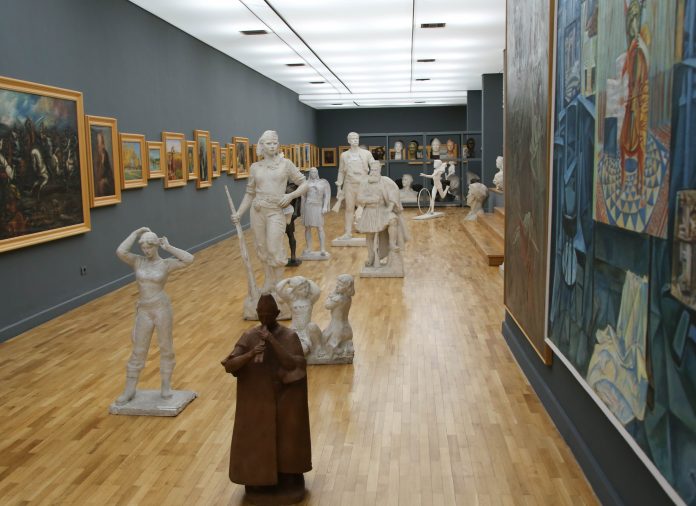
4. National Gallery of Arts (Tirana)
If you love visual art and want to understand the creative spirit of Albanians through the centuries, the National Gallery of Arts is a must-visit stop. Located near Mother Teresa Square, this gallery brings together the most representative works of Albanian art – from Byzantine icons to contemporary installations.
Its collection includes hundreds of paintings, sculptures, and graphic works that reflect the country’s cultural phases: socialist realism, the National Renaissance period, ecclesiastical iconography, and modern art. The gallery hosts permanent and temporary exhibitions, often with international participation, giving Tirana a vibrant artistic pulse.
- Address: Mother Teresa Square, Tirana
- Status: Currently closed for reconstruction
5. Marubi Museum (Shkoder)
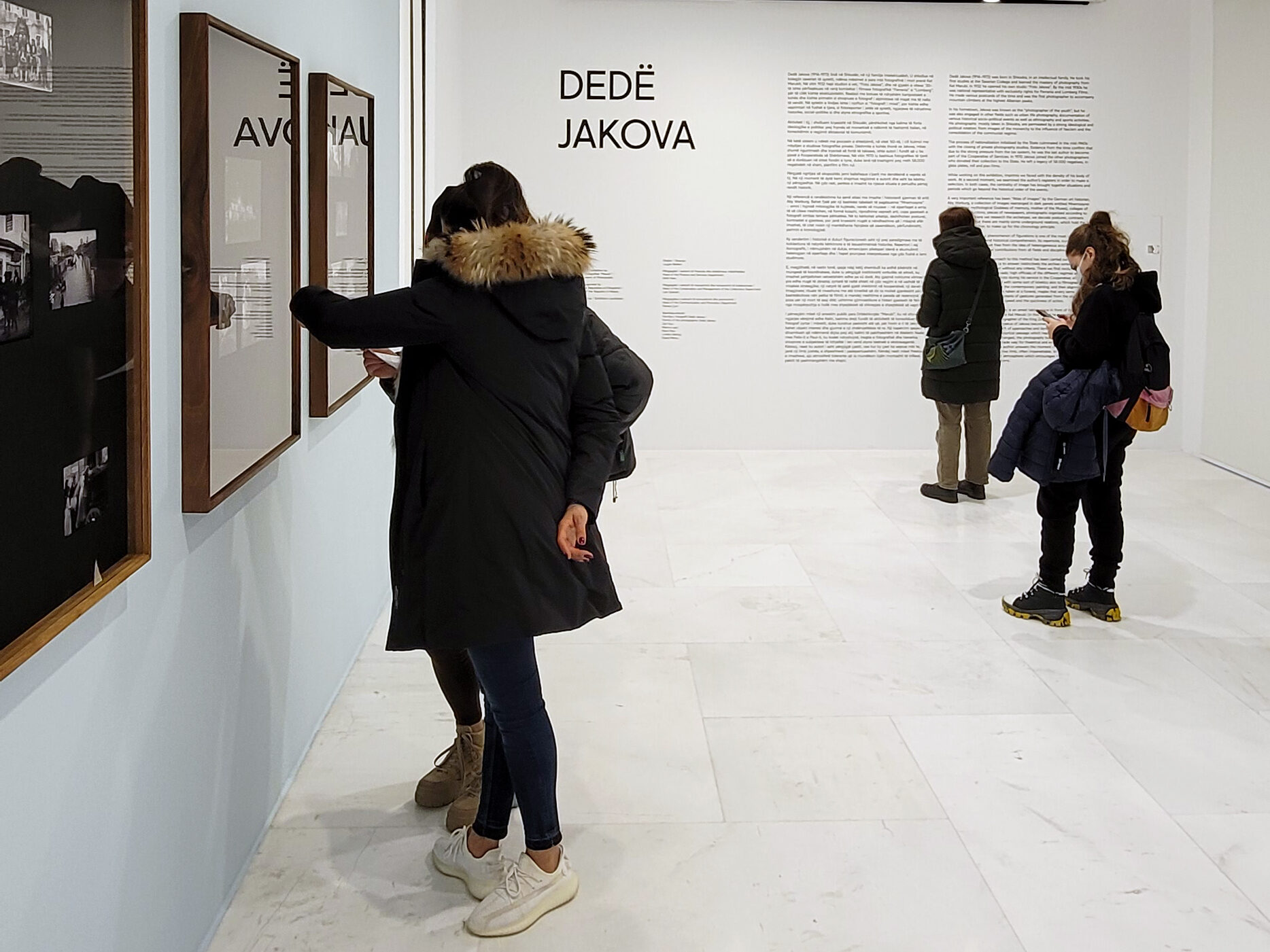
For those who want to see Albania of the past through the lens of photography, the National Museum of Photography “Marubi” is a rare treasure. Located in the heart of Shkodër, this museum houses the richest photographic collection in the country, with over 500,000 images spanning from the late 19th century to the present day.
The Marubi family, together with their Albanian successors, documented history, urban life, noble portraits, and key moments of Albanian society. Visiting this museum feels like flipping through the pages of a nation’s historical album – full of emotion, discovery, and nostalgia.
- Address: Kole Idromeno Street, No. 32, 4001 Shkoder
- Opening hours: Tuesday – Saturday 09:00–16:00; Sunday 10:00–15:00; Monday closed
- Price: 700 ALL (individual); 600 ALL (groups); reduced fees for certain categories
- Official website: marubi.gov.al
6. National Museum “Gjergj Kastrioti Skanderbeg” (Kruje)
Within the ancient walls of Krujë Castle lies one of Albania’s most symbolic museums: the National Museum “Gjergj Kastrioti Skanderbeg”. Built in 1982, this museum is dedicated to the national hero and the legendary resistance against the Ottoman Empire in the 15th century.
The museum’s architecture resembles a traditional Albanian fortress, and inside you’ll find historical documents, replicas of weapons, flags, maps, and symbolic objects linked to Skanderbeg’s life and battles. Visiting this museum is both historical and emotional – especially when you step outside to admire the spectacular view of the valley below.
- Address: Inside Krujë Castle (Skanderbeg Square, Kruje)
- Opening hours: Monday – Sunday 09:00–17:00
- Price: 400 ALL (individual); 300 ALL for groups
- Official website: muzeumet-kruje.com

7. Ethnographic Museum of Kruja
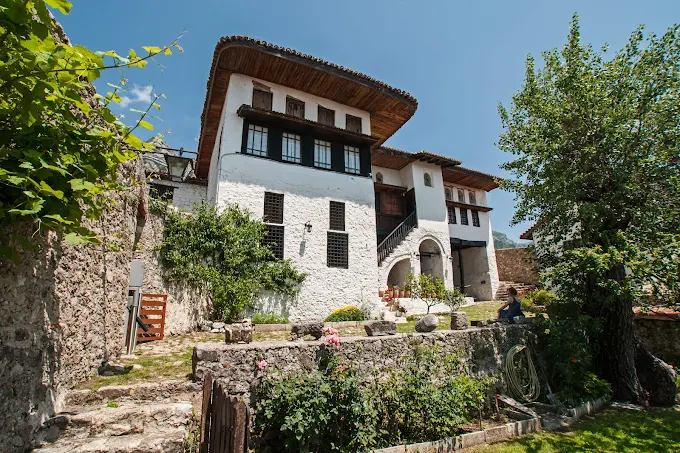
In the same castle complex as the Skanderbeg Museum, you can also visit another cultural gem: the Ethnographic Museum of Krujë. Housed in an 18th-century traditional Albanian house, this museum offers an authentic glimpse into daily life during the Ottoman period.
Inside the three-storey building, you’ll find carefully preserved spaces such as baths, kitchens, guest rooms, women’s quarters, and artisan workshops. Everything is filled with original objects – furniture, tools, traditional clothing, and elements of Albanian lifestyle. It’s an experience that transports you back in time and makes you feel part of history.
- Address: Krujë Castle, near the Skanderbeg Museum
- Opening hours: Monday – Sunday 09:00–18:00
- Price: 500 ALL (individual); 400 ALL for groups; audio guide available for an extra fee
- Official website: muzeumet-kruje.com
8. Archaeological Museum of Durres
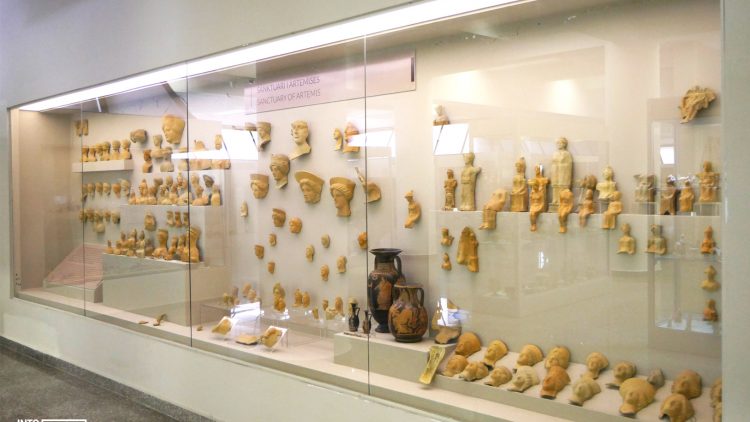
Located near the coastline of the ancient city of Durres, the Archaeological Museum is a treasure for anyone passionate about antiquity. Founded in 1951, it is the largest archaeological museum in Albania, housing thousands of objects from Illyrian, Greek, Roman, and Byzantine periods.
Delicate mosaics, ancient sculptures, ceramics, jewelry, and coins are just some of the artifacts that reflect the history of ancient Dyrrachium and the development of Albanian civilization. The museum is currently under restoration, supported by international programs such as EU4Culture, and is expected to reopen as a modern cultural and educational center.
- Address: Neighborhood 13, Durrës
- Status: Currently closed for restoration
- More info: eu4culture.al
9. Onufri Iconographic Museum (Berat)
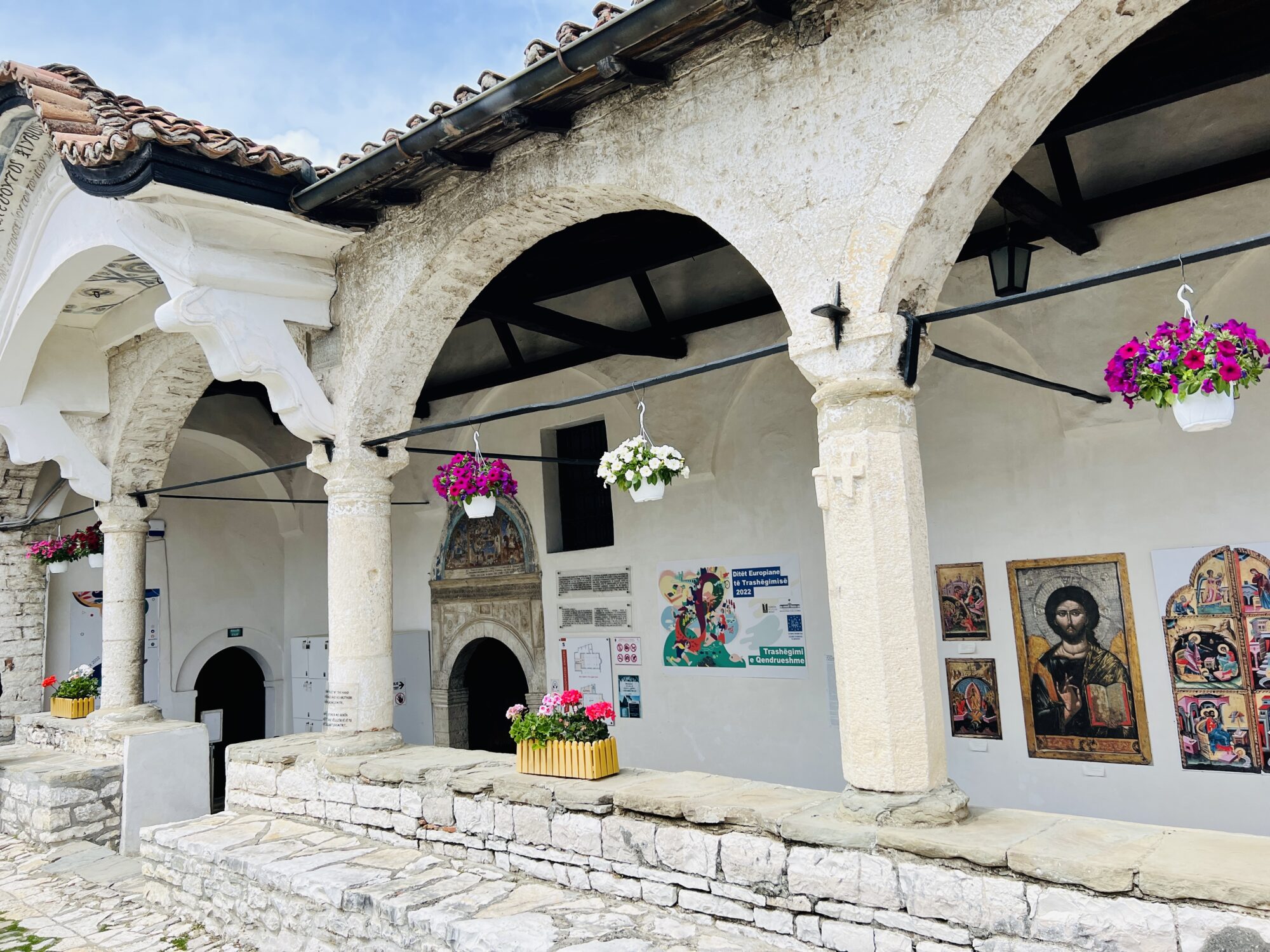
Inside the majestic Berat Castle lies one of Albania’s most distinctive museums: the Onufri Iconographic Museum, located within the Church of St. Mary. This museum is dedicated to the renowned 16th-century Albanian painter Onufri, famous for his bold style and use of deep red tones.
The collection includes over 170 works of Byzantine and post-Byzantine art: icons, murals, finely crafted altars, and liturgical objects from the 16th to the 19th century. It is a place where art, faith, and history merge into a spiritual and aesthetic experience.
- Address: Berat Castle, Church of St. Mary complex
- Opening hours: Monday – Saturday 09:00–16:00; Sunday 09:00–14:00
- Price: 400 ALL (adults); discounts for students, pensioners, and children
- Official website: muzeumet-berat.al
10. National Museum of Medieval Art (Korçe)
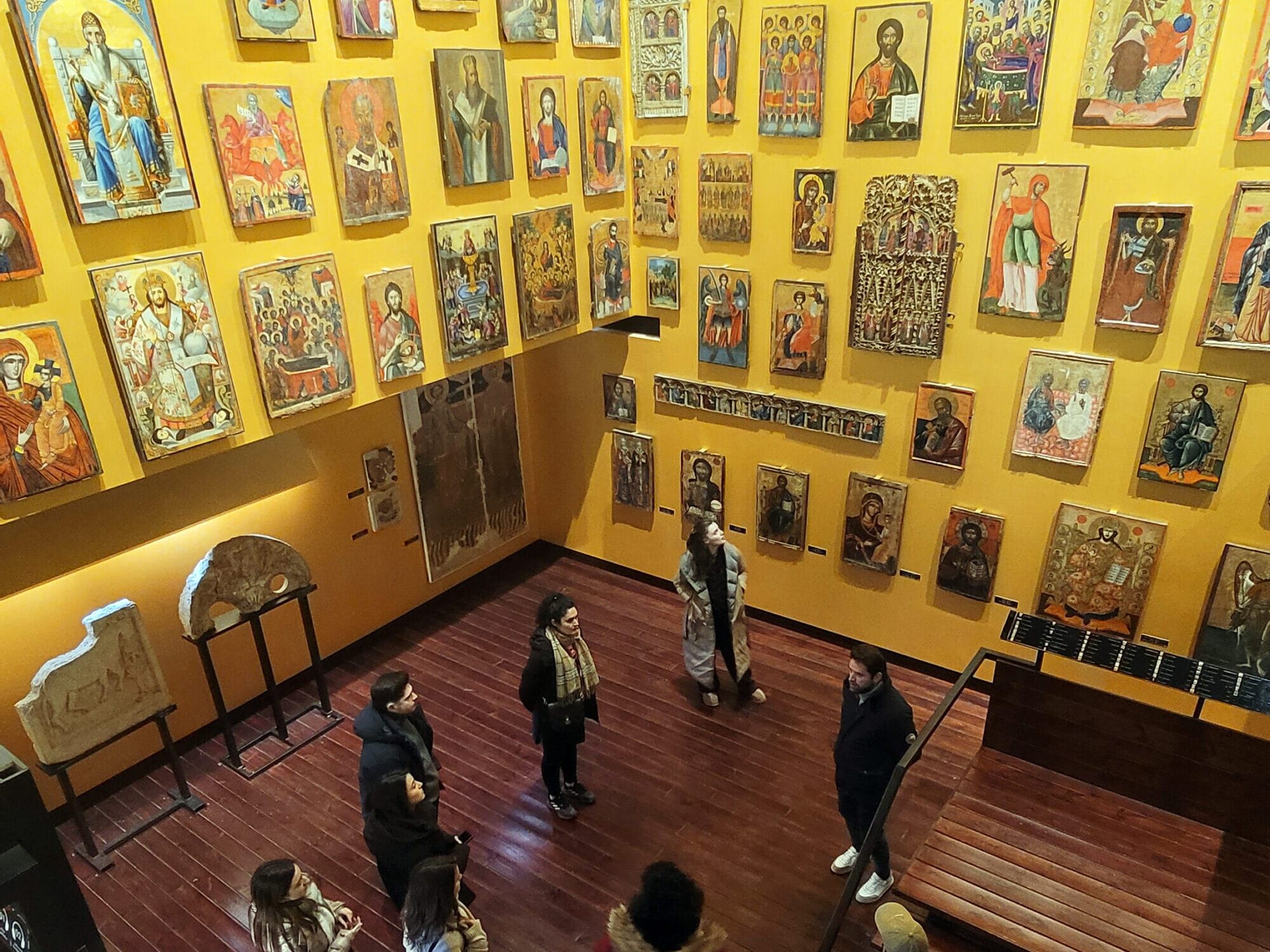
If Byzantine icons and ecclesiastical art fascinate you, then the National Museum of Medieval Art in Korçe is a visit not to be missed. First opened in 1980 and recently renovated to modern standards, this museum represents a rare cultural treasure not only for Albania, but for the entire region.
The museum houses over 7,000 objects of Albanian ecclesiastical heritage – icons, altars, carved wooden frames, liturgical garments, and rare manuscripts – dating from the 13th century to the early 20th century. Much of the collection includes works by masters of iconography such as Onufri, Kostandin Shpataraku, and David Selenica. The interior lighting is carefully designed, creating a contemplative atmosphere that helps visitors connect with an extraordinary spiritual and aesthetic world.
- Address: “Fan Noli” Street, Korçe
- Opening hours: Monday closed; Tuesday–Saturday 09:00–16:00; Sunday 10:00–15:00
- Price: 500 ALL (entry); discounts for students, pensioners, and special categories
- Official website: akt.gov.al
Ready for a cultural journey through time?
From the deep bunkers of Tirana to the glowing icons of Berat and the exquisite medieval art of Korça – these 10 museums you must visit in Albania offer more than just exhibitions. They are windows into the Albanian soul, telling stories, preserving heritage, and delivering experiences that leave a lasting impression.
While some institutions like the National Historical Museum and the National Gallery of Arts are temporarily closed for renovation, they remain cultural cornerstones and will reopen stronger than ever in the near future.
If this guide helped you discover more about museums in Albania, share it with your friends and start planning a cultural trip you won’t forget. Albania has so much to reveal — you just need to know where to look.