

If you want to truly understand the soul of Albania, it’s not enough to visit only its beaches, mountains, or ancient cities. You must also stop at its mosques—not merely as places of worship, but as cornerstones of our history, culture, and architecture. In this article, “The Most Beautiful Mosques in Albania: Historic Monuments You Shouldn’t Miss,” you will discover true treasures that speak of religious coexistence and centuries-old architectural mastery. From modern Tirana to the historic fortresses of Berat or Korçë, Albanian mosques are living testimonies that deserve greater attention.
Et’hem Bey Mosque – The Spiritual Heart of Tirana
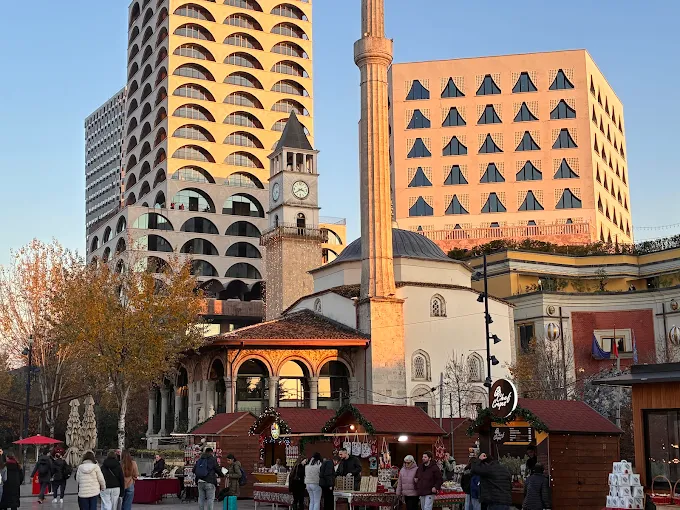
In the heart of Tirana, on Skanderbeg Square, next to the Clock Tower, stands one of the most beloved and visited mosques in Albania: the Et’hem Bey Mosque. This mosque was built at the end of the 18th century by Molla Bey and completed in 1823 by his son, Haxhi Et’hem Bey. Built in the classical Ottoman style, it is one of the rarest mosques in the Balkans thanks to its wall frescoes depicting natural landscapes such as trees, waterfalls, and towns—unusual motifs in Islamic architecture. Outside the prayer hall is an open portico (hajat) decorated with natural motifs, while inside, the central dome is adorned with the 99 names of Allah and verses from the Quran.
During the communist regime, the mosque was closed, but it was declared a cultural monument in 1948 and thus spared from destruction. In 1991, after decades of religious prohibition, it reopened with a collective prayer that became a symbol of the spiritual revival of Albanians. Today, the mosque is fully functional and remains a must-stop for local and foreign visitors who wish to better understand the historical and cultural spirit of Tirana. It is a place where faith, art, and national memory come together in harmony.
📍 Location: Skanderbeg Square 1, Tirana 1001, Albania
Namazgjah Mosque – The Largest Mosque in the Balkans
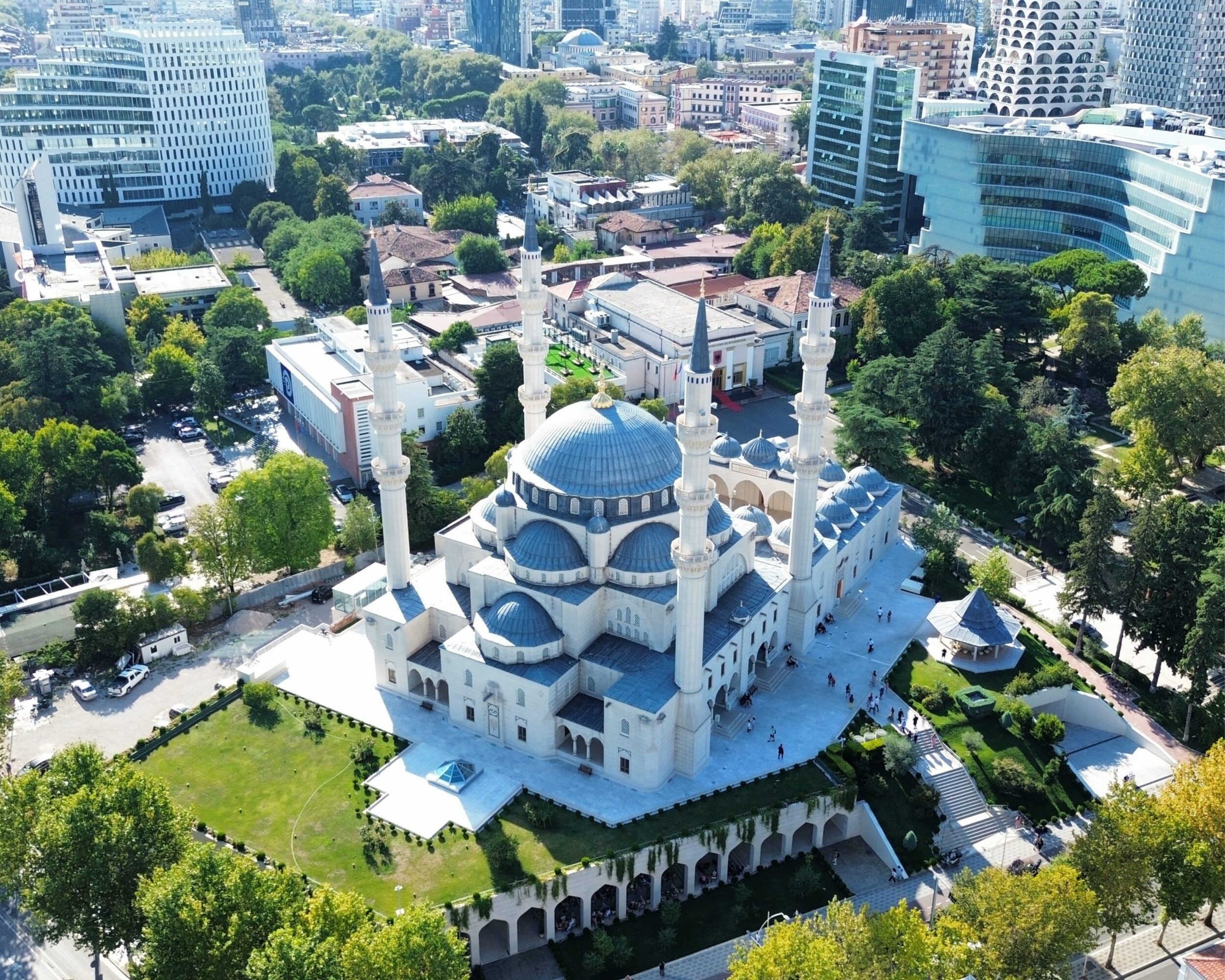
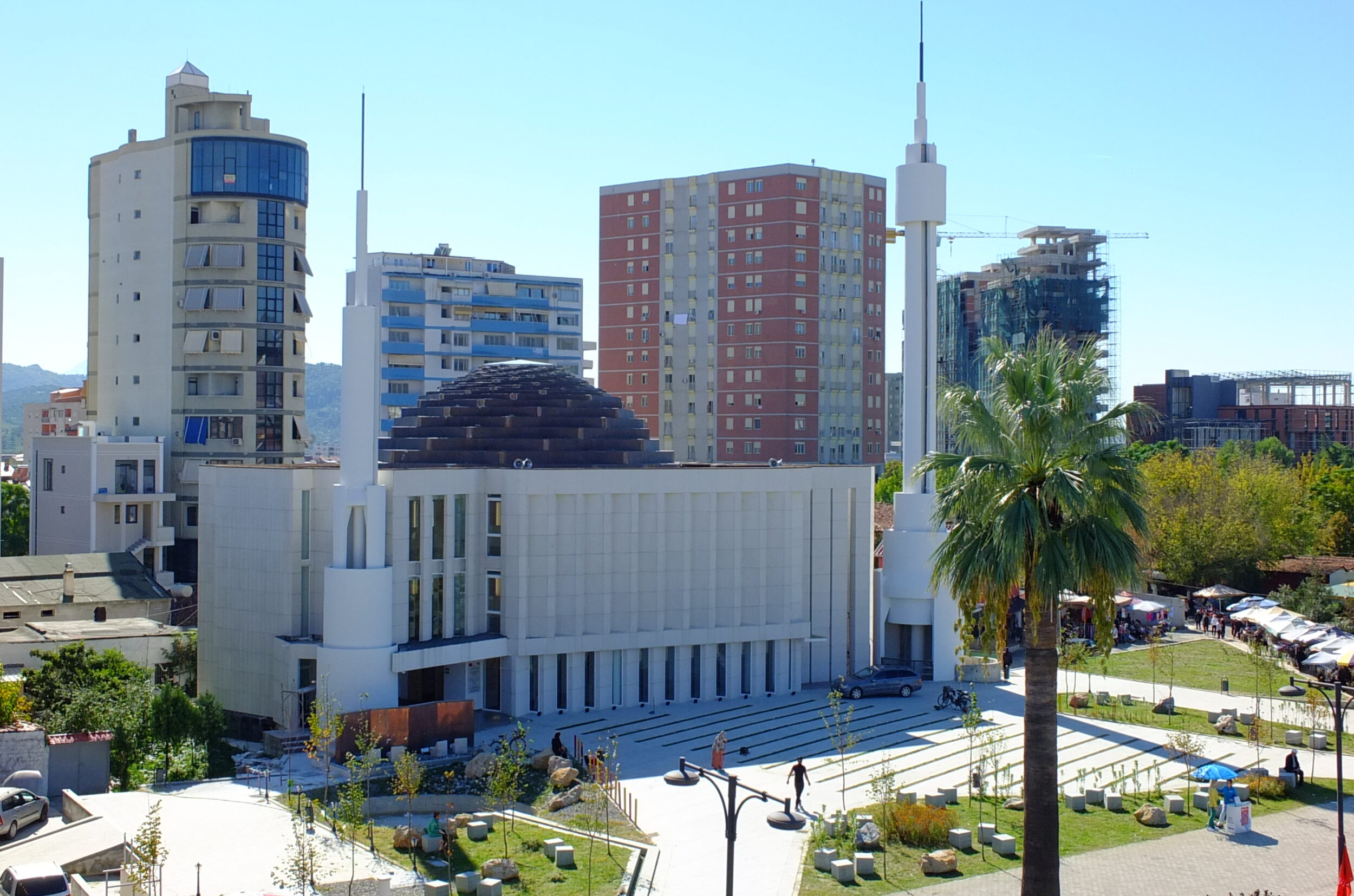
After decades without a central mosque in the capital, Tirana finally gained a new symbol of faith and religious coexistence—the Namazgjah Mosque. Located near the Parliament, this mosque was inaugurated on October 10, 2024, after a long construction process that lasted over a decade. With four tall minarets and a majestic 30-meter dome, Namazgjah blends classical Ottoman style with modern functional elements. It can accommodate up to 10,000 worshippers and includes cultural spaces such as a library, exhibition hall, and classrooms—making it a complete complex for the community and visitors.
The project was financially supported by Turkey’s Diyanet and built by Albanian and Turkish companies. During the inauguration, important leaders from Albania and Turkey were present, while thousands of citizens experienced the event as a spiritual rebirth. Namazgjah is not only a place of worship—it is a monument of cultural cooperation, a symbol of interfaith tolerance, and now one of Tirana’s newest tourist attractions.
📍 Location: 8RGF+7QW, Tirana, Albania
Fatih Mosque – Durrës
On the historic coast of Durrës, an ancient city shaped by many Mediterranean cultures, stands the Fatih Mosque, one of the oldest and most important mosques in Albania. Built in 1502 after the Ottoman conquest of the city, it was named after Sultan Mehmed II “the Conqueror”, known for the conquest of Constantinople, marking a new chapter in the religious and architectural history of the coastal city.
The original structure was built on the ruins of an early Christian basilica, and some remaining elements of this earlier temple are still visible in parts of the walls. Due to its age and the influence of the Ottoman period, the mosque represents one of the city’s key historical landmarks, offering visitors a clear reference point for experiencing classical Ottoman architecture.
During the communist regime, like many other religious buildings, the mosque was closed and its minaret destroyed, but after the 1990s it regained its function and was restored, returning to use as a place of worship and a cultural point of interest in the center of Durrës.
📍 Location: 8C6W+C87, Xhamia Street, Durrës, Albania
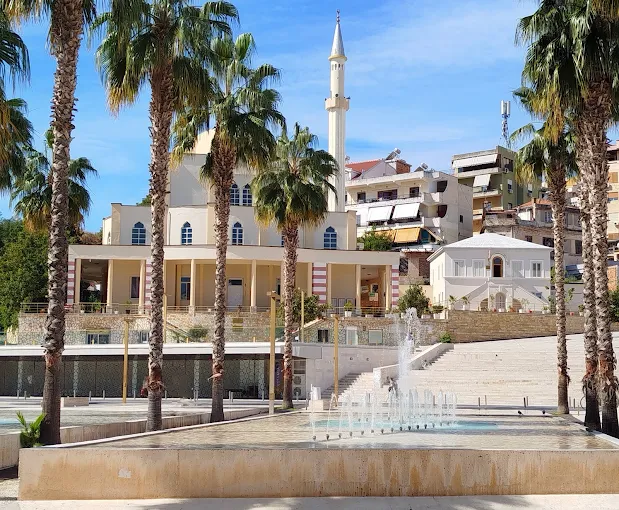
Lead Mosque – Shkodër
South of the city of Shkodër, in a plain near the confluence of the Kir and Drin rivers, stands the majestic Lead Mosque, one of the largest and most distinctive religious monuments in Albania. Built in 1773–1774 by the renowned vizier Mehmet Pasha Bushati, the mosque was named “Lead” because its domes were covered with lead sheets—both a protective and aesthetic element that set it apart from other mosques in the country. Its monumental structure, with a central dome rising on a tall drum and smaller auxiliary domes at the four corners, places it close to the typology of imperial mosques in Istanbul.
One of its rarest features is the inner courtyard with columns, separated from the prayer hall by large arches—a characteristic usually reserved for imperial mosques. The construction was carried out using blue and white cut stone, highly resistant to climate and time. The mosque was declared a cultural monument in 1948 and has endured major challenges, such as frequent flooding and the destruction of its minaret during the communist regime.
After decades of damage from floods and lack of maintenance during the communist period, the Lead Mosque has recently been restored, recovering its main architectural and aesthetic elements. Today, the site is accessible to visitors, and conservation interventions have helped preserve its unique structure, including the majestic dome and colonnaded courtyard. It remains a national treasure that represents not only the history of Shkodër, but also the Ottoman heritage in Albania, making it an essential stop for scholars, worshippers, and foreign tourists.
📍 Location: Shkodër, Albania
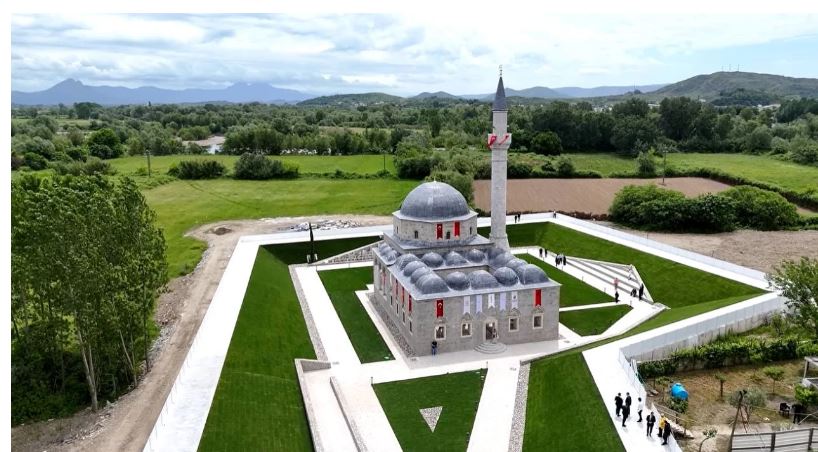
King’s Mosque – Berat
Located in the heart of the historic Mangalem neighborhood in the city of Berat, the King’s Mosque (also known as the Sultan’s Mosque or Hünkar Mosque) is one of the oldest mosques in Albania, built around 1492 during the reign of Sultan Bayezid II. Positioned just a few steps from the “Helveti Tekke” square and within the UNESCO-protected museum zone, this mosque represents the typology of royal Ottoman sanctuaries, preserving originality in both structure and decoration.
Unlike domed mosques, it features a flat wooden roof over a wide rectangular prayer hall. Its ceilings are decorated with rosettes and geometric motifs, as well as inscriptions of the 99 names of God. A distinctive feature is the external mihrab, which allowed worshippers to pray outside when the interior was overcrowded. In front of the entrance stands an open portico (hajat), with a roof supported by columns—a place where citizens gathered before or after prayer.
Declared a cultural monument in 1948, the mosque has continued to function as a place of worship even after the communist period. Thanks to conservation restorations, it is today fully active and one of the most visited stops in the city, not only for Muslim worshippers but also for tourists exploring the architectural and spiritual treasures of Berat.
📍 Location: PX42+7V2, Berat, Albania
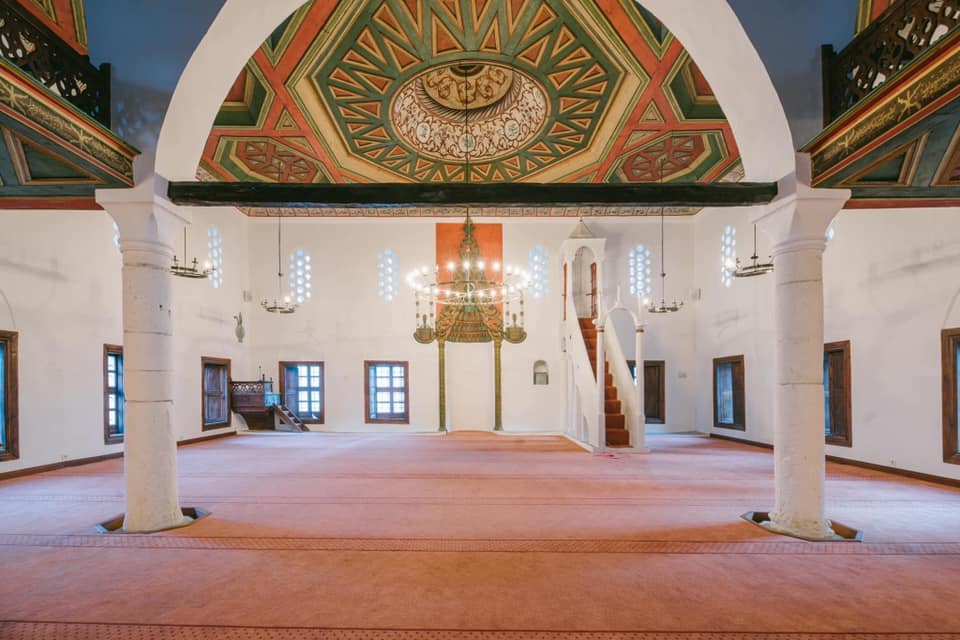
Iljaz Bey Mirahori Mosque – Korce
In the city of Korce, just a few meters from the historic center, stands one of the oldest and most significant mosques in Albania: the Iljaz Bey Mirahori Mosque, built in 1495–1496 by the city’s founder, Iljaz Bey Mirahori—an Ottoman commander of local origin. This mosque represents a cornerstone of Korçë’s urban and religious identity and is among the first mosques with a central dome in Albanian lands.
The architectural structure includes a square prayer hall covered by a majestic dome, resting on thick stone walls. The portico (hajat) with arches on the northern side was an elegant addition that gave the building a sense of symmetry and solemnity. The minaret, located at the northwestern corner, is built of cut stone and has a simple yet elegant appearance.
During the communist regime, the mosque was closed and used as an ethnographic museum, but after the 1990s it was returned to its original function as a place of worship. The most recent restorations, completed in 2015, helped preserve its original elements and turned it into an important cultural and religious attraction for the city. Beyond its spiritual role, the mosque is a testament to historical continuity and one of the main points on Korçë’s tourist itinerary.
📍 Location: Korçë, Korçë Region
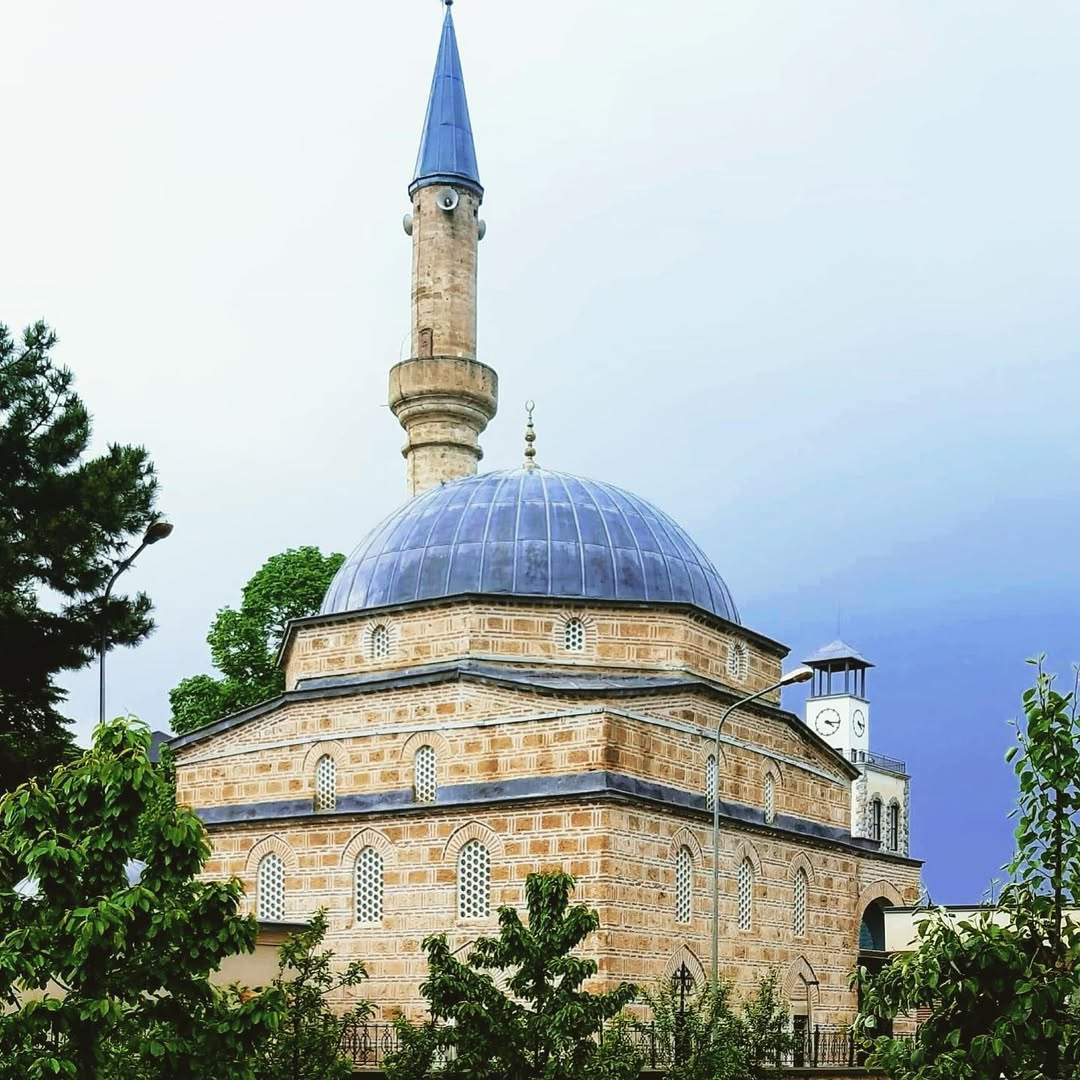
🕌 Ballie Mosque – Elbasan (Elbasan Region)
In the heart of the city of Elbasan, just a few meters from the King’s Mosque and part of the historic urban center complex, stands another mosque of historical importance: the Ballie Mosque. Built in the late 18th or early 19th century, this mosque bears the name of the Balliu family, believed to have directly contributed to its construction or maintenance. Although less known than the city’s major mosques, it holds a special place in Elbasan’s religious and architectural memory.
The mosque is built with traditional materials: cut stone, red bricks, and wooden beams for the roof. The structure includes a small rectangular prayer hall and a simple stone minaret. Unlike larger mosques, it does not have a dome, but a four-sided roof that gives it a warm and intimate appearance. Decorations are modest yet harmonious, focusing on functionality and community use.
During the communist years, the Ballie Mosque was closed and did not function as a place of worship, but after 1990 it was returned to its original role. Although smaller and less restored than the city’s major monuments, it remains active and functional, serving the surrounding neighborhood and visitors seeking to see a simple yet authentic mosque in the heart of Elbasan.
📍 Location: Historic center of Elbasan, Elbasan Region
A Journey Beyond Religion – Into the Depth of the Albanian Spirit
From major cities to quiet mountain villages, mosques in Albania are far more than places of worship—they are living testimonies of history, art, and interfaith coexistence. Every mosque featured in this article—whether as grand as Namazgjah in Tirana, as ancient as the Fatih Mosque in Durrës, or as modest and silent as those in rural areas—carries centuries-old stories that enrich our national identity.
These buildings are not meant only to be seen. They are meant to be felt, to be heard in their silence, to be experienced up close. They are invitations to better understand ourselves through the heritage we have built as a people.
📢 Did you share this article with your friends?
If this virtual journey through mosques in Albania inspired you, share this article with friends, family, or your followers on social media. Let’s spread the value of our cultural heritage together!